The FAA changed the definition of Upwind

This is true. But are you going to then continue straight ahead and leave the area or are you going to turn Crosswind which *IS* crossing over the departing traffic.
...after you know where they are and can avoid them.

But there's still the issue of Descending in (what used to be called) the Upwind.
Nobody is talking about descending in the upwind. I'm not sure where you get this idea. It's part of the pattern, you don't descend into it.

But I'm still unclear why anyone would use a NON STANDARD, NON APPROVED entry into the pattern.
Show me an "APPROVED" entry into the pattern.

(Hint: There's no such thing.)

It layed out pretty clearly in the AIM the recommended pattern entries. The only time you want to be above the pattern is if you're coming in perpendicular for an Overhead entry where you can see the FULL pattern.
Can you show me where in the FAA documentation the definition of an "Overhead" entry is?

(Hint: There's no such thing, again.)

Assuming you mean the old "fly directly over the field to check out the windsock followed by flying away and coming back on the 45" entry, you CANNOT see the full pattern when you're doing that - You'll miss anyone that's near the centerline of your aircraft.

Contrast that with the upwind, where you can see the entire pattern, from pattern altitude where it's much easier to pick out planes in the pattern.

Then after crossing the Rwy you descent the remaining 500' when you do the Teardrop or if there is no one in the pattern you opt to turn Downwind.
So now descending in the pattern is OK? What about the fact that you just flew through the twin/turbine pattern?

And from 10 miles out or so (when you make your first call about your intentions) it is simple to manuver to one of the correct entries. So why bother to make stuff up.
At this point, I'm wondering what you think the "correct entries" are? There's only one *recommended* entry.

The point of "making stuff up" is to see and avoid and stay the heck out of everyone else's way.

While there could be a revision, AOPA references AIM stating that turn to the crosswind should happen before 300 feet of reaching pattern altitude on the departure.
======================================

"Only one line in this section of the AIM talks about the first turn a pilot is expected to make: “If remaining in the traffic pattern, commence turn to crosswind leg beyond the departure end of the runway within 300 feet of pattern altitude.”
That's still in the AIM, Figure 4-3-2.
 
If there's a NOTAM for that side of the airport, comply with it. Otherwise, sure. Are you suggesting that flight on that side is always prohibited?
What's not prohibited isn't always wise. Also, those types of concerns would be in the Chart Supp and not NOTAM'd (at least around here). Plus doing circles over someone's house isn't going to get *you* in trouble, it's going to get the *airport* in trouble.
 
Love that the teardrop sketch violates 91.126. FAA can't even follow their own regulations. And yes there is case law that says a right turn within 5 miles is a violation.
Do you have a link to the reference, I've looked for such to no avail.
I'm not aware of what @EdFred is talking about specifically. The one I'm thinking of is where a Southwest pilot made a right turn from a dogleg onto a 3 mile final for a straight in and got nailed by the FAA for the right turn.

They did not specifically say how big the pattern is nor say a right turn within x miles is or isn't OK, but what we did learn from that one is that the FAA considers a turn to a 3-mile final to be "in the pattern".
That was the one.

Also an advisory circular is not a regulation, and neither is the AIM or the AFH. So if 3 miles is in the pattern by the FAAs judgment, then so is 2 miles. They can't even keep their own crap straight.
 
They did not specifically say how big the pattern is nor say a right turn within x miles is or isn't OK, but what we did learn from that one is that the FAA considers a turn to a 3-mile final to be "in the pattern".
From either that or a similar case, I think the FAA/NTSB stance was that anything inside the FAF (or a similar distance) is "in the pattern".
 
They did not specifically say how big the pattern is nor say a right turn within x miles is or isn't OK, but what we did learn from that one is that the FAA considers a turn to a 3-mile final to be "in the pattern".

Does the regulation requiring left turns use the phrase "in the pattern"?
 
Not just 500 above, but 500 above the highest pattern altitude, and quite a few fields have TPA at 1500 for the faster movers.
Yep. But it sounds like some people don't get this, so therefore the Overhead is bad because they don't understand it or don't fly it correctly.

And you get the people who also don't understand a "teardrop" so once they cross the runway, they TURN to track outbound on the 45dgrs and start to descend into anyone approaching on the 45.
 
Show me an "APPROVED" entry into the pattern.
My bad, there is no "approved" pattern entry. I was just getting caught up in some of the sillyness and should have said an entry that won't have someone from the FSDO discussion 91.13 with you. :D
 
My bad, there is no "approved" pattern entry. I was just getting caught up in some of the sillyness and should have said an entry that won't have someone from the FSDO discussion 91.13 with you. :D
They won't. Already had the discussion with multiple DPEs and a FSDO rep. Nothing about a upwind entry constitutes careless and reckless.
 
https://www.faa.gov/documentlibrary/media/advisory_circular/ac_90-66c.pdf
One relevant note from the document, there are others.
Note: An aircraft outside the traffic pattern would not be bound by § 91.126(b) (see paragraph 11.3 and Appendix A, Traffic Patterns, for aircraft crossing over midfield above pattern altitude to enter the pattern).
Oh? There is case law in Alaska where an Air Alaska flight entered final from a right turn. The pilot lost.

I'm not aware of what @EdFred is talking about specifically. The one I'm thinking of is where a Southwest pilot made a right turn from a dogleg onto a 3 mile final for a straight in and got nailed by the FAA for the right turn.

They did not specifically say how big the pattern is nor say a right turn within x miles is or isn't OK, but what we did learn from that one is that the FAA considers a turn to a 3-mile final to be "in the pattern".
B-b-but they don't regulate "entries" i/a/w AC 90-66C: "8.2.1 The FAA does not regulate traffic pattern entry, only traffic pattern flow."

I'm familiar w/the Alaska case, not Southwest though. Maybe they're the same? I was looking for a legal definition of "vicinity" while "approaching to land" which is the verbiage in 91.126 IIRC. Nothing there about "traffic patterns" that I recall. The AC above seems to have different strokes for different folks in that regard. Parachutes are one "vicinity", gliders another. I'd expect jets would be another and so on. In the case of gliders, the example includes the training area, so how wide is that? But then they advise to call 2 miles from the airport when they are departing the vicinity. Not a good AC, imo.
 
Last edited:
Does the regulation requiring left turns use the phrase "in the pattern"?

§ 91.126 Operating on or in the vicinity of an airport in Class G airspace.​

(b) Direction of turns. When approaching to land at an airport without an operating control tower in Class G airspace—​

(1) Each pilot of an airplane must make all turns of that airplane to the left unless the airport displays approved light signals or visual markings indicating that turns should be made to the right, in which case the pilot must make all turns to the right; and​

So no. It's "in the vicinity". Which technically makes their recommended entry a violation. I can see them saying "well, the 45 isn't *in* the pattern, it's approaching the pattern and you're not really in the pattern until you complete the turn." However, there's no way to say that midfield downwind isn't in the vicinity of the airport but the rest of the pattern is.

Yep. But it sounds like some people don't get this, so therefore the Overhead is bad because they don't understand it or don't fly it correctly.

And you get the people who also don't understand a "teardrop" so once they cross the runway, they TURN to track outbound on the 45dgrs and start to descend into anyone approaching on the 45.
So you're arguing that it's better than the upwind... Why again? :dunno:

My bad, there is no "approved" pattern entry. I was just getting caught up in some of the sillyness and should have said an entry that won't have someone from the FSDO discussion 91.13 with you. :D
I'll have that discussion all day long. "I flew the upwind so as to have the best possible view of all other aircraft in the pattern prior to turning into the pattern." Done.
 
Flying a correct overhead above the pattern and then swinging around in a correct Teardrop to enter a 45 degree entry back into the pattern... Absolutly if you know how to fly.
But if the other guy is flying a bad teardrop you'll be in far worse conflict than anyone on the upwind would be...
 
So no. It's "in the vicinity". Which technically makes their recommended entry a violation. I can see them saying "well, the 45 isn't *in* the pattern, it's approaching the pattern and you're not really in the pattern until you complete the turn." However, there's no way to say that midfield downwind isn't in the vicinity of the airport but the rest of the pattern is.
Once again you're showing you haven't actually studied any of this. You said you're a CFI, I call fake news. If you are, maybe your local FSDO should give you a check ride....
Legal Interpretation - Grossman: "...In your letter, you state that the AIM section 4-3-3, as well as many other sources, describes the safest method for pattern entry as using a 45-degree entry to the downwind, meaning a turn to the right to enter a left traffic pattern. The AIM provides a diagram depicting this recommendation. You state that this recornrnendation would put a pilot in technical violation of section 91.126(b)(1). We disagree..."
So you're arguing that it's better than the upwind... Why again?
You are flatly stating that flying a non standard pattern is safer. Troll comes to mind. :D And which sim do you use?
 
That was the one.

Also an advisory circular is not a regulation, and neither is the AIM or the AFH. So if 3 miles is in the pattern by the FAAs judgment, then so is 2 miles. They can't even keep their own crap straight.
No ****. When someone asserts they are right because “the FAA says so” it doesn’t really mean much to me. Sometimes the FAA is extraordinarily knowledgeable. Sometimes dumber than a sack of hammers. Just depends on which FAA you’re talking to at the time.
 
What's not prohibited isn't always wise. Also, those types of concerns would be in the Chart Supp and not NOTAM'd (at least around here). Plus doing circles over someone's house isn't going to get *you* in trouble, it's going to get the *airport* in trouble.

Oh, for Pete’s sake - that house you’re worrying about is under the downwind when the opposite runway is in use. Unless operations are restricted to one side of the airport, this argument is silly.
 
Once again you're showing you haven't actually studied any of this.
I wouldn't say I've "studied" it, but I've definitely put some thought into it.

You said you're a CFI, I call fake news.
Where did I say that, exactly?

If you are, maybe your local FSDO should give you a check ride....
I'm not... And I never said I was.

Legal Interpretation - Grossman: "...In your letter, you state that the AIM section 4-3-3, as well as many other sources, describes the safest method for pattern entry as using a 45-degree entry to the downwind, meaning a turn to the right to enter a left traffic pattern. The AIM provides a diagram depicting this recommendation. You state that this recornrnendation would put a pilot in technical violation of section 91.126(b)(1). We disagree..."
Clearly YOU have "studied" this and honed your arguments. ;) I didn't say the FAA would interpret their own guidance to be in violation of the reg, I said "techically..." It's about what the words say vs what the FAA has interpreted them to mean. Obviously we know what the FAA recommends, and if they thought it was a violation they wouldn't recommend it.

You are flatly stating that flying a non standard pattern is safer.
Nope. I'm saying that flying the *whole*, *standard* pattern including the upwind and the crosswind after flying an entry other than the recommended one is an easy way to see all of the traffic in the pattern, and for reasons already stated several times here, can be a lot safer than the recommended 45 entry.

I'm also picking apart your flawed logic - You said that the 45 is safer, but then gave examples of people doing the 45 wrong that cause conflicts. And frankly, the main place I've seen stupid pilot tricks in the pattern is with maneuvering to the 45.

Troll comes to mind. :D And which sim do you use?
Same as you, it's just a little longer. (M20R. ;) )
 
I think the reason the FAA likes the overhead teardrop is that they like to believe everyone is still overflying the field to look at the markings and windsock like it is the 1930's. But who really does that? I will on an unfamiliar airfield with no ATIS or AWOS, but TBH that is about 2% of my flying.
 
I think the reason the FAA likes the overhead teardrop is that they like to believe everyone is still overflying the field to look at the markings and windsock like it is the 1930's. But who really does that? I will on an unfamiliar airfield with no ATIS or AWOS, but TBH that is about 2% of my flying.
Besides the segmented circle, how else are you supposed to know whether it’s left or right traffic?:D
 
The whole thing about crossing the runway at midfield, whether to do a teardrop to a 45 or turn left into the downwind, seems unwise. I know that's what they give but once you're over the runway if crossing at 1500' (where the bigger birds live) then if turning left you are descending into the downwind. If at pattern altitude and there is traffic either coming at you from the 45º entry or 90º in the downwind where is your escape route?

If I fly an upwind track I have an excellent view of departing traffic and they will have an excellent view of me. If I need to continue straight out for departing traffic then extending my upwind is not a problem. Seems to me they are making this more difficult than it needs to be ...
 
Besides the segmented circle, how else are you supposed to know whether it’s left or right traffic?:D

Apparently the FAA doesn't know their own regs, or realizes it's silly but isn't worth the effort to change. The latest AC on pattern ops (2023) says to use charted direction.
 
If at pattern altitude and there is traffic either coming at you from the 45º entry or 90º in the downwind where is your escape route?

Follow ROW rules. Slow down and angle right to pull in behind them.
 
Turn from the crosswind to the downwind prior to pattern altitude is not FAA recommended.

While there could be a revision, AOPA references AIM stating that turn to the crosswind should happen before 300 feet of reaching pattern altitude on the departure.
======================================

"Only one line in this section of the AIM talks about the first turn a pilot is expected to make: “If remaining in the traffic pattern, commence turn to crosswind leg beyond the departure end of the runway within 300 feet of pattern altitude.”
How far away from the airport do you want me to fly my pattern in a 65HP J3 on a hot day? Because if I can't turn downwind until I'm at TPA, it's going to be a big pattern.....
 
Maybe, but merging aircraft from different altitudes on crosswind is not it.

They should not be different altitudes. If position reporting on the radio and entering on a 45º upwind then all the flow is relatively in the same direction ...
 
Nope. I'm saying that flying the *whole*, *standard* pattern including the upwind and the crosswind after flying an entry other than the recommended one is an easy way to see all of the traffic in the pattern, and for reasons already stated several times here, can be a lot safer than the recommended 45 entry.
My bad on the CFI, someone here who was pushing the Upwind entry said they were a CFI.

As for the Upwind pattern, I really can't believe you've thought this through, or possibly the non towered airports you fly out of are a lot sleepier than the ones I have. Take BID on a busy weekend. One on short final, one of final, one turning base, a couple in the downwind and a couple on the 45 or reported X miles out going to enter on the 45. Then there's the helicopter or helicopters that are *correctly* flying the opposite side of the fixed wing downwind or are descending towards the airport. Here you come along and are headed for the Upwind...

So are you going to turn Crosswind and cut off all those other planes that are established in the "standard" 45 entry? What do you do as you're getting close and that guy that's #2 for the runway gets a little too close to the plane in front of him and CLIMBS into the Upwind which I see as THEIR space when they need to go around in a conflict, NOT your space to enter the pattern in a non standard way. And so now where do you go? Do you turn off on a 45 away from the airport? Where were those other helicopters that were descending into THEIR patter altitude on their "standard" entry?

And as for seeing the whole pattern. I disagree that you get a better view entering than entering on the 45? Or even on the Overhead a mile or so out when you can still see the full pattern over the nose? Same as you get over the runway and are about to descend, you have a full view of and NORDOs headed for the 45 degree entry where you're going to make a big swing back to and adjust that turn and speed to fit right in with any existing traffic. I have no problem stretching the mega one size fits all "recommendation" when it doesn't make sense. But I really don't agree popping up in a Upwind is safer or better. Actually, I'm not so sure people used to arrive on a 45, they'd just fly into the Downwind... and why did they switch to the 45??? To give you a BETTER view of the traffic than you saw arriving parallel to the Runway. Hmmmmm :D
 
They should not be different altitudes. If position reporting on the radio and entering on a 45º upwind then all the flow is relatively in the same direction ...

If one aircraft is doing an "upwind" arrival and another is on crosswind after taking off, then yes they are. Worse, their altitudes are converging, and at least one is in the others' blind spot.
 
If one aircraft is doing an "upwind" arrival and another is on crosswind after taking off, then yes they are. Worse, their altitudes are converging, and at least one is in the others' blind spot.

You make a valid point but that may be less of a concern than airplanes approaching each other head on over the field ... especially when the pattern is busy. Above you said, "Slow down and angle right to pull in behind them." If you do that then you are turning upwind on the downwind side ...
 
How far away from the airport do you want me to fly my pattern in a 65HP J3 on a hot day? Because if I can't turn downwind until I'm at TPA, it's going to be a big pattern.....
There are more than two TPAs

The appropriate one for the j3 is the low pattern. 500’.
 
If one aircraft is doing an "upwind" arrival and another is on crosswind after taking off, then yes they are. Worse, their altitudes are converging, and at least one is in the others' blind spot.
In which case, if I’m on the upwind, “I’ve got the departing traffic in sight, I’ll extend and fall in behind you”. Folks, we need to work together. It’s all about communication and cooperation. The level of rigidity from both camps here astounds me.
 
The AIM is garbage because of the tear drop pattern entry. There I said it. Hate. Hate. Hate. that non-sense. I’ve seen it cause more delay and confusion than any other pattern entry at multiple airports.

One student does a 1 mile tear drop, next one takes 4 minutes to get turned around, yada, yada…. When used properly the old “upwind” I fine too, or an upwind, right down the center line slightly off set.
 
As for the Upwind pattern, I really can't believe you've thought this through, or possibly the non towered airports you fly out of are a lot sleepier than the ones I have. Take BID on a busy weekend. One on short final, one of final, one turning base, a couple in the downwind and a couple on the 45 or reported X miles out going to enter on the 45. Then there's the helicopter or helicopters that are *correctly* flying the opposite side of the fixed wing downwind or are descending towards the airport. Here you come along and are headed for the Upwind...

So are you going to turn Crosswind and cut off all those other planes that are established in the "standard" 45 entry?
Nope. I'm gonna wait for a hole and take it... And if it's so busy that there's no hole, I'll fly away, and maybe circle way out and around and come back in on the 45.

FWIW, I have *never* had to do that. There's always a hole.

What do you do as you're getting close and that guy that's #2 for the runway gets a little too close to the plane in front of him and CLIMBS into the Upwind which I see as THEIR space when they need to go around in a conflict, NOT your space to enter the pattern in a non standard way. And so now where do you go? Do you turn off on a 45 away from the airport?
I keep him in sight, keep my offset from the runway and there's no conflict. Or I turn away if necessary - Anything to the right is available. Or I pour on the coals and climb away. Or some combination thereof. Seriously, there's a lot of sky out there. It's not like I'm on rails and can't turn away from the conflict - And I can see him the entire time.

Where were those other helicopters that were descending into THEIR patter altitude on their "standard" entry?
Helicopters call 1000 AGL "nosebleed altitudes". They don't have to descend through our patterns all that often. ;)

And as for seeing the whole pattern. I disagree that you get a better view entering than entering on the 45? Or even on the Overhead a mile or so out when you can still see the full pattern over the nose?
It's a much better view than either of those, because you're closer to the airport and everyone is easier to see. Nobody's much more than a mile from you, and everyone is out the same side of the plane.

I have no problem stretching the mega one size fits all "recommendation" when it doesn't make sense. But I really don't agree popping up in a Upwind is safer or better.
I'm not saying it should be the default entry. I'm saying it's a perfectly valid entry and very safe, in response to the people who called it "unsafe" and "a ****-poor pattern entry" earlier on in the thread. In reality, depending on the situation, I have entered the pattern on every single leg and the 45 at some point.

In which case, if I’m on the upwind, “I’ve got the departing traffic in sight, I’ll extend and fall in behind you”. Folks, we need to work together. It’s all about communication and cooperation.
This!!!
 
How far away from the airport do you want me to fly my pattern in a 65HP J3 on a hot day? Because if I can't turn downwind until I'm at TPA, it's going to be a big pattern.....
A case of "we do the best we can" :D
 
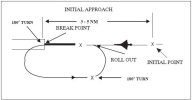
Here's how to get 100% agreement and compliance: Ban all entries except the Overhead Break. Everybody can head for the Initial point from any direction. Everybody will be happy and a side benefit will be less congestion due to all the mid-airs.

Overhead Break.jpeg
 
Here's how to get 100% agreement and compliance: Ban all entries except the Overhead Break. Everybody can head for the Initial point from any direction. Everybody will be happy and a side benefit will be less congestion due to all the mid-airs.

View attachment 144023
And a heck of a lot more fun!
 
Here's how to get 100% agreement and compliance: Ban all entries except the Overhead Break. Everybody can head for the Initial point from any direction. Everybody will be happy and a side benefit will be less congestion due to all the mid-airs.

View attachment 144023

Add AAA for anyone not joining via the break and now you’re talking compliance.
 
Here's how to get 100% agreement and compliance: Ban all entries except the Overhead Break. Everybody can head for the Initial point from any direction. Everybody will be happy and a side benefit will be less congestion due to all the mid-airs.

View attachment 144023

I know you made the suggestion somewhat TIC, but IMO that is actually the best entry when arriving on upwind direction. Just adjust your break point to fit into the flow of traffic on downwind. The only difference between that and the "upwind arrival" advocated by others is turning break before you reach crosswind.
 
Last edited:
Back
Top