Dana
Final Approach
Probably digested from a previous POA thread...You mean, "Below is a bunch of crap from dozens of SGOTIs summarized and cleaned up so it sounds definitive."
That's all AI is.

Probably digested from a previous POA thread...You mean, "Below is a bunch of crap from dozens of SGOTIs summarized and cleaned up so it sounds definitive."
That's all AI is.

Wait, what??? Who's saying they're doing that? I wouldn't agree with that either, descending to pattern altitude in the pattern is definitely not a good idea.I don't have any problem with arriving on upwind. However, I take issue with the term "entering". On the upwind, you have not entered the traffic pattern yet. You are at a different altitude than the rest of traffic, so you still have to merge with them.
I love it! It is one of the few times I've agreed with AI when it comes to aviation.Below is an interesting tidbit from AI. Of course the tool is not a definitive source it does however give food for thought.

AI does need taken with a grain of salt regardless of topic.I love it! It is one of the few times I've agreed with AI when it comes to aviation.
Usually you get an answer that sounds right when you gloss over it. But when you go back and really read what came from AI, there is frequently a little slip that makes the answer totally wrong or misleading.

Wait, what??? Who's saying they're doing that? I wouldn't agree with that either, descending to pattern altitude in the pattern is definitely not a good idea.
When I enter on the upwind, I enter on the upwind, at TPA.

AI does need taken with a grain of salt regardless of topic.



Whether you are descending into the pattern, or flying level above ascending aircraft, the effect (and the risk) is the same.
No, you're not "above ascending aircraft" because the upwind leg is not over the runway.
So even more maneuvering over a noise-sensitive neighbor, parachute jump zone, etc?If there's an ascending aircraft, it's easy to to turn away and circle back around.
You are on the crosswind.
So even more maneuvering over a noise-sensitive neighbor, parachute jump zone, etc?
Also true for the midfield entry.
And being on the downwind as some crosswind climbs aren't finished until the plane is on downwind.

Yes, because no one in the history of flying patterns has EVER climbed into the downwind.Wrong. FAA defines downwind as being at pattern altitude.

You load up a tired 152 at gross on a 6000+ DA day, you are going to be climbing into the downwind from crosswind,

Well, if that's the case, according to the FAA, you aren't in the pattern!Flying patterns in a Champ, under those conditions, you might still be climbing (or attempting to) while turning base ...
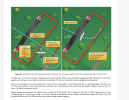
Well, you were in the traffic pattern until this most recent FAA change... And in spite of the graphic, they have not changed the textual description, so I'd say you're still in the pattern.I'm not saying that. I'm saying you are not yet in the traffic pattern in the upwind, even though you are at "pattern altitude".
You are not in the traffic pattern until you have merged with the other traffic. Traffic on the upwind and legs is climbing from the runway. That is the FAA definition. See the OP.
Thus, you have not entered until somewhere on the crosswind leg.
But if you're on an upwind, you are offset to the non-pattern side of the runway so that you can see the aircraft below you, so the risk is not the same, it's much lower as the aircraft below you are by definition going to be either on the runway or relatively in line with it.Whether you are descending into the pattern, or flying level above ascending aircraft, the effect (and the risk) is the same.
How so?
This is true. But are you going to then continue straight ahead and leave the area or are you going to turn Crosswind which *IS* crossing over the departing traffic. But there's still the issue of Descending in (what used to be called) the Upwind. What if I'm in a Cessna and the plane in front of me doesn't clear the Rwy or I'm just too close AND.... Climb and shift over to the (old) Upwind? I'd probably not see you in a low wing either, but I'm never going to see you in a high wing.No, you're not "above ascending aircraft" because the upwind leg is not over the runway.
You're crossing over the airport at TPA with planes ascending below you.
What about those who were in the pattern when the rule changed?Well, you were in the traffic pattern until this most recent FAA change...
But I'm still unclear why anyone would use a NON STANDARD, NON APPROVED entry into the pattern.
Wrong. I've been at pattern altitude from departure at midfield a number of times at uncontrolled fields. So it's definitely not the safest place to cross. The safest place to cross would be where you can keep all traffic in your vision, and that isn't the place. Also, you don't ****ing turn to crosswind there if someone just departed. It's like you guys think, "If I fly an upwind, I just turn here for crosswind, and hope everyone gets out of my way." Yeah, no.At midfield, any aircraft below you are either on the runway, about to touch down, or have just taken off. That's why it is the safest place to cross.
On the crosswind, other aircraft are within 300 feet of pattern altitude, aligned on the same track with you, and climbing with their back to you. That is why it is the least safe place to cross.
Okay, got it. Not really interested in safety. Any chance you've gotten this theory from flying a sim where you just push start again?Because the FAA has their head up their ass with the approved pattern entry. The 45 to downwind is straight out of Retardsville unless you are already out there.

No. It comes from being a flight instructor, multiple ratings, thousands of hours, and having a brain. I am interested in safety and explained why the 45 is a HORRIBLE procedure. What is your reason for saying it is the best way to enter from the non-pattern side other than "The FAA said so."Okay, got it. Not really interested in safety. Any chance you've gotten this theory from flying a sim where you just push start again?
Have a good day.
I think you are forgetting to say the "teardrop" part. You aren't saying a standard 45 entry is bad, are you?No. It comes from being a flight instructor, multiple ratings, thousands of hours, and having a brain. I am interested in safety and explained why the 45 is a HORRIBLE procedure. What is your reason for saying it is the best way to enter from the non-pattern side other than "The FAA said so."
I will have a good day when idiots start using their brain and realize the FAA way sucks total ass, other than just parroting their horrible suggestions. I already explained why it sucks. You ignored that, not surprising considering what I've seen you post.
So, got anything that actually shows why putting yourself blind to the pattern is safer than keeping your eyes in the pattern?
I am saying it is bad when coming from the non-pattern side of the airport. Landing south, left traffic, and you are coming in from the east, 45 entry away. You aren't putting your back to the airport environment in that situation. You keep everything (mostly) in front of you. The other problem (although not from a safety issue, just a regulation issue ) is the whole 91.113 says that the 45 plane has the right of way, but the AIM says it doesn't. Regulation trumps suggestion. You also have the issue with 91.126(b)(1). All turns are to be to the left (assuming left traffic). Making that turn onto downwind is as Judas Priest would say, "breakin the law, breakin the law."I think you are forgetting to say the "teardrop" part. You aren't saying a standard 45 entry is bad, are you?

While I may not use as strong language as EdFred, this is definitely my observation and experience with 45 degree entries unless you happen to be somewhere on that side of the field already. The busiest non-towered fields I frequent nearly scare the cr@p out of myself at times when I feel obligated to wander out a few miles from the field and do a teardrop entry to the 45, losing sight of everything while doing it, and hoping the situation hasn't changed drastically by the time I'm in position again. Throw in a mix of piston singles, a jet or two, and a couple helicopters and it feels like shaking the Magic 8-Ball for what you'll see by the time you're back in the airport environment. More than a few times, because of how the situation has changed while maneuvering the 45 entry, I've had to abandon the attempted pattern entry, go back out again and try again. There are many times that doing an upwind entry would make infinitely more sense because I could maintain visual on what is evolving, but because of perceived "norms" I won't do it.So you acquire all the traffic in the pattern, go fly out to bum****sville to descend, losing sight of all previous traffic. Now you are out there not knowing if someone else has now joined the pattern or taken off because you have your back to it, and then you have to try and find everyone again once you do turn around. Oh, and the best part, the right of way rules. Now it ****s everything up because now the 45 guy - who isn't in the pattern - now has the right of way by regulation.
Not just 500 above, but 500 above the highest pattern altitude, and quite a few fields have TPA at 1500 for the faster movers.The other problem with the teardrop entry is that few do it correctly and few CFIs teach it correctly (mine didn't). You're supposed to cross the airport at least 500' above TPA, maintain that altitude while flying several miles beyond the pattern, then descend to TPA, then turn onto the 45. Too many pilots do a descending turn directly to the 45 and close in.
Not just 500 above, but 500 above the highest pattern altitude, and quite a few fields have TPA at 1500 for the faster movers.
Turn from the crosswind to the downwind prior to pattern altitude is not FAA recommended.And being on the downwind as some crosswind climbs aren't finished until the plane is on downwind.

While I may not use as strong language as EdFred, this is definitely my observation and experience with 45 degree entries unless you happen to be somewhere on that side of the field already. The busiest non-towered fields I frequent nearly scare the cr@p out of myself at times when I feel obligated to wander out a few miles from the field and do a teardrop entry to the 45, losing sight of everything while doing it, and hoping the situation hasn't changed drastically by the time I'm in position again. Throw in a mix of piston singles, a jet or two, and a couple helicopters and it feels like shaking the Magic 8-Ball for what you'll see by the time you're back in the airport environment. More than a few times, because of how the situation has changed while maneuvering the 45 entry, I've had to abandon the attempted pattern entry, go back out again and try again. There are many times that doing an upwind entry would make infinitely more sense because I could maintain visual on what is evolving, but because of perceived "norms" I won't do it.
The chief-offending airport for this is French Valley (F70), which is now scheduled to get a NFCT, something that is long overdue.
And people never drive over the speed limit, ever.Turn from the crosswind to the downwind prior to pattern altitude is not FAA recommended.
While there could be a revision, AOPA references AIM stating that turn to the crosswind should happen before 300 feet of reaching pattern altitude on the departure.
======================================
"Only one line in this section of the AIM talks about the first turn a pilot is expected to make: “If remaining in the traffic pattern, commence turn to crosswind leg beyond the departure end of the runway within 300 feet of pattern altitude.”
Turning crosswind: When’s the right time?
www.aopa.org

Do you have a link to the reference, I've looked for such to no avail....there is case law that says a right turn within 5 miles is a violation.