The FAA changed the definition of Upwind

AV8R_87

En-Route
Joined
Feb 1, 2024
Messages
3,628
Location
NE USA
Display Name
OC
Upwind Leg− A flight path that begins after departure and continues straight ahead along the extended runway centerline. Upwind leg is an extension of departure and is used when issuing control instructions for separation, spacing or sequencing.

Also changed in the AIM, with the following explanation:
This change realigns the AIM definition and graphic depiction of upwind leg at towered airports with current ATC use and expectation. ATC usage of upwind leg is an extension of departure. The AIM’s current definition of upwind has led to confusion among pilots and controllers. The new proposed graphic depiction of upwind in FIG 4−3−1 as well as the definition in 4−3−2c aligns with common usage at towered airports.
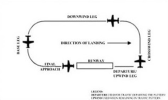
1754567588353.png


For reference, the old leg definitions:
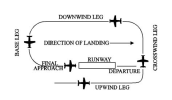
1754567746464.png

I'm not sure I like this change. While a bit of a nothingburger in towered operations, there's no quick and simple way to call "old upwind" anymore when side-stepping from finalin an untowered environment.

Based on the usual reasons for that maneuver, can we just call it the "upyours"?
 
Calling something the same thing but changing what it is, is usually a "non-backwards compatible" way of doing things and doesn't let people that don't study new rules know there's a change. They should have called it "Lateral" or something. Them if someone said they went "final to lateral", people could think "I've never heard that, let me see if it's in the FAR/AIM" (.. people still use that, right?).
 
Why not just say "sidestep"? In spite of the "old" version, not sure I would have inferred a call of upwind as sidestepped to the right. I've never heard anyone call "departure" when they are on the leg between take off and turning crosswind.
 
Why not just say "sidestep"? In spite of the "old" version, not sure I would have inferred a call of upwind as sidestepped to the right. I've never heard anyone call "departure" when they are on the leg between take off and turning crosswind.
What do you call it when you enter the pattern on the "upwind" leg?
 
So it’s like the word “literally.” It was used so often to mean something other than literally that they changed the definition.
 
So it’s like the word “literally.” It was used so often to mean something other than literally that they changed the definition.
Now I am confused, did they literally change the definition of literally or not? :biggrin:
 
I wonder if they’re just wanting to not imply that flying parallel to the runway on the upwind side then entering the pattern on the crosswind is ok, which is what I think some pilots thought the old graphic depicted.

When I was flying down in central California the “crosswind entry” was popular and it was only the fact that few of the little podunk airports had any traffic that kept the number of midair’s and near misses down.
 
I've used the upwind entry once or twice. I remember one time in particular, there was a student solo in the pattern doing touch and goes. For spacing and my direction of flight, it just seemed like a good idea to enter on the upwind, because the timing of her next "go" would put her on downwind about the same time I'd be on the upwind and we'd be about as far apart from each other as possible. I had her in sight the whole way, we were both talking to each other, and everything worked out. Crossing at midfield would have let me cut in front, it would have been close, but there was no hurry and I didn't want to spook a student by coming in from that direction without her being able to see me. I didn't want to enter at the crosswind because of the potential conflict, so I'd have to maneuver a bit. It was all good.
 
I've used the upwind entry once or twice. I remember one time in particular, there was a student solo in the pattern doing touch and goes. For spacing and my direction of flight, it just seemed like a good idea to enter on the upwind, because the timing of her next "go" would put her on downwind about the same time I'd be on the upwind and we'd be about as far apart from each other as possible. I had her in sight the whole way, we were both talking to each other, and everything worked out. Crossing at midfield would have let me cut in front, it would have been close, but there was no hurry and I didn't want to spook a student by coming in from that direction without her being able to see me. I didn't want to enter at the crosswind because of the potential conflict, so I'd have to maneuver a bit. It was all good.

I've used upwind entries a few times for similar reasons - when traffic in the pattern already made it make sense. When I have done upwind entries though, I do it (and announce it) as being 500' above the TPA and then descend on the crosswind to TPA, being very mindful of departing traffic. I've found the alternative, going over the top of the airport above the TPA and turning for a 45 to downwind, to be more hazardous in some circumstances.

I've never found it confusing when tower has instructed me to continue my "upwind" before turning. Always seemed very obvious to me. This revised definition will ultimately just cause confusion in the long term at non-towered airports.
 
Hmmm. I've used it, in fact I used it a couple of weeks ago coming back from Osh. Uncontrolled field, RWY 18 in use coming in from the North. Pattern was a beehive so the safest way join the pattern without some kind of kabuki dance course reversal was to enter at TPA on the upwind and fly a full pattern -- easy pezzy and safe. YMMV....
 
I’ll admit, I wasn’t aware of the original definition. To me, the upwind leg always referred to the departure leg. The other one - the one with the side-step - was just something you did during a go-around. I didn’t realize it had a specific name. So from my perspective, this change actually aligns the definition with what I always understood.
 
Like some others, I never head the term "departure leg" when I was training (and as best I can recall, have never used it), and found the fairly recent "upwind" vs "departure leg" squabble silly. I guess for a while there, "upwind" meant some kind of offset, but I never thought of it that way.

Basically, it looks like the "new and improved" nomenclature comes down to its use at nontowered airports, with "upwind" meaning, I'm remaining in the pattern" and "departure leg" meaning, "I'm leaving."

OTOH, how people actually use it might be a completely different story.
 
I wonder if they’re just wanting to not imply that flying parallel to the runway on the upwind side then entering the pattern on the crosswind is ok, which is what I think some pilots thought the old graphic depicted.
A ****-poor pattern entry.
OK, educate me. What is "wrong" or unsafe with entering on an upwind (old definition)?

When I was flying down in central California the “crosswind entry” was popular and it was only the fact that few of the little podunk airports had any traffic that kept the number of midair’s and near misses down.
What was the "crosswind entry" exactly, and why do you think it was unsafe?

Like some others, I never head the term "departure leg" when I was training (and as best I can recall, have never used it), and found the fairly recent "upwind" vs "departure leg" squabble silly. I guess for a while there, "upwind" meant some kind of offset, but I never thought of it that way.

Basically, it looks like the "new and improved" nomenclature comes down to its use at nontowered airports, with "upwind" meaning, I'm remaining in the pattern" and "departure leg" meaning, "I'm leaving."

OTOH, how people actually use it might be a completely different story.
Given that what was called the upwind doesn't even have a name any more, I'm probably just going to call it... Let's see, it's opposite the downwind leg, so it makes the most sense to call it... Upwind!
 
A bad idea?

Something I never do.

A ****-poor pattern entry.

I honestly don’t know what is so dangerous.

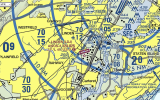
Either way, I hope you guys don’t fly into LDJ and if you do, I hope they’re not using 9, because that’s the approved way to get in.

IMG_5494.jpeg

 
Yes, given the airspace around there, a different pattern entry makes sense. Having said that, joining the pattern where airplanes are climbing seems to not make a ton of sense 99% of the time.
Screenshot 2025-08-07 at 3.19.08 PM.png
 
Given that what was called the upwind doesn't even have a name any more, I'm probably just going to call it... Let's see, it's opposite the downwind leg, so it makes the most sense to call it... Upwind!
Except I have no idea where that is other than over the runway or where it would be used.
 
OK, educate me. What is "wrong" or unsafe with entering on an upwind (old definition)?


What was the "crosswind entry" exactly, and why do you think it was unsafe?


Given that what was called the upwind doesn't even have a name any more, I'm probably just going to call it... Let's see, it's opposite the downwind leg, so it makes the most sense to call it... Upwind!

You can enter how ever you want. The AIM only suggests 2 preferred methods for entering the pattern at a non-towered airport, the 45 and mid-field direct.

I see people entering the pattern in all kinds of different ways, many of them nothing like what the AIM describes. Crosswind entry is just one more way to do it that is not described in the AIM.

If you're doing it and you're sure you're not conflicting with other traffic good for you. But, if you make the same kind of entry, only somewhere over the runway, you could call it a mid-field direct and it'd be very much like what is described in the AIM. To each his own I guess.
 
Seems to me if you fly an instrument approach and break it off to join the pattern, you side step to the upwind, er opposite of the downwind and work your way in. Right? Don't think we've made the communications clearer here.
 
Seems to me if you fly an instrument approach and break it off to join the pattern, you side step to the upwind, er opposite of the downwind and work your way in. Right? Don't think we've made the communications clearer here.

I usually just continue the approach and do the touch & go and remain in the pattern to avoid exactly something like that. I suppose you could do a "low approach" and turn crosswind at the appropriate time. Depending on where you're at, you might want to watch out for helicopters and gliders over there.
 
The primary reason I've literally used the upwind leg (that other side of the downwind depicted in the so called incorrect old graphic) is when I end up having to move over there for some reason. Like breaking off a practice instrument approach for an aircraft taking the runway or when arriving from the opposite side of the pattern and determine that the over the top flyover is not safe to do. (You know, that cool maneuver where you look down at the beehive of traffic and have to reverse course and sneak into the half-ninety (45) entry without getting in someone's way). As long as you know what the departing traffic is going to do or have a plan on when to turn the crosswind, an upwind, 'er sidestep, shouldn't be forbidden. If your beautiful upwind is deflated by a more refined pilot, you can always have them copy of number (that neat thing ATC gets to do) so you discuss it with them later. I've even done it when when I'm the only airplane in the pattern at an unfamiliar airport and I want to scope out the airport like an eagle. :eek:. OK, my sarcasm posting will now be turned off.
 
I honestly don’t know what is so dangerous.

Either way, I hope you guys don’t fly into LDJ and if you do, I hope they’re not using 9, because that’s the approved way to get in.

View attachment 143756

There are other airports that do that
 
Seems to me if you fly an instrument approach and break it off to join the pattern, you side step to the upwind, er opposite of the downwind and work your way in. Right? Don't think we've made the communications clearer here.

We can just use symbols. So "when you fly an instrument approach and break it off to join the pattern, you side step to the" symbol the leg formerly known as downwind.jpg "and work your way in."

Introducing symbol the leg formerly known as downwind.jpg (the leg formerly known as upwind).
Coming soon: symbol the leg formerly known as crosswind.jpg (the leg formerly known as crosswind),

symbol the leg formerly known as downwind.jpg (the leg formerly known as downwind), and
symbol the leg formerly known as base.jpg (the leg formerly known as base).
 
Last edited:
I usually just continue the approach and do the touch & go and remain in the pattern to avoid exactly something like that. I suppose you could do a "low approach" and turn crosswind at the appropriate time. Depending on where you're at, you might want to watch out for helicopters and gliders over there.
Maybe, at our field approach cut's you loose pretty close. With 5 flight schools on the field 5-6 in the pattern is pretty normal just popping in on final can be exciting on a VMC day
 
This is a distinction without a difference. Once most pilots get past the departure end of the runway they can't stay on the centerline, so anything pointed that way should be "Upwind".
 
I've used upwind entries a few times for similar reasons - when traffic in the pattern already made it make sense. When I have done upwind entries though, I do it (and announce it) as being 500' above the TPA and then descend on the crosswind to TPA, being very mindful of departing traffic.
I always discourage my students to enter the airport traffic area 500 feet above the pattern. It is easier to see and be seen by other traffic if you are at pattern altitude when you arrive. Descending in the pattern is dangerous, and remember that jets and turboprops fly their pattern 1,500 feet AGL. Flying a crosswind at mid-field is a good technique as long as you are avoiding any downwind traffic, because departing aircraft are very unlikely to climb to your altitude over the middle of the runway, but they might be a conflict if you fly crosswind off the departure end.
 
I always discourage my students to enter the airport traffic area 500 feet above the pattern. It is easier to see and be seen by other traffic if you are at pattern altitude when you arrive. Descending in the pattern is dangerous, and remember that jets and turboprops fly their pattern 1,500 feet AGL.
Amen!
Flying a crosswind at mid-field is a good technique as long as you are avoiding any downwind traffic, because departing aircraft are very unlikely to climb to your altitude over the middle of the runway, but they might be a conflict if you fly crosswind off the departure end.
Ouch. You were doing so good up to then. I guess it's a "choose your poison" kind of Hobson's choice. We are talking about a collision over the Potomac in another thread due to a 90° intercept angle. Neither crew had time to avoid the collision after seeing the other aircraft. Yeah, I know, not at pattern altitude. But what I'm saying is the angle of convergence is the similarity. Slow merging traffic has more time. Entering upwind, when coming from the other side, gives LOTS more time to identify and space between departing aircraft.
 
Back
Top