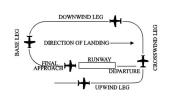
The FAA changed the definition of Upwind

A bad idea?

Hardly. It's a good entry when coming from the non-pattern side of the airport, as it does not risk collision with pattern traffic, it affords a good view of the runway and the pattern, and it's easy to abort from when necessary. I use it fairly often.
 
I think a 45 degree to the upwind should be the corollary to the 45 to the downwind when approach8ng the airport from the opposite side. I think the midfield crosswind and midfield overflight methods both present unnecessary maneuvering risks.

I think that's what you meant to write, and I agree with you.
 
You can enter how ever you want. The AIM only suggests 2 preferred methods for entering the pattern at a non-towered airport, the 45 and mid-field direct.

I see people entering the pattern in all kinds of different ways, many of them nothing like what the AIM describes. Crosswind entry is just one more way to do it that is not described in the AIM.

If you're doing it and you're sure you're not conflicting with other traffic good for you. But, if you make the same kind of entry, only somewhere over the runway, you could call it a mid-field direct and it'd be very much like what is described in the AIM. To each his own I guess.
Here's the scenario that popped up in my head. I frequently make the trip from my home drome to the east to C29, with the direct path seen in blue below:
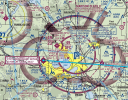
Screenshot 2025-08-08 at 3.07.48 AM.png
I call Madison Approach about 25nm east of MSN. They run operations either North (36, 3, 32) or South (18, 21, 14) at MSN. The way ATC works there, Tower is allowed to just send out departures without notice to the TRACON in whichever of those two directions, with IFR departures going up to 5000 in the middle third (for which the TRACON should already have a strip and be aware) and VFR departures in the outer two thirds, for which the TRACON needs to protect the airspace.

If they're operating to the North, it's not as big a deal - They may just have to keep me out of the way of traffic. If they're operating to the South, they have to be ready for things to pop up off MSN with zero notice up to 3,000 feet. So, they'll frequently restrict me to "maintain at or above 3500" until I'm far enough past MSN that they don't have any concerns about anyone coming up under me, generally when I'm over Lake Mendota.

More often than not, the winds are going to be westerly and C29 is going to be landing runway 28, usually with a few Cessnas in the pattern. There's no way I'm landing 28 on a straight in if ATC just dropped me 3-5 miles from the field at 3500 feet... And when I crank in enough of a descent just to get down to TPA, I'm screaming into the pattern at 180 knots or so anyway. But ye olde teardrop isn't a good pattern entry from that angle either, it's lots of random maneuvering in an area likely to have other planes randomly maneuvering; the big towers to the south also limit where you can go should a conflict develop. So, I enter "on the upwind", parallel to runway 28, offset just far enough that I can see any traffic on final, on the runway, or on the departure leg, then turn crosswind and downwind while waiting for speed to drop, and from there drop the gear and continue the pattern as normal.

And that is the safest method to enter the pattern in that scenario, IMO. Nothing wrong or unsafe or not "ok" about it.
I wonder if they’re just wanting to not imply that flying parallel to the runway on the upwind side then entering the pattern on the crosswind is ok, which is what I think some pilots thought the old graphic depicted.

 
My mechanic s based in Santa Paula, CA. Here's a couple of pictures from the KSZP web site showing the preferred traffic pattern. Upwind legs (defined the old way) are part of the pattern.
ee7139bff165208f9a1bbadbccc20041.jpg

911d0f8aff9d72fe1e0381b0b089a2fd.jpg
 
Before entering on an upwind, I'll do straight in or veer off to the side plenty away from the airport and do a 45 entry to the downwind. I'd rather be away from the airport until I get the lay of the land and entering in a standard way. Upwind entry, depending on how you define it, would be against traffic in the downwind for the opposite runway, something I wouldn't want to do. Not even at a higher altitude. I'm not a fan of descending into the pattern either.
 
Before entering on an upwind, I'll do straight in or veer off to the side plenty away from the airport and do a 45 entry to the downwind. I'd rather be away from the airport until I get the lay of the land and entering in a standard way. Upwind entry, depending on how you define it, would be against traffic in the downwind for the opposite runway, something I wouldn't want to do. Not even at a higher altitude. I'm not a fan of descending into the pattern either.
That’s a valid logic. But there are places where, because of terrain, there is simply no room to do that.
 
My mechanic s based in Santa Paula, CA. Here's a couple of pictures from the KSZP web site showing the preferred traffic pattern. Upwind legs (defined the old way) are part of the pattern.
ee7139bff165208f9a1bbadbccc20041.jpg

911d0f8aff9d72fe1e0381b0b089a2fd.jpg
I remember Kern Valley L06 having something very similar, but I can’t find the graphic
 
IMO straight in makes more sense than upwind entry. You are doing extra maneuvering for what purpose?

If you do want to enter the pattern, turning at midfield makes more sense than turning crosswind.

The problem with crosswind entry is that you are potentially merging with climbing and turning aircraft. All kinds of blind spot issues there.

I think I get the FAA thinking here. There is no upwind arrival leg because you are not in the pattern yet. You still have to merge with traffic.
An upwind pattern entry is just getting time and space parallel to the runway to figure out the safest point is to make the crosswind turn. You have a great view of the runway, departing traffic, traffic on crosswind, downwind, as well as a good view of the 45 entry to the downwind, with plenty of options to bail if their is traffic. Doing a midfield crosswind entry, you’re nose to nose with the 45 entry to downwind.
 
I think the whole reason pattern entries aren't strictly regulatory is that there are innumerable scenarios and we're expected to exercise good judgement. We can (and do) go around in circles for pages and pages with these discussions with "what about this situation" comments vs the "but the AIM says....." crowd. IMO one should know the AIM preferred entries and try to use them but also pay attention to the situation and not be so rigid as to bypass options that make more sense for the given situation you find yourself in.

As for the whole "upwind" thing I guess I'm learning something new(or I guess old) here because I was always under the impression that the upwind leg and departure leg were the same thing. I've never even heard about this parallel "upwind" entry before.
 
I've never even heard about this parallel "upwind" entry before.
The drawing you seem to be referring to has been in the AIM forever. IIRC, it's in the section on airport operations at tower-controlled fields and is specifically noted that it is not guidance on how to enter the traffic pattern. It was for terminology and is correct, imo. Whoever came up with "Notices to Air Missions" probably had a hand in this change too. Hope it meets the same fate.
 
As for the whole "upwind" thing I guess I'm learning something new(or I guess old) here because I was always under the impression that the upwind leg and departure leg were the same thing. I've never even heard about this parallel "upwind" entry before.
In the Airplane Flying Handbook published by the FAA, it says: "The upwind leg is a course flown parallel to the landing runway, but in the same direction to the intended landing direction. The upwind leg continues past a point abeam of the departure end of the runway to where a medium bank 90-degree turn is made onto the crosswind leg. The upwind leg is also the transitional part of the traffic pattern when on the final approach and a go-around is initiated and climb attitude is established. When a safe altitude is attained, the pilot should commence a shallow bank turn to the upwind side of the airport. This will allow better visibility of the runway for departing aircraft."
 
As for the whole "upwind" thing I guess I'm learning something new(or I guess old) here because I was always under the impression that the upwind leg and departure leg were the same thing. I've never even heard about this parallel "upwind" entry before.

I thought that same thing for about 20 years, and was finally corrected by a guy checking me out in a club 172 about a decade ago. I feel like it's a pretty common misconception. Well, *was* a misconception. ;)
 
Upwind entry, depending on how you define it, would be against traffic in the downwind for the opposite runway, something I wouldn't want to do.
If there's traffic for the opposite runway, the upwind is the least of your worries.

Also, upwind isn't on the opposite downwind. It's much closer to the runway, just far enough to be able to see the traffic on the runway and/or departing so that they don't climb into you. It shouldn't be so far away that the opposite downwind is a concern at all.

IMO straight in makes more sense than upwind entry. You are doing extra maneuvering for what purpose?
Shedding extra speed/altitude in some cases, potentially fitting into the traffic flow in other cases. For example, I'll call a straight in, but I'll sometimes defer to preexisting traffic depending on the situation. If there's a 172 on base that's gonna turn final 1/2 mile in front of me, I'll just sidestep to the upwind and fly the pattern.

If you do want to enter the pattern, turning at midfield makes more sense than turning crosswind.
There are good arguments for both, but...

The problem with crosswind entry is that you are potentially merging with climbing and turning aircraft. All kinds of blind spot issues there.
You should be able to see those aircraft before you get to the crosswind, though. You have a view of the entire pattern the entire time you're on upwind.

I would suggest that the best technique isn't to worry so much about whether your crosswind is midfield or off the departure end, but to use the upwind to pick your "hole" in the traffic and turn wherever you need to to fit in said hole while maintaining the maximum distance from other traffic.
 
Also, upwind isn't on the opposite downwind. It's much closer to the runway, just far enough to be able to see the traffic on the runway and/or departing so that they don't climb into you. It shouldn't be so far away that the opposite downwind is a concern at all.
I’ll agree to disagree. Too many pilots can’t or at least don’t follow a runway heading for ****.
 
Hardly. It's a good entry when coming from the non-pattern side of the airport, as it does not risk collision with pattern traffic, it affords a good view of the runway and the pattern, and it's easy to abort from when necessary. I use it fairly often.
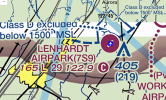
So...how would you enter the pattern at this airport, K7S9, when landing on Runway 02?
The accepted practice is either a 45 to a left upwind for rwy02 or a midfield crosswind and turn directly onto downwind. Pattern altitude is 1000' MSL.

1754691343213.png
 
I just love the folks doling out judgement from their high horses because someone is doing something that is not in their bag of tricks. So easy to dismiss people as dangerous or uniformed - (look out for that mirror....)

For those that haven't flown GA outside of the states, be thankful that we have the ability to make judgement decisions. Flying under IFR-like rules all the time and having ATC dictate every movement of our airplanes is how the other half lives. Sometimes it makes sense to do an upwind entry (or a downwind, or a cross wind, or <gasp> direct to base entry). Situation and situational SA dictates so much of our wonderfully gray rules; food fights only push us into tighter corners. Take a deep breath and say it with me "it's ok if people have different techniques than me.... it's ok if people have different techniques than me..."
 
Take a deep breath and say it with me "it's ok if people have different techniques than me.... it's ok if people have different techniques than me..."

Yes and no. Some level of baseline uniformity is necessary to keep people from running into each other.

There is plenty of data and experience to indicate the least risky traffic merge is two aircraft at the same altitude in level flight at an oblique angle. The most risky merge is one aircraft descending onto another along the same path. The FAA agrees, which is why their preferred entry point is midfield downwind.

It's not overly alarmist in a discussion about pattern entries to observe that some entry techniques increase the odds of putting climbing and descending aircraft into proximity.
 
I just love the folks doling out judgement from their high horses because someone is doing something that is not in their bag of tricks. So easy to dismiss people as dangerous or uniformed - (look out for that mirror....)

For those that haven't flown GA outside of the states, be thankful that we have the ability to make judgement decisions. Flying under IFR-like rules all the time and having ATC dictate every movement of our airplanes is how the other half lives. Sometimes it makes sense to do an upwind entry (or a downwind, or a cross wind, or <gasp> direct to base entry). Situation and situational SA dictates so much of our wonderfully gray rules; food fights only push us into tighter corners. Take a deep breath and say it with me "it's ok if people have different techniques than me.... it's ok if people have different techniques than me..."
If that doesn’t work at first, then…….

 
Whoever came up with "Notices to Air Missions" probably had a hand in this change too. Hope it meets the same fate.
Or they could just use notams as a common word and drop “spelling it out”, just like with radar and laser. Officially change Notice To Air Missions to Notams.
 
Also what's an appropriate (or inappropriate) pattern entry for a fast mover may not be for a slow plane, and vice versa.
 
Yes and no. Some level of baseline uniformity is necessary to keep people from running into each other.

There is plenty of data and experience to indicate the least risky traffic merge is two aircraft at the same altitude in level flight at an oblique angle. The most risky merge is one aircraft descending onto another along the same path. The FAA agrees, which is why their preferred entry point is midfield downwind.

It's not overly alarmist in a discussion about pattern entries to observe that some entry techniques increase the odds of putting climbing and descending aircraft into proximity.
Discussion is great - it makes us all better. Saying something is outright dangerous and should never be done is rarely 100% accurate. There are a few things but something as dynamic as pattern entry can have 1000 safe answers. I am definitely encouraging discussion; the judgement doesn't encourage discussion.
 
Discussion is great - it makes us all better. Saying something is outright dangerous and should never be done is rarely 100% accurate. There are a few things but something as dynamic as pattern entry can have 1000 safe answers. I am definitely encouraging discussion; the judgement doesn't encourage discussion.
Did someone say something is outright dangerous and should never be done?
 
Did someone say something is outright dangerous and should never be done?
I took some literary license I suppose, but comments like:

"A bad idea"
"A ****-poor entry to the pattern"
<paraphrase> Your explanation was so close to being correct but you're wrong because I disagree

May not say outright that something is dangerous, but I argue that at best they do not promote an even-keeled discussion of techniques.
 
Before entering on an upwind, I'll do straight in or veer off to the side plenty away from the airport and do a 45 entry to the downwind. I'd rather be away from the airport until I get the lay of the land and entering in a standard way. Upwind entry, depending on how you define it, would be against traffic in the downwind for the opposite runway, something I wouldn't want to do. Not even at a higher altitude. I'm not a fan of descending into the pattern either.
1) How do you define "upwind"?
2) Not the image below, from the first post. Except for calm days, and direct crosswinds how often are both runways preferred? In calm days or direct crosswinds, the downwind for one runway is the upwind for the other one.
1754771570278.png
 
...The problem with crosswind entry is that you are potentially merging with climbing and turning aircraft. All kinds of blind spot issues there....
That could be true when flying a low-wing airplane, but when flying a high wing, I have found seeing traffic climbing on the departure leg/new upwind to be relatively easy.
 
In calm days or direct crosswinds, the downwind for one runway is the upwind for the other one.
Well... not exactly. A typical upwind is flown much closer to the runway than a downwind. Similar to the sidestep recommended on a go-around. Close enough to keep the runway in sight. Even the diagram in your post shows it is closer than a downwind.
 
Well... not exactly. A typical upwind is flown much closer to the runway than a downwind. Similar to the sidestep recommended on a go-around. Close enough to keep the runway in sight. Even the diagram in your post shows it is closer than a downwind.
Please tell this poster...I was responding to what he wrote.
Upwind entry, depending on how you define it, would be against traffic in the downwind for the opposite runway,
 
WOW!!!! Did AI or a NON pilot do that?! So if I'm opposite the Downwind at Pattern Altitude and I in the "Negative Downwind"?

And there was an issue with the also very obvious Departure Leg???
 
Upwind and downwind for the opposite runway are in the same direction.

Example: upwind for runway 09 is 90 degrees. Downwind for runway 27 is also 90 degrees.
 
Upwind entry, depending on how you define it, would be against traffic in the downwind for the opposite runway, something I wouldn't want to do. Not even at a higher altitude. I'm not a fan of descending into the pattern either.
Well... not exactly. A typical upwind is flown much closer to the runway than a downwind. Similar to the sidestep recommended on a go-around. Close enough to keep the runway in sight. Even the diagram in your post shows it is closer than a downwind.

Gil
 
A typical upwind is flown much closer to the runway than a downwind.
Per the new definition your "typical upwind" is not nameless. I'm voting for the "Anti Downwind" :D, unless someone can come up with something better.

I've actually submitted a request to the FAA for the definition of what was the old Upwind.
 
I'm voting for the "Anti Downwind"
When someone does a downwind at the same time, is there annihilation, like most* particle anti-particle pairs?

* photons are their own antiparticles, as are Majorana fermions and maybe some neutrinos.
 
I don't do upwind entries. I'll position for the overhead and execute a tear-drop or direct entry into the pattern depending on traffic.
 
Back
Top