Tear Drop Entry To Pattern

bonefishpete

Cleared for Takeoff
Joined
Nov 10, 2024
Messages
1,360
Display Name
Bonefishpete
My son was taught to use tear drop entry to join the downwind traffic pattern at uncontrolled airports. He still uses them.
I rode with him recently and went to a nearby uncontrolled airport and he used this technique. I was like WTF are you doing.
Am I just an old Boomer?

Flying opposite direction of downwind traffic makes no sense to me.
 
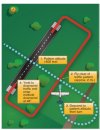
Most teardrop entries are done incorrectly. It's not overfly 500 and make a direct descending turn to downwind. It's overfly by a couple miles. Then descend. Then turn and enter downwind.

For the record... I don't like it either.
IMG_2170.jpeg
 
When I was a youngster I was taught to enter the downwind at a 45 degree angle to the downwind, now understand the tear drop entry.
 
I was taught that, too. I don't like it, and I haven't done it since shortly after getting my private. I'd rather maneuver outside the pattern to get on downwind or enter on a crosswind or mid-field crosswind. I don't like having my tail to the pattern and potentially losing situational awareness.
 
The teardrop, as flown by 90%+ of the pilots, is incorrect and unsafe.

If flown correctly, it's (as stated above) a case of fly a few miles past the airport, descend and enter the pattern on the 45.

At that point, might as well deviate a couple miles away from the departure end and enter on the downwind.

Or just do a direct entry. Slightly above TPA if you're in a high wing, sligtly below if you're a low wing. Minimizes the chances of an aircraft being obscured by your wings.
 
Or just do a direct entry. Slightly above TPA if you're in a high wing, sligtly below if you're a low wing. Minimizes the chances of an aircraft being obscured by your wings.
Or do what I do and do a 10 mi final making calls every mile. I like to start my approach with a "what runway is everyone using" followed by a "meow".
 
Better yet, make an upwind entry.

Ahem...
 
Am I just an old Boomer?
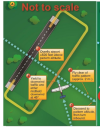
I don't know, but the completely misnamed and improperly flown "teardrop," correctly done, has been the FAA's preferred entry from the upwind side of the pattern for at least as long as this Boomer has been flying.

They probably ought to make the picture to scale to make the point that's it's a crossover to leave the pattern completely and return on a 45.

1759264906186.png
 
Last edited:
They probably out to make the picture to scale to make the point that's it's a crossover to leave the pattern completely and return on a 45.

Amen and amen, and again I say AMEN!

CFIs, including mine, keep teaching that as a descending turn onto the downwind. Instead of calling it a "teardrop entry," maybe we should start calling it the "go somewhere else, descend, turn, and come back on the 45" entry.
 
Teardrop, really? Do not get me started...

1759264814132.png


Seriously, I would love to have a face-to-face debate with an FAA-type person about the "teardrop" pattern entry. I think it is an awful idea. I'm not a CFI, but I've been flying for 36 years now, and I cringe at the fact that this is the "preferred method" in the FAA handbook. Just calling it "teardrop" creates confusion with a teardrop entry to a holding pattern, which is a real, defined thing. At least the FAA doesn't officially call it a teardrop, they just call it the "preferred method". Give me a whiteboard, a marker and a microphone and I'll spend 10 minutes explaining why I think it's a bad idea. I've never heard anyone explain why it is good.

I was originally taught that when approaching from the "other side of the airport" to descend to pattern altitude and then fly wide around the airport, outside the traffic pattern to position myself for the 45°entry to the downwind. I was taught to think ahead, and decide how I would get myself where I need to be for the standard pattern entry. Somewhere during my training a CFI showed me the midfield crosswind entry as an alternate method to join the pattern from the opposite side. The midfield crosswind entry has been my preferred method when approaching from the opposite side of the airport ever since.

What I wasn't taught, and what I wouldn't do is make my plan to fly over the top of the airport (at either 500' above, or higher if there is turbine traffic -- more confusion) then go out beyond the pattern 2 miles or so (is that from the runway or from the downwind? more confusion) then descend straight ahead into an area where planes may be coming toward me as they approach the airport trying to find that spot about a mile or two out on the 45° intercept to the downwind, so that they can do the standard pattern entry. Yeah, I'm going to descend right there into those guys. Then I'm going to turn right 235°to get on the 45° entry to the downwind. I'm going to make THAT turn in an area where planes will all be gathering to join the standard pattern entry. Uh....NO. [mic drop]
 
I don't know, but the completely misnamed and improperly flown "teardrop," correctly done, has been the FAA's preferred entry from the upwind side of the pattern for at least as long as this Boomer has been flying.

They probably out to make the picture to scale to make the point that's it's a crossover to leave the pattern completely and return on a 45.

View attachment 145623

I still continue to perform this proper teardrop entry if the pattern is busy so I can get a good view of the furball below. I fly plenty clear of the pattern after the midfield overflight. I don't see the problem if someone chooses this entry. But what do I know, I fly a high wing......
 
When I was flying around in Arizona last winter, it appeared that the flight schools taught the teardrop entry. So incredibly annoying as they were also doing b52 patterns. Apparently they teach students to tie up the radio for 5 minutes making 1 radio call.

Personally I think the teardrop entry is stupid. I have never done one, ever!
 
Low wingers are allowed the "overhead break" ...

We did overhead patterns constantly in the C-130 (high wing) for several reasons. In formation, it gave us good spacing. In combat, it kept us higher and faster until over the (presumed) safer air base.

I discourage my students from doing the teardrop. I don't like turning my back to the pattern, no matter how far away when approaching to land.
 
I just finished flight school. If on apposite side of the downwind, they always wanted a teardrop entry crossing mid field 500+ above pattern altitude. Sometimes it didn't make sense to me because it would be quicker/easier to join the 45 without crossing over. Field was usually not very busy 0-3 other planes. The examiner asked me to loop around, do an extended downwind and not cross over. So am I to assume either is GTG.
 
When I was flying around in Arizona last winter, it appeared that the flight schools taught the teardrop entry. So incredibly annoying as they were also doing b52 patterns. Apparently they teach students to tie up the radio for 5 minutes making 1 radio call.

Personally I think the teardrop entry is stupid. I have never done one, ever!
It’s frustratingly common to hear fright school planes making calls at 10 miles out, seven miles, 4.5 miles, entering downwind, established on downwind, turning base, base, final, short final (30 seconds out), clearing the runway, taxiing. Of course there are three others in the pattern doing the same. And they all specify “nautical miles” on their distance calls. Which is good, because when they call seven west it could be the seven counties west of the runway where they like to fly downwind.
 
Most teardrop entries are done incorrectly. It's not overfly 500 and make a direct descending turn to downwind.
At one towered airport, the direct descending turn to downwind is the preferred noise abatement procedure. However, tower tells everyone to do an "overhead join", not a "teardrop".
I was originally taught that when approaching from the "other side of the airport" to descend to pattern altitude and then fly wide around the airport, outside the traffic pattern to position myself for the 45°entry to the downwind.
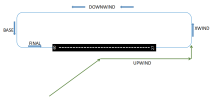
I was taught to fly overhead and outbound for 2 miles, turn 90 degrees, fly another 1 mile and then turn back to the 45. However, flying outside the traffic pattern to position myself for the 45 is how my technique has seemed evolved on its own.
 
I just finished flight school. If on apposite side of the downwind, they always wanted a teardrop entry crossing mid field 500+ above pattern altitude. Sometimes it didn't make sense to me because it would be quicker/easier to join the 45 without crossing over. Field was usually not very busy 0-3 other planes. The examiner asked me to loop around, do an extended downwind and not cross over. So am I to assume either is GTG.

If you fly over the pattern at plus 500 feet, you are at the altitude for jet and turboprop airplane patterns. May not be an issue close in, since they fly bigger patterns due to higher speeds, but....
 
Back in the day, before AWOS, you didn’t know which direction was downwind until you overflew the field (500’ above TPA) and saw which way the windsock pointed. Then, if you were fortunate and on the downwind side, fly out two miles from the downwind leg (not the rwy), descend, and enter on a 45. If you really did it precisely, you would fly 2 miles in the upwind direction to ensure you were on a 45. If you were unfortunate and on the wrong side, you did a 180, flew two miles the other way, and did the descent and 45 entry. I don’t recall that procedure having a name, like tear drop, but I don’t remember a lot from 1986.

I don’t think people realize what a game changer AWOS was/ is. The newer mid-field direct entry from the opposite side of the (known) downwind takes advantage of AWOS for efficiency in the pattern, and I take advantage of it when the pattern is not crowded. When it is crowded, I revert to the procedure above.

I agree a tight-in teardrop turn is dangerous.

Whether or not to do it 500’ above TPA is a debate for another thread.
 
The book is pretty clear. If you're gonna cross midfield to join the 45 entry, you've gotta be above pattern altitude at least 500', you've gotta fly for 2 miles beyond the runway before descending to pattern altitude, then you turn back to make a "45 entry". A "tear-drop" entry is for holding patterns, not airport traffic patterns. But hey, it's all "recommended" anyway. Do what ever the hell you want just stay outta my way, and I'll stay outta yours.
 
If you fly over the pattern at plus 500 feet, you are at the altitude for jet and turboprop airplane patterns. May not be an issue close in, since they fly bigger patterns due to higher speeds, but....
Hadn't thought about that. Will run it by the instructor see what he says. Field doesn't have much jet traffic, usually they land straight in.
 
Back in the day, before AWOS, you didn’t know which direction was downwind until you overflew the field (500’ above TPA) and saw which way the windsock pointed.
AWOS? I flew NORDO for seven years. Had to use the windsock, though too often there was someone who would land the other way because it was more convenient for their hangar.

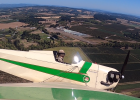
Nice thing about the teardrop is that it gives an excellent view of upwind, crosswind, and new downwind traffic for high-wing airplanes. Wing toward the potential conflicting traffic is high. I always tried to fly a straight 45 (even at the end of a teardrop) to maximize the potential for spotting traffic with my low-wing airplane. Open cockpit helps a lot.

Don't know how guys with closed-cabin airplanes handle it; it's like flying inside a rolled-up carpet....
1759286477285.png

Ron Wanttaja
 
Most teardrop entries are done incorrectly. It's not overfly 500 and make a direct descending turn to downwind. It's overfly by a couple miles. Then descend. Then turn and enter downwind.

For the record... I don't like it either.
View attachment 145616

Yea, if you are a hamburger hopper arriving in level flight 500 ft above pattern altitude for this entry it is not very pleasant. The question is why were you flying at 1500 AGL approaching the airport in the first place?

It’s not over fly the pattern 500. It overfly the pattern by more than 500, hopefully 2000 feet more in a descent using the speed to create the distance and reaching patten altitude before the turn.
 
Back
Top