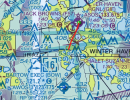
Tear Drop Entry To Pattern

(b) Direction of turns. When approaching to land at an airport without an operating control tower in Class G airspace—

At what point do you become “…when approaching to land…”? X number of miles from? When you begin your descent from cruising altitude? When you first make a position report say you are out there and coming in?
There is case law where the FAA violated a commercial airline pilot for making a right turn to final 2 miles from the airport. But, at the same time the FAA advises both in the AIM and in their pilot training materials a right hand turn from the 45° entry to the downwind that typically occurs within 1 mile of the airport.

As most violations, the FAA is going to apply the regulation on a situation to situation basis. Following reccomended procedures isn’t a violation, not following recommended procedures can be.
 
I flew into KCUB a couple weeks ago for a "$100 pizza", and a 172 in front of me elected to (sorta) do the teardrop procedure for RWY 31. To do it correctly and more safely they'd have had to be in or near the C surface area of Columbia. I think this would've been a good opportunity for the CFI (could tell it was a training flight once we were on the ground) to demonstrate a direct crosswind or mid-field crosswind entry, which is what I was setup to do until I realized we'd end up nearly nose-to-nose. I climbed and gave them altitude and a little lateral spacing, but it was a late and unfortunately I ended up having to do a similar dumb maneuver to keep spacing. I feel like a little common sense regarding entry and politeness in the pattern goes a long way.

1759520684636.png
 
Here's my pattern entry a couple of days ago. Not normally my thing, was going for a 45° entry but a Bo was doing a circle-to-land practice approach from the other direction (winds calm) so we just decided to make it easy for him! I did take off from the preferred calm wind runway. Didn't intentionally draw a fetal shape.
View attachment 145678
This looks like a guy bent over with explosive diarrhea.. :D :D
 
I thought I was supposed to call 20 mile final?
Only if you fly a Cirrus

Also, every single entry is going to have some amount of risk do like so many things in life, the answer to this question is.......it Depends
 
(b) Direction of turns. When approaching to land at an airport without an operating control tower in Class G airspace—

At what point do you become “…when approaching to land…”? X number of miles from? When you begin your descent from cruising altitude? When you first make a position report say you are out there and coming in?
Why is the turn into the downwind any different than any other turn in the pattern?
 
I followed a Career Crap airplane in the other day. He crossed mid-field, saying he was going to overfly the airport and do a teardrop. I crossed mid-field after he did, then turned directly into downwind. He asked, "you're not doing a teardrop" and I answered "no". He said he'd do a 360 for spacing. I laughed and told him I'm already on downwind and you haven't even turned around yet. I'm not in your way. I landed and made it to my hangar before he touched down.

Georgetown is our nearby Class D airport where two of the big ripoff schools are based, but the tower won't let them do tngs all day so they flood our airport and then have the nerve to complain about the traffic!
I was following a student and cfi. They announced final while I was downwind. Then suddenly I see them make a right hand turn. Wtf. Then they announce a 360 for spacing. Ummm what?? It's just us 2 and I'm behind you? ok.... I'll guess I'll turn base? Then they announce they were leaving the area.

I had eyes on them the whole time cuz they had some other pattern weirdness while I was approaching and on frequency.

A polite where are you going (?) would have been in order. Sometimes a little chat at an uncontrolled airport is a good thing...
 
I just love "bucky 123 overflying the field for a right teardrop to join the 45 for the left downwind for runway 23" radio call. Meanwhile, 2 planes have entered the pattern and landed and a Cirrus is on a 15 mile straight in final...
 
A polite where are you going (?) would have been in order. Sometimes a little chat at an uncontrolled airport is a good thing...
I omitted my request. But it went unanswered.
 
I'm sure this has been hashed out but the problem is the phrase teardrop "entry" because your entry to the pattern is when you join the downwind leg, not the 45 which is what you're supposed to be getting yourself on with the teardrop maneuver. The idea is to get yourself to the other side of the airport above the pattern then drop down and enter in the usual manner.
 
Like many things, this is dependent upon the situation and the particular airport. My home drome is KGIF. Take a look at the figure below.

1759612805242.png

The distance from the center of KGIF to the beginning of the KBOW delta (the red line) is about 3.5 miles. When approaching from the north and intending to land on, for example, runway 29, to fly the teadrop entry you will have to fly two miles beyond the pattern, then descend (another mile or so), and then begin the right turn. It's virtually impossible to do this without intruding into the delta.

A teardrop for landing on 23 isn't much better.

Plus, maneuvering close to the KBOW delta at low altitude can easily create a conflict with KBOW traffic. Typically, there is also a lot of flight school traffic in the KGIF pattern.

I find that an upwind entry works better in this circumstance and it allows more room and options for maneuvering as necessary.
 
Last edited:
There is case law where the FAA violated a commercial airline pilot for making a right turn to final 2 miles from the airport. But, at the same time the FAA advises both in the AIM and in their pilot training materials a right hand turn from the 45° entry to the downwind that typically occurs within 1 mile of the airport.

As most violations, the FAA is going to apply the regulation on a situation to situation basis. Following reccomended procedures isn’t a violation, not following recommended procedures can be.
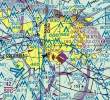
How far up the food chain did that case go? Did it get above an Administrative Law Judge?
 
Of course, the pattern direction isn't helped by the fact that the AIM gets it wrong when referring to the segmented circle. I've reported the error a while back but never heard back from them.
 
I flew into KCUB a couple weeks ago for a "$100 pizza", and a 172 in front of me elected to (sorta) do the teardrop procedure for RWY 31. To do it correctly and more safely they'd have had to be in or near the C surface area of Columbia. I think this would've been a good opportunity for the CFI (could tell it was a training flight once we were on the ground) to demonstrate a direct crosswind or mid-field crosswind entry, which is what I was setup to do until I realized we'd end up nearly nose-to-nose. I climbed and gave them altitude and a little lateral spacing, but it was a late and unfortunately I ended up having to do a similar dumb maneuver to keep spacing. I feel like a little common sense regarding entry and politeness in the pattern goes a long way.

View attachment 145727
Rather difficult to do a tear drop to 31 with 1 mile of area under the shelf.
 
Of course, the pattern direction isn't helped by the fact that the AIM gets it wrong when referring to the segmented circle. I've reported the error a while back but never heard back from them.
:dunno: Other than the entry point drawn wrong in Fig. 4-3-2, what's wrong with the segmented circle?
 
But, at the same time the FAA advises both in the AIM and in their pilot training materials a right hand turn from the 45° entry to the downwind that typically occurs within 1 mile of the airport.
Someone questioned the Right Turn to ENTER the Downwind and there is a Legal Interpretation that confirms it is okay to make a Right Turn to ENTER the downwind. And then once in the Downwind, all turns must be to the Left (except when there is a Right Downwind depicted).

So the turn INTO the Downwind does not go against the requirement for all turns to (typically) be to the Left while IN the Downwind.

As for the guy that was sited. I think there was more to it, possibly even that they cut people off or they created an unsafe situation. But I don't remember the specifics.
 
:dunno: Other than the entry point drawn wrong in Fig. 4-3-2, what's wrong with the segmented circle?
This statement:
Similar treatment of the indicator at the departure end of the runway will clearly indicate the direction of turn after takeoff.

This is wrong for an airport that has left traffic for both runways or right traffic for both runways (and YES, the latter does exist with segmented circles). It only holds true if the runways keep all the traffic on the same time (i.e., both left or both right traffic).
We'll have to agree to disagree. It's been that way forever and makes perfect sense. That some airport managers came along and put flags at both ends in opposite directions, i.e., indicating a figure eight pattern, and that such a ridiculous figure actually made its way into the PHAK caused me to write a letter of complaint. Mine went unanswered too. I've always looked at the flags from the departure point of view not the arrival. After all, noise is louder taking off. Both ends need to point the same way, else how can you stay in the pattern without crossing over in an "eight"?
 
Last edited:
Of course, the pattern direction isn't helped by the fact that the AIM gets it wrong when referring to the segmented circle. I've reported the error a while back but never heard back from them.
Other than the entry point drawn wrong in Fig. 4-3-2, what's wrong with the segmented circle?
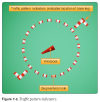
I'm a bit confused on what you guys are talking about. And I don't see any errors in the current AIM drawings.

And if you're referring to Fig. 4-3-2 and being an ENTRY diagram, it's not. It is just showing the basic parts of the Pattern. So if you were to fly Closed Traffic, you'd Takeoff and turn to enter the "Crosswind" part. Then you'd turn again to join the "Downwind," turn again for the "Base" and then finally turn to "Final." The diagram shows the Standard Left Pattern, but it could be switched around for those airports that have Right Traffic.

Bottom line though is the diagram just shows the basics.
 
The previous 3 pages is exactly why if it works out for me, I’m doing a 10 mile straight in.

Too many trainers at my airport all doing wacky stuff at 80mph.

I was one of those that made fun of the Cirrus on 20 mile finals, but I’ve joined their ranks.
 
I'm a bit confused on what you guys are talking about. And I don't see any errors in the current AIM drawings.
You're supposed to enter downwind at mid-field not the departure end. The disagreement is about the flags on the segmented circle. I'm saying they apply to both departure and arrival paths and only get depicted when an opposite runway requires right-hand traffic. I.e., there shouldn't be any "both ends of the runway have right-hand traffic" like some airport managers have declared. See: https://www.faa.gov/documentLibrary/media/Advisory_Circular/150_5340_5d.pdf
Note that these requirements should be posted on every airport bulletin board (I didn't even know that).
 
Last edited:
I'm a bit confused on what you guys are talking about. And I don't see any errors in the current AIM drawings.
Read my follow up post. The problem isn't the drawing. It's an incorrect statement in the text.
 
What do you see wrong with it, for an airport with left traffic for both runways?
 
Last edited:
"Practice RNAV GPS Approach Runway XX"
No approaches at my home field. Under the class B with a D just to the NW and two deltas to the south. Very tight maneuvering or your busting somebody’s airspace or getting in the way of somebody’s approach path into a delta.

Perfect place for six flight schools
 
Whad do you see wrong with it, for an airport with left traffic for both runways?
For one, you aren't supposed to show left traffic on a segmented circle because it's standard. For another, a "pattern" includes both takeoff and landing, like when you stay in the pattern for touch and goes. Following this depiction, you'd be crossing over the airport in a figure "8" because the text has been consistent for at least sixty years I know of — it applies to departures too.
 
For one, you aren't supposed to show left traffic on a segmented circle because it's standard.
I'm not familiar with that - do you have a reference to the FAR or AIM?
Following this depiction, you'd be crossing over the airport in a figure "8".
I think I see what might cause the confusion. There is a little note on top of that picture, stating "indicates location of base leg". It's only that, and on both ends of the segmented circle. It does not depict the crosswind on the other end, but the base leg for that landing direction.

It would only be shown on the same side at both ends if one runway was LP and the opposite was RP.
 
You must have missed my link in post 102:
I did. Thank you for pointing it out.

I will add one thing, though. ACs are just that, advisories. An airport could elect to install a segmented circle for left patterns, it would probably fall under the "non-standard markings" in the chart supplement.
 
I did. Thank you for pointing it out.

I will add one thing, though. ACs are just that, advisories. An airport could elect to install a segmented circle for left patterns, it would probably fall under the "non-standard markings" in the chart supplement.
Sure, why not. Everybody else in this thread does their own thing, why not airport managers too? :rolleyes1:
 
So, you don't find this picture incorrect?
View attachment 145828
The picture is fine. It shows LEFT traffic on the both runways. But the text in the AIM I quoted is wrong. You do not turn based on the L at the departure end of the runway. This would indicate a RIGHT turn here, but the regulations and common sense tells you that you need to turn left.

Usually, they won't show an indication as above, because the lack of L's indicates left traffic. There is at least one airport I found with RIGHT traffic to both runways (i.e. the L's are flipped compared to the picture). This demonstrates the problem with that sentence in the AIM.
I see you missed my link too. Oh well...
 
Everybody else in this thread does their own thing, why not airport managers too? :rolleyes1:
The graphic is non-standard either because the writer didn't want to confuse a student pilot or because he forgot about that AC.

But if I'm an airport manager and I have two neighboring airports with non-standard patterns, I might consider installing it even if my pattern is standard.
Better SA, even if not within the letter of the AC.
 
My son was taught to use tear drop entry to join the downwind traffic pattern at uncontrolled airports. He still uses them.
I rode with him recently and went to a nearby uncontrolled airport and he used this technique. I was like WTF are you doing.
Am I just an old Boomer?

Flying opposite direction of downwind traffic makes no sense to me.
I prefer to do a direct entry when overflying the field at the runway mid-point.
 
The graphic is non-standard either because the writer didn't want to confuse a student pilot or because he forgot about that AC.
More likely the author was the lowest bidder. The AC is the official guidance. It shouts out in BOLD TYPE that the traffic pattern flags only apply to right-hand patterns. Ergo, all the depicted flags in the AC's example figures are right hand not indicating left-hand. Therefore, they show both departure and arrival turns, as confirmed by the arrows going both ways. To do it contrary to the guidance only serves to confuse those (like me) who properly understand what these signify.
 
ou're supposed to enter downwind at mid-field not the departure end.
Umm... Yes. So again, what's you're point about Fig 4-3-2 which DOES NOT SHOW and HAS NOTHING TO DO WITH Midfield Overhead Entry to the Pattern.

If you're confusion is that you think it is showing the Midfield Overhead Entry down at the Crosswind portion of the standard Pattern, it is NOT. That drawing is the basic diagram that has been around forever that shows the 45 degree entry to the Standard Pattern, the recommended ways to leave the Pattern and the basic parts of the Pattern. It does not show the Midfield Overhead Entry.
 
So, you don't find this picture incorrect?
Not at all. But I'm going to take a wild guess you think that the traffic should stay on ONE side of the airport. So it would be Left Traffic for one Runway and Right Traffic for the opposite Runway. That is incorrect.

Except for a few airports that have Right Traffic to some of their runways, ALL Turns once you have entered the Pattern are TO THE LEFT. Does not matter if you are landing Rwy 4 or Rwy 22. This is what the diagram you think is incorrect is actually CORRECTLY showing.

And there could be some other Airports because of terrain, noise abatement or any number of reasons, where Rwy 4 has Standard Left Traffic, but Rwy 22 has Right Traffic. So in that NON STANDARD situation, the Traffic will stay on the same side of the Runway. And this is a VERY DANGEROUS situation if you get one person that misses which way the wind is coming from OR if there is a preferred Calm Wind Rwy, they may enter the Pattern head on with the other traffic.
 
Back
Top