Tear Drop Entry To Pattern

Yea, if you are a hamburger hopper arriving in level flight 500 ft above pattern altitude for this entry it is not very pleasant. The question is why were you flying at 1500 AGL approaching the airport in the first place?

It’s not over fly the pattern 500. It overfly the pattern by more than 500, hopefully 2000 feet more in a descent using the speed to create the distance and reaching patten altitude before the turn.
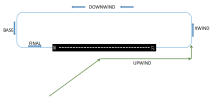
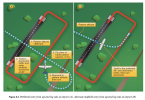
I'm well aware of what the entry should look like. I linked the photo directly from the phak.

Overflying by 2000 ft above pattern is ridiculous and would probably put you in the yellow arc while trying to slow down for pattern speeds. And I doubt pax like a -2000 fpm descent

You question 1500 agl and say it's unpleasant. Why? What makes it unpleasant? Most likely you descended from a higher altitude and hit the +500 number just before overflight. The phak alternative is a pattern altitude crosswind entry. Which is 500-700 below the teardrop +500 recommendation
 
Old school plus you get a really good look at the runway conditions.
And look for the wind sock.
With no one else seen or heard in the pattern, nothing wrong (IMO) with approaching the runway perpendicular and crossing the departure end of the runway on the upwind, with a great view of the airport and the active downwind before you enter it.

Approaching the airport from the opposite side of the downwind I find this to be a safe method to view what's happening (or not happening) on the field (including the windsock) while approaching the airport environment.

Don't understand why there's any need to fly an upwind parallel to the active runway and downwind (as pictured - in the same direction as departures) before turning onto the crosswind just past the departure end.

Instead, just position your aircraft to enter the crosswind perfectly perpendicular to the runway, right over the end of the departure runway, looking down at the reciprocal runway numbers with a great view of the active downwind and any aircraft approaching or already on it.
1759326425388.png
 
I'm well aware of what the entry should look like. I linked the photo directly from the phak.

Overflying by 2000 ft above pattern is ridiculous and would probably put you in the yellow arc while trying to slow down for pattern speeds. And I doubt pax like a -2000 fpm descent

You question 1500 agl and say it's unpleasant. Why? What makes it unpleasant? Most likely you descended from a higher altitude and hit the +500 number just before overflight. The phak alternative is a pattern altitude crosswind entry. Which is 500-700 below the teardrop +500.


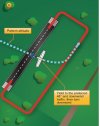
All the FAA is suggesting is fly over the TPA, descend, turn and enter on a normal 45° to the pattern. You should be established on the 45° entry at least 2 miles from the airport. That means you have cleared traffic, are properly aligned and have made a radio call for the 45 more than 2 miles from the airport.

Pilots in a rush find themselves in a poor ADM situation turning too close to the airport with things happening quickly entering the pattern. Fly higher, use the airspeed a descent provides to create distance and then return.
 
At a very busy Class Delta in the Denver area, it was common to be given a “Cross mid-field, make RIGHT traffic for Runway 17R, traffic ahead of you is…” et etera. But not Pete Cetera. Like I said, this was Denver, not Chicago.
 
All the FAA is suggesting is fly over the TPA, descend, turn and enter on a normal 45° to the pattern. You should be established on the 45° entry at least 2 miles from the airport. That means you have cleared traffic, are properly aligned and have made a radio call for the 45 more than 2 miles from the airport.

Pilots in a rush find themselves in a poor ADM situation turning too close to the airport with things happening quickly entering the pattern. Fly higher, use the airspeed a descent provides to create distance and then return.
A rush back straight to the airport to keep the Hobbs meter from piling up time and end up in a poor ADM situation? What's wrong with approaching the airport using a 3+ mile wide circle around to the downwind side, then entering downwind at 45 degrees at the proper altitude? In either case the plane is still miles away from the airport racking up billable time, and affording the pilot more time to look for traffic while getting oriented.
 
If traffic density allows, I like to make a direct midfield crosswind entry at 1,000 AGL. It's much easier to spot traffic at or above your altitude than below.

With people flying giant bomber patterns in trainers, it's tough to know how wide of a berth to give an airport when approaching from a weird direction and trying to circumnavigate to the correct side for a 45-to-downwind entry.
Same. This is the alternate method to the teardrop in the phak.

As has been mentioned, the teardrop puts you at the same altitude as larger aircraftIMG_2174.jpeg
 
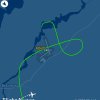
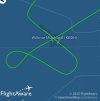
I just looked at the Flightaware logs for three trainers I often hear on frequency in this area, and for each airplane I found an example on the first page of a descending ~270° turn right into downwind. These are all high-wing trainers, so they're beginning the teardrop descent belly-up to any traffic joining on the 45 and likely ending the maneuver with the right wing down, blocking their sightline. Drives me nuts.
 

Attachments

  • IMG_5106.jpeg
    IMG_5106.jpeg
    68 KB · Views: 28
  • IMG_5107.jpeg
    IMG_5107.jpeg
    81.2 KB · Views: 28
  • IMG_5108.jpeg
    IMG_5108.jpeg
    92.9 KB · Views: 28
99% of the time I enter by method B. If the pattern is busy, I'll go out and come back in on a 45. Someone else mentioned crossing at the departure end of the runway (or crosswind entry, but a plane that has done a go-around, or even a plane that climbs quickly, will be less of a factor at midfield.

I think the term 'teardrop' caught most of us older pilots off guard. I remember I was flying with another pilot the first time I heard it and we were both confused. I honestly thought they were crossing mid-field at a 45, then doing a teardrop shaped turn into base/final.

We used to say, "crossing over mid-field and entering the pattern on a 45." Now they say, "crossing over mid-field for a right-hand teardrop into the left downwind".
Screenshot 2025-10-01 at 2.52.54 PM.png
 
Back in the day, before AWOS, you didn’t know which direction was downwind until you overflew the field (500’ above TPA) and saw which way the windsock pointed.
Back in the days before AWOS, we had plenty of other wind direction (and speed) indicators…trees, grass, crops, water, smoke…
 
What if I climbed up to 2k feet over pattern altitude above the airport and just spiral descent down in into the 45 of the downwind leg. I think fixes the issues of not being able to see the traffic because I think we should be able to get at least 2-3 360 degree views of the pattern.
 
What if I climbed up to 2k feet over pattern altitude above the airport and just spiral descent down in into the 45 of the downwind leg. I think fixes the issues of not being able to see the traffic because I think we should be able to get at least 2-3 360 degree views of the pattern.
Inverted would be better.
 
Same. This is the alternate method to the teardrop in the phak.

As has been mentioned, the teardrop puts you at the same altitude as larger aircraftView attachment 145647
There's no regulatory or ther guidance to support hte requirement to yield to the 45 or that such has any preference. Yielding to traffic on downwind here is the general rule for converging (other than head-on or nearly so) traffic.
 
Interestingly enough...Pat Brown had a vlog post with madpropsaero just a couple months ago on this. He's a well known DPE in the HTX area. His thoughts are the crossing at 500' above is one of the danger zones in the regulations, as it mixes you into potentially other traffic that you may not really be aware of, like jet traffic or a neighboring airfield approach, or another airspace altogether (like when it's an airport under a Bravo or Charlie wedding cake). He has recommendations on how to cross the airport, enter the pattern, and other things to be looking for if you're doing a tear drop or other entry type.

 
I've done the teardrop as recommended, but frankly, it's problematic. With a little preplanning, you can arrive at the destination airport in a position to make a less abrupt turn to the 45. I even placed a couple of way points for CJR when I was based there (the raydomes on one side and a point on the NW side for the other side of the pattern) that lets me fly there and make a calmer turn to start the 45.

At my own field, I tend to do a 45-to-upwind with the nromal prevailing wind, however.
 
Teardrop, really? Do not get me started...

Just calling it "teardrop" creates confusion with a teardrop entry to a holding pattern, which is a real, defined thing.
Yeah, I call it the "ampersand" entry: &

Who in their right mind would want to do that?
 
Last edited:
If I’m approaching from the opposite side of the pattern, I usually observe the runway and final looking for potential departures and go directly into a crosswind if it can be accomplished without creating a conflict.

The teardrop entry is appropriately named because it’s a way for slummy flight schools to bill another .1 per flight at the student’s expense and drag out the learning process as a result. Prove me wrong…
 
Our airport has a mix of piston, trainer, turbine, and glider aircraft. If approaching from the upwind side of the airport, crossing midfield and entering the downwind, or doing an upwind entry, whichever looks safer to integrate into the pattern, is the quickest way to get on the ground and out of the pattern. The teardrop entry just increases the potential of a high closure rate conflict while losing sight of the pattern and prolonging time in and around the high traffic areas of the airport. I'd rather fly way around the airport and enter on a 45 than do the teardrop entry. But that is 99% unnecessary.

If approaching the airport on the active runway heading, straight in (gasp!) is the way to go. If the traffic is a little busy, it's best to get on the ground expeditiously to reduce potential conflicts. With everybody talking, it's no problem and everyone sequences themselves sensibly.
 
I followed a Career Crap airplane in the other day. He crossed mid-field, saying he was going to overfly the airport and do a teardrop. I crossed mid-field after he did, then turned directly into downwind. He asked, "you're not doing a teardrop" and I answered "no". He said he'd do a 360 for spacing. I laughed and told him I'm already on downwind and you haven't even turned around yet. I'm not in your way. I landed and made it to my hangar before he touched down.

Georgetown is our nearby Class D airport where two of the big ripoff schools are based, but the tower won't let them do tngs all day so they flood our airport and then have the nerve to complain about the traffic!
 
A rush back straight to the airport to keep the Hobbs meter from piling up time and end up in a poor ADM situation? What's wrong with approaching the airport using a 3+ mile wide circle around to the downwind side, then entering downwind at 45 degrees at the proper altitude? In either case the plane is still miles away from the airport racking up billable time, and affording the pilot more time to look for traffic while getting oriented.
The reason the FAA suggests flying over the airport is the aircraft is not in a conflict with departures or straight in arrivals.
 
Inverted would be better.
When approaching from the “wrong” side of the airport, the proper pattern entry is obviously to cross midfield at TPA +500, pull into a vertical climb, execute a hammerhead turn, do a 1/4 right roll on the down line, and pull to level flight at TPA.

Isn’t that how everyone on POA has been doing it?

(Disclaimer: For cross country flights, make sure you have the proper low altitude waiver and call ahead to establish a legal aerobatic box at the destination airport.)
 
Of course, anywhere else in the world you'd cross midfield and turn downwind making your turns to the left like 91.126(b) says.
Totally agree. Why would I fly two miles out? If the pattern is clear go from midfield turn left to downwind.

Upwind puts you in the path of departing AC... why would you do that?
 
I followed a Career Crap airplane in the other day. He crossed mid-field, saying he was going to overfly the airport and do a teardrop. <snip>

I think this school is largely responsible for popularizing the "teardrop" maneuver, as it is commonly flown contrary to the FAA guidance. They seem to have a lot of incestuous habits, with instructors who trained in-house and have never flown much, if any, outside of that school's training structure.
 
If I’m approaching from the opposite side of the pattern, I usually observe the runway and final looking for potential departures and go directly into a crosswind if it can be accomplished without creating a conflict.

The teardrop entry is appropriately named because it’s a way for slummy flight schools to bill another .1 per flight at the student’s expense and drag out the learning process as a result. Prove me wrong…
Actually it’s a conspiracy to increase profits at the oil refiners and the engine shops. If it were just designed to affect students, the rest of the whiny pilots wouldn’t have anything to cry about.
 
Last edited:
With a little preplanning, you can arrive at the destination airport in a position to make a less abrupt turn to the 45. I even placed a couple of way points for CJR when I was based there (the raydomes on one side and a point on the NW side for the other side of the pattern) that lets me fly there and make a calmer turn to start the 45.
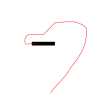
Like this?
Clipboard.png
 
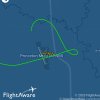
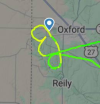
Here's my pattern entry a couple of days ago. Not normally my thing, was going for a 45° entry but a Bo was doing a circle-to-land practice approach from the other direction (winds calm) so we just decided to make it easy for him! I did take off from the preferred calm wind runway. Didn't intentionally draw a fetal shape.
1759417580908.png
 
I thought I was supposed to call 20 mile final?
 
If the pattern is clear go from midfield turn left to downwind.
What if somebody is coming straight at you, planning on doing the same thing you are, but for the opposite runway? And neither of you see the other because you two have the highest possible closing speed and lowest possible frontal areas? Not to mention you're each looking right, across the cockpit through the windshield posts rather than straight ahead, for the downwind traffic.
 
Last edited:
I rarely use that PHAK preferred method because the airport I most frequently fly has parachute jumping. When I do, I fly at 500 above turbine traffic pattern altitude unless it's an airport that very likely doesn't get much if any jet traffic (think combination of no AWOS, no IAP, short narrow runway, no Jet-A) flying just as the FAA recommends. But more often I prefer to fly around to join a 45 degree entry. It's easy, doesn't add much time, can watch and listen to the traffic and form a mental picture. Some times and places, you really do have to take a good look at the wind sock.
Radio calls are easy for the so-called tear drop. I don't use that term in flight. "overflying the field at X ft, general direction of flight(north to south, etc)" then "X miles to North/southwest/etc on the 45 to right/left downwind rwy X"
It's not difficult and not particularly unsafe. What is very unsafe are all the bozos coming in to a busy traffic pattern rolling their own random entry that meets their selfish needs, often times announcing their intentions at the last possible minute.
 
Of course, anywhere else in the world you'd cross midfield and turn downwind making your turns to the left like 91.126(b) says.
(b) Direction of turns. When approaching to land at an airport without an operating control tower in Class G airspace—

At what point do you become “…when approaching to land…”? X number of miles from? When you begin your descent from cruising altitude? When you first make a position report say you are out there and coming in?
 
Here's my pattern entry a couple of days ago. Not normally my thing, was going for a 45° entry but a Bo was doing a circle-to-land practice approach from the other direction (winds calm) so we just decided to make it easy for him! I did take off from the preferred calm wind runway. Didn't intentionally draw a fetal shape.
View attachment 145678
Looks a bit Mickey Mouse to me.
 
Back
Top