Student Pilot Question: Should I ban the iPad from the cockpit during PPL training?

FWIW I think part of it depends on your path. If your goal is to become a professional pilot, then I'm kinda thinking you just need to learn enough paper to pass the tests and move forward. But if you're learning to fly just for the fun of it, and you're planning on flying small and simple aircraft for a long time, then I think it's a good idea to become comfortable with flying pilotage and ded reckoning enough to not be in a stressed state if you lose all the electronics.

Also take into consideration your CFI, though. If he's a good guy and he wants to emphasize some things, then trust him to do that. He might have an agenda that you're not realizing - you might be looking down at the tablet too much, for example. VFR flying is mostly about looking outside.

Just the opinion of some guy on the Internet, who has been wrong about more than a few things the past few days, so take that with a grain of salt.
 
BTW, anyone else remember similar discussions when GPS appeared?

There were some flight schools that required GPS remain switched off until the last stages of training to supposedly foster VFR skills.

The policy ended at one school when, on a dual cross country flight, an airplane had an engine failure and landed in a field. Within easy gliding distance of an airfield that would have appeared with NRST.
 
Hi everyone, happy to be here. My name is Alessandro Cotrufo and I’m a student pilot based in Simi Valley, CA, just starting my PPL journey.

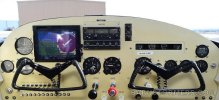
I wanted to get the community's take on a debate I’ve been having with my instructor. I’m naturally more on the tech-savvy side along with most people in my age range, and I’ve already set myself up with a subscription to ForeFlight and an iPad mount.

However, I’ve heard conflicting advice from older pilots at the hangar who say I should ban the iPad from the cockpit entirely until after I get my license to ensure I actually learn dead reckoning and pilotage properly.

Is relying on the "magenta line" really that detrimental to early learning, or is that just an old-school mentality? I want to build safe habits for my future flying in California airspace, but I also don't want to ignore modern tools that increase situational awareness and would generally make me a better pilot.

What did you all do during your primary training? Did you stick to 100% paper charts, or did you mix in the tech?
Alessandro

I haven't read the other comments but thought I'd answer the questions at the end of your post and give my thoughts. I initially took lessons in 1979-80 and restarted in Jan 2004, bought my Cherokee in July and got my pilots license in December. My airplane had twin VORs, an ADF, and GPS 100. The official policy of the flight school was not to use GPS at all during training.

At our flight school all initial navigation was by Pilotage then by Dead Reckoning, followed by ADF and VOR. This was done to ensure understanding and competency in each of these methods. The first skill for pilotage is looking out the window and Identifying an unmistakable landmark and determining your position relative to it. The next concept is Identifying a line of position (like a road or a river) and flying along it at constant speed while timing your movement to determine position. Then you substitute a radio signal for a line of position, combined with DR and Pilotage to spot check your position and time between known unmistakable landmarks. The radio signal is an invisible line of position that can stretch straight over featureless terrain, and your ability to follow it is an important skill to develop. I had a lot of difficulty initially mastering this VOR concept, though simple in theory it can be a monster to understand and execute properly in the ockpit while flying the airplane.

My GPS 100 operated much like a VOR with a distance read out added. The main advantage was that any LAT-LON point on the chart could be used as virtual navigation aid allowing you to fly directly to or away from it. I learned how to use it on my first XC after getting my PPL.

I use GPS in my Mooney now, but being able to seamlessly move to different navigation styles is very important. Two years ago I flew through a GPS hole near Cleveland Ohio. For 30 minutes none of my GPS equipment provided and position data at all. I had a GPS 496, an AERA760, a Garmin GTX345 transponder, and a SPOT Communicator. Not one of these separate devices gave me position or direction during that 30 minutes. The first thing I did was verify my heading and check my DG. Then I pulled up a list of nearest VORs and dialed in a VOR along my heading. I started preparing to complete the 300NM flight using VOR and Dead Reckoning. 30 minutes later everything started working again. Due to this incident I have changed my panel and added ADF as backup. NDBs are going away but AM radio stations aren't, and there is one only 6 miles from my home airport.

I wrote about this incident on POA and I was going to reference it here but I can no longer find the thread. Another member found it under GPS OUTAGE. Take a look at it here
 
Last edited:
Key point - the ipad is just one of the many tools to keep you safe. Like any other tool, it needs to be used wisely, and don't let the tool drive you.
Case in point - a buddy of mine mounts his 10" ipad with a suction mount on the windshield, blocking a good third (if not more) of his outside view. His eyes are glued to the thing 75% of the time.

Don't be like him. Put it in a place where it doesn't block the outside view or primary instrument, keep it in your scan but don't fixate on it. For VFR flying, no more than 10% of your time should be spent looking at it.
Know how to navigate without it, even if not perfect. For example, make a note of a couple big landmarks that can help you get to your destination. Have one or two VORs that you can dial to figure things out if the ipad quits.
I don't carry up to date maps with me anymore either, but I keep a few pages of the chart supplement for common airfields and a few 8x11 pages with parts of sectionals that would help me if nothing else works.
 
I don't carry up to date maps with me anymore either, but I keep a few pages of the chart supplement for common airfields and a few 8x11 pages with parts of sectionals that would help me if nothing else works.
It's been years since I bought an actual sectional, but before I stopped carrying paper charts I would sometimes print out a part of the chart from the online version. Actually, I still do, occasionally, when I just for fun use a chart and leave the electronics off when going someplace that doesn't have any tricky airspace.

When I'm flying around the familiar local area, Avare on my phone is all I need, if I even look at it. Going cross country, I add a tablet (also with Avare) with the phone providing redundancy.

Fun story: Back in the mid 1980s a couple of friends and I decided to fly out 50 miles to lunch, me in my T-Craft, them in I think an Interstate but might've been a Champ or a Cub. Both NORDO, no nav instruments of course. We were flying formation; they were leading. I had been to the destination (I think it was Sky Manor in NJ) but not recently. About halfway there they rocked their wings and waved and beckoned me closer, then made a big show of throwing something (which I afterwards learned was their sectional chart) into the back of the plane. Couldn't quite figure out what they were trying to say, so we just continued on, eventually I spotted the field and landed, they followed.

Turns out they had the wrong chart, and had no idea where they were going. Sheer dumb luck that we were headed in generally the right direction and I recognized the field. On the way home I pulled out the expired sectional that I always kept under my seat, and they followed me home. Good times. :)
 
BTW, anyone else remember similar discussions when GPS appeared?

There were some flight schools that required GPS remain switched off until the last stages of training to supposedly foster VFR skills.

The policy ended at one school when, on a dual cross country flight, an airplane had an engine failure and landed in a field. Within easy gliding distance of an airfield that would have appeared with NRST.
I see far too many flight training emergencies where CFIs are committed to getting the plane to an airport when safer off airport landing options are available. In an engine emergency, the goal of the PIC is to save the souls on board, not save the flight school money. If an CFI calls and advises they had an engine failure, the first question should be is anyone injured, not where is the airplane.
 
Last edited:
I won’t tell you what to do, but I’m of the opinion that the iPad is a distraction if you’re at the beginning and just learning basic airmanship and navigation. It can certainly help with cross country navigation and planning, but learning pilotage and ded reckoning first gives you something to fall back on should your electrical system crap out.
 
How many people still carry paper maps?
My guess is a lot of the students that are using EFBs also still have a Sectional. Maybe they have an EFB on their Phone and iPad, but if not, you're going to need a Sectional backup since some students may not want to foot the bill for two electronic devices.
 
Hi everyone, happy to be here. My name is Alessandro Cotrufo and I’m a student pilot based in Simi Valley, CA, just starting my PPL journey.

I wanted to get the community's take on a debate I’ve been having with my instructor. I’m naturally more on the tech-savvy side along with most people in my age range, and I’ve already set myself up with a subscription to ForeFlight and an iPad mount.

However, I’ve heard conflicting advice from older pilots at the hangar who say I should ban the iPad from the cockpit entirely until after I get my license to ensure I actually learn dead reckoning and pilotage properly.

Is relying on the "magenta line" really that detrimental to early learning, or is that just an old-school mentality? I want to build safe habits for my future flying in California airspace, but I also don't want to ignore modern tools that increase situational awareness and would generally make me a better pilot.

What did you all do during your primary training? Did you stick to 100% paper charts, or did you mix in the tech?
with out reading the rest of the thread here is what I recommend.

Absolutely learn how to use it in the cockpit. You will be using it the rest of your flying career. Plus any more it is the only reasonable way to get current charts.

For Extra credit: do at least one cross country flight either using a paper chart or turn off the GPS feature and all GPS in the Airplane. You will be surprised how challenging this can be. Hint: Paper is actually easier than and EFB with a non-functioning GPS.
You can also save this task for after you get your rating.

Flight planning, Sure learn how to plan a flight using the EFB, BUT, make sure you are capable of filling out a paper navigation log with out it. If you can't fill out a paper navigation log then there are Navigation concepts that you are required to know that you don't understand yet.

Brian
CFIIG/ASEL
 
I would advise to use the iPad but know how to plot a flight on a paper chart and know it well.

When my Dad started flying, they used the old LF/MF Four-Course Radio Ranges. https://harris1.net/hold/av/stories/avionics/radiorange.htm

When I started flying IFR a lot it was VOR, ADF, and later VLF/Omega and Loran. Most of that is gone and before iPads. I remember coasting off the east coast and into the Gulf of Mexico on ADF's. One of my fondest memories is flying from Dallas to Oshkosh with Dad, in our Globe Swift just using ADFs because the VOR did not work in it.

Times change and pilots should also.
 
Last edited:
There's nothing wrong with using all available electronic aids. Just use it, but don't make it a crutch. Having said that, there is a certain level of joy in flying VFR without constantly looking at the little airplane icon on the screen.

Also, you said iPad, but that is not the only platform for EFB's. Android is used by more than half the population.
 
You can't learn muscle memory and judgment from looking down at an iPad. Nope. The last thing we need in aviation is more pilots looking down at a screen rather than outside in VFR. Especially low time students.
 
Last edited:
I see far too many flight training emergencies where CFIs are committed to getting the plane to an airport when safer off airport landing options are available. In an engine emergency, the goal of the PIC is to save the souls on board, not save the flight school money. If an CFI calls and advises they had an engine failure, the first question should be is anyone injured, not where is the airplane.
Aside from the negative assumptions about others’ motivations you create, I’d argue that, all other things being equal, I’d, easy gliding distance to both, landing on a surface intended as a runway is a safer option for the people on board than a field of unknown condition. The heck with the airplane.

This even was more like the joke where the CFI pulls the power over an airport and the student heads to a field next to it.
 
Last edited:
Also, you said iPad, but that is not the only platform for EFB's. Android is used by more than half the population.
Yes, there are excellent Android EFBs out there, but I doubt the rest is true if you are referring to the US pilot population.

Actually, thinking about it, if it were true, you wouldn’t have to have “correct” the comment.
 
Yes, there are excellent Android EFBs out there, but I doubt the rest is true if you are referring to the US pilot population.

Actually, thinking about it, if it were true, you wouldn’t have to have “correct” the comment.

I was mostly pointing to the imprecise terminology - in this case it was implied that iPad = EFB = Foreflight. If the poster had asked "should I ban EFB's from the cockpit", that would have avoided these implied references.

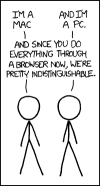
Same thing used to happen to me with computers: PC = Microsoft = Windows. As Linux user I struggled with those implied references.
Gotcha. I just accept the zombiism at this point.
 
Aside from the negative assumptions about others’ motivations you create, I’d argue that, all other things being equal, I’d, easy gliding distance to both, landing on a surface intended as a runway is a safer option for the people on board than a field of unknown condition. The heck with the airplane.

This even was more like the joke where the CFI pulls the power over an airport and the student heads to a field next to it.
The problem is misjudging glide distances and passing a good option to place the aircraft where there are poor options. After personally observing a spin at low altitude by a pilot killing all on board having to extend a glide to clear buildings to get to the airport after they glided over perfectly good fields, you rethink this stuff
 
Last edited:
The problem is misjudging glide distances and passing a good option to place the aircraft where there are poor options. After personally observing a spin at low altitude by a pilot killing all on board having to extend a glide to clear buildings to get to the airport after they glided over perfectly good fields, you rethink this stuff
You are still visualizing something very different form the reality of the situation.

Here's a response based on what I am hearing from you. All I need to do is make up a scenario that's that's different. I know that's not what you said, but I'll disregard that in favor of my own variation.

Gee, it sounds like you would fly into a forest of trees because you saw it rather than fly within the equivalent glide distance to an open field. In fact, you would not even want to know that the open field exists so you can make a choice.

Whatever.
 
I was mostly pointing to the imprecise terminology - in this case it was implied that iPad = EFB = Foreflight.
After I poured coffee from my Thermos, I dropped the mug on my foot. I used a Kleenex to wipe it up and then I put a Band-Aid on my toe. I sealed the broken mug in some Bubble Wrap with some Scotch Tape and then used a Sharpie to label the box I put it in.
 
After I poured coffee from my Thermos, I dropped the mug on my foot. I used a Kleenex to wipe it up and then I put a Band-Aid on my toe. I sealed the broken mug in some Bubble Wrap with some Scotch Tape and then used a Sharpie to label the box I put it in.
I think you are going to get a "cease and desist" letter from multiple trademark lawyers.
 
...Train as you fight, fight as you train... Translated into aviation, this means learn to fly as you mean to continue to fly, ideally with the instrumentation and tech you'll be using during your check ride and afterwards. There's no one handing out cookies after landing for doing it old-school.
I adhere to this line of reasoning, but this means your training should also include practicing loss of the EFB mid flight to ensure you can make the transition from tracking along the magenta line to navigating via analog indicators (VORs) and ground reference. My EFB has failed in mid-flight due to overheating, so it isn't a guaranteed tool in your toolbox. There are lots of options imbedded in most EFB software and training with someone familiar with those options will shorten your path to mastery of the device. That's just one aspect of becoming a competent PIC. Make sure your training gives adequate coverage to all aspects of being boss of the plane. Ask LOTS of questions and practice recovering from issues you may never experience in a normal flight.
 
You are still visualizing something very different form the reality of the situation.

Here's a response based on what I am hearing from you. All I need to do is make up a scenario that's that's different. I know that's not what you said, but I'll disregard that in favor of my own variation.

Gee, it sounds like you would fly into a forest of trees because you saw it rather than fly within the equivalent glide distance to an open field. In fact, you would not even want to know that the open field exists so you can make a choice.

Whatever.
Actually the opposite, your prospective is an airport surrounded by alternate sites where making an error in glide distance judgement has no consequence. When on an XC, the given scenario, the PIC is unfamiliar with obstacles around an unfamiliar airport they opt to divert to + altitude is lost while referencing an EFB and possibly turning 180° to the nearest airport, which depending on ground clutter you may not readily see.

Page 18-2 AFH.
Psychological Hazards

⦁ Desire to save the airplane—the pilot who has been conditioned during training to expect to find a relatively

safe landing area, whenever the flight instructor closed the throttle for a simulated forced landing, may

ignore all basic rules of airmanship to avoid a touchdown in terrain where airplane damage is unavoidable.

Typical consequences are: making a 180° turn back to the runway when available altitude is insufficient;

stretching the glide without regard for minimum control speed in order to reach a more appealing field; and

accepting an approach and touchdown situation that leaves no margin for error. The desire to save the

airplane, regardless of the risks involved, may be influenced by two other factors: the pilot’s financial stake

in the airplane and the certainty that an undamaged airplane implies no bodily harm. There are times,

however, when a pilot should be more interested in sacrificing the airplane so that the occupants can safely

walk away from it.


if you maintain situational awareness with a paper chart, you should be able to ID a close airport without an EFB and a nearest button.
 
Last edited:
if you maintain situational awareness with a paper chart, you should be able to ID a close airport without an EFB and a nearest button.
Paper or iPad doesn't matter. Part of your scan every couple minutes should be "if the engine quits now, where do land?" I'd argue you can do that way better with an EFB than paper (think wind adjusted glide ring). The tool is largely irrelevant to situational awareness, it's the guy or gal in the left seat>
 
I adhere to this line of reasoning, but this means your training should also include practicing loss of the EFB mid flight to ensure you can make the transition from tracking along the magenta line to navigating via analog indicators (VORs) and ground reference. My EFB has failed in mid-flight due to overheating, so it isn't a guaranteed tool in your toolbox.
Agreed! Which is why I said "You need to be able to fly and navigate the aircraft when the tech fails." Using an EFB from the get-go doesn't mean that you don't learn all the other skills, and done properly it won't negatively affect the acquisition and practice of those skills.

It's also important to remember that point-to-point navigation is only part of the EFB's utility. The airspace around which OP is flying is complex and busy, with significant amounts of turboprop and jet traffic, as well as a heavy GA training presence. Improved SA regarding airspace boundaries and especially other aircraft via ADSB is a significant safety improvement. I have a hard time justifying giving that up just to prove that you can identify a lake that looks like a boot next to a road.

Again, fully agree that student pilots need to be taught and drilled on flying fundamentals. I just don't agree that the EFB can't be used as part of that teaching.

On another note, I'm increasingly hearing of people building/optioning aircraft without nav radios since they don't think they need VOR/ILS capability in the WAAS GPS world. A GPS outage/degradation would be an interesting conundrum for those folks if in IMC. I guess you'd just have to ask for vectors to a VMC airport?
 
After I poured coffee from my Thermos, I dropped the mug on my foot. I used a Kleenex to wipe it up and then I put a Band-Aid on my toe. I sealed the broken mug in some Bubble Wrap with some Scotch Tape and then used a Sharpie to label the box I put it in.

I had to Google that.
 
Last edited:
After I poured coffee from my Thermos, I dropped the mug on my foot. I used a Kleenex to wipe it up and then I put a Band-Aid on my toe. I sealed the broken mug in some Bubble Wrap with some Scotch Tape and then used a Sharpie to label the box I put it in.

You make an interesting point. But I think there is a difference. You can say "I am going to the store to buy some Kleenex" and come back with a generic box of tissues. But I don't think someone going shopping for an iPad + Foreflight will come home with an Android + Avare and assume they are all the same.
 
You make an interesting point. But I think there is a difference. You can say "I am going to the store to buy some Kleenex" and come back with a generic box of tissues. But I don't think someone going shopping for an iPad + Foreflight will come home with an Android + Avare and assume they are all the same.
As an engineer I tend to be excessively anal about proper terminology, only to have my wife describe her Android tablet as her "iPady thing". :no:
 
My opinion is that one uses the tablet and VFR charts, but ease into it. Turn off the GPS, and use the VFR chart the same as a paper chart. You'll need to keep track of your position manually be looking out the window and moving the chart manually. After pilotage is learned, start introducing the automation. Learn the failure modes of whatever you use and have a backup (software on a phone, paper charts, or whatever), and learn how to use that as well.

I once flew to lunch and left the ipad in the plane in summer. It overheated shortly after takeoff and I simply used my knowledge to start home. I Flew roughly in the direction of the airport knowing that I would intercept the Platte river or I-80. Once I hit one or the other, I would follow it home. I had foreflight on the phone (the software license allows 2 devices) but I didn't use it. After I climbed into cooler air, the ipad worked again. No big deal. But this is an example of how to deal with the loss of automation- think about it just as you might think of an engine loss.
 
But I don't think someone going shopping for an iPad + Foreflight will come home with an Android + Avare and assume they are all the same.

to have my wife describe her Android tablet as her "iPady thing"

My wife simply calls it her iPad.

Brand dilution is already happening for Apple, despite their attempts to prevent it. As we can see fom the above replies.
It doesn't help that "ipad" is faster to pronounce than "tablet".
And I do think that in a few years the ecosystems will converge enough that ipad+FF=android+GP (or AvareX).
FF's recent own goals (trying to turn instructors into sales reps, the layoffs+outsourcing plans) might expedite the leveling of the playing field.
 
Part of your scan every couple minutes should be "if the engine quits now, where do land?" I'd argue you can do that way better with an EFB than paper (think wind adjusted glide ring).
Q - aside from charted airports, how do you ID a potential emergency landing location at night?

I started thinking about this while flying tonight. There was a stretch where no airports were within glide distance, and it was basically a black hole on a night with little or no moonlight If TSHTF, how do you find a safe(r) spot to put it down?
 
After I poured coffee from my Thermos, I dropped the mug on my foot. I used a Kleenex to wipe it up and then I put a Band-Aid on my toe. I sealed the broken mug in some Bubble Wrap with some Scotch Tape and then used a Sharpie to label the box I put it in.

And then I saw one of those little Cessna planes flying over my house:)
 
Same thing used to happen to me with computers: PC = Microsoft = Windows. As Linux user I struggled with those implied references.
I’m old enough to remember when they were referred to as IBM or Macintosh. No one called them PCs for the first decade(?) after they were introduced to the mainstream and certainly not Windows.
 
The original ibm 5150 was called a PC. Then when the 80286 chip came out, they were called IBM PC XT. I still have an original one.
 
The original ibm 5150 was called a PC. Then when the 80286 chip came out, they were called IBM PC XT. I still have an original one.
I never personally worked with a 5150, but had an XT when they first came out and we were moving away from Wang.
 
The original ibm 5150 was called a PC. Then when the 80286 chip came out, they were called IBM PC XT. I still have an original one.
I seem to recall that the 80286 was called the PC AT. The XT had an 8086 chip. Dating myself here….
 
The original ibm 5150 was called a PC. Then when the 80286 chip came out, they were called IBM PC XT. I still have an original one.
I remember those days. There were multiple computers around in the micro market. Except for the art department, apples didn't exist anywhere in business that I know of, just in schools. And they weren't referred to as Mac's yet. MS-DOS based things were known as 8086's, 286's, then 386 and from that there really wasn't any non-incremental improvement anymore. IBM tried and failed to make it proprietary with the PS/2s. I seem to remember Microsoft propping up Apple back then, in part to keep them afloat as a competitor. Then I think it was Michael Dell that said that anyone that doesn't understand that PC's are a commodity isn't paying attention.

We really need to get to a point where people view mobile devices in a similar way. A tablet or a phone is a means to an end, not a status symbol or something that should be changing tech every couple of years. We don't need more compute power so the 20 year old pretending to work at the jiffy mart can watch cat videos better. We should get to the point where they're viewed a bit like a 3/8" drill, where I can buy one for $30 with no name, or a $100 DeWalt or a $200 Makita depending on what batteries they have. Oh, and then they can start giving us features on phones that we actually care about, like replaceable batteries and USB jacks.

On the back end, the commoditization is kinda happening now. Companies don't need to care if they're running Linux or Windows for their back end. They can just get container hosts. They don't even care what vendor is supplying is - GCP, Azure, AWS. They just need cycles.
 
Back
Top