
You are using an out of date browser. It may not display this or other websites correctly.
You should upgrade or use an alternative browser.
You should upgrade or use an alternative browser.
Mid-life Career Change to Airline Pilot. It's Doable.
- Thread starter SixPapaCharlie
- Start date

dtuuri
Final Approach
- Joined
- Apr 21, 2011
- Messages
- 5,819
- Location
- Madison, OH
- Display Name
- dtuuri
- Home Airfield
- Homeless, TBD
Makes sense to me, as a former Twinkie owner. Used to sitting high up in the Airbus you'd tend to flare "too high" in the Twin Comanche. But flaring "high" is what I found helps make nicer landings in the Twinkie. The gear is so short compared to the wingspan that ground effect causes problems. Flaring higher lets you take advantage of that cushioning effect as you settle in at a steeper angle to the runway, rather than bouncing off it like a pogo stick (or maybe a skipped stone across a pond is a better analogy). IMO.Surprisingly landings are fine in the Twinkie after flying the bus.

SixPapaCharlie
May the force be with you
- Joined
- Aug 8, 2013
- Messages
- 17,548
- Display Name
- First Officer 6PC
One thing I never expected.
Today was a 4 AM van which means trying to get to sleep at like 8:00 PM so I can wake at 3:00 AM which is almost impossible.
Wish I had slept a little better. Coffee at the hotel was pretty nasty and if you have ever been on a plane, you know it doesn't get a lot better.
We hop on the plane and I start working on getting my nest setup, then the people start boarding. It is early, dark, and nothing is open for getting clearances, etc which can be a little frustrating.
Into the cockpit walks 4 year old Kennedy. She is a tiny little thing, wearing a shirt with a picture of her own face on it. She walks right in and grabs the captain's arm. I quickly got in a defensive posture and had my eyes locked on the crash axe just in case. She was small but looked scrappy and I don't know how to fight.
Mom pops up behind Little Kennedy and asks if this is ok. I looked at her shirt a little closer. It was her face with a ribbon around it that read "Children's cancer awareness month". Mom lets us know she is on her way to St. Jude for her Oncology appt. She lets know that she loves pilots, airplanes, and anything having to do with flying.
We knew what to do. We Hopped out of our seats, let her sit at the controls while mom took all the photos she wanted. Kennedy was smiling from ear to ear and looking all around at all the lights just like the rest of us do when we get in an airplane. I only mention her name because they are very public about her journey and she is in some St. Jude commercials. She's a little rock star and said she wants to be a pilot when she grows up. I told her "Look, if i can do it..."
So, one really cool unexpected side effect of this was being part of putting a smile on someone's face that is in the middle of some really tough stuff. That really made our day and might have been one of the sweetest moments I've had in aviation. There is a lot to like about this job but that might be the best part so far.

- Joined
- May 29, 2014
- Messages
- 4,754
- Display Name
- Kayoh@190
Great story - it's indeed one of my favorite parts of the job.
I also love waving to kids looking at us through the glass in the terminal. Then what really blows their mind is when I open my window and lean out to wave at them.
I also love waving to kids looking at us through the glass in the terminal. Then what really blows their mind is when I open my window and lean out to wave at them.

texasclouds
En-Route
- Joined
- Aug 23, 2018
- Messages
- 4,361
- Location
- Bryan, Texas
- Display Name
- Mark
- Home Airfield
- Coulter Airfield CFD
Always take time for the kiddos. Sometimes the FAs get testy bc it may cut into their already short overnight, but always let them kids some look even of it just for a second.
dtuuri
Final Approach
- Joined
- Apr 21, 2011
- Messages
- 5,819
- Location
- Madison, OH
- Display Name
- dtuuri
- Home Airfield
- Homeless, TBD
Kids can have good one-liners too, like the little boy who exclaimed, "Wow, look at all those clocks!"
SixPapaCharlie
May the force be with you
- Joined
- Aug 8, 2013
- Messages
- 17,548
- Display Name
- First Officer 6PC
In fairness we're not really supposed to let anybody know but it really is just a bunch of clocksKids can have good one-liners too, like the little boy who exclaimed, "Wow, look at all those clocks!"
MauleSkinner
Touchdown! Greaser!
“You’re my favorite of all the pilots I know. But I don’t know any pilots.”Kids can have good one-liners too, like the little boy who exclaimed, "Wow, look at all those clocks!"
got me right between the eyes.


Zeldman
Touchdown! Greaser!
My mom once asked me if I knew what all those gauges are for.
I just shrugged my shoulders and said.... Nope, but most are there to just look important....
I just shrugged my shoulders and said.... Nope, but most are there to just look important....

Rcmutz
Pattern Altitude
Thanks for posting that flight deck picture of yourself. Now I know who to look for and when to get off the plane when I see you!
JK…. Congrats. Took a lot of dedication to make this career change late in life.
JK…. Congrats. Took a lot of dedication to make this career change late in life.
Rcmutz
Pattern Altitude
I think he also needs a pocket protector for all those writing devices a real pilot carries.Don't forget the E6B.
SixPapaCharlie
May the force be with you
- Joined
- Aug 8, 2013
- Messages
- 17,548
- Display Name
- First Officer 6PC
Update:
120 hours in and I am feeling pretty comfortable. I pretty much have the dance down perhaps a touch of indecisiveness choosing my descent method to an outstation.
STARS are easy. I love flying SIDS and STARS. Every time I get in the plane, the captain will say "I'll fly us out, you bring us back".
They do this to set the tone for how we are going to fly together.
I am finding that for me and a lot of FOs at my level, we are really good at getting back into DFW but raise an eyebrow descending into smaller airports.
If you don't care about the details, ignore this blue section
Descending via a star is simple. We plug it into the box, put the plane in magenta world (LNAV/VNAV, and FMS speeds) and it does everything for you.
I follow along on the STAR on my EFB and make adjustments in speed, alt, and heading if instructed by ATC. They will give us changes and then have us rejoin the STAR or SID pretty regularly.
The plane has a very efficient wing and will not slow down and go down so pre planning is required to get it the correct altitude and speed. STARS help a lot with this.
If an airport has no STAR, we have options.
Mental Math method. Just fly it and manage the energy to get below 250 before you cross 10,000, far enough away from the airport to get configured for landing and be stable but not so far away that you have to fly slow for an extended period of time.
PBD method. Create a point at a specific bearing and distance from the airport, put in a descent angle and let the plane calculate the top of descent based on these things and do what we call "Pathing down". This might mean we put a PBD 30 miles away from the airport, insert it as a fix, assign it an altitude, and in magenta world the plane will descend to that point. This works well unless ATC changes your heading. Now the fix is off your path.
FPA Method: We have the option to descend to that PBD or the field elevation, or any other fix on the approach using "Flight Path Angle" or FPA. It shoots a green laser out the nose of the profile view on our display, and we dial in an angle to climb or descend, 3 degrees down for example and make that laser cross the fix to ensure you are at the correct altitude when crossing the fix.
30 Mi ring Method: in the FMS, we can place a ring around a fix. So put a 30 mile ring around the airport, set your bottom altitude to 10,000 and we can do vertical speed, Fight Level Change, or Flight Path Angle down to that ring. Now you are level, 30 miles out and the plane slows down nicely when level.
Vertical Direct to: We can take a fix, assign it an altitude and then do what we call a vertical direct to which is like your "direct to" on your GPS only it is vertical instead of lateral. This allows us to stay in magenta (Basically building a 1 leg STAR) and the flight computer will calculate our descent profile.
There are more ways than this but the point is there are a lot of options and some are better than others. Ultimately I feel successful if I can get down without using the speed brakes. 3/4 to Fully deployed, they cause the aircraft to shake which can be uncomfortable for the passengers. The ultimate goal is for them to be as calm and bored as possible. So avoiding a scenario that requires an aggressive descent because we hadn't taken into consideration a massive tailwind is pretty important when choosing how and when to plan the descent.
Questions I've gotten:
Have you flown with Captains younger than you?
Yes. All of them LOL. I think I have flown with 2 captains that were older than me. The rest have been in their mid 30s to mid 40s.
They are almost all awesome and reassuring. Many have told me not to worry if I feel behind and don't expect to be fully comfortable until I have a couple hours in the plane.
At 120, I'm feeling on pace or slightly ahead.
Are you working for free a lot of the time?
Not really. There is definitely some in-between time spent walking around the airplane, waiting for assignments, or riding the hotel shuttle, but the pay system accounts for that with monthly guarantee, Time away from base, per diem, and other considerations. I am guaranteed pay every month for a number of hours whether I fly that much or not. Most months I am flying less. If I pick up a trip on my day off, that is paid at a higher rate and it stacks on top of the guarantee. So reserve plus the occasional day off trip actually works out pretty well. I am working far fewer hours than I did in IT. In October I flew about 65 hours total, stayed in hotels for 8 nights, and still had 14 days off. Reserve does not always mean flying every day. Sometimes it means being mentally prepared to fly and then doing projects around the house. Today for example, I am on reserve and I can see the assignment list. There are several crews ahead of me and not many unassigned flights remaining, so I know I'm not going anywhere. Tomorrow is similar. Sometimes reserve feels like being on call. Sometimes it feels like someone is paying you to sit quietly and mind your business.
Overall, the pay system works out fine and I am happy with it.
What's the hardest airport to get in and out of?
Chicago, Charlotte, and DC. Lots of frequencies, lots of specific rules, curve balls, etc.
DFW has IMO the best system for getting planes in and out. I am aware of my bias though.
Where are the best places you have flown?
Gulfport MI (Cajun food & beach), Wilmington NC (Beach), Tri-Cities TN (hiking), Chihuahua Mexico (Food & Entertainment (H&B @eman1200)), Billings MT (hotel & landscape)
Do you get bored sitting there on long flights?
Eh... There is always something you can be doing. Most of our flights are < 2 hours and climbing, descent planning and descending will keep you busy for most of that.
I have been on a couple 3+ hour flights and you can get a little bored. I will study charts and diagrams and sometimes explore the flight management system just to see what I can learn.
What's the best part?
I don't have a boss. It still doesn't feel like a job, It feels like a mission. Working as a crew is a lot of fun, The plane is tremendous fun to fly. Going places and getting paid to do it is still fun.
I can really tell that I am learning on every flight and that is a good feeling. I no longer give the captains, the "I'm new. Don't let me screw up" spiel.
I kind of already have some seniority. We have been hiring like crazy so 1 month in I was able to hold a composite line or I can bid reserve and get the days off that I want.
I got Thanksgiving week off and should be able to get Christmas off as well. I didn't expect to be able to do that so quickly.
What's the worst part?
Shuttle rides, Walking around the plane in the rain. long overnights. There are sometimes flights where you land at 10 AM and don't leave until 6 PM the next day.
I tend to take a lot of naps on those trips. It isn't terrible, it just feels like wasted time. THATS when I feel like I miss being home. The short overnights don't bother me.
Maintenance stuff sucks. We have landed after midnight and I do the post flight walk around only to find an engine full of feathers. I have to go tell the captain, he has to tell maintenance, fill out a wildlife report, etc. Dragging the day out when it is already late sucks. Airport standby can be rough. Lots of delays lately and I can't go home until the last plane leaves so I was at DFW knowing full well I wasn't going to fly but had to stay there until 1:00 AM. Airport standby is pretty rare though. I have done it 3 times and only not flown once.
So far, no really crazy stories. So far, no bed bugs, 1 cockroach, mostly good weather, I am the most instrument proficient and I guess proficient pilot in general I have ever been.
I love the company. I love the culture and focus on safety. The crews have been amazing. All the pros outweigh the cons and the cons here are better than the cons in my former career.
Only thing I would change is I would like to have been one of those 30 year old captains. I wish I had done this sooner.
Everywhere I have been thus far:
Shreveport
Billings
Killeen
Memphis
Laredo
Longview
Midlan
Charlotte
Greensboro
Chicago
Columbus
Washington DC
Huntsville
Oklahoma City
Lake Charles
Tyler
Lafayette
Monroe
Fort Wayne
St. Louis,
Moline, IL (When I am told I am going here, I sing it to the tune of Dolly Parton's "Jolene")
Tri-Cities
Gulfport
Springfield
Amarillo
Wilmington
Miami
Jacksonville
Birmingham
College Station
Greenville
Chihuahua
Also, it feels Illegal to be the only person on an airplane. I try to get there early when I can and give everything a once over.

It's a good job.
120 hours in and I am feeling pretty comfortable. I pretty much have the dance down perhaps a touch of indecisiveness choosing my descent method to an outstation.
STARS are easy. I love flying SIDS and STARS. Every time I get in the plane, the captain will say "I'll fly us out, you bring us back".
They do this to set the tone for how we are going to fly together.
I am finding that for me and a lot of FOs at my level, we are really good at getting back into DFW but raise an eyebrow descending into smaller airports.
If you don't care about the details, ignore this blue section
Descending via a star is simple. We plug it into the box, put the plane in magenta world (LNAV/VNAV, and FMS speeds) and it does everything for you.
I follow along on the STAR on my EFB and make adjustments in speed, alt, and heading if instructed by ATC. They will give us changes and then have us rejoin the STAR or SID pretty regularly.
The plane has a very efficient wing and will not slow down and go down so pre planning is required to get it the correct altitude and speed. STARS help a lot with this.
If an airport has no STAR, we have options.
Mental Math method. Just fly it and manage the energy to get below 250 before you cross 10,000, far enough away from the airport to get configured for landing and be stable but not so far away that you have to fly slow for an extended period of time.
PBD method. Create a point at a specific bearing and distance from the airport, put in a descent angle and let the plane calculate the top of descent based on these things and do what we call "Pathing down". This might mean we put a PBD 30 miles away from the airport, insert it as a fix, assign it an altitude, and in magenta world the plane will descend to that point. This works well unless ATC changes your heading. Now the fix is off your path.
FPA Method: We have the option to descend to that PBD or the field elevation, or any other fix on the approach using "Flight Path Angle" or FPA. It shoots a green laser out the nose of the profile view on our display, and we dial in an angle to climb or descend, 3 degrees down for example and make that laser cross the fix to ensure you are at the correct altitude when crossing the fix.
30 Mi ring Method: in the FMS, we can place a ring around a fix. So put a 30 mile ring around the airport, set your bottom altitude to 10,000 and we can do vertical speed, Fight Level Change, or Flight Path Angle down to that ring. Now you are level, 30 miles out and the plane slows down nicely when level.
Vertical Direct to: We can take a fix, assign it an altitude and then do what we call a vertical direct to which is like your "direct to" on your GPS only it is vertical instead of lateral. This allows us to stay in magenta (Basically building a 1 leg STAR) and the flight computer will calculate our descent profile.
There are more ways than this but the point is there are a lot of options and some are better than others. Ultimately I feel successful if I can get down without using the speed brakes. 3/4 to Fully deployed, they cause the aircraft to shake which can be uncomfortable for the passengers. The ultimate goal is for them to be as calm and bored as possible. So avoiding a scenario that requires an aggressive descent because we hadn't taken into consideration a massive tailwind is pretty important when choosing how and when to plan the descent.
Questions I've gotten:
Have you flown with Captains younger than you?
Yes. All of them LOL. I think I have flown with 2 captains that were older than me. The rest have been in their mid 30s to mid 40s.
They are almost all awesome and reassuring. Many have told me not to worry if I feel behind and don't expect to be fully comfortable until I have a couple hours in the plane.
At 120, I'm feeling on pace or slightly ahead.
Are you working for free a lot of the time?
Not really. There is definitely some in-between time spent walking around the airplane, waiting for assignments, or riding the hotel shuttle, but the pay system accounts for that with monthly guarantee, Time away from base, per diem, and other considerations. I am guaranteed pay every month for a number of hours whether I fly that much or not. Most months I am flying less. If I pick up a trip on my day off, that is paid at a higher rate and it stacks on top of the guarantee. So reserve plus the occasional day off trip actually works out pretty well. I am working far fewer hours than I did in IT. In October I flew about 65 hours total, stayed in hotels for 8 nights, and still had 14 days off. Reserve does not always mean flying every day. Sometimes it means being mentally prepared to fly and then doing projects around the house. Today for example, I am on reserve and I can see the assignment list. There are several crews ahead of me and not many unassigned flights remaining, so I know I'm not going anywhere. Tomorrow is similar. Sometimes reserve feels like being on call. Sometimes it feels like someone is paying you to sit quietly and mind your business.
Overall, the pay system works out fine and I am happy with it.
What's the hardest airport to get in and out of?
Chicago, Charlotte, and DC. Lots of frequencies, lots of specific rules, curve balls, etc.
DFW has IMO the best system for getting planes in and out. I am aware of my bias though.
Where are the best places you have flown?
Gulfport MI (Cajun food & beach), Wilmington NC (Beach), Tri-Cities TN (hiking), Chihuahua Mexico (Food & Entertainment (H&B @eman1200)), Billings MT (hotel & landscape)
Do you get bored sitting there on long flights?
Eh... There is always something you can be doing. Most of our flights are < 2 hours and climbing, descent planning and descending will keep you busy for most of that.
I have been on a couple 3+ hour flights and you can get a little bored. I will study charts and diagrams and sometimes explore the flight management system just to see what I can learn.
What's the best part?
I don't have a boss. It still doesn't feel like a job, It feels like a mission. Working as a crew is a lot of fun, The plane is tremendous fun to fly. Going places and getting paid to do it is still fun.
I can really tell that I am learning on every flight and that is a good feeling. I no longer give the captains, the "I'm new. Don't let me screw up" spiel.
I kind of already have some seniority. We have been hiring like crazy so 1 month in I was able to hold a composite line or I can bid reserve and get the days off that I want.
I got Thanksgiving week off and should be able to get Christmas off as well. I didn't expect to be able to do that so quickly.
What's the worst part?
Shuttle rides, Walking around the plane in the rain. long overnights. There are sometimes flights where you land at 10 AM and don't leave until 6 PM the next day.
I tend to take a lot of naps on those trips. It isn't terrible, it just feels like wasted time. THATS when I feel like I miss being home. The short overnights don't bother me.
Maintenance stuff sucks. We have landed after midnight and I do the post flight walk around only to find an engine full of feathers. I have to go tell the captain, he has to tell maintenance, fill out a wildlife report, etc. Dragging the day out when it is already late sucks. Airport standby can be rough. Lots of delays lately and I can't go home until the last plane leaves so I was at DFW knowing full well I wasn't going to fly but had to stay there until 1:00 AM. Airport standby is pretty rare though. I have done it 3 times and only not flown once.
So far, no really crazy stories. So far, no bed bugs, 1 cockroach, mostly good weather, I am the most instrument proficient and I guess proficient pilot in general I have ever been.
I love the company. I love the culture and focus on safety. The crews have been amazing. All the pros outweigh the cons and the cons here are better than the cons in my former career.
Only thing I would change is I would like to have been one of those 30 year old captains. I wish I had done this sooner.
Everywhere I have been thus far:
Shreveport
Billings
Killeen
Memphis
Laredo
Longview
Midlan
Charlotte
Greensboro
Chicago
Columbus
Washington DC
Huntsville
Oklahoma City
Lake Charles
Tyler
Lafayette
Monroe
Fort Wayne
St. Louis,
Moline, IL (When I am told I am going here, I sing it to the tune of Dolly Parton's "Jolene")
Tri-Cities
Gulfport
Springfield
Amarillo
Wilmington
Miami
Jacksonville
Birmingham
College Station
Greenville
Chihuahua
Also, it feels Illegal to be the only person on an airplane. I try to get there early when I can and give everything a once over.
It's a good job.
Last edited:
MauleSkinner
Touchdown! Greaser!
Cajun food in Michigan?Gulfport MI (Cajun food & beach),

SixPapaCharlie
May the force be with you
- Joined
- Aug 8, 2013
- Messages
- 17,548
- Display Name
- First Officer 6PC
I can't change it now.Cajun food in Michigan?


eman1200
Touchdown! Greaser!
wait til he tells you about the pizza he had in louisiana!Cajun food in Michigan?

Larry in TN
En-Route
- Joined
- Nov 16, 2013
- Messages
- 4,433
- Location
- Nashville, TN
- Display Name
- Larry in TN
- Home Airfield
- ORD
How has your experience in the 121 world changed your view of our ATC system?

kaiser
Thinking about a Citation
- Joined
- Mar 6, 2019
- Messages
- 2,838
- Location
- Chicagoland
- Display Name
- The pilot formerly known as Cool Beard Guy
Really cool! Appreciate the continued updates!
I hear ya about descent planning - I still struggle with it (even with all the FMS tools I have) AND convincing ATC that I need lower at a certain time. If I get a nice PD clearance, I've learned that 900fpm VS descent and full power lets me ride the barber poll all the way down. That's about a 2.2 degree path for us - so as soon as I load the flight plan, I change the last leg to include a 2.2 degree path to destination. Though when the math goes wrong or ATC says no, it doesn't work out. The worst experience I had I overflew my destination airport at 7500' . It doesn't help that airport sits in between 3 approach facilities. Luckily it was an empty leg.
I hear ya about descent planning - I still struggle with it (even with all the FMS tools I have) AND convincing ATC that I need lower at a certain time. If I get a nice PD clearance, I've learned that 900fpm VS descent and full power lets me ride the barber poll all the way down. That's about a 2.2 degree path for us - so as soon as I load the flight plan, I change the last leg to include a 2.2 degree path to destination. Though when the math goes wrong or ATC says no, it doesn't work out. The worst experience I had I overflew my destination airport at 7500'
. It doesn't help that airport sits in between 3 approach facilities. Luckily it was an empty leg.This is one of the biggest benefits I seeI am working far fewer hours than I did in IT.
I had the easiest taxi clearance and messed it up at O'hare (but didn't get yelled at) - It was 9C @ FF via B D cross 4L and that's what i would have said if they used std phraseology.What's the hardest airport to get in and out of?
Chicago
Larry in TN
En-Route
- Joined
- Nov 16, 2013
- Messages
- 4,433
- Location
- Nashville, TN
- Display Name
- Larry in TN
- Home Airfield
- ORD
Ha! That's nothing! Try, "Runway 10L at DD, right on G, G2, B, A10, N, give way to two E175s off your left"I had the easiest taxi clearance and messed it up at O'hare (but didn't get yelled at) - It was 9C @ FF via B D cross 4L and that's what i would have said if they used std phraseology.
eman1200
Touchdown! Greaser!
serious kweshion but does anyone ever use a kneepad or anything like that to write that stuff down?Ha! That's nothing! Try, "Runway 10L at DD, right on G, G2, B, A10, N, give way to two E175s off your left"

dmspilot
Final Approach
- Joined
- Oct 20, 2006
- Messages
- 6,774
- Display Name
- DISPLAY NAME
What kind of airplane can you descend at full power and not in overspeed?If I get a nice PD clearance, I've learned that 900fpm VS descent and full power lets me ride the barber poll all the way down.
I try to to idle thrust descents. Fun in the winter when I plan everything perfect and then the anti-ice kicks on and bumps the thrust up.
dmspilot
Final Approach
- Joined
- Oct 20, 2006
- Messages
- 6,774
- Display Name
- DISPLAY NAME
Everyone I know writes it in the FMS scratch pad. When I was new and couldn't type that fast (nonstandard keyboard) I wrote it on paper first.serious kweshion but does anyone ever use a kneepad or anything like that to write that stuff down?
Larry in TN
En-Route
- Joined
- Nov 16, 2013
- Messages
- 4,433
- Location
- Nashville, TN
- Display Name
- Larry in TN
- Home Airfield
- ORD
I think I've seen an airline pilot use a kneeboard once or twice but that was in the 1990s. They were ex-Airforce. I've seen a few of them who wore gloves for takeoff and landing, too.serious kweshion but does anyone ever use a kneepad or anything like that to write that stuff down?
Typing in the scratchpad (on the FMC) is very common. I have a very small clipboard that I use to hold the takeoff data message and final weights printouts and I write on that.
eman1200
Touchdown! Greaser!
I think I've seen an airline pilot use a kneeboard once or twice but that was in the 1990s. They were ex-Airforce. I've seen a few of them who wore gloves for takeoff and landing, too.
Typing in the scratchpad (on the FMC) is very common. I have a very small clipboard that I use to hold the takeoff data message and final weights printouts and I write on that.
How bout dry erase marker on the side window?
MauleSkinner
Touchdown! Greaser!
Grease pencil.How bout dry erase marker on the side window?
(But I have to note that whatever it was I typed, “grease enchiladas” is what showed up the first time.)
eman1200
Touchdown! Greaser!
Grease pencil.
(But I have to note that whatever it was I typed, “grease enchiladas” is what showed up the first time.)
Sounds like what 6er eats when he flies to mehico.
texasclouds
En-Route
- Joined
- Aug 23, 2018
- Messages
- 4,361
- Location
- Bryan, Texas
- Display Name
- Mark
- Home Airfield
- Coulter Airfield CFD
Yea, we all wear a knee pad and fingerless flying gloves. lol That kind of stuff wpuld get you hazed. Hard!
kaiser
Thinking about a Citation
- Joined
- Mar 6, 2019
- Messages
- 2,838
- Location
- Chicagoland
- Display Name
- The pilot formerly known as Cool Beard Guy
The same plane where ATC will sometimes clear you "normal speed" when climbing at max power... PC-12!What kind of airplane can you descend at full power and not in overspeed?
I try to to idle thrust descents. Fun in the winter when I plan everything perfect and then the anti-ice kicks on and bumps the thrust up.
SixPapaCharlie
May the force be with you
- Joined
- Aug 8, 2013
- Messages
- 17,548
- Display Name
- First Officer 6PC
As politely as I can put it, it is inconsistent.How has your experience in the 121 world changed your view of our ATC system?
Enroute, its all good. Tower, Ramp, Ground, Metering... Its like someone Yahtzee'd the airports ATC systems and they are all different.
I appreciate the people on the other side of the transmission but the design of some seems (I said "Seems") chaotic.
They are probably all well thought out and I am still new but once you are on the ground in ORD...
I'd say the best thing a pilot can do is pull up ground in ORD in Live ATC, grab a blank piece of paper and start copying taxi instructions. I do this anytime I am at the airport with time on my hands.
Again, I am new and it is likely all on me. I am not wanting to come off as calling anything scary or negative but there are a few places where you can't not be on your A game. I got spoiled at DFW because they have a perfect system
SixPapaCharlie
May the force be with you
- Joined
- Aug 8, 2013
- Messages
- 17,548
- Display Name
- First Officer 6PC
In our situation, I have a paper holder on the right side designed for just that. We have a pen holder as well. It is expected that you write important information down.serious kweshion but does anyone ever use a kneepad or anything like that to write that stuff down?
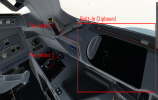
eman1200
Touchdown! Greaser!
ok so not as far fetched as @texasclouds made it out to beIn our situation, I have a paper holder on the right side designed for just that. We have a pen holder as well. It is expected that you write important information down.
View attachment 146953
SixPapaCharlie
May the force be with you
- Joined
- Aug 8, 2013
- Messages
- 17,548
- Display Name
- First Officer 6PC
One of my favorite features (And probably lesser known facts) is that there is a printer on the plane.
Good God it spews out so much paper. But prior to each flight, most FOs will feed a chunk of paper for the clipboard.
I am still using pre printed pads I built in photoshop and had printed for me. It is a crutch but not unusual early on to have something like this.
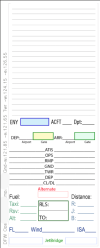
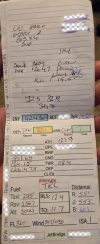
Good God it spews out so much paper. But prior to each flight, most FOs will feed a chunk of paper for the clipboard.
I am still using pre printed pads I built in photoshop and had printed for me. It is a crutch but not unusual early on to have something like this.
SixPapaCharlie
May the force be with you
- Joined
- Aug 8, 2013
- Messages
- 17,548
- Display Name
- First Officer 6PC
I asked if I would be looked at strange if I wore a kneeboard and was told I can do what I want but a kneeboard would be odd.
What I wasn't told was "It isn't really necessary because you will have paper, pens, and a dedicated clipboard as part of your station".
Once I got on the plane, it made sense.
What I wasn't told was "It isn't really necessary because you will have paper, pens, and a dedicated clipboard as part of your station".
Once I got on the plane, it made sense.

I even see that as a lowly piston ga pilot. Seems like every Charlie (and delta) airport has its own procedure for how to get your clearance and who to call for taxi. If you do it wrong.... they'll tell you about it.Tower, Ramp, Ground, Metering... Its like someone Yahtzee'd the airports ATC systems and they are all different.
Controllers get most of their training in their own facility, so each one becomes its own silo with its own customs. Since most of them are not pilots, they never experience any other way of doing it unless they transfer facilities which is a once or maybe twice in a career thing.
Last edited:

RussR
Final Approach
STARS are easy. I love flying SIDS and STARS.
Told ya!

It's a good job.
Man that is so great to hear. I feel the same way about mine. It's good to be where we want to be. Thanks for the update!
dmspilot
Final Approach
- Joined
- Oct 20, 2006
- Messages
- 6,774
- Display Name
- DISPLAY NAME
I think my first 100 hours I carried a cheat-sheet with ramp/ground/tower frequencies for our hubs. I lost it and didn't make a new one because I got better at finding them on my iPad/Jepps super quick. Highlighting them can help.One of my favorite features (And probably lesser known facts) is that there is a printer on the plane.
Good God it spews out so much paper. But prior to each flight, most FOs will feed a chunk of paper for the clipboard.
I am still using pre printed pads I built in photoshop and had printed for me. It is a crutch but not unusual early on to have something like this.

flyingcheesehead
Taxi to Parking
- Joined
- Feb 23, 2005
- Messages
- 28,191
- Location
- UQACY, WI
- Display Name
- iMooniac
- Home Airfield
- KUES/KMKE
Awesome, thanks for keeping us posted!Update:
I'm a big fan of VNAV Direct when coming out of the flight levels, and it's even better when you combine it with one or more of the other methods - IE, mental-math both the "I want do descend here" point and the "I really need to descend by here" point, set up FPA/PBD point that you're aiming for with the *desired* descent angle. When you're cleared to descend via PD prior to the "I want to go down here" point, just let it pick up your desired path for the FPA/PBD. If you don't get your descent by then, VNAV Direct to it... Or even VNAV Direct to the airport, that usually works out just fine too.Vertical Direct to: We can take a fix, assign it an altitude and then do what we call a vertical direct to which is like your "direct to" on your GPS only it is vertical instead of lateral. This allows us to stay in magenta (Basically building a 1 leg STAR) and the flight computer will calculate our descent profile.
I do have VNAV Direct capability on the Mooney too (GTN750+GI275 combo will do it), but I rarely use it there because I was used to doing all that in my head before I had that capability and it's much rarer to get stuck at cruise altitude down in the normally aspirated piston altitudes.
I like the way you think here... That's flying with finesse, and too many pilots don't really think to that level or even care about it. Having been the guy in the back plenty of times, I have always paid attention to what the folks up front are doing and judge them silently.There are more ways than this but the point is there are a lot of options and some are better than others. Ultimately I feel successful if I can get down without using the speed brakes. 3/4 to Fully deployed, they cause the aircraft to shake which can be uncomfortable for the passengers. The ultimate goal is for them to be as calm and bored as possible. So avoiding a scenario that requires an aggressive descent because we hadn't taken into consideration a massive tailwind is pretty important when choosing how and when to plan the descent.
 It's always nice to be on a flight where control inputs and power adjustments are smooth and fluid; it's not at all fun to be in the back with a hamfisted grunt up front jockeying the power roughly enough to pop everyone's ears.
What about sick call-outs, fatigue call-outs, or whatever else might prevent someone from showing up? How many of those do you end up picking up? Have you ever seen more unassigned flights added to the list?Today for example, I am on reserve and I can see the assignment list. There are several crews ahead of me and not many unassigned flights remaining, so I know I'm not going anywhere.
If I do make the leap to 121, I'll be a little over 2 hours' drive from work even if I'm based at the closest major hub, so I'll have to travel at least partway on reserve days. I have heard that you folks who live in base have it good when it comes to reserve!
Well, you do, but it's best if you never meet in person.I don't have a boss.
Before I flew in a 2-crew environment I thought it was a little lame. First time I flew a jet I learned a lot. When I started flying 2-crew regularly I learned that there's a lot of great things about it. There's someone to talk to, someone who catches all of your mistakes without you getting into trouble, someone who can help you out when things get busy, someone to help you figure out whether a particular course of action is smart or crazy before you do it... I like it.It still doesn't feel like a job, It feels like a mission. Working as a crew is a lot of fun, The plane is tremendous fun to fly. Going places and getting paid to do it is still fun.
Wow!I kind of already have some seniority. We have been hiring like crazy so 1 month in I was able to hold a composite line or I can bid reserve and get the days off that I want.
I got Thanksgiving week off and should be able to get Christmas off as well. I didn't expect to be able to do that so quickly.

See, I kinda like those. It's an opportunity to explore the local area.What's the worst part?
Shuttle rides, Walking around the plane in the rain. long overnights. There are sometimes flights where you land at 10 AM and don't leave until 6 PM the next day.
Some are definitely more fun than others. Dayton (Air Force museum), Brownsville (SpaceX launch facility), and Libby, MT (Kootenai Falls Suspension Bridge and some other sightseeing) all rank as fond memories for me. And even Binghamton, NY was pretty fun with a few other crewmembers (we had two planes out there overnight) - We visited the first ever Dick's Sporting Goods location (which seems to look as it did when it opened), a cool place with a ton of old arcade games in the back and a store where they sold vintage gaming systems and game cartridges in front, checking out an abandoned insane asylum and other such shenanigans.
Maybe my attitude is a bit different because the 135 world is different than 121 - We usually had a lot of time to wait on pax during the day, so having some downtime was normal. After a while, doing stuff on the Internet and taking naps in the FBO does get old. But, I definitely appreciated it when passengers would let us know "There's no way we'll be done before 5" or something like that because it greatly expanded the radius of possible exploration - I never liked to be farther from the airport than the pax were in normal circumstances.
It's amazing how good you get when you fly several days per week, isn't it?I am the most instrument proficient and I guess proficient pilot in general I have ever been.
And only then do you realize how bad you've been at some other times. Personally, it seems like I need to have no more than a 3 week break in between flights, 3 weeks makes me feel slow. When you fly every day for a week or two, though, it's amazing how well things can flow.
I was getting postcards from regionals in 2014, if not earlier. In hindsight, I really wish I'd taken them up on it. Probably could have had some pretty good seniority in the left seat by now.Only thing I would change is I would like to have been one of those 30 year old captains. I wish I had done this sooner.
Heh... Next time you go there, see if you can swing over to the GA side and check out the FBO. It's... Different.Everywhere I have been thus far:
Longview
I also remember there was a drive-through taco place not too far from the airport that was REALLY good even though it looked like it was in an old shipping container.This is one place I wish we'd have been able to spend more time. I'd love to have had the chance to go to the US Space & Rocket Center. Alas, that was always a short stop on the ground for us, barely enough time to grab lunch.Huntsville
Wow... I always felt like I was being slow if I was doing less than 1500 fpm. Unless, of course, I was passive-aggressively doing 500 fpm because ATC made me descend a couple hundred miles early.I hear ya about descent planning - I still struggle with it (even with all the FMS tools I have) AND convincing ATC that I need lower at a certain time. If I get a nice PD clearance, I've learned that 900fpm VS descent and full power lets me ride the barber poll all the way down.
Hah! I feel this. I always pulled power in the descent because the TBM has a fair bit less drag than the PC12 and it'll speed up a fair bit and give you the power back with ram air effects.The same plane where ATC will sometimes clear you "normal speed" when climbing at max power... PC-12!
But, on the way up, sometimes even a "fast" climb (170 KIAS) would get us the "normal speed" call... And I think they liked to force us to read it back, just to twist the knife a little.
You've mentioned this twice... What's this "perfect system"? Have you seen anything like it anywhere else?Again, I am new and it is likely all on me. I am not wanting to come off as calling anything scary or negative but there are a few places where you can't not be on your A game. I got spoiled at DFW because they have a perfect system
dmspilot
Final Approach
- Joined
- Oct 20, 2006
- Messages
- 6,774
- Display Name
- DISPLAY NAME
I once found a function called "Chimes Test" in the FMS. No description in any manuals that I could find. Not wanting anything to go crazy, waited patiently until after we landed to try it out. Imagine my disappointment when I pushed it and nothing happened.I will study charts and diagrams and sometimes explore the flight management system just to see what I can learn.
SixPapaCharlie
May the force be with you
- Joined
- Aug 8, 2013
- Messages
- 17,548
- Display Name
- First Officer 6PC
Gate to spot to standard taxi route.You've mentioned this twice... What's this "perfect system"? Have you seen anything like it anywhere else?
RWY standard taxi route to spot to gate.
And there's almost no deviation. You can land and predict exactly where you're going to go and how you're going to get there whereas dc, charlotte, chicago, you're getting portions of the route from different frequencies and it is significantly more variable.
They all have systems and they're all probably fine I'm just spoiled because I go in and out of DFW so much. Charlotte with their rainbow taxiways and multiple ramp frequency changes can be stressful.
I don't know what is going on at Chicago but being on the ground there is the busiest I've ever been in an airplane. And don't even think about asking for progressive taxi
It's just not as variable at dfw. Once we're in cruise I can tell you exactly what my taxi instructions are going to be all the way to the gate and vice versa.
SixPapaCharlie
May the force be with you
- Joined
- Aug 8, 2013
- Messages
- 17,548
- Display Name
- First Officer 6PC
Dude!!!!Yea, we all wear a knee pad and fingerless flying gloves. lol That kind of stuff wpuld get you hazed. Hard!
What I've learned is the worst thing you can possibly do and will get you more hazed than anything else is wearing the hat.
Knowing that you have to pay for your own hat and realizing that nobody wears the hat and if people do wear the hat they're getting hazed makes me wish I hadn't bought it. That was an expensive hat that will never see the light of day!
Anytime I see a pilot wearing the hat my first thought is doesn't he know everyone's looking at him and thinking "Whoop Whoop! Hat Alert! We got a hat wearer in Bravo terminal!!!"