Mid-life Career Change to Airline Pilot. It's Doable.

SixPapaCharlie

May the force be with you
Joined
Aug 8, 2013
Messages
17,547
Display Name
First Officer 6PC
So having passed my Line check today, it seems I am on the other side of what ever I just went through.
Long story short April 1 of 2024 my employer told us we are going out of business. I had been the Director of IT which means allowing my tech skills to atrophy while I attended meetings that could have been emails.

I knew the company was going to fail starting about 6 months prior so I started looking but no response, Then the company did fail and for a few months I kept sending out the resumes and no response.

The only other thing I am really passionate about is flying. so I got my commercial, muili, and flew about 400 hours to get to the magic 1,500 hour mark.

I got the hours and started applying but the airline I am most interested in said we are no longer taking pilots without the ATP / CTP. So off to school I went and got that knocked out along with the ATP written.

With that knocked out, I got my resume and paperwork in order and submitted my app on airlineapps.com Additionally I am close friends with 4 captains at the airline. 3 of them wrote me letters of recommendation and one is now dead to me. I kidd. He just never got around to it.

I got the call for the interview 4 weeks in advance and I studied the ever-loving hell out of the Jepp charts, symbology, arrivals, approaches, etc. I had never flown a SID or star so I called our friend @RussR and he met me in my plane and we flew a couple just to get an idea of how they work. Thank you Russ. I was over prepared for the interview. I showed up in mid October. hiring was all but frozen. It was me and 2 young cadets. They took our logbooks, sent us to a meeting room and we kinda talked about our experience. Then they brought us back 1 by 1.

I was ushered into a room with a pilot and an HR employee. The pilot spoke like an auctioneer asking rapid fire questions, Mostly about symbology on the Jepp charts. Then the Woman from HR would ask a softball question to bring the pace (And my blood pressure) down. What is it that interests you about our company? What got you into aviation? Then back to the rapid fire guy. It was a blur and the whole thing lasted maybe 20 minutes. They thanked me and sent me back to the meeting room with the other 2 kids. We sat for about an hour and once again, they called us out 1 at a time. I went back to the same room and saw a drug test on the table. Thankfully, I remembered all the tricks @eman1200 taught me so I wasn't worried. I saw the test on the table and felt relieved. Took the test, "passed" and they said welcome aboard.

8 Months Later...... I get a class date of June 2nd

INDOC
Week 1 is indoc. You are in a class, in my case with 37 other people. Think first day of school vibes. Strangers awkwardly asking "What's your background?" and making small talk.
We get introduced to the heads of training, the CEO and a series of other speakers, then our instructor comes in and we start reading the the flight operations manual (FOM) and taking copious notes on everything and anything.
In hindsight this shouldn't have been stressful but we didn't know what the test was going to look like on this. We were going through the book at break neck speed and the firehose I kept hearing about was on and aimed at us. In hindsight, this wasn't even the fire hose but it was a crap ton of info and there were no breaks or pauses. Just read, listen, and write. After a week of that, it was a field trip to go down the slide, practice putting out fires, become familiar with the exterior cabin door and some other tangible / physical things. It was a fun end to the firehose of information.

SYSTEMS
Systems week was similar to Indoc however it was 2 days of reading, then they sent us home for 3 days to watch 132 training videos. Engines, brakes, fuel system, hydraulics, etc. Everything and anything about the plane. That wasn't an exaggeration, it was 132 videos. The info from Indoc and systems would be tested in the KV or Knowledge validation test. I don't recall the number of questions but my class WAY overstudied for it. Nobody ever tells you what happens if you fail something I still don't know. However, I suspect if you fail a test they probably don't fire you but that was what was in our minds so we studied this stuff like our lives depended on it.


Knowledge Validation
KV day, we all show up and take this test that we panic studied for and it wasn't that bad. I am not really an academic but I got a 91 so I assume everyone else got a 100.

FMS LAB
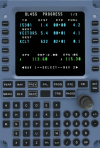
This computer and the Guidance panel are life now.
1756092162199.png

The FMS or flight management system also called the MCDU "McDoo" is what we use to program the route, performance data, navigation, takeoff, climb, descent, and landing info. Think of it like your Garmin, the approaches, stars, sids, go here along with weight and balance information. There is a lot more to it than that but this post is already going to be too long. To teach this, everyone gets a day of FMS lab training where they give you a high level overview of programming the box, we practice programming holds, arrivals, approaches, etc on what is like a PC based, flight simulator with no visual reference. Meaning there is a panel and there are phases of flight that take place in real time but you are only referencing this box, and an MFD and PFD. Think Flight sim with no external view.
The FMS lab is open 24/7 so there were a lot of late nights here where we would practice programming it for different scenarios. It was tremendously confusing at first but it would all make sense way later in training.


CPT
This was the hard part. Cockpit procedure trainers are these sort of non moving sims. Here is a photo I googled. You can see the FMS box pictured above on either side of the thrust levers below.

1756092695503.png

These are all touch screens that behave like the real aircraft. Everything happens in real time Pilot flying sits right and Pilot monitoring sits left.
We practice 2 hour flights going through our roles and then switch seats and do the flight again. We are learning flows, callouts, procedures, and emergencies during this time.
This was hard as hell if I am being honest. It was intense, timeboxed, and very little room for errors because time was limited. At night we had to be getting these flows and callouts down or the CPT the next day was going to be a mess. Those in class that didn't have flows and callouts down had really stressful CPT sessions. Some of these sessions felt like checking events. They could get pretty intense as this was the precursor to sending students on to the sims.
The company is very nice to those that struggle. We had one guy that was struggling terribly. CPT is supposed to be 8 days. They sent him back for another 8 to get him up to speed. They want you to succeed. This was where the rubber starts to meet the road in the training program. I personally felt sometimes like I was hanging on by a thread and other times, I felt ahead of the aircraft. I got it done in the 8 sessions but it was a test I wish not to have to repeat. Lots of late nights, lots of early mornings, chair flying with anyone and everyone that was available but this is were we basically said "We're not effing around". I started staying at the hotel even though I am local and my family was so supportive. I had to be where the class was and where the training devices were so I could shut off all other aspects of my life and focus on this one thing. Did I mention it was hard?
 
Last edited:
PV
After the 8 procedure trainer sessions comes the procedure validation. It is a checkride in the CPT sim. I came in stressed, tunnel vision, anxeity, all the stuff that goes into a checking event.
The examiner was super cool, cracking jokes and doing his best to diffuse any nerves I had. We did the flight and the whole time, he was really casual and just being a fun loving pilot monitoring while I did the pilot flying portion. After, I said I appreciate your style, it was very comfortable flying with you. He said "IF you hadn't been doing such a good job, you might have gotten a totally different version of me".
That was a boost of confidence and kinda lit a fire under me that this might actually happen.
I suffer from the worst imposter syndrome and live my life knowing every day, this is the day I get fired.
I don't know where it comes from but it was amplified during this training so this was a good experience for me.
Everyone in the class that made it this far passed their procedures validation.

SIMS
We had access to full motion simulators that were for lack of a better word, Bad Ass! Feels, sounds, behaves like the actual jet which I can now confirm as I have 30 hours in the Jet.
The sims were a little less stressful then the CPT because they were the same 8 lessons so nothing new other than now we were "Flying".
Everyone gets 8 two hour sim sessions as pilot flying and 8 two hour sim sessions as pilot monitoring. This portion of the training was fun for the most part. It is mostly focused on emergencies and how to handle them.
We almost never land the sim. Every time you see a runway, there is a dear on it or a truck on it or something. In my sleep I hear "Go around, Flaps 2!" that is the phrase most spoken in the sim.
Towards the end of the sims it started getting more difficult. I was doing just ok but really struggling with the single Engine ILS w/ no autopilot. That is just a terribly difficult maneuver for me.
Due to this and a couple setbacks, when they asked how are you doing and I said I am 80% there, they offered some additional sim sessions and I accepted them.
There were a handful of others in the class that accepted them as well and this sort of became the point where the class is no longer a class but individuals finishing their training.
The group chat goes dark and we all fight as individuals for the finish line.

CHECKRIDE 1: MV
The Maneuvers validation is the hard checkride. This is where you have to do stall recovery, emergency descent, V1 cuts, engine fire, and anything else they want to throw at you including for me the dreaded single engine ILS, hand flown. I nailed all of the maneuvers and totally botched the Single Engine ILS which they know is tough so they leave it for last. They have contingency built into the training for botched maneuvers and I used all of the contingencies offered up to the point where I had the examiner behind me stating "This is it I need you to do this or it's game over" My legs were shaking. I did a v1 cut and setup for the ILS. I clicked the autopilot and auto throttles off and I was on top of the flight director, absolutely glued to it. Speed set, configured, "flaps 1", "Flaps 2", "Gear down, Flaps 3", "Flaps 5 Landing Checklist". Set power to 69%. Runway in sight, "Minimums" and I nailed that landing. I stopped the plane and the examiner goes. "It would have been less stressful if you had just done that the first time. Sat complete by the way, congrats".

CHECKRIDE 2: LOE
Last checking event in the sim is Line Operating Experience. This is 2, 2 hour flights from gate to gate. They just want to see you fly. They will throw very minor emergencies at you just to see how you run the checklists, etc. It is calm, slow paced and low stress. Mine was fairly uneventful. If you mess anything up you have 2 chances to repeat it. We debriefed my landing at the end. The examiner said it wasn't pretty and I would liked to have seen x,y,z but everything was done to standards. He printed out my ATP and Type rating and we went to the sim to snap a couple photos.

IOE & LINE CHECK
That brings us to the last 2 weeks in the actual jet. Last week, I went to Miami, Jacksonville, North Carolina, South Carolina, Oklahoma, Alabama, Amarillo, College Station, and DFW about 6 times. I've been everywhere man. I've been everywhere. The jet flies like the sim but it is easier to land and there are these nice people that bring you food and coffee. On the longer flights it moves very slow and is very calm. Up in the flight levels, it is beautiful and the radio gets really quiet especially late at night. There are stressful flights. We had a flight to DFW and back out where we had a 30 min ground stop and had to switch planes which meant after the flight, I have to do a post flight walk around, grab my bags, get to the next gate, do a pre flight walk around, then get the flight plan and performance loaded while all the passengers are already there. You can feel rushed when that happens but you have to fight it. All through training the moto was "Don't rush" the tendency to do so is real. On my 2nd flight, we had a bird strike at 10,000 feet. It was loud AF. On my 3rd landing, I had an APU fail. when we got the next plane, the APU was inop. Flying into Miani, we were dodging thunderstorms all along the coast. So the first time in the jet I got exposed to a lot. The last flight yesterday was my line check and it went well. A short hop from OKC to DFW so a lot to do in a short period of time but I got it done and the examiner signed me off. It was the perfect end to a check ride. I greased the landing. And having strangers shake your hand and say "Great Landing" On their way out might be the best end to a check ride ever.

I posted these in another thread but some cool moments.
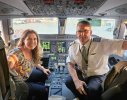
My wife hitched a ride out to College station so she could get on one of my flights. That was awesome.
She made a video of her on the plane while I was making a PA. She is super happy about my being employed again and I think she digs pilots.
1756133641859.jpg

Let me know if you know what kind of bird that was. I wonder what he was doing at 10,000 feet.

Screenshot 2025-08-25 095226.png


All in all, I do believe this was the hardest thing I have done in my life especially given all that hangs in the balance. The training is damn hard but a full career swap at nearly 50 with two kids about to go to college and mom holding down the fort and praying this works out compounded it significantly. She took on a lot of additional clients to offset some of the financial strain but we're on the other side now.

I am happy to be working again. I am happy I made the change even though it was starting to feel like my only option since the IT world and I are no longer compatible.
I still feel like the new kid on the first day of school at the airport but that should fade. I like the airplane a lot and I really love the company. Their focus on safety isn't lip service they are very serious about it.
Even though I barely have a toe in the water, I suspect I will be a lifer here. I could see myself retiring into the training department should this last.
The culture and emphasis on safety, fatigue, prioritizing family, etc is nice.

I did make 1 single joke over the last 3 months. On the long flights, we take turns eating. Captain said its quiet if you want to eat first, this is a good time.
I handed her a can of tuna and a can opener and said can you open this while I get my utensils out of my bag?
The stare I got back was priceless. The can was not opened.
That is about the level of "fun" that can be had on the flight deck.

That's it. That's the story if anyone is curious about the airline training process, the E-175, or any non company specific things, I am happy to do deep dives into any of the stuff above.
It was all a mystery to me as I was going through it and I learned a ton.

Also, for all the people that post "I'm 26, 36, 46, 56... Is it too old to get started?", You are not too old to start, you are not too old to change things about your life that you don't like.
It is hard to change but we can do hard things if we need to.

Last Call,
-F.O. SixPapaCharlie
 
Last edited:
Congrats bro, and welcome to Club 121. It gets easier and easier (and more rewarding). Don’t get caught up in the drama and stay away from the Stews! Once you get a seat at a major, you will be a made man. Stay away from the Stews also.
 
Congrats bro, and welcome to Club 121. It gets easier and easier (and more rewarding). Don’t get caught up in the drama and stay away from the Stews! Once you get a seat at a major, you will be a made man. Stay away from the Stews also.
No concerns there. I knew from day I would be a slam clicker. The kids can go party. I'm not interested.
 
Exceptional ‘write-up’.
Congratulations!
 
Congratulations on the job! The first full course is the hardest. Next time, you'll know what to expect going in and it will feel a lot easier.

That CPT pictures is not an E-Jet! LOL Definitively a big Boeing.

I jumpseat a good bit on the E-Jet. Looks like a nice airplane to fly. I'd say, don't let the A/Ts and VNAV spoil you, but, at 30 hours, it's already too late.

You'll feel a lot more comfortable by about 100 hours.

and say "Great Landing" On their way out
I respond to those comments with, "Thanks! I've been practicing all week!"
 
What airline flies in/out of Aggieland?
 
Congratulations on the job! The first full course is the hardest. Next time, you'll know what to expect going in and it will feel a lot easier.

That CPT pictures is not an E-Jet! LOL Definitively a big Boeing.

I jumpseat a good bit on the E-Jet. Looks like a nice airplane to fly. I'd say, don't let the A/Ts and VNAV spoil you, but, at 30 hours, it's already too late.

You'll feel a lot more comfortable by about 100 hours.


I respond to those comments with, "Thanks! I've been practicing all week!"
I couldn't find an Embraer CPT picture online.

There is a lot that can spoil me on this equipment for sure.
I do hand fly the plane up to 18,000 and have committed to myself to continue to do so.
I am going to work up to getting the autopilot off higher on the approach but currently I am doing at about 1000 feet.
I never want to be the guy that goes to recurrent and has lost their stick and rudder skills.
 
Awesome, and congrats on starting, and completing, the journey.

Also I'll show this post to any layperson who says 'planes practically fly themselves these days'.
 
Nice write up. The tuna took me back, way back, back when there were engineers. I used to carry a couple of comic books in my flight bag. Once, departing Oakland, the captain came aboard and read the deferred write ups. He slammed the metal binder closed, tossed it on my table and announced, "Autopilot inop — you're flying to Chicago!" So, somewhere high over the night-black heartland, a flight attendant walked in for a break, saw the captain reading a comic book at my engineer's station, the copilot paging through the other one while I practiced holding altitude and heading. She says, "I didn't see a thing," and left as quietly as she arrived.
 
Congrats on all. I was faced with the same situation as you, career-wise, but for me it was late enough that I could just pull the ripcord and retire. I'd been planning it for a few years anyway, and flying for hire was definitely not an option. Happy that you had enough time and means to switch to something you're going to love doing.

Let me know if you know what kind of bird that was. I wonder what he was doing at 10,000 feet.
Visual analysis indicates that it is what is known as a "dead bird", and at 10,000 feet he was getting smacked by an airliner. Hope this helps.
 
I’d be comfortable flying in your plane. I know if there’s ever any issue, you’re fully qualified to pop the chute!

Seriously, congratulations! This is one of the best posts ever on PoA. You’re a natural writer.
 
Grats man good feeling to get done with all the checking events. Now you get to fly with the weirdos on reserve. 100 hours you'll be comfortable 500 youll be eyeing when you can hold Captain.

One random bit of unsolicited advice you'll hear a lot of stuff about the plane or how to fly on the line from various captains always take it with an eye towards skepticism. Just remember the weakest person in the class 18 months ago can now be your boss cause they managed to stumble through upgrade. There will be times where you know more or have better situational awareness even as new as you are dont be afraid to push back respectfully.
 
Nice write up. My son sat in those very same classes and simulators a few years ago. I never got nearly the detailed answer to ‘so how is training and what is it like?’ as the one that you just wrote. You worked hard for those wings on your chest, congrats.
 
Nicely Done. Congratulations and all the best in the rest of the new career. C u @ RR next year if not before on a Envoy out of DAY.
 
Congrats, I hear the 2nd Type rating is much less stressful. I sure don't want to have to repeat my first one either :)
 
Congrats, I hear the 2nd Type rating is much less stressful. I sure don't want to have to repeat my first one either :)
I think I'm set. This one was a three-fer...
I can fly the 170, the 175, and the 190
 
What airline flies in/out of Aggieland?
I once rode CLL-DFW on a Rio Airways Beech 99. That admission may be dating me.

I do hand fly the plane up to 18,000 and have committed to myself to continue to do so.
I am going to work up to getting the autopilot off higher on the approach but currently I am doing at about 1000 feet.
Automation management.

Develop a habit of de-automating based on how you feel, weather conditions, and ATC/traffic complexity. Use the automation to reduce your workload when any of those factors are more challenging and, when they're not, de-automate as appropriate.

I feel the best in the morning so will often disengage the A/T, A/P, and F/D after clean up on departure and half-fly, raw data, to cruise. Doing that makes a big difference the next time I go to the sim. In busy (hub) ATC environments, I stay in LNAV/VNAV and A/P until established and configured on the approach so as to maximize my situational awareness. I'll arm APR when I pass the fix prior to the FAF.

As a new F/O, you will likely fly a lot of arrivals into hubs which means more automation rather than less. Use the opportunities you get at less congested airports to do more hand flying.

If you feel like you're getting behind the airplane (or sim) while hand-flying, it's probably because you're letting the pitch drift up/down. Put it back where it needs to be and everything will improve.
 
I never understood that city pair. You can drive it quicker.
It's not generally for people traveling between CLL and IAH or CLL and DFW. It is for people who are traveling from CLL to all of the destinations that they can connect to from IAH or DFW, and vis versa.
 
It's not generally for people traveling between CLL and IAH or CLL and DFW. It is for people who are traveling from CLL to all of the destinations that they can connect to from IAH or DFW, and vis versa.

Oh, I know; as they say in the Trigon, Highway 6 goes both ways.
 
I started staying at the hotel even though I am local and my family was so supportive. I had to be where the class was and where the training devices were so I could shut off all other aspects of my life and focus on this one thing.
This makes a huge difference, as you figured out. Since I live in a sim city, my last type rating was “local.” My wife said, “I know you’re going to be useless for a couple of weeks, so I’m going to go visit my dad.”

As to the hand flying, remember, too, that in an airplane you get a LOT of kinesthetic feedback that you don’t get from a simulator…and, in fact, some of the simulator feedback is contradictory. So even when hand flying your scan still has a tendency to deteriorate, but it needs to be top notch when you get back in the sim next year.
If you feel like you're getting behind the airplane (or sim) while hand-flying, it's probably because you're letting the pitch drift up/down. Put it back where it needs to be and everything will improve.
Be conscious of those pitch/power combinations, so you know “where it needs to be,” and that will help a lot, both in the sim and the airplane.

Great job, and great write up!
 
Congratulations.

Mind if I ask how old you are/were when you made the decision to pursue 121 flying?
 
Congrats! And great write up.

If I may, here's some more unsolicited advice. Two bits, in fact.

First: One day you will put in for upgrade. And even though you already know the airplane, you'll again be stressed and feel that need to put things on hold to dedicate yourself to being successful in the training. Give yourself some time now to relax, enjoy flying jets, and get comfortable in your role as an FO. But before too long, start thinking like a Captain-in-training. You don't need to start studying the flows or the Captain call outs in the profile quite yet, but start paying attention to what the CAs are doing in their flows, and learning why. When they have to make decisions, think through what you would do, observe what they do, and ask questions if they're different. And all those things in the FOM that FO's tend to write off as "Captain stuff' once they've been on the line for a while? Stay familiar with them. Scenario based training is great, and there's no better scenario than one you're living in real life. Start to build your own Captain senses and knowledge when your crew is faced with passenger issues, rare/infrequent situations that involve FOM recall, FAR things you don't get to see very often, transportation/accomodation issues on the layovers, etc. Don't let these learning opportunities go to waste. When time permits, go through the release thoroughly, like a Captain looking for easter eggs in the sim. The more you do this, the faster you'll get at it. And if there's anything in the release you aren't familiar with, get it figured out, even if you don't have time until you get to the hotel. The more you do these things on the line as an FO, the more that your upgrade training will be a validation of--not training for--Captain-level competencies.

Second, when you're flying the line you're going to see a variety of techniques. Sometimes the CA will want you to do it their way. As an FO, you have two options. You can be frustrated, or at least annoyed, that you're being asked to fly it not-your-way (the path that a lot of FOs take). The other path is to do see it as an opportunity to try another technique under the watch of someone that is familiar with it. Assuming you agree it's safe, pick the latter. Build up a vocabulary of techniques that you are proficient in. This expands your comfort zone, and is helpful when you move to the left seat. A CA that is only comfortable when things are done one particular way will be a micro-managing Captain. They have to be, because their comfort zone is very small and they have an obligation to keep the airplane in it. Consider yourself a collector of techniques, and you will know the airplane better, have a bigger comfort zone, and eventually be a CA that can give FOs the space to make small mistakes and learn from them.

Again, congrats!
That’s good advice.
 
Congratulations! Glad it worked out for you.

I did make 1 single joke over the last 3 months. On the long flights, we take turns eating. Captain said its quiet if you want to eat first, this is a good time.
I handed her a can of tuna and a can opener and said can you open this while I get my utensils out of my bag?
The stare I got back was priceless. The can was not opened.
That is about the level of "fun" that can be had on the flight deck.
I don't care what she said, that was funny!

So, when are we going to see some cockpit influencer videos from you, JPS-style? The world absolutely needs another airline youtuber! :cool: :stirpot: :rofl:
 
Congratulations! Glad it worked out for you.


I don't care what she said, that was funny!

So, when are we going to see some cockpit influencer videos from you, JPS-style? The world absolutely needs another airline youtuber! :cool: :stirpot: :rofl:
I should start reporting on plane crashes now that I'm an expert.
 
Back
Top