Crash at Reagan National Airport, DC. Helicopter crash into airliner.

Ward Carrol posted a video yesterday saying the warrant officer check pilot was being way too deferential to the Captain flying. And that, "Okay Fiiinnnee," reply from her should have been check ride over. But, it looks like he deleted it. Or at least I can't find it now on his page.
 
Everyone has forgotten that the problem really, is that the general staff, who all live out by Ft. Belvoir, need to be told they just have to drive to work. A privileged class. Hey no kidding, an entitlement that must needs to "go away". Rotorcraft and fixed wing in a small space are just not compatible.

There, I said it.

The flight that crashed had nothing to do with VIPs. It was a training flight for the NCR evacuation mission to support Continuity of Government.

BTW, the notion that generals are getting rides home from work is nonsense. I worked there. Doesn't happen. And the 4 stars don't live at Belvoir. They live at Myer or McNair.

VIP flights are usually for bringing in field commanders for time sensitive meetings. If the President says get Erik Kurilla here right now to tell me about bombing Iran, he takes a G5 and a helicopter.

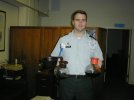
Picture shows what a Green Beret Major assigned to the Pentagon does. Very important.

Me cleaning pots.jpg
 
The flight that crashed had nothing to do with VIPs. It was a training flight for the NCR evacuation mission to support Continuity of Government.

BTW, the notion that generals are getting rides home from work is nonsense. I worked there. Doesn't happen. And the 4 stars don't live at Belvoir. They live at Myer or McNair.

VIP flights are usually for bringing in field commanders for time sensitive meetings. If the President says get Erik Kurilla here right now to tell me about bombing Iran, he takes a G5 and a helicopter.

Picture shows what a Green Beret Major assigned to the Pentagon does. Very important.

View attachment 143554
Um,
 
I know there's some folks that keep coming back to this. Not saying you're wrong. But my understanding is that these helo routes exist around several Class B airspaces. Boston is nearest to me and I know NYC has them as well. So does it really matter who the customer is rather than looking at why those routes exist so close to busy airports?

There are 8 Helicopter Route Charts, all in very busy airspaces with at least on Class B airport in each.

https://www.faa.gov/air_traffic/flight_info/aeronav/productcatalog/vfrcharts/helicopter/ Helicopter Route Charts
 
In spite of whatever is finally published in the NTSB and Army reports, the bumpersticker battle was won within days of the mishap.

The discussion hasn’t really expanded to all the H routes nationwide; it’s all been very localized to the airport and the helo crew. The real lessons to be learned aren’t about the route design or airmanship. Instead, what system allowed the routes and procedures to essentially remain static over decades of time?

That the NTSB did the hard math FAA should have done is telling of a broken traffic management and, potentially, safety reporting system. That even today, only one side of a conflict can still engage visual separation rules and take collision avoidance procedures away from the controller is an issue, especially given that can occur without the other factor aircraft even being aware it’s happening.

Looking at that part of it alone, I sense there was a mentality of there being zero F’s left to give with tacit acceptance of the mid air risk. If all we take away from this was a .mil pairing was to blame, we’ve missed the ball.
 
The "okay fine" reads more to me like task saturation than anything. I remember during instrument training there were times that if my cfii had asked me my name, I would've replied "uh-huh". It's on the instructor to recognize that the student is loaded up. Now maybe he was afraid to take control, but the one thing we know for sure is that he asked for the visual separation. Plenty of blame to go around here.
And the “Okay, fine” was not atypical relative to the cockpit comms during the entire flight according to the entire PAT25 CVR transcript. It’s up to the PIC to set and enforce all flight standards. The opinion that “OK, fine” should have resulted in an immediate flight evaluation failure also seems absurd even if a YouTube commenter thought otherwise.

The Helicopter Operations Interview Transcripts (PDF pp. 470-475, hardcopy pp. 68-73) provides far more interesting and relevant information. CW5 Van Vechten was the most frequent speaking Army rep at the hearings. He is a 5300 hr helo pilot and 11-yr Standardization Pilot. In the interview transcript he was asked if a 100 ft altitude bust would result in immediate failure. No was the answer (with caveats). He was asked if a wrong turn at Cabin John would result in immediate failure. Again, no was the answer (with caveats). So it seems absurd that an altitude bust and wrong turn would not necessarily result in evaluation failure, while simply uttering “OK, fine” should result in failure.

What is far more concerning to me (I’ve not yet seen this discussed on social media) are the implications in the NTSB questions at this point of the interview. It appears to me that the NTSB questioner is tallying up all of the errors Lobach made (more than just altitude deviation and wrong turn) during the evaluation flight and asking the CW5, “OK, if the 450-hr pilot under evaluation made all of these errors in the same flight, what is the probability of evaluation failure?” The CW5 answered, “pretty high.”

Not sure how the Army handles evaluation flight failures. Does the IP inform the pilot under evaluation at the time of failure or is the flight completed and evaluation failure announced at the mission debrief? It’s possible that the IP intended to fail Lobach had the flight been completed.
There’s no telling the tone of the “okay fine.” Could be she was frustrated or could be just a nonchalant acknowledgment. Either way, if no discussion of the traffic or route was made (exchange of mission information), the examinee doesn’t know what the examiner expects.

If indeed Lobach was to fail that would be discussed after the flight during debrief. In this case I believe she is a PC, those orders would be pulled, she would be restricted to PI duties and a change in readiness level (RL1,2,3). After retraining (if necessary), she would get reevaluated. If there were a series of serious flight issues in the past, a flight evaluation board (FEB) might convene.
 
The "ok fine" thing is ridiculous. Some people are reading meaning into that based on projections from totally different circumstances. Just because your wife talks like that when she is angry does not establish any sort of negativity in a cockpit environment. I consider it functionally equivalent to "roger".

She had been taught and evaluated by warrant officers her entire short career. I would be surprised if she ever had a commissioned officer as IP. To assume any sort of resentment based on rank shows a complete lack of awareness of army culture.

Maybe she was a bad pilot. Maybe she was still learning a challenging mission. Neither of the things above have anything to do with that.

I have a sneaking suspicion some of the quotes come from political forums.
 
And the “Okay, fine” was not atypical relative to the cockpit comms during the entire flight according to the entire PAT25 CVR transcript.
Whoa. According to the CVR transcript? You mean nobody actually heard a recording? Wow those guys bitching about her are good, I missed it completely.
 
Whoa. According to the CVR transcript? You mean nobody actually heard a recording? Wow those guys bitching about her are good, I missed it completely.
Well, when a woman says "okaaaaay, fine" it means she's going to shut you out and ignore you.

Oh, I've been married for 28 years and figured out the code.
 
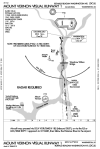
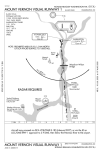
The RJ gets no blame, still? For the record, I'm not blaming anybody who died. They all thought they were doing the right thing, but the system set them up for failure. Take the RJ for instance. They were cleared for the "charted" Mount Vernon Visual approach to the airport. The crumb line depicted bends around land projections into the river, so as to stay over the water. The written instructions say to "follow the river to the airport". It's been that way for the past 50 years. But somewhere along the way, it was deemed to disregard the printed word and follow I-295 instead, effectively coming out of left field and left of the helo's field of vision under goggles. See here:
1754193262953.png

Here's the crumb line they were cleared to follow:
1754193412482.png

Had they stayed over the water, their landing lights would have lit up the helo's cockpit like it was daytime. But then they'd have to tip their wings to line up with runway 33 below 500 AGL, a no-no in these times. Fifty years ago, we weren't as fussy.
 
Direct quote from a retired military aviator:

I saw the transcript that the last thing that pilot said before killing everyone was "Ok. Fine." as the IP was trying coax her back on course. Holy ****. I've been sorrowful but now I'm just ****ed. I've never heard "Ok. Fine" in the cockpit. It gives me chills.

It's quite clear that Lobach was not a good pilot and was arrogant by being corrected by a lesser officer during a flight. If anyone wants to defend her, please step up to the plate.
You are making assumptions. We don't know the pace or tone of the "OK. Fine." It's very easy to hear it in one's wife's or teenager's voice with the accompanying eye roll, but we don't know that... And there are plenty of possible explanations. Imagine a vacant, airy "OK Fine" and you might start thinking about some sort of pilot incapacitation issue. Imagine a slow monotone "OK fine" and it sounds more like task saturation. Again, plenty of explanations that don't automatically mean she's a bad pilot.
 
Whoa. According to the CVR transcript? You mean nobody actually heard a recording? Wow those guys bitching about her are good, I missed it completely.

correct me if I'm wrong, but only a very few people get to hear the crew's last dying words. A transcript should be all that gets released to the general public.

Or am I operating under the old rules?
 
The RJ gets no blame, still? For the record, I'm not blaming anybody who died. They all thought they were doing the right thing, but the system set them up for failure. Take the RJ for instance. They were cleared for the "charted" Mount Vernon Visual approach to the airport. The crumb line depicted bends around land projections into the river, so as to stay over the water. The written instructions say to "follow the river to the airport". It's been that way for the past 50 years. But somewhere along the way, it was deemed to disregard the printed word and follow I-295 instead, effectively coming out of left field and left of the helo's field of vision under goggles. See here:
View attachment 143588

Here's the crumb line they were cleared to follow:
View attachment 143589

Had they stayed over the water, their landing lights would have lit up the helo's cockpit like it was daytime. But then they'd have to tip their wings to line up with runway 33 below 500 AGL, a no-no in these times. Fifty years ago, we weren't as fussy.

They were initially given the Mount Vernon Visual for runway 1. But then they asked if they could take 33. I don't recall anything in the radio transcript where they were told to continue with the runway 1 visual approach. I'm guessing they loaded the RNAV 33 approach and used that for SA.
 

Attachments

correct me if I'm wrong, but only a very few people get to hear the crew's last dying words. A transcript should be all that gets released to the general public.

Or am I operating under the old rules?
Pretty sure you've aced the test. A transcript ought only to be used for the relevant facts; "Ok, fine" isn't relevant for anything other than that she responded, imo.
 
They were initially given the Mount Vernon Visual for runway 1. But then they asked if they could take 33. I don't recall anything in the radio transcript where they were told to continue with the runway 1 visual approach. I'm guessing they loaded the RNAV 33 approach and used that for SA.
"They were asked," not "They asked." That is a charted visual approach to the airport, same as an IFR circling approach can have the primary straight-in runway designation in the title but allow circling to another runway. No need for ATC to cancel the charted Mount Vernon Visual clearance when asked to circle to a different runway in either case. No different than "Cleared for the ILS runway 1 approach, circle to runway 33." That's my opinion based on my experience actually having been instructed how to fly this approach to runway 33 (and then doing it) 50 years ago. I was warned about the heavy helicopter traffic at Bolling Field back then, too.
 
"They were asked," not "They asked." That is a charted visual approach to the airport, same as an IFR circling approach can have the primary straight-in runway designation in the title but allow circling to another runway. No need for ATC to cancel the charted Mount Vernon Visual clearance when asked to circle to a different runway in either case. No different than "Cleared for the ILS runway 1 approach, circle to runway 33." That's my opinion based on my experience actually having been instructed how to fly this approach to runway 33 (and then doing it) 50 years ago. I was warned about the heavy helicopter traffic at Bolling Field back then, too.
My error. I meant to write "then they were asked if they could take runway 33".

I didn't recall seeing "circle" in the transcript. Which I interpreted as land on 33 the way you normally would. If it were me (never flew into DCA or anything bigger than a SEP), I would have loaded the RNAV33 approach and used that as a guide so as not to go where I wasn't supposed to.
 
I didn't recall seeing "circle" in the transcript. Which I interpreted as land on 33 the way you normally would.
According to the preliminary, they were asked if they could "switch" to runway 33:

At 2039:10, Potomac Approach cleared the crew of flight 5342, which was inbound to DCA from the south, for the Mount Vernon Visual Runway 1 approach.​
...​
At 2043:06, the flight 5342 crew made initial contact with DCA tower. At this time, the airplane was about 10.5 nautical miles (nm) from DCA. The tower controller asked if the crew could switch to runway 33. The crew agreed, and the controller subsequently cleared flight 5342 for landing on runway 33. The crew acknowledged and read back the clearance.​
​
Switching runways doesn't change anything other than the runway, imo. Maybe the transcript doesn't include every actual word?

Then there's this:

At 2046:02, a radio transmission from the tower was audible on flight 5342’s CVR informing PAT25 that traffic just south of the Wilson Bridge was a CRJ (flight 5342) at 1,200 ft circling to runway 33. CVR data from the helicopter indicated that the portion of the transmission stating the CRJ was “circling” may not have been received by the crew of PAT25. The word “circling” is heard in ATC communications as well as the airplane’s CVR, but not on the helicopter’s CVR.​
​
I think everyone involved takes "circling" to mean landing on a different runway after an approach to the other, in this context.
 
I didn't recall seeing "circle" in the transcript.
From the ATC transcript:

“Bluestreak fifty three forty two at the Wilson Bridge change to cir- change to circ(le) runway three three. runway three three cleared to land.”

Once an aircraft is directed to circle 33, it is authorized to discontinue the MTV1 visual path and maneuver as necessary to align with 33.

The 5342 flight crew had requested and received landing data for 1 and 33 from PSA dispatch. IOW, long before ATC offered 33, the 5342 flight crew expected the possibility of landing 33.

I’m confident the NTSB will find zero fault with the way the 5342 captain flew the circle 33 approach.
 
After reading the transcript, she seemed to be struggling with basic flight maneuvers ie “rusty”. (And there are comments in the hearings about insufficient flight hours for all army pilots) But the IP is the one that requested and accepted visual separation. He never comments to her or confirms that he had traffic in sight and points out to her. If I’m copilot and ATC gives me a traffic point out, I’m pointing and confirming to the other pilot so we both know where to be looking. Perhaps it was the IP that became task saturated because of having to watch her flying rather than being eyes outside.
 
The RJ gets no blame, still? For the record, I'm not blaming anybody who died. They all thought they were doing the right thing, but the system set them up for failure. Take the RJ for instance. They were cleared for the "charted" Mount Vernon Visual approach to the airport. The crumb line depicted bends around land projections into the river, so as to stay over the water. The written instructions say to "follow the river to the airport". It's been that way for the past 50 years. But somewhere along the way, it was deemed to disregard the printed word and follow I-295 instead, effectively coming out of left field and left of the helo's field of vision under goggles. See here:
View attachment 143588

Here's the crumb line they were cleared to follow:
View attachment 143589

Had they stayed over the water, their landing lights would have lit up the helo's cockpit like it was daytime. But then they'd have to tip their wings to line up with runway 33 below 500 AGL, a no-no in these times. Fifty years ago, we weren't as fussy.

Back in the day when -7's and other turbo props could easily stay on waters edge. Not as easy or possible in a jet with higher weight and faster speeds.
 
The RJ gets no blame, still? For the record, I'm not blaming anybody who died. They all thought they were doing the right thing, but the system set them up for failure. Take the RJ for instance. They were cleared for the "charted" Mount Vernon Visual approach to the airport. The crumb line depicted bends around land projections into the river, so as to stay over the water. The written instructions say to "follow the river to the airport". It's been that way for the past 50 years. But somewhere along the way, it was deemed to disregard the printed word and follow I-295 instead, effectively coming out of left field and left of the helo's field of vision under goggles. See here:
View attachment 143588

Here's the crumb line they were cleared to follow:
View attachment 143589

Had they stayed over the water, their landing lights would have lit up the helo's cockpit like it was daytime. But then they'd have to tip their wings to line up with runway 33 below 500 AGL, a no-no in these times. Fifty years ago, we weren't as fussy.
That’s the visual to land on 1.

They were circling to 33.

They didn’t do anything wrong that I can see. Well. Aside from not seeing and avoiding traffic. ****ed that up pretty good.
 
Once an aircraft is directed to circle 33, it is authorized to discontinue the MTV1 visual path and maneuver as necessary to align with 33.
Says who? The charted approach says to follow the river. It even depicts the route meandering to avoid land areas. They were cleared via the charted approach and cleared to land on runway 33. What's so hard to understand that the approach means to avoid land areas? Fear of banking below 500 feet? (Doing so may be risky, but if the rules are to be changed, then they should have updated the approach.)

Back in the day when -7's and other turbo props could easily stay on waters edge. Not as easy or possible in a jet with higher weight and faster speeds.
I was in a Learjet for most of my experiences there and then a Citation later on. The Lear was every bit as fast as the RJ. We didn't have FMS/GPS navigators to fumble with, though, heck we didn't even have flight directors in the Lear 24D. We just eyeballed it.

That’s the visual to land on 1.

They were circling to 33.
Show me where it says follow the Potomac River only to runway 1. I interpret it to follow the river to the airport no matter the runway. The primary runway gets its name in the title, imo:

1754240418565.png

With jet speeds it’s not possible to circle to 33 and stay feet wet in most cases.
I have a TD2 simulator, so I booted it up a while back and cruised in at 160 KIAS. It can be done.

 
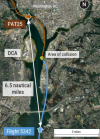
This is a useful graphic. Can anyone ID where both aircraft were when the helo received the traffic call out?
The first one where the pilot initiated the visual separation where we’ve since learned was most probably a lie? I can’t pinpoint that real accurately right now, but it was pretty far up there. Or the next time just before the collision? That’s annotated as “Area of collision.”
 
The first one where the pilot initiated the visual separation where we’ve since learned was most probably a lie? I can’t pinpoint that real accurately right now, but it was pretty far up there.

My first thoughts exactly as details became reported early on.

Big cities show lights flashing everywhere. Once departed Linden NJ (LDJ- 6nm south of Newark) one clear night during an evening NY Airspace push. During the climb out counted 18 aircraft without even looking too hard.

An earlier time did something similar (and never again) approaching to land at the highly populated central Long Island's Islip NY (KISP) at night. Approach called traffic a few miles off at nine o' clock. Looked over, saw lights (lots of them) and believed that one of the flashing strobes was probably my threat, then stupidly offered a knee jerk reply of "in sight".

A short time later a small aircraft wizzed by left to right no more than a half a mile out front. It was completely lost in the sea of lights until nearly pasted right into the windscreen.

Nighttime visual separations in crowded airspace are not to be taken lightly.
 
Says who? The charted approach says to follow the river. It even depicts the route meandering to avoid land areas. They were cleared via the charted approach and cleared to land on runway 33. What's so hard to understand that the approach means to avoid land areas? Fear of banking below 500 feet? (Doing so may be risky, but if the rules are to be changed, then they should have updated the approach.)


I was in a Learjet for most of my experiences there and then a Citation later on. The Lear was every bit as fast as the RJ. We didn't have FMS/GPS navigators to fumble with, though, heck we didn't even have flight directors in the Lear 24D. We just eyeballed it.


Show me where it says follow the Potomac River only to runway 1. I interpret it to follow the river to the airport no matter the runway. The primary runway gets its name in the title, imo:

View attachment 143604


I have a TD2 simulator, so I booted it up a while back and cruised in at 160 KIAS. It can be done.
It’s a visual approach to rwy 1. At the moment the controller clears you to circle to land on 33 you’re no longer flying the charted visual to rwy one. In the old days I would say you could wipe your butt with the chart but now it’s all in iPads and you can’t effectively use it as toilet paper. I think you are wrong in your assessment it’s a procedure for the entire airport. What would you do if they asked you to circle to 15?

RE your assertion it can be done, you are right and wrong. When you take into account current industry standards for stabilized approach criteria maneuvering below 500’ is generally frowned upon. It’s the trend of the business. Go fire up the sim, put yourself on final wings level at 500’ and tell me how it goes.
 
They were cleared for the "charted" Mount Vernon Visual approach to the airport
That is not how the part 121 airlines fly this approach.

I've been trained to fly it by two different airlines, and have flown it for one of them. The first was in 2014, the second more recently, when they were doing the construction on runway 19/1. The procedures that the 121 airlines use is to either fly the RNAV ground track or fly up the freeway to join final. This is what the controllers expect them to do.

In any case, you follow the river until you can't follow the river anymore and still land on the assigned runway. If you think about it, that's true for landing on Runway 1, too.
 
My first thoughts exactly as details became reported early on.

Big cities show lights flashing everywhere. Once departed Linden NJ (LDJ- 6nm south of Newark) one clear night during an evening NY Airspace push. During the climb out counted 18 aircraft without even looking too hard.

An earlier time did something similar (and never again) approaching to land at the highly populated central Long Island's Islip NY (KISP) at night. Approach called traffic a few miles off at nine o' clock. Looked over, saw lights (lots of them) and believed that one of the flashing strobes was probably my threat, then stupidly offered a knee jerk reply of "in sight".

A short time later a small aircraft wizzed by left to right no more than a half a mile out front. It was completely lost in the sea of lights until nearly pasted right into the windscreen.

Nighttime visual separations in crowded airspace are not to be taken lightly.
The ‘knee jerk’ in these PAT scenarios was not a reply of in sight. It was just simply ‘request visual separation’ without having seen traffic. The thinking was obviously if it gets close, we’ll see it in time and avoid then. There are some Airlines, all foreign I think, who refuse Visual Separation at night. There was an incident at SFO not long ago where the pilot refused visual separation and got vectored around so much while they were trying to build a hole for him that he was on the verge of minimum fuel and diverting to his alternate.
 
It’s a visual approach to rwy 1. At the moment the controller clears you to circle to land on 33 you’re no longer flying the charted visual to rwy one. In the old days I would say you could wipe your butt with the chart but now it’s all in iPads and you can’t effectively use it as toilet paper. I think you are wrong in your assessment it’s a procedure for the entire airport. What would you do if they asked you to circle to 15?

RE your assertion it can be done, you are right and wrong. When you take into account current industry standards for stabilized approach criteria maneuvering below 500’ is generally frowned upon. It’s the trend of the business. Go fire up the sim, put yourself on final wings level at 500’ and tell me how it goes.
Lol. I would say throw it in the back seat. You’re more colorful

 
Last edited:
"Those people are dead because I wasn't the RJ CA flying that visual" is the most main character syndrome, POA bird-pellet to this accident I've read so far. Between that and the manosphere/red-pill adjacent commentary about the helo crew demographics, you folks are something else. I <3 POA. :rofl:
 
"Those people are dead because I wasn't the RJ CA flying that visual" is the most main character syndrome, POA bird-pellet to this accident I've read so far. Between that and the manosphere/red-pill adjacent commentary about the helo crew demographics, you folks are something else. I <3 POA. :rofl:
Agree.

This is a clear airspace design failure. It’s obvious there were human factor failures but I find it grating there is so little awareness the failures are not new or terrifyingly bad. All of the errors made are of a magnitude that are normally absorbed into the safety margins of civil airspace. Those margins were non-existent for the two crews in this event. No room for error. It should never have been allowed.

We can arm chair QB until the end of time how these two crews could have done better or how exactly it went sideways but the ultimate responsibility is owned by the office that designed the DCA terminal airspace.
 
All of the errors made are of a magnitude that are normally absorbed into the safety margins of civil airspace. Those margins were non-existent for the two crews in this event. No room for error. It should never have been allowed.

... the ultimate responsibility is owned by the office that designed the DCA terminal airspace.
QED
 
Back
Top