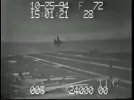
Crash at Reagan National Airport, DC. Helicopter crash into airliner.

Assuming you're correct, how is that not the IP's fault?

I think he was saying, it's the fault of the military culture, where a lower ranking officer is actually in charge, but the culture makes him walk a fine line between that, and the repercussions of insulting the "student" that has a superior rank.
 
To me, the discussion would seem more relevant if they were talking about altitudes. I'm hearing them talk about lateral direction, and from my understanding of the accident that wasn't the problem.

I think the problem was that someone decided that a 75' or similar clearance between flight paths was OK, considering that all the acceptable errors lined up to make that 0' or less. The reason an accident hadn't happened before was simply statistical, in that they never crossed at the same point in time, but there was a bit of airspace where both fixed wing and helicopters were both routinely flying through at similar times. Again, kinda like figure 8 racing in the air, that few people if anyone realized was happening.

That they were talking about left/right position, to me, implies that both of them were aware of their path, and neither one of them thought there was any problem with altitude.
 
Stupid and juvenile to turn this into some kind of gender thing.

Army helo crews have been mixed warrant/officer for a very long time. The warrants are almost always more experienced and skilled, and not at all shy about asserting themselves.
 
Stupid and juvenile to turn this into some kind of gender thing.

Army helo crews have been mixed warrant/officer for a very long time. The warrants are almost always more experienced and skilled, and not at all shy about asserting themselves.

hhmmm, maybe I missed it, but haven't people been discussing RANK, not gender?
 
I think the problem was that someone decided that a 75' or similar clearance between flight paths was OK
No. Absolutely not. Nobody ever decided that vertical separation was okay where the final and helicopter route crossed.

Visual separation, not altitude separation, had been applied. It was the responsibility of the helicopter to pass final before, behind, or after the CRJ. It was visual separation that failed.
 
I think he was saying, it's the fault of the military culture, where a lower ranking officer is actually in charge, but the culture makes him walk a fine line between that, and the repercussions of insulting the "student" that has a superior rank.
Except that isn't what he said.
Lobach is at fault on this crash.
 
To me, the discussion would seem more relevant if they were talking about altitudes. I'm hearing them talk about lateral direction, and from my understanding of the accident that wasn't the problem.

I think the problem was that someone decided that a 75' or similar clearance between flight paths was OK, considering that all the acceptable errors lined up to make that 0' or less. The reason an accident hadn't happened before was simply statistical, in that they never crossed at the same point in time, but there was a bit of airspace where both fixed wing and helicopters were both routinely flying through at similar times. Again, kinda like figure 8 racing in the air, that few people if anyone realized was happening.

That they were talking about left/right position, to me, implies that both of them were aware of their path, and neither one of them thought there was any problem with altitude.

To me it’s relevant because it shows no indication they were looking at the traffic that they were to pass behind.
 
I would like to quickly expand on the relationship between Warrant and Commissioned Aviators in an Army Unit. Normal ratios probably run at eight to one but also significantly over 90 % of the crew mix will be all Warrant Officers for most missions. It is not the norm for the Commissioned Officer to be the Pilot in Command in any given aircraft. Sir and Ma’am are just as easy as a first name or call sign in the cockpit. We have all said sir or ma’am at some time while taking control of the aircraft to avert disaster.
 
No. Absolutely not. Nobody ever decided that vertical separation was okay where the final and helicopter route crossed.

Visual separation, not altitude separation, had been applied. It was the responsibility of the helicopter to pass final before, behind, or after the CRJ. It was visual separation that failed.
It just seems to me that we have backups for our backups most of the time in aviation, but in the case of visual separation, especially at night, it is far too easy to screw up and there's no backup.

The backup, of course, should be greater separation of the routes, especially with the number of potential conflicts that we've found after the fact.

Especially on NVD's in a high light pollution environment. The crew specifically discussed distraction from bright lights.
 
It’s not the Lobach’s fault. This is an Aircrew Coordination (CRM) failure which ultimately rests on the shoulders of the IP.

As far as “sir or ma’am.” Well that’s the proper way to address a senior officer. It’s no different than the crew chief in the back addressing pilots as such. Doesn’t mean a thing as far as authority though. In this case the IP retains overall authority in handling the flight. You can be courteous to a senior officer and still tell them what to do.
 
and I still don't see PEOPLE DISCUSSING GENDER. I see one comment. so whatever right back at ya.

I suspect that such discussion would get deleted as being in violation of the POA ROC.
 
The IP asked the PIC twice to go left. If the helicopter had been just 200 feet to the left, there would haver been a near miss. The airliner was descending at 3 degrees.

I wonder if previous failures to respond promptly to a deviation caused the previous failure by the PIC?

If my IFR instructor told me that I was high, low, or Left right, they expected immediate control movement.
If they asked me if I was where I should be, they expected that I would scan, find the discrepancy, and correct it.
There is a big difference in the two messages. That difference was fatal in this case.
This misguided narrative was specifically examined in today’s hearing; i.e., that the PF disregarded a command from the IP to turn left. No one in the hearing room agreed with this narrative.

According to the CVR, between 20:47:52.5 and 20:47:56.4, the IP uttered the statement, “alright, kinda come left for me ma’am, I think that’s why he’s asking. We’re kinda out towards the middle.

The collision occurred at approximately 20:47:58.

Had the IP thought his aircraft was in danger of collision, I would have expected either a direct, urgent order by the IP to the PF, or for the IP to take the controls and execute an anti-collision maneuver.
 
For me, some of the discussion in this thread highlights why the Air Force (and the other Sevices, I’m sure) have two investigations after an accident: one entirely focused on safety, which is candid as well as protected from release, and occasionally a second one with far less access to much of the findings but more disclosable, including in civilian lawsuits, etc. I’ve served on the first but not the second and the first is definitely entirely about improving safety.

I have a hard time thinking the term “girlboss” would be found in the former for sure and probably either. I’ve served on the first but not the second and the first is definitely entirely about improving safety. If there was an issue related to culture, gender, or whatever, it would be called out there and addressed in a factual, apolitical way.

If one wants to be taken credibly I’d humbly suggest ditching that term.
 
The IP asked the PIC twice to go left. If the helicopter had been just 200 feet to the left, there would haver been a near miss. The airliner was descending at 3 degrees.
Or 200 feet to the left. Or 200 feet higher. Or 200 feet lower.
The IP wasn't instructing the PF to go left to avoid the airliner. If he'd seen the airliner, the collision wouldn't have happened.
 
For me, some of the discussion in this thread highlights why the Air Force (and the other Sevices, I’m sure) have two investigations after an accident: one entirely focused on safety, which is candid as well as protected from release, and occasionally a second one with far less access to much of the findings but more disclosable, including in civilian lawsuits, etc. I’ve served on the first but not the second and the first is definitely entirely about improving safety.

I have a hard time thinking the term “girlboss” would be found in the former for sure and probably either. I’ve served on the first but not the second and the first is definitely entirely about improving safety. If there was an issue related to culture, gender, or whatever, it would be called out there and addressed in a factual, apolitical way.

If one wants to be taken credibly I’d humbly suggest ditching that term.
1000029256.jpg

Considered Big Blue attempted at great lengths to cover up the Hultgreen crash and make her a hero despite her many deficiencies.
 
Was he riding as an IP or a check pilot?
Both?

The CW2 is described as the Instructor Pilot (IP) but the purpose of the PAT25 flight was “the pilot’s annual standardization evaluation with the use of night vision goggles (NVGs).” Both the pilot (O-3) and the IP were “current and fully qualified on the accident helicopter”.
 
I am trying to follow this but the jargon is throwing me. Who was the actual PIC? I know when I get a flight review, I am spectacularly the PIC. I had to seize the controls not so long ago from the fellow who was giving the review to stop him from killing us, there was never any question whose plane it was. Is it not the same in the Army? I assumed the CAPT was PIC.
 
View attachment 143503

Considered Big Blue attempted at great lengths to cover up the Hultgreen crash and make her a hero despite her many deficiencies.
That’s your basis for using a pretty derogatory term for all female officers?

I’ve seen many prior enlisted be publicly condescending towards officers. Less so, if ever, the other way. Just an observation.
 
Both?

The CW2 is described as the Instructor Pilot (IP) but the purpose of the PAT25 flight was “the pilot’s annual standardization evaluation with the use of night vision goggles (NVGs).” Both the pilot (O-3) and the IP were “current and fully qualified on the accident helicopter”.

I can only speak from my AF experience, but all check airmen (Stan/Eval Flight Examiners - SEFEs) are also IPs. Most SEFEs also instruct/supervise outside of a checkride event.

Being qualified in the aircraft does not necessarily mean you are qualified for the mission (Basic Qual vs Mission Qual). Our recurring checkrides are/were done every 12-18 months.

There’s some subtle complexities on the CRM side if the CWO was there as a check pilot vs IPing a syllabus ride vs supervising a currency ride.
Okay but at the end of the day you can only have one person in charge and one person responsible yeah? Who was it? This accident reminds me of the sad crash a Love Field in Dallas where the pilot got so many directions in such a short time and got overwhelmed, tragically. She should have backed off. Same here. When you are PIC, nobody has a gun to your head; it is your ship.
 
That’s your basis for using a pretty derogatory term for all female officers?

I’ve seen many prior enlisted be publicly condescending towards officers. Less so, if ever, the other way. Just an observation.
Quite the opposite. Many ringknockers treated enlisted like garbage. Besides, the worst pilot I ever flew with was a female. One with a bad attitude that the other pilots didn't want to fly with her.

The best pilots I ever flew with are the ones who did CSAR in Vietnam. We would fly through hell for them.
 
Okay but at the end of the day you can only have one person in charge and one person responsible yeah? Who was it? ….
Depends on the ride. What’ll blow your mind is the concept of a single seat platform where the IP/SEFE is in an entirely different airplane.
 
Last edited:
Besides, the worst pilot I ever flew with was a female. One with a bad attitude that the other pilots didn't want to fly with her.
Clearly you’ve made up your mind about some things.

I was a physician in the Air Force. Probably the best boss I had was a female nurse (actually, as I think about it, at least two of those come to mind). With my upbringing that was a shift in perspective.

One is well served by being aware of their biases, regardless of their age.
 
For me, some of the discussion in this thread highlights why the Air Force (and the other Sevices, I’m sure) have two investigations after an accident: one entirely focused on safety, which is candid as well as protected from release, and occasionally a second one with far less access to much of the findings but more disclosable, including in civilian lawsuits, etc. I’ve served on the first but not the second and the first is definitely entirely about improving safety.
Don't know about now, but back in the old Army days there was a separate 'Collateral Board' to determine pecuniary liability, like what you describe.
 
No. Absolutely not. Nobody ever decided that vertical separation was okay where the final and helicopter route crossed.

Visual separation, not altitude separation, had been applied. It was the responsibility of the helicopter to pass final before, behind, or after the CRJ. It was visual separation that failed.
I thought some were hanging on to the idea that the route itself was OK, and that visual separation was just added as an extra to the already OK vertical separation for the route. Because the flight paths were intersecting anytime two aircraft were on those two paths.

Maybe I should amend my comment to say that someone thought that the route was OK given the addition of visual separation? But I don't know if that was ever a condition of the route universally, just applied by the controllers as an extra? Along the lines of they believed that the route was tight, but safe, and if everybody flew it just right everything would be OK. 150 mph closing rate at right angles at 75' apart is fine, because it only crosses for a fraction of a second.

The thing that had been keeping this from happening before was that the space occupied by both paths was small and separated by time. The small overlapping vertical component meant that sometimes they'd be able to pass at the same time without colliding. My bet is that no pilot, going either way, using visual separation ever even saw the near misses that happened before this.

Visual separation, at night in the airport environment, used as a compensating control for a set of paths that intersect isn't a control at all. As a comparison, the complexity and training around the use of close parallel runways at ATL weren't done for the fun of it, and as far as I know those paths do not intersect. But with the helicopter traffic, they were given the equivalent of a pat on the back and a "good luck buddy, you won't be able to see it if it hits you, but it won't last long". I'm not suggesting that was the intent, but it was absolutely the effect. Butch and Sundance jumping off the cliff.

Media people seem to want this to be about one person's mistake. A pilot, or a mechanic, or a controller. Or some sort of staffing issue. Some kind of c theory. Or something that has to do with classes or types of people. There must be somebody to blame. Nobody in the press wants to hear that it happened because the routes were just wrong. I didn't think that extended to people that actually fly airplanes.

 
I thought some were hanging on to the idea that the route itself was OK, and that visual separation was just added as an extra to the already OK vertical separation for the route. Because the flight paths were intersecting anytime two aircraft were on those two paths.

Maybe I should amend my comment to say that someone thought that the route was OK given the addition of visual separation? But I don't know if that was ever a condition of the route universally, just applied by the controllers as an extra? Along the lines of they believed that the route was tight, but safe, and if everybody flew it just right everything would be OK. 150 mph closing rate at right angles at 75' apart is fine, because it only crosses for a fraction of a second.

The thing that had been keeping this from happening before was that the space occupied by both paths was small and separated by time. The small overlapping vertical component meant that sometimes they'd be able to pass at the same time without colliding. My bet is that no pilot, going either way, using visual separation ever even saw the near misses that happened before this.

Visual separation, at night in the airport environment, used as a compensating control for a set of paths that intersect isn't a control at all. As a comparison, the complexity and training around the use of close parallel runways at ATL weren't done for the fun of it, and as far as I know those paths do not intersect. But with the helicopter traffic, they were given the equivalent of a pat on the back and a "good luck buddy, you won't be able to see it if it hits you, but it won't last long". I'm not suggesting that was the intent, but it was absolutely the effect. Butch and Sundance jumping off the cliff.

Media people seem to want this to be about one person's mistake. A pilot, or a mechanic, or a controller. Or some sort of staffing issue. Some kind of c theory. Or something that has to do with classes or types of people. There must be somebody to blame. Nobody in the press wants to hear that it happened because the routes were just wrong. I didn't think that extended to people that actually fly airplanes.
Russian roulette, but with aircraft.
 
Visual separation, at night in the airport environment, used as a compensating control for a set of paths that intersect isn't a control at all.

Could not agree more. My theory is that Army got away with those routes so long because their pax were high ranking people who liked their V.I.P. transport and weren't shy about telling FAA to quit griping. As far as the altimeter error 'smoking gun', I call that a red herring. Collective Army action/inaction and FAA action/inaction caused the accident. The Board will subdivide it further, I'm confident. The only innocents are those young skaters, the families, and the flight crew aboard the doomed airliner.
 
… the altimeter error 'smoking gun', I call that a red herring. ….
Me, too. Somebody should read the panel TSO section relating to altimeters to see what’s allowable.

My guess is 20+ years ago some old heads put together procedures that worked and, over time, the corporate body didn’t understand the consequences of unwritten rules around those procedures and whittled away at them over time since they were told there was ten pounds of stuff going in to that sock, whether they liked it or not.

And with all such things, the operators, 4+ generations later failed to understand the consequences of the game they were playing.
 
Okay but at the end of the day you can only have one person in charge and one person responsible yeah? Who was it? This accident reminds me of the sad crash a Love Field in Dallas where the pilot got so many directions in such a short time and got overwhelmed, tragically. She should have backed off. Same here. When you are PIC, nobody has a gun to your head; it is your ship.
The crash you mention, 4252G, occurred at Houston Hobby. The radio transmissions, and the end result, are sad.
 
Was he riding as an IP or a check pilot?
IP. In a stands eval (APART), the IP is always briefed as the PIC (PC). An SP is always an IP as well. Generally a SP is an IE as well. This CW2 was just an IP though and her (Lobach) instrument eval of the APART would been done by an IE.

Now if he were in the back doing IP duties evaluating the crew up front, then they won’t be able to log PC. Must have access to flight controls. It’s a briefed position though and in this case, I guarantee the IP was briefed as PC.
 
Back
Top