MauleSkinner
Touchdown! Greaser!
You agree with a question?Agreed


You agree with a question?Agreed

Which is why we have supplemental oxygen systems in pressurized planes. Presumably, these guys had their masks on. Of course, there have been some pretty nicely documented failures where the pilots didn't get their masks on (less obvious depressurization events).At 18,000 you have ~2.5 minutes' useable brain time. You really can't descend to <16,000 over that portion of the divide (which doesn't do you a lot of good, brainwise). And, if you descend to 14,000 you'd better be terrain smart, which is hard to imagine after that sort of hypoxic hit. The pilots and the automation clearly made GOOD choices.
Any chance you can post a screenshot of the AFM Supplement Limitations Section? Be interesting to see what limitations there are for its use.Yes, that is a hazardous attitude. Know thy systems, and know thy own limitations.


How about flying in and out of ASE in IMC? High altitude operations in mountainous terrain?I've never flown for 135, nor pressurized plane...
This is the only part of your rant that’s relevant. I haven’t looked at the actual profile, but if they indeed did nothing for 45 seconds, that would indicate that they were incapacitated. If they were incapacitated, the rest is probably the best decision making they could have done under the circumstances.First, the pilots had to do nothing for 45 seconds after the depressurization. That seems like a fail right there.
That's my question. According to the statement, the pilots immediately got their oxygen masks on and communicated the emergency to ATC before Otto took over. There's no indication they were ever incapacitated.On the other hand, if they got their masks on and oxygen flowing in a timely manner, why wait another 30+ seconds to let the airplane initiate the emergency descent?
My qualifications are irrelevant because I wasn't on the plane. Are you saying that these pilots weren't qualified to do that or handle an emergency under those circumstances? That takes me back to my statement that I would never fly with them or this carrier. I guess what everyone here is saying is that if these pilots had been flying a plane without Otto in this situation, they'd be dead, so letting Otto land was their best option.How about flying in and out of ASE in IMC? High altitude operations in mountainous terrain?
So I guess we need an AFMS and some company SOPs.That's my question. According to the statement, the pilots immediately got their oxygen masks on and communicated the emergency to ATC before Otto took over. There's no indication they were ever incapacitated.
They are relevant. You've made strident criticism of the pilots' response to a decompression event, from their initial reactions to the landing. Doing so without having any granular knowledge of what was involved in managing the emergency in the conditions that existed at the time and the decision ladder enhancement of the autoland activation gives your observations little credibility.My qualifications are irrelevant because I wasn't on the plane.

Nobody said "always". I'm saying that in *this particular instance* that there is a compelling case to be made that the automation is safer.Wait, so now is the consensus that 45 seconds really isn't even enough time for the pilots to take decisive action in the event of depressurization? If that's the case, then either the system should wait longer or it should just activate right away. After all, if it can always handle the emergency better than human pilots, we should have it always handle the emergency.
Incapacitation isn't always black and white, especially when it comes to hypoxia. Sometimes, you think you're in control, until you're not. It's still an emergency, and this feature is still a good idea.If I was Garmin, I would 100% take the position that if the pilot is conscious, he should fly the plane rather than relying on what is designed to be an emergency only feature for use in the case of pilot incapacitation.
If they were *not at all* competent, sure. We don't have any evidence to that effect at this point.And if these pilots truly were less competent to handle this emergency and safely land the plane, then the computer, that's a great reason to never fly this carrier or with these pilots.
You only posted a tiny portion of the sectional so as to make your point, by not including the portions where they were.Where are the peaks above 14,000' between them and BJC? How did the Garmin manage to make an emergency descent without hitting them?
View attachment 148534
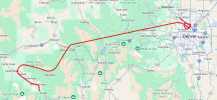
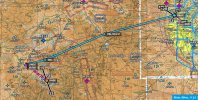
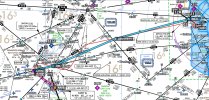
There. Is. No. Safe. Vector. At. 15,000. Feet. Here.And shouldn't they have been familiar with what was between them and their intended destination? They told ATC they had a decompression, why not ask for a safe vector to 15,000 ft while already in a descent to an altitude they knew was safe?
No kidding. Then again, I remember when I was a kid and I was first a member of EAA, in 1987, and pilots were bitching about having to install a Mode C transponder to fly within 30nm of a Class B.I still can't get over how angry some of you are that these pilots allowed the computer to land the airplane, as it was designed to do.
 We really are a bunch of cheap, luddite, curmudgeonly old bastards.
Oooh, you should have seen the thread we had when Cirrus and Garmin came out with the LVL button. Now, this seems way too tame for what I remember, but I did find an early thread about it:Had they crashed and died, of course these threads usually pick apart the pilot's every wrong move, including what they had for breakfast. But these pilots chose to let the emergency system do its thing, it did, they survived and the aircraft was unharmed. Why the animosity? I'd love to go back in this section to the first CAPS deployment.
Death before dishonor...
Cirrus Design is now offering its top-of-the-line SR22 and turbo models with a panic button. The customized $48,000 Garmin Perspective integrated cockpit option includes a bright blue emergency switch called LVL to return the airplane to straight-and-level flight. The LVL button can recover the aircraft from an attitude of 75 degrees of roll and 50 degrees of pitch, even if they occur simultaneously.
Your qualifications become relevant when you start dictating what they should have done, because you're implying that you know better than they do.My qualifications are irrelevant because I wasn't on the plane.
There are almost always multiple options that don't result in death, and one of them is the best option the pilots have given a particular circumstance.Are you saying that these pilots weren't qualified to do that or handle an emergency under those circumstances? That takes me back to my statement that I would never fly with them or this carrier. I guess what everyone here is saying is that if these pilots had been flying a plane without Otto in this situation, they'd be dead, so letting Otto land was their best option.
If they can get the plane safely on the ground, surely they are still competent enough to monitor Otto... And I'm not sure why you think there would be any question about Otto getting them on the ground safely.And what I'm saying is that I believe competent and proficient pilots in this situation should know that they can safely get the plane on the ground, which they couldn't say for certain about Otto.


Was that peak in the path between them and the best landing airport? What else did it happen 25 miles from?You conveniently ignore that this depressurization happened about 25 miles from the highest peak in the Rocky Mountains.
The first transmission from Otto has them 2 miles south of the airport. Where did the emergency occur?Here's the view of it from Google, Sectional, and Low Enroute charts. On the charts, I've also got their filed route showing. The red line in all three was their actual track. Note that the OROCAs are all above 16,000. I even looked up the MIA chart for ATC, and their minimum altitudes for vectoring are mostly well above 15,000 (up to 16,400) as well.

No, but with the confusion and chaos that can accompany such an incident, I did take note that the first thing the (human) pilots did was to initiate the descent *and turn away from that mountain.*Was that peak in the path between them and the best landing airport?
No idea what you're after here.What else did it happen 25 miles from?
Northeast of Aspen, just prior to the descent and left turn being initiated, as far as we know.The first transmission from Otto has them 2 miles south of the airport. Where did the emergency occur?

Er, even a GNS430 knows terrain and obstacle heights so it can flash red and yellow stuff on the moving map for you to see. This is not new technology.Where are the peaks above 14,000' between them and BJC? How did the Garmin manage to make an emergency descent without hitting them?
Their statement is that they immediately put on their masks and they weren't incapacitated. I believe them. And your defense of them seems less and less like a defense.Incapacitation isn't always black and white, especially when it comes to hypoxia. Sometimes, you think you're in control, until you're not. It's still an emergency, and this feature is still a good idea.
On the contrary, they could have safely flown their entire route at 15,000'. Perhaps they didn't even need to since the pilots were the only souls on board and had oxygen.You only posted a tiny portion of the sectional so as to make your point, by not including the portions where they were.
You conveniently ignore that this depressurization happened about 25 miles from the highest peak in the Rocky Mountains.
Here's the view of it from Google, Sectional, and Low Enroute charts. On the charts, I've also got their filed route showing. The red line in all three was their actual track. Note that the OROCAs are all above 16,000. I even looked up the MIA chart for ATC, and their minimum altitudes for vectoring are mostly well above 15,000 (up to 16,400) as well.
View attachment 148544
View attachment 148545
View attachment 148546
There. Is. No. Safe. Vector. At. 15,000. Feet. Here.
I thought that when Otto took over, their MFD and PFD were replaced with cartoons for passengers? So I don't really understand what they were monitoring. And if it is difficult to recover the system, what would they have done if they were unhappy with what they saw Otto doing? How did they know that Otto wasn't going to fly them into the highest peak in the rocky mountains? Yeah, their trusting Otto's capabilities more than their own is a red flag for me.If they can get the plane safely on the ground, surely they are still competent enough to monitor Otto... And I'm not sure why you think there would be any question about Otto getting them on the ground safely.

JimR said:As for "emergency descent", while the pilots might be loopy or unconscious at 16K, that's not an altitude where a healthy person would be at risk of imminent death, so remaining above terrain would be higher priority than descending to lower altitudes for richer oxygen. I expect the system is designed to fly a route that avoids terrain (and obstacles) first and then safely descends when able.
Lack of an accident isn’t what defines a flight as “safe.” The debate here seems to be about which is “safer,” which would make for good or gooder outcomes when it occurs again.Interesting that the conversation isn't about a bad outcome. The outcome was good.
It's about how it was done, not what was accomplished.
Was it riskier to use the auto land? Real world evidence shows it worked.
We're discussing actions in the past with an outcome in the past as if there's still a chance those past actions could lead to a past bad outcome.
Why not discuss "this is a good outcome, how can we learn from this and get more good outcomes when this situation occurs again"?
Are you saying they had a forebrain insult even though they put the mask on immediately as per the EP? Are you saying an airline crew would not be "right" after an emergency descent from FL 350 to 10000 and probably should keep their masks on and maybe at 100%? As to 45 seconds I could see a delay in performing the emergency descent to see if they could salvage the cabin pressure since pax wouldn't be at risk.The brain does not recover from a forebrian ischemia insult (brain diverts blood flow AWAY from the frontals when O2 supply is poor) until >30 minutes has passed below 10,000 feet. You have to get below 10, NOT AN OPTION at Red Table Vortac. Thus if they had the insult at pressure altitude 18,000, you cannot exepct them to be "right" until >30 minutes after descent to below 10,000.
The original author on this study is Nestus, T.R. et al. from FAA in about ~1980 (a pressure chamber study).
So thinking that they could just decend to a lower altitude and recover is fallacious.
Heck the Eisenhower tunnel is at higher than 10,000. "commmmmminggggggg though.......as the King Air roars down the tunnel LOL"
The recommendation I’ve always heard is masks on 100% until the ambulance pulls up to the airplane.Are you saying an airline crew would not be "right" after an emergency descent from FL 350 to 10000 and probably should keep their masks on and maybe at 100%?
The ridiculous hyperbole is astounding. The autoland is a certified system that is authorized to operate in the national airspace. They weren't "NORDO," and there was infinitesimally small chance the automation would fail to function properly.I thought that when Otto took over, their MFD and PFD were replaced with cartoons for passengers? So I don't really understand what they were monitoring. And if it is difficult to recover the system, what would they have done if they were unhappy with what they saw Otto doing? How did they know that Otto wasn't going to fly them into the highest peak in the rocky mountains? Yeah, their trusting Otto's capabilities more than their own is a red flag for me.
If the emergency happened where you suppose, why didn't they return to Aspen? Instead they continued flying--sorry, let Otto continue flying--NORDO into the Denver Class B.
Not sure what you mean by that... And I'm not at all saying "They did no wrong!" We do not have enough information to know for sure. I am merely making the case that it's very possible that they DID make the right decisions for the scenario they were in.Their statement is that they immediately put on their masks and they weren't incapacitated. I believe them. And your defense of them seems less and less like a defense.
In theory. Keep in mind, though, that having the mask on makes communication (both in and out of the cockpit) very difficult even if they're working perfectly, which adds risk.On the contrary, they could have safely flown their entire route at 15,000'. Perhaps they didn't even need to since the pilots were the only souls on board and had oxygen.
MFD is totally gone, PFDs have a strip on the top. Airspeed, attitude, altitude are still there per the video Mark posted earlier in the thread.I thought that when Otto took over, their MFD and PFD were replaced with cartoons for passengers?
It's not that it's "difficult" but it does take some time. You can take control of the plane pretty much immediately, but you can't land immediately and you can't even navigate immediately. Aviate, wait, communicate?And if it is difficult to recover the system, what would they have done if they were unhappy with what they saw Otto doing?
Because the system was on autopilot and has TAWS for one. It also won't go below 15,000 and while that's close and illegally low, in theory if everything else goes right they won't hit anything.How did they know that Otto wasn't going to fly them into the highest peak in the rocky mountains?
Humans. Computers. One of the two has degraded performance when there's degraded cabin pressure. Which one?Yeah, their trusting Otto's capabilities more than their own is a red flag for me.
Because Aspen is probably the most difficult and dangerous airport to fly into in the entire CONUS, and even though they had just landed there, it is NOT the place to go in an emergency.If the emergency happened where you suppose, why didn't they return to Aspen?
Because some people have a macho attitude that prevents them from realizing that technology developed for safety actually works. Look at how many Cirrus pilots died instead of pulling the red handle in the early years (it was a lot).Why not discuss "this is a good outcome, how can we learn from this and get more good outcomes when this situation occurs again"?

Even a Lowrance AirMap from the nineties (still have mine!) has an obstacle database. As it doesn't have altitude it only lets you know something is in your path, not whether you'll overfly it. Still have it.Er, even a GNS430 knows terrain and obstacle heights so it can flash red and yellow stuff on the moving map for you to see. This is not new technology.

I haven’t followed the thread in a while. Information still not complete and a bunch of fighting opinions don’t interest me.Not sure what you mean by that... And I'm not at all saying "They did no wrong!" We do not have enough information to know for sure. I am merely making the case that it's very possible that they DID make the right decisions for the scenario they were in.
In theory. Keep in mind, though, that having the mask on makes communication (both in and out of the cockpit) very difficult even if they're working perfectly, which adds risk.
MFD is totally gone, PFDs have a strip on the top. Airspeed, attitude, altitude are still there per the video Mark posted earlier in the thread.
It's not that it's "difficult" but it does take some time. You can take control of the plane pretty much immediately, but you can't land immediately and you can't even navigate immediately. Aviate, wait, communicate?
Because the system was on autopilot and has TAWS for one. It also won't go below 15,000 and while that's close and illegally low, in theory if everything else goes right they won't hit anything.
Humans. Computers. One of the two has degraded performance when there's degraded cabin pressure. Which one?
Because Aspen is probably the most difficult and dangerous airport to fly into in the entire CONUS, and even though they had just landed there, it is NOT the place to go in an emergency.
Because some people have a macho attitude that prevents them from realizing that technology developed for safety actually works. Look at how many Cirrus pilots died instead of pulling the red handle in the early years (it was a lot).
Every time there's new safety tech (BRS chutes, LVL button, smart glide, autoland, etc...) some pilots will talk **** about anyone who buys it, uses it, or says anything positive about it. They're the same ones who would die rather than be saved by tech.


There have been some pretty amazing technical developments in recent years, SpaceX ability to return a booster right onto a rig comes to mind. This autoland system is another.Auto land only uses runways that have published GPS approaches with vertical guidance. Prefers towered airports but tries to avoid really busy class Bravos. But will land at a non-towered airport if it has to, and does check runway length. Each aircraft has its own requirements for runway length. It will look at winds and weather, avoid thunderstorms for instance and pick the appropriate orientation for winds. As mentioned above, will manage throttles, flaps, landing gear, deice equipment if needed, and talk to ATC and then to tower/CTAF. Will talk to the passengers and let them know what is happening. Will squawk 7700. Will bring the plane to a stop on centerline (usually) and shut down the engines Then tell the passengers how to egress, open the door etc. The equipment self tests before each flight and will annunciate if any systems are degraded before or during flight. With degraded systems if necessary it will do its best with the systems remaining, but the POH states the plane could depart the runway, say if brakes had failed. So Garmin did not “wing” this system. It is very precise and well engineered. Piper was the test bed for the hardware in the M600, it as then rolled out to other OEM’s. Pretty crazy. 10 years ago, I don’t think there were many in the know that thought this tech could get certified in a light GA aircraft.
Jim, 37,000 ft is a totally different environment (when the FAR requires that one of the pilots already be wearing the mask). If the Pilot flying doesn't get the Scott 2000 mask in the first 10 seconds there are data he is still making cognitive errors when they get down to the ground. And that is on 100% O2 (Occlusive mask). Brain circulation takes a LONG while to recover. It suggests a prostaglanding mechanism but nobody has been able to show that (no funding).Are you saying they had a forebrain insult even though they put the mask on immediately as per the EP? Are you saying an airline crew would not be "right" after an emergency descent from FL 350 to 10000 and probably should keep their masks on and maybe at 100%? As to 45 seconds I could see a delay in performing the emergency descent to see if they could salvage the cabin pressure since pax wouldn't be at risk.
I haven't heard that. If you get to 10 or below mask can come off. Higher leveloff due to terrain, mask to normal.The recommendation I’ve always heard is masks on 100% until the ambulance pulls up to the airplane.
So operators should change their procedures to keep masks on after 10000 feet but go to normal? At a higher terrain leveloff stay on 100%?Jim, 37,000 ft is a totally different environment (when the FAR requires that one of the pilots already be wearing the mask). If the Pilot flying doesn't get the Scott 2000 mask in the first 10 seconds there are data he is still making cognitive errors when they get down to the ground. And that is on 100% O2 (Occlusive mask). Brain circulation takes a LONG while to recover. It suggests a prostaglanding mechanism but nobody has been able to show that (no funding).
@12,500 it has been shown that if oxygen is applied after 30 minutes of exposure to 12,500 pressure altitude, the brain takes > 30 minutes at the surface to STOP MAKING COGNITIVE ERRORS. So that tells us that getting down to 12.5 for a 30 minute trip ahead will not recover hypoxic forebrain. I'm pretty sure form over 40 trips from the midwest to KASE that there really isn't a way to get from KASE to BJC VFR, without having to be VERY SHARP and take some risks, and even that won't recover the "Judgement functions" of the brain over the next 30 minutes.
So by inference, with 30 minutes of flight remaining, from Red Table at 18K.....they might not have been recovered. The Exact interval at 18,000 has not been established.
I can tell you that there is at least one TBM 750 accident in which a slow to recognize cabin pressure loss (not "sudden") was not correctly responded to and even though the guy was found with evidence of having a mask on- he was nonfunctional.
The point is, getting the mask on doesn't necessarily rectify the self recognition of "hey we're not right". They might have been okay, but there's good data that it might have been not until after landing at BJC when they were "OK".
B
So you’re saying that after a depressurization event, the pilots are fully recovered by the time they get below 10,000 ft?I haven't heard that. If you get to 10 or below mask can come off. Higher leveloff due to terrain, mask to normal.
So you’re saying that after a depressurization event, the pilots are fully recovered by the time they get below 10,000 ft?
I'm saying most operators assume the mask comes off and even have it in the procedure to reestablish normal coms. Can you cite the authority or expert that advises this?So you’re saying that after a depressurization event, the pilots are fully recovered by the time they get below 10,000 ft?
Best des the altitude chamber course I did, pretty much every time it’s come up at FlightSafety/CAE/Wherever that’s the recommendation.I'm saying most operators assume the mask comes off and even have it in the procedure to reestablish normal coms. Can you cite the authority or expert that advises this?
The two airlines I worked at in the past did it as normal practice. Not in the checklist but seems to be common:Best des the altitude chamber course I did, pretty much every time it’s come up at FlightSafety/CAE/Wherever that’s the recommendation.
And while I haven’t worked for “most operators,” I’ve never seen it in a checklist or manual to take the mask off at 10,000.
The fact that YouTube is your cited authority sold me.The two airlines I worked at in the past did it as normal practice. Not in the checklist but seems to be common:

The two airlines I worked at in the past did it as normal practice. Not in the checklist but seems to be common:Best des the altitude chamber course I did, pretty much every time it’s come up at FlightSafety/CAE/Wherever that’s the recommendation.
And while I haven’t worked for “most operators,” I’ve never seen it in a checklist or manual to take the mask off at 10,000.
Actually the Airbus link was not the right one. But I'm not citing any authority. My past airline experiences were to remove the mask circumstances appropriate. It still seems to be done in these airline related clips. If it's a recommendation in your experience you are welcome to follow it.The fact that YouTube is your cited authority sold me.
