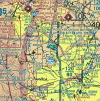
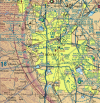
Autoland King Air 200 Due to Pilot Incapacitation Broomfield, CO 12/20/25

I will respectfully disagree. As the statement says, they were IMC, over mountains, just had a rapid depressurization and were masked up, probably fighting the effects of adrenaline and helmet fire, and the airplane was flying itself just fine. That gave the pilots the ability to slow down, assess the situation, and not do anything stupid to make it worse. How many accidents were caused by the overreaction or mis-reaction of the pilots after some type of system failure that shouldn't have been a problem. I recall the King Air at Cape Girardeau years ago that the pilots did their best to pull the wings and tail off the airplane after a cabin depressurization event. I have to side with the pilots on this one, they are alive and the airplane is reusable. If that isn't manly enough for you, oh well.
If the pilots weren't capable of avoiding mountains in IMC, how could they be capable of monitoring the AP to make sure it didn't fly them into mountains in IMC.

Occam's Razor suggests to me that the things activated and they just watched it work. But what did they tell the first responders who supposedly had no idea what happened?
 
I’m not sure why anyone is saying there’s terrain and mountains to avoid near SVH. It’s pretty gosh darned flat.


20f3021619757a3598108e5befb33698.jpg
 
The issue for transitioning to the operational mentality of humans as the back up, is that humans make poor back ups compared to computer loops. Atrophy is the compelling mechanism. What often gets sold as "the human is backing HAL up" is often just an atrophied-hands human hiding behind HAL. There is no actual backup.

A human who knows this and hides behind the automation to get him out of IMC, is a liability. And it is absolutely a perverse incentive for employers to just nix them from the cost chain altogether. An uncharitable view of this narrative could argue that's exactly what they did. Yes chat that is conjecture, I don't need permission to think like some of y'all do, digressing. @Jim K you're not alone in your assessment.

This is why in the training world we have such a thing as continuation training allotments, and I am encouraged and do steal stick time from my students at the end of the sortie in order to remain recent and proficient as the glove-saver. Granted, my occupational use case is way more skill-perishable than average, but the macro point remains.
 
I was thinking a little about the whole autoland concept, not just this particular case: that’s pretty dang cool.
 
I saw an official statement from the operator this morning. They stated this was a repositioning flight with 2 pilots and no passengers. Once reaching FL230 they experienced a rapid decompression event and the emergency auto descent system activated. Given the circumstances, the pilots elected to allow the system to do its thing while monitoring the situation and its operation.

Edited to add the full statement for your reading pleasure:

"Below is our statement from Chris Townsley, our CEO. No additional interviews will be given at this time. Thank you, Kyle

Buffalo River Aviation Statement Regarding Colorado

Emergency Landing


Buffalo River Aviation confirms its Super King Air 200, N479BR, experienced an in-flight emergency on Saturday, December 20, after departing from Aspen, Colorado (KASE) on a FAR Part 91 reposition flight. No passengers were on board. Climbing through 23,000ft MSL, the aircraft experienced a rapid, uncommanded loss of pressurization. As per standard procedures, the two pilots immediately put on their oxygen masks.


The aircraft, equipped with Garmin Aviation’s latest Emergency Descent Mode (EDM) and Autoland systems, automatically engaged exactly as designed when the cabin altitude exceeded the prescribed safe levels. The system selected a suitable airport per Garmin criteria (KBJC, Rocky Mountain Metropolitan Airport), navigated to it, and communicated automatically along the way.


Due to the complexity of the specific situation, including instrument meteorological conditions, mountainous terrain, active icing conditions, unknown reasons for loss of pressure, and the binary (all-or-nothing) function of the Garmin emergency systems; the pilots, exercising conservative judgement under their emergency command authority (FAR 91.3) made the decision to leave the system engaged while monitoring its performance and attempting communications as able within the constraints of the system. While the system performed exactly as expected, the pilots were prepared to resume manual control of the aircraft should the system have malfunctioned in any way.


Reports of pilot incapacitation are incorrect and result solely from the Garmin emergency system's automated communication and reporting functions. In this case, the crew consciously elected to preserve and use all available tools and minimize additional variables in an unpredictable, emergent situation, prioritizing life and a safe outcome over all other factors, as they are trained to do. The aircraft returned home the following day without incident.


Buffalo River Aviation is grateful to the pilots for their exceptional judgment and execution of protocols, and to the Rocky Mountain Metropolitan Airport and Denver Center Tracon personnel for their assistance and support during this event.


Chris Townsley, CEO, Buffalo River Aviation"
Yeah that's what I heard too. I guess neither pilot can log the time or the landing though
 
As a repositioning flight, what was the intended destination?
 
Sorry I'm just now catching up to this. Background: I was director of safety and a captain at a 135 operator that used airplanes that had this equipment, so I had to become VERY familiar with it.

FWIW, it was included on our passenger briefings in those airplanes. "If, somehow, both pilots were to become incapacitated, you push that big red button up there between them for three seconds, buckle yourself back in and enjoy the ride."

What kind of sorcery is this? This is game-changing. Does it sense the incapacitation and automatically invoke action? If so, how does it sense incap? Does it query the pilot after sensing a period of inactivity or something?
Three ways of activating it:

1) The Big Red Button.
2) If you are in LVL mode for 2 minutes. This can happen if you hit the LVL button, or if ESP has to make attitude/power corrections and there's no response from the pilot. If you don't take it out of LVL mode after two minutes, autoland is automatically activated.
3) If you got a CABIN ALTITUDE message at or above 15,000 feet, after 45 seconds Emergency Descent Mode is activated and the aircraft will go into FLC near max speed, HDG 90º left of current heading, and ALT will arm at 15,000 feet. Upon reaching 15,000 feet, HOMESAFE RQST comes on for 15 seconds and if there is no response, the system assumes the pilots are still out and autoland is automatically activated. That appears to be what happened here.

Being reported on another site there were 2 pilots onboard, it was inadvertent activation, and they didn't know how to deactivate it.
Say what? That has to be a joke that got taken seriously. If not, then the manual and training is incomplete.
It's in the manual... It's in the checklists, which is the more important thing as that should be where any pilot goes when encountering an abnormal/emergency situation.

Training, however, you may be right. There was a previous activation where the pilot hit the LVL button to show his friend how that worked, not realizing that he had to get all the autopilot axes back out of LVL mode within two minutes. Once it was activated he didn't know what to do. Not sure if that one went all the way to the ground or not, but it wasn't well publicized because it was an inadvertent activation and not an incapacitation. Some of our pilots were in the area and heard it on the ATC frequency they were on.

From what I have read plus a couple videos I have seen, a button has to be manually pushed to activate the system.
Nope - You have 2 minutes to respond after a LVL event and 45 seconds to respond after a cabin depressurization situation before the system activates itself.

But can’t you deactivate the auto land? Other than pulling an autopilot CB.
Yes, but it's not that simple.

Pull the circuit breaker.
There is no circuit breaker for autoland, and it would be HIGHLY inadvisable (and dangerous) to pull the autopilot or PFD/MFD breakers when autoland is active.

And just how is an incapacitated pilot supposed to do that?
There are at least two situations where the system will activate itself (see above) and if the pilots are incapacitated, passengers can activate it via the Big Red Button.

Deactivate with the AP disconnect button.
Ah, but pushing the A/P DISC is not enough to deactivate it...

As to crosswinds, the autoland looks at winds, weather, runway properties and picks the best airport with a precision GPS preferably a tower, less preferably a class-B, and a host of other inputs. Pretty well engineered.
It's incredibly well done. In fact, if radar shows an area of precipitation moving in the direction of the airport it initially chose, it can "change its mind" and select a different airport.

Does it even remember to lower the landing gear at an appropriate airspeed and time?
Yes. Gear and flaps... And it also brakes to a stop on the runway and shuts down the engines.

What a complicated system.
Does it use a published approach to find a runway?
Most likely, yes.

An aside; I wonder what the ICA says??
Should almost include a full operational test each year.
You can't do a full operational test as the plane has to make a quick trip to maintenance again afterwards; plus of course air traffic gets significantly disrupted.

There are ICAs and I remember there were some "odd" things you had to do annually in maintenance because of that, but I don't remember the specifics.

As I've been diving into the complexities of glass panel systems for our plane, and talking and reading about other pilots' experience with these systems, it has become pretty apparent that the in-depth systems knowledge needed to understand what is happening during "abnormal events" is lacking in a good number of pilots, not helped by a lack of training materials emphasizing how to handle various failure conditions. The problem with developing good training is that there are so many different systems, with boxes talking to each other in various ways, that there is no consistent way to deliver the training other than "you should really understand how your specific system is wired".
While I agree 100%, the autoland is currently only available for G3000 equipped airplanes, so they're all going to be wired the same at the factory.

I do expect that we'll be able to get this technology as a retrofit in the next 10 or so years, that will definitely make things more complicated.

Interesting. I'd not be happy if I was the operator. Putting myself in their shoes: I'm paying two pilots....why exactly? They elect to let the plane land itself rather than fly it? Autoland is pretty impressive, but from what I've seen plants the plane pretty solidly. Chance for a hard landing? Tying up ATC/the airport? Getting my company's name and our airplane all over the news? These guys would be looking for a new job. Meanwhile I'd also be furiously updating my 135 certificate to eliminate the second pilot.
You're paying two pilots to make good decisions. As I understand it, these guys were over the mountains, in IMC, and had just experienced a rapid decompression event. They could not descend to breathable altitudes in the area they were in; it's very difficult to communicate with the oxygen masks on, they were likely on a massive adrenaline high, and the airplane was flying itself to a safe place to land. There is no good reason I can think of for them to change what was happening.

The system lands fairly well from what I understand, it flares using the radar altimeter and there is no requirement for a hard landing inspection afterwards.
Tying up ATC and the airport for a few minutes is a helluva lot better than tying up the NTSB for a few months on a crash investigation and having two families grieve dead members.
"All news is good news" and all, this may turn out to be just fine if not a positive for the company.

Now, I think the autoland system does make a pretty compelling case for the autopilot in lieu of SIC OpSpec, but the best use of the second pilot isn't just to take over for an incapacitated PIC, it's to catch and correct any errors the PIC might make.

I don't fault them at all for letting it fly them down close to the airport. Plenty of time to wind their watches and run their checklists. I do fault them for letting it land itself.
The system should NOT be disabled on short final. In fact, there's a specific caution against doing so in the deactivation checklist. There's two checklists you need to run to get everything back, plus the MFD reboots and such. It takes at least a few minutes to get the plane fully back under control of the pilots with full instrumentation and properly configured.

Yeah that's what I heard too. I guess neither pilot can log the time or the landing though
Given that the FAA still considers time on autopilot to be good for the "sole manipulator" rule, whoever was PF should still be able to log it until there's case law to the contrary.

 
Last edited:
BTW, FWIW... Here's what a deactivation would look like.

First of all, the MFD is gone. The assumption is that the pilot is incapacitated, so the MFD displays messages for the passengers like "Please buckle your seat belt, the autoland system has been activated, landing at *location* in *countdown timer*".

So, you press A/P DISC *twice* to deactivate, and it gives you the PFD back. You have no flight plan, no engine instruments, no MFD at all - Essentially you're down to the six pack except it's glass.
That's why step 2 is to hit "DISPLAY BACKUP", which will put the engine instruments on the PFD.
Next, you hit LVL. I'm not sure why this is, other than it will put everything in LVL mode instead of whatever mode autoland puts it in. However, that also means you need to get it back out of LVL in two minutes lest it reactivate the autoland, so you'll need to hit YD, sync heading and hit HDG, hit ALT, hit A/T DISC and set power appropriately.
Now, you need to ensure the radios are set properly and inform ATC that you're under control again, and that you need an altimeter setting and to re-enter the flight plan. Asking them for a heading and an altitude would be a good idea for now.
Set the altimeter.
Hopefully by now, the MFD is back. Re-enter the flight plan.
Now, run the CONFIG MISMATCH checklist, because the flaps and gear may no longer be where their levers are...
(Each line above is an item on the deactivation checklist.)
 
Last edited:
Nope - You have 2 minutes to respond after a LVL event and 45 seconds to respond after a cabin depressurization situation before the system activates itself.


You're paying two pilots to make good decisions. As I understand it, these guys were over the mountains, in IMC, and had just experienced a rapid decompression event. They could not descend to breathable altitudes in the area they were in; it's very difficult to communicate with the oxygen masks on, they were likely on a massive adrenaline high, and the airplane was flying itself to a safe place to land. There is no good reason I can think of for them to change what was happening.
I would expect an emergency descent would be self-initiated quicker but does King Air have some procedures and com changes that would keep them busy. And how would the system know you had already started the descent?
 
I would expect an emergency descent would be self-initiated quicker but does King Air have some procedures and com changes that would keep them busy. And how would the system know you had already started the descent?
These times are actually variable and are set by the aircraft manufacturer. It's not activating autoland right off the bat, it's activating Emergency Descent Mode which is available on quite a few airplanes (I think most Citations have it these days, and it's been available with other, non-Garmin systems already).

I think the reason for the delay is to give the flight crew a chance to assess the situation and disable the automation if necessary. The airplane only knows what the sensor tells it. If the flight crew sees CABIN ALTITUDE but hasn't had their ears pop and can get the PF into a mask and maybe they're in a situation where they've got the risks of continuing lower than the risks of an emergency descent, then they may want to disable EDM.

Once EDM gets the plane down to 15,000, there's (potentially) another short delay to let them keep it there before the full autoland goes into effect. On our planes, it was 15 seconds.
 
You're paying two pilots to make good decisions. As I understand it, these guys were over the mountains, in IMC, and had just experienced a rapid decompression event. They could not descend to breathable altitudes in the area they were in; it's very difficult to communicate with the oxygen masks on, they were likely on a massive adrenaline high, and the airplane was flying itself to a safe place to land. There is no good reason I can think of for them to change what was happening.
One last bit on this - If you go look at FlightAware, the airplane has already been operating revenue flights again for several days. Everyone's alive, the plane is fine, surely lessons will be learned. The pilots should keep their jobs, and they have probably already filed ASAP and SMS reports that will ensure that. I'm looking forward to seeing what we learn.
 
You're paying two pilots to make good decisions. As I understand it, these guys were over the mountains, in IMC, and had just experienced a rapid decompression event. They could not descend to breathable altitudes in the area they were in; it's very difficult to communicate with the oxygen masks on, they were likely on a massive adrenaline high, and the airplane was flying itself to a safe place to land. There is no good reason I can think of for them to change what was happening.
First, the pilots had to do nothing for 45 seconds after the depressurization. That seems like a fail right there. And why couldn't they have descended to 15,000 ft where they were, there's no terrain at that height?

Plus they were in communications with ATC, so all they had to say was descending to 15,000 ft, and ATC would have gotten everyone out of their way.

I've never flown for 135, nor pressurized plane, but I assume what to do after the cabin depressorizes is one of those things that you have to memorize and do pretty quickly. In order for this outcome to occur, they didn't do that.

If anything, the pilots should have had more information than the autoland system, not less and it and they could have done more to assure a safe outcome, such as actually communicating with ATC, and not picking an airport arbitrarily.

So now we've got pilots sitting on their hands for 45 seconds, then once the thing activates, they just let it go. Assuming that it's going to lead to a safe outcome. You've done a great job of explaining the steps to deactivate this system, including how long it would take to get the pilots back into a normal control mode, which only further demonstrates the foolishness of allowing it to continue any longer than absolutely necessary. If it had become apparent at some later point that the autoland might not lead to a safe outcome, it seems very likely that the pilots might not have been able to recover control of the aircraft in time to prevent an unsafe outcome.
 
Acronym please....what is LVL?

As for an earlier comment that KBJC is busy....not that busy. Nothing like KAPA, which is about 30 nm away. Think a triangle. BJC on the west, Denver Int Apt on the east, KAPA the point at the bottom. BJC gets busy on Saturdays (all the flight schools) and when there's really good snow and the jets come in. But snow's been crappy/non-existent so far this year. Most of the jets go to KCFO (SE of Denver) because fuel is cheaper and the airport will drive the jet crew to Denver, unless the crew stays over or flys the jet back home.
 
Last edited:
I don't know anything about either of the boxes.
Sets pitch and roll level. Let's say you get spatial D and have gone into panic mode. Level button gets things stable and buys time to sort things out. Or you are a non-pilot and in the right seat and pilot passes out. Buys time again.
 
Now why would they create an auto land system that is impossible to practically turn off - without shutting everything down and requiring a reboot?

Next - has it ever been considered to someday make it capable of the “impossible turn”?
 
Now why would they create an auto land system that is impossible to practically turn off - without shutting everything down and requiring a reboot?
I only know what I've read in this thread, but @flyingcheesehead gave us a pretty good writeup on how it works. It's clear that the system is deeply integrated into the plane's systems, taking over control of radios, flaps, engines, etc. It's able to change flaps and engine settings separate from what the controls/levers indicate in the cockpit.

This is not just a simple wing-leveling autopilot in your Cherokee or Skyhawk that you can just press a button to disconnect and immediately resume flying normally. It's an emergency system that is designed to put the plane on the ground safely because presumably the pilots are incapable of doing so. It's not unreasonable to expect there to be some amount of reconfiguration required to transition out of that emergency control mode back to a "normal flying under pilot control" mode.
 
Last edited:
You're paying two pilots to make good decisions.
:yeahthat:
When pilots follow training and comply with company SOPs, aircraft checklist(s), agreed.

It appears these pilots were comfortable with (monitoring) the aircraft’s highest level of automation, and without need to intervene ‘step-down/reduce’ use of technology/automation.


Separately,
there have been interesting comments on social media mentioning autoland creating disruptions for ATC/other traffic, but apparently without consideration for 91.113(c).

Rapid depressurization at FL230 is an emergency.

For emergency descent, navigation and landing, right-of-way remains, irrespective of aircraft automation used.
Whether hand-flown, or with use of auto-pilot, or with Garmin HAL autoland technology, an aircraft-in-distress has priority.

On frequency, Garmin HAL transmitted mayday with aircraft position and intentions.

Seems like only difference was the nature of the emergency: HAL transmitting as pilot incapacitation vs more accurately, pressurization failure.

They should probably add a feature that lets the pilots turn off / gain control of the auto communications function.
Sounds like a good idea, and relevant!
 
Last edited:
:yeahthat:
When pilots follow training and comply with company SOPs, aircraft checklist(s), agreed.

It appears these pilots were comfortable with (monitoring) the aircraft’s highest level of automation, and without need to intervene ‘step-down/reduce’ use of technology/automation.


Separately,
there have been interesting comments on social media mentioning autoland creating disruptions for ATC/other traffic, but apparently without consideration for 91.113(c).

Rapid depressurization at FL230 is an emergency.

For emergency descent, navigation and landing, right-of-way remains, irrespective of aircraft automation used.
Whether hand-flown, or with use of auto-pilot, or with Garmin HAL autoland technology, an aircraft-in-distress has priority.

On frequency, Garmin HAL transmitted mayday with aircraft position and intentions.

Seems like only difference was the nature of the emergency: HAL transmitting as pilot incapacitation vs more accurately, pressurization failure.


Sounds like a good idea, and relevant!
What did the pilots do for 45 seconds?
 
I find it interesting how there is such a Macho attitude here... Everyone automatically assumes they could do better than the automation that is specifically designed to handle this scenario. Wow. Yes, that is a hazardous attitude. Know thy systems, and know thy own limitations.

First, the pilots had to do nothing for 45 seconds after the depressurization. That seems like a fail right there.
Au contraire. There's at least 5 seconds of "Oh F*ck!" and 5-10 seconds of grabbing and donning the O2 mask, maybe another 5 to make sure it's working. So now we're 20 seconds in. At that point the PF can initiate the descent, and maybe they did exactly that, but then the system took over and put them in EDM mode and they just let it, and there's nothing wrong with that.

Also, the ADS-B Exchange track shows that they didn't just sit there. The transition from normal climb to emergency descent happened in 7 seconds, even with all of the above going on. They did just fine.

And why couldn't they have descended to 15,000 ft where they were, there's no terrain at that height?
IMC in mountainous terrain, and while there aren't any rocks at 15,000 in that area, there's plenty over 14,000. The lowest reasonable altitude in that situation without carefully verifying position and MIA is 17,000.

I've never flown for 135, nor pressurized plane, but I assume what to do after the cabin depressorizes is one of those things that you have to memorize and do pretty quickly. In order for this outcome to occur, they didn't do that.
No, they did do that... And then when the automation was ready to take over for them again, they let it.

If anything, the pilots should have had more information than the autoland system, not less and it and they could have done more to assure a safe outcome, such as actually communicating with ATC, and not picking an airport arbitrarily.
It appears that BJC was their initial intended destination, as that flight doesn't show up as a diversion. They DID assure a safe outcome - As I stated earlier, there would be significant challenges to the pilots completing the flight as well. I *have* flown pressurized planes equipped with this system in 135 operations in that particular area, and I'm telling you that knowing what I know, I can happily defend their decision:

* It's really difficult to communicate both in cockpit and with ATC when you've got the oxygen masks on. Even when you're using the mask's built-in mic, the sound quality would be rated "barely usable". There would be a lot of repetition required both for in-cockpit and ATC communications.
* Terrain in that area prevents you from safely getting down to non-oxygen altitudes.
* Airports in that area are VERY challenging. Most carriers require special briefings to go into them at least, and often special qualifications. Aspen, where they departed, is probably the most difficult/dangerous one in the contiguous 48. Eagle, closest to where the depressurization happened, is maybe the 2nd most. Leadville, just to the east across the highest terrain in CO, is also the highest altitude field and you'd definitely need to run some performance calculations before choosing to go in there. Granby is lower than Leadville, but has a shorter runway and just a single circling-only approach with 2000-foot minimums. The next airport along their route was their intended destination, and the automation was taking them there anyway. That would have been the correct decision regardless.
* The system was communicating with ATC. I think if the pilots had been doing the communication, the only difference would have been ATC pestering them for fuel and souls on board, and asking about what kind of assistance they needed.

So now we've got pilots sitting on their hands for 45 seconds, then once the thing activates, they just let it go.
Again, that is not what happened.

Assuming that it's going to lead to a safe outcome.
Why should they assume any different? It's a phenomenal system, and one that does not depend on oxygen to work.

You've done a great job of explaining the steps to deactivate this system, including how long it would take to get the pilots back into a normal control mode, which only further demonstrates the foolishness of allowing it to continue any longer than absolutely necessary. If it had become apparent at some later point that the autoland might not lead to a safe outcome, it seems very likely that the pilots might not have been able to recover control of the aircraft in time to prevent an unsafe outcome.

Acronym please....what is LVL?
Level. There's a blue LVL button on Garmin autopilot controllers that you can hit in the event of an upset that will return it to straight and level flight. Both axes will annunciate "LVL" when this happens.

Now why would they create an auto land system that is impossible to practically turn off - without shutting everything down and requiring a reboot?
It's not really a reboot I guess, after watching the video Mark posted above. It takes a minute to give back the MFD in case the deactivation was inadvertent. It also sounds like the reversionary mode may be automatic now.

It's not at all "impossible to practically turn off." Two clicks on the A/P DISC and it's technically off... But you'd better be ready to fly it! Best to not take the system offline while it's still helping you.

Next - has it ever been considered to someday make it capable of the “impossible turn”?
I'm sure they're looking at it. Smart Glide + autoland... Maybe add in a thrust sensor and buy Xavion technology from Austin Meyer for good measure.

Unfortunately, sometimes the turn really is impossible. After doing the Brian Schiff exercise, it appears that I can't return even when departing a 6,000 foot runway, unless I'm turning fairly significantly after takeoff anyway.
 
and buy Xavion technology from Austin Meyer for good measure.
I did buy that app years ago. Then, about a year after I bought the app, Austin released an "update" which disabled the app he sold unless a "subscription" was paid to continue using the app he previously sold without any subscription. Personally I will not be sending any more money his way.
 
What did the pilots do for 45 seconds?
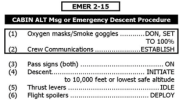
For pressurization failure, typically Memory Items (then -> Immediate Action Checklist -> QRH).
Agreed above post, 45 seconds: startle factor, mask on/set, establish crew communications ...

Similar to example (Pt 121 transport category aircraft);
(1) and (2) Memory Items appear common for pressurized aircraft operating in flight levels, like BE20.

1766998989581.png
 
Wait, so now is the consensus that 45 seconds really isn't even enough time for the pilots to take decisive action in the event of depressurization? If that's the case, then either the system should wait longer or it should just activate right away. After all, if it can always handle the emergency better than human pilots, we should have it always handle the emergency.

If I was Garmin, I would 100% take the position that if the pilot is conscious, he should fly the plane rather than relying on what is designed to be an emergency only feature for use in the case of pilot incapacitation.

And if these pilots truly were less competent to handle this emergency and safely land the plane, then the computer, that's a great reason to never fly this carrier or with these pilots.
 
Does the decompression checklist in the AFM Supplement have decision trees for whether or not to disable the auto land system?
 
IMC in mountainous terrain, and while there aren't any rocks at 15,000 in that area, there's plenty over 14,000. The lowest reasonable altitude in that situation without carefully verifying position and MIA is 17,000.
Where are the peaks above 14,000' between them and BJC? How did the Garmin manage to make an emergency descent without hitting them?

Screenshot_20251229-114402.png

And shouldn't they have been familiar with what was between them and their intended destination? They told ATC they had a decompression, why not ask for a safe vector to 15,000 ft while already in a descent to an altitude they knew was safe?
 
Does the decompression checklist in the AFM Supplement have decision trees for whether or not to disable the auto land system?
Agreed.
With respect to expected 121/135 pilot actions, especially emergency procedures, following company SOPs and aircraft checklists, wins.
(Memory Items -> Immediate Action Checklist -> QRH).
If monitor ‘HAL automation’ listed, it appears that’s what pilots did.
 
Last edited:
At 18,000 you have ~2.5 minutes' useable brain time. You really can't descend to <16,000 over that portion of the divide (which doesn't do you a lot of good, brainwise). And, if you descend to 14,000 you'd better be terrain smart, which is hard to imagine after that sort of hypoxic hit. The pilots and the automation clearly made GOOD choices.

I fly the KASE-BJC route (actualy to KFTG) with some regularity. If I lost Oxygen at 16-18,000 it would for sure be a TRUE emergency.

BZ to all.
B
 
Back
Top