An accident local to me around a year ago is gnawing on me a little. A very experienced ag pilot went under a power line(possibly inadvertently or misjudged it and tried to dive under, not sure) and it sheared the vertical stabilizer off. He crashed almost immediately after. If a plane loses the vertical stabilizer is the plane completely uncontrollable or was other factors involved do you think? I would think flight would still be ok without the vertical stabilizer, likely your "roll" from the ailerons over exaggerated somewhat but not likely instant crash inducing failure or am I wrong? Unfortunately the man that i think very highly of perished and I just think of the accident and am no where near as experienced so I was wondering what you guys think as far as flight with most of the vertical stabilizer sheared off and its effects.

You are using an out of date browser. It may not display this or other websites correctly.
You should upgrade or use an alternative browser.
You should upgrade or use an alternative browser.
Vertical stabilizer sheared off
- Thread starter fudge80
- Start date

deyoung
Line Up and Wait
I think the answers is "it depends" - more info than what you posted is needed. Although if you're worried, this seems like a very very unlikely sort of emergency, so probably shouldn't be source of sleeplessness in general.
That said - you lost the rudder, and yaw stability. Single engine plane? There will be yaw induced from engine torque that you now can't compensate for; I really don't know how strong that will be, but you can probably adjust for it with roll - difficult on landing where your bank angle is limited, but if you can plan for a low or no power approach that will make it better. This seems like a situation where you're actually better off in a twin (but disclaimer, I have no actual twin experience) because you can use differential thrust to compensate. I would imagine, anyway.
That said - you lost the rudder, and yaw stability. Single engine plane? There will be yaw induced from engine torque that you now can't compensate for; I really don't know how strong that will be, but you can probably adjust for it with roll - difficult on landing where your bank angle is limited, but if you can plan for a low or no power approach that will make it better. This seems like a situation where you're actually better off in a twin (but disclaimer, I have no actual twin experience) because you can use differential thrust to compensate. I would imagine, anyway.

skyking3286
Line Up and Wait
- Joined
- Sep 29, 2012
- Messages
- 559
- Display Name
- skyking3286
Quickly uncontrolled. Cf. XB-70.
Same thing happened to the guy i was working far. It was a new line installed since the last time he was there. The new one was just a house service line and he probably could have flown through it. But he pulled up but then didn't get down in time to miss the high tension lines. He was sore for a couple of weeks but the airplane was destroyed. The high tension line pulled the tail right off.
traumamed
Pre-takeoff checklist
I am definitely no aeronautical engineer, but Japan Airlines flight 123 would support your theory. That flight crew kept the plane in the air for 32 minutes after losing most of their vertical stabilizer AND most flight control authority (lost hydraulics as well when the aft pressure bulkhead blew out). It still wasn't a happy ending unfortunately.This seems like a situation where you're actually better off in a twin (but disclaimer, I have no actual twin experience) because you can use differential thrust to compensate. I would imagine, anyway.
People tend to underestimate the importance of yaw control. Just because birds don't need a rudder/vertical stabilizer doesn't mean our comparatively rudimentary flying machines don't.

Craig
Cleared for Takeoff
B-52 with no fin. Note the huge asymmetrical loading as well.

SixPapaCharlie
May the force be with you
- Joined
- Aug 8, 2013
- Messages
- 17,546
- Display Name
- First Officer 6PC
Also In a small airplane you're probably combining the lack of control with a major shift in CG

Llewtrah381
Pattern Altitude
- Joined
- Apr 9, 2010
- Messages
- 1,762
- Display Name
- Llewtrah


Its all about center of gravity which dictates flight control authority. All other issues are secondary. Given most AG plane hoppers are forward of the cockpit any loss of weight aft of the datum will shift the CG and most likely exceed the control limits, ie., the stick hits the stops. Now if an aircraft is loaded in such a manner that the loss of mass could be equalized or reduce the CG shift effect then you get into aerodynamics which could allow continued flight as shown above and in dozens of other examples.If a plane loses the vertical stabilizer is the plane completely uncontrollable or was other factors involved do you think?

- Joined
- Oct 16, 2019
- Messages
- 8,855
- Location
- Atlanta / Marietta
- Display Name
- Vintage Snazzy (so my adult children say)
- Home Airfield
- KPUJ
Sorry for the loss of your acquaintance. Hopefully we can all learn a bit from things that go wrong to lessen the chances of future "things that go wrong".
M2C: Rudder is essential part of control. The rudder and vertical stabilizer aren't put there because it's a nice to have. I think the very name - "stabilizer" - tells us how critical it is.
That B 52 flight was amazing. I think they lowered the rear (tandem) gear while keeping the front retracted to create a lot of rear centerline drag behind the CG to give them some yaw control. Landing it that way was a miracle.
The Japan Airline 747 that lost the rudder essentially lost control. It circled, yawed, etc. It was uncontrollable. It crashed into a mountain, unable to veer away from it. How the pilot/crew kept it in the air as long as they did, the fight they put up was admirable.

dtuuri
Final Approach
- Joined
- Apr 21, 2011
- Messages
- 5,819
- Location
- Madison, OH
- Display Name
- dtuuri
- Home Airfield
- Homeless, TBD
Bombs fall sideways without fins. American Airlines Flight 587 crashed when the stab broke off: https://en.wikipedia.org/wiki/American_Airlines_Flight_587If a plane loses the vertical stabilizer is the plane completely uncontrollable or was other factors involved do you think?

Dan Thomas
Touchdown! Greaser!
- Joined
- Jun 16, 2008
- Messages
- 12,389
- Display Name
- Dan Thomas
The fin and rudder are there to keep the airplane straight. That tail area is on a long arm and has more authority that the fuselage area ahead of the CG.
Now, lose the fin and that forward fuselage area becomes dominant and the airplane will not fly straight. It wants to turn sideways in the air, creating enormous drag and cutting lift. The pilots of that airliner that lost its fin used differential power on its engines in an attempt to keep straight, but they ultimately crashed.
There isn't much on the outside of an airplane that you can do without.
Years ago, locally, a Mooney Mite lost its vertical stabilizer. The pilot managed somehow to get it back to the departure airport and onto the runway, and it was repaired to fly again another day. Minds were boggled.
noahfong
Pre-takeoff checklist
- Joined
- Aug 20, 2013
- Messages
- 305
- Display Name
- Noah
- Home Airfield
- KHWD
This.The fin and rudder are there to keep the airplane straight. That tail area is on a long arm and has more authority that the fuselage area ahead of the CG.
Now, lose the fin and that forward fuselage area becomes dominant and the airplane will not fly straight. It wants to turn sideways in the air, creating enormous drag and cutting lift. The pilots of that airliner that lost its fin used differential power on its engines in an attempt to keep straight, but they ultimately crashed.
There isn't much on the outside of an airplane that you can do without.
A lot of folks here mentioned loss of rudder. This is losing more than the rudder...we're talking about losing the entire vertical fin. It's what keeps the plane from going sideways and the wings don't do much good then (in addition to what Dan says).
I think losing the rudder alone with the vertical fin still attached (the vertical fin and the rudder are two different things) should still give the airplane vertical stability.
Dan Thomas
Touchdown! Greaser!
- Joined
- Jun 16, 2008
- Messages
- 12,389
- Display Name
- Dan Thomas
This is partly true. Some stability would be better than none. But the fin and rudder, just like the aileron and wing, or elevator and horizontal stabilizer, is a unit. It's a wing with variable camber. The rudder doesn't just deflect air; it makes the air travel faster over the left side of the fin/rudder combination when right rudder is applied, and vice versa. And that faster air results in a pressure differential between the sides of the fin and rudder, with less pressure on the left side so that the tail moves left and the nose goes right.I think losing the rudder alone with the vertical fin still attached (the vertical fin and the rudder are two different things) should still give the airplane vertical stability.
Camber does that.
Lindberg
Final Approach
Why is that?Conventional gear aircraft require it; tricycle gear aircraft can fly without it.

texasclouds
En-Route
- Joined
- Aug 23, 2018
- Messages
- 4,361
- Location
- Bryan, Texas
- Display Name
- Mark
- Home Airfield
- Coulter Airfield CFD
Why is that?
BC trike pilots already know how to fly without touching the rudder pedals

- Joined
- Jun 13, 2008
- Messages
- 9,173
- Location
- Marietta, GA
- Display Name
- Drake the Outlaw
- Home Airfield
- Cartersville, GA
Quickly uncontrolled. Cf. XB-70.
Yep. Lose the VS and rudder and you're toast. That stuff ain't for looks.

We had an idiot depart out of our field and fly low over the lake and struck powerlines on his way home (four miles away). The plane was scarely looking after the fact. I'm always amazed he survived.

Half Fast
Touchdown! Greaser!
- Joined
- May 7, 2016
- Messages
- 21,187
- Location
- Central Florida
- Display Name
- Half Fast
- Home Airfield
- KGIF
Also consider that the rudder departure may inflict additional damage to the elevator and elevator control cables as it goes.
The aviation term for a plane that can be flown after losing its rudder is “miracle.”
The aviation term for a plane that can be flown after losing its rudder is “miracle.”
SixPapaCharlie
May the force be with you
- Joined
- Aug 8, 2013
- Messages
- 17,546
- Display Name
- First Officer 6PC
Hell, u ever tossed one of those little balsa gliders without the rudder? It's a disaster
noahfong
Pre-takeoff checklist
- Joined
- Aug 20, 2013
- Messages
- 305
- Display Name
- Noah
- Home Airfield
- KHWD
OK. Help me understand why what you said is that important for stability if a large number of pilots never touch the rudder (meaning the rudder never moves). Yet, they don't fall out of the sky. For them, the fin and rudder may as well be one unit.This is partly true. Some stability would be better than none. But the fin and rudder, just like the aileron and wing, or elevator and horizontal stabilizer, is a unit. It's a wing with variable camber. The rudder doesn't just deflect air; it makes the air travel faster over the left side of the fin/rudder combination when right rudder is applied, and vice versa. And that faster air results in a pressure differential between the sides of the fin and rudder, with less pressure on the left side so that the tail moves left and the nose goes right.
Camber does that.
The fin and rudder combination has camber for efficiency (low drag), right? I don't see why stability needs efficiency.
Dan Thomas
Touchdown! Greaser!
- Joined
- Jun 16, 2008
- Messages
- 12,389
- Display Name
- Dan Thomas
The presence of the fin gives the stability. A lot of airplanes have larger fins for pilots like that. Some rudder systems have centering mechanisms that force the rudder to center; all the Cessna single trikes are like that, with the nosewheel steering bungees doing the centering when the nosewheel is off the ground and the nose strut's centering cam engaged. Others use springs that bring the rudder to center. The airflow has to fight those if the airplane skids or slips. The taildraggers might have just pedal return springs that keep the rudder inclined to center, or they might (as in the 185) have a rudder trim that has an adjustable spring bungee to center the rudder wherever the pilot sets it. Those airplanes, when on floats, either have to have a fin on the aft fuselage under the tail to add side area to counter the floats' areas ahead of the CG, and some do away with that using a centering spring mechanism inside the tail, attached to the rudder cables, that has lots of spring authority at center, and decreasing as the rudder is deflected away from center. All of this stuff is to add yaw stability.OK. Help me understand why what you said is that important for stability if a large number of pilots never touch the rudder (meaning the rudder never moves). Yet, they don't fall out of the sky. For them, the fin and rudder may as well be one unit.
The fin and rudder combination has camber for efficiency (low drag), right? I don't see why stability needs efficiency.
An example of the 185 floatplane with the fin under the tail:
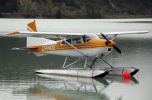
A cambered airfoil will have more authority than a flat-plate surface, simply because the air smoothly flows over it without turbulating. Just imagine an airplane with a flat-plate wing, formed from steel tube like a Cub's rudder. Horrible lift numbers, horrible stall behavior.The fin and rudder combination has camber for efficiency (low drag), right? I don't see why stability needs efficiency.

- Joined
- Apr 18, 2013
- Messages
- 5,322
- Location
- The independent worm saloon
- Display Name
- Mantis Toboggan, MD
Deflecting the rudder essentially introduces camber which induces lift and a resultant yawing moment. Changing the angle of attack of the vertical stab also induces lift and a resultant yawing moment. In a basic sense, the former is *control*, where the moving rudder is used to induce yaw, and the latter is *stability*, where displacement in yaw causes a restoring moment from the vertical surfaces. If the rudder were to jam in the centered position an airplane would still exhibit the basic directional stability it has with a moving rudder. Directional *control*, on the other hand, would be reduced or eliminated. If Directional stability and/or control requires a change in camber you have to ask yourself how airplanes like the A-5 (Vigilante) and the Evans Volksplane are both directionally stable and controllable but have all-moving vertical stabs with no camber changing mechanism.The fin and rudder combination has camber for efficiency (low drag), right? I don't see why stability needs efficiency.
Nauga,
keeping the pointy end forward
Dan Thomas
Touchdown! Greaser!
- Joined
- Jun 16, 2008
- Messages
- 12,389
- Display Name
- Dan Thomas
They just change the angle of incidence and therefore the angle of attack when they move.Directional *control*, on the other hand, would be reduced or eliminated. If Directional stability and/or control requires a change in camber you have to ask yourself how airplanes like the A-5 (Vigilante) and the Evans Volksplane are both directionally stable and controllable but have all-moving vertical stabs with no camber changing mechanism.
My Jodel had an all-moving vertical tail. The plans showed a simple centering mechanism but it never got installed. It flew fine and had awesome yaw control, but in turbulence the tail would wag some without that centering device. I would feel it in my feet, the pedals moving a little as the rudder was moved by the turbulence.
That airplane had come out tail-heavy when the engine mount was built to the plans. The plans had been translated from the French, and measurements converted from metric to Imperial (US), and other changes included the addition of a tailwheel, use of birch ply instead of mahogany, and fabric cover over plywood surfaces. All of that adds weight, most of it behind the CG. We had to built another engine mount to out the engine about eight inches further forward to balance the airplane, and that created a longer cowl with more side area. That cost some yaw stability (you change one thing, and many others will change, too) and while it would slip really aggressively, it was also a bit slow to straighten out again. It really should have had the centering device installed.
MauleSkinner
Touchdown! Greaser!
I didn’t know Beech designed the Jodel!but in turbulence the tail would wag some without that centering device. I would feel it in my feet, the pedals moving a little as the rudder was moved by the turbulence.


wanttaja
Final Approach
- Joined
- Jun 7, 2008
- Messages
- 5,667
- Location
- "War-Torn" Portland
- Display Name
- Ron Wanttaja
- Home Airfield
- Twin Oaks Airpark
Not to mention the wires doing *other* damage to the airplane....Also consider that the rudder departure may inflict additional damage to the elevator and elevator control cables as it goes.
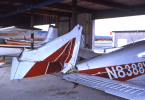
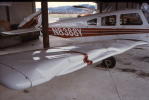
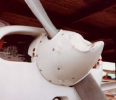
The airplane not only landed, but was repaired to fly again.
In this case, the plane struck wires on final, so it might have just been a ballistic landing.....
Ron Wanttaja


Ed Haywood
Final Approach
If the rudder were to jam in the centered position an airplane would still exhibit the basic directional stability it has with a moving rudder.
Or just call it an Ercoupe and tell everyone it is safer that way.
Albany Tom
Final Approach
- Joined
- Jul 23, 2021
- Messages
- 5,703
- Display Name
- Albany Tom
Maybe I'm missing something here, but I think the lesson learned is not to fly into power lines, not how one might successfully fly an airplane without a VS.
traumamed
Pre-takeoff checklist
For saleThe airplane not only landed, but was repaired to fly again.
Nice Piper Warrior
Many recent updates, including new spinner, wing skins, and upgraded empennage
Some minor hangar rash in the damage history

donjohnston
En-Route
There is so much wrong with such a short statement.Conventional gear aircraft require it; tricycle gear aircraft can fly without it.

traumamed
Pre-takeoff checklist
Someone bit on this earlier in the thread lol. FORANE was making a joke about pilots of trikes having learned how to fly without using a rudder.There is so much wrong with such a short statement.

RyanShort1
Final Approach
- Joined
- Feb 18, 2010
- Messages
- 6,480
- Location
- Dallas, Texas
- Display Name
- RyanShort1
- Home Airfield
- KRBD
It’s also a function of what the stabilizer and rudder are compensating. In the case of an ag plane, they nearly universally have a massive amount of power available not to go fast but to be able to lift large and heavy loads. That power creates a lot of your left-turning tendencies and without the means to counter them, you have a big problem. In a large, stable multi you have different forces in play, and a lower powered aircraft might also be more survivable.

My previous glider had very weak ailerons, especially before I added the winglets to it. Combined with the adverse yaw I am sure it would have been uncontrollable without the vertical fin rudder. Maybe if one could teach themselves to use the adverse yaw quickly enough it might have worked but would have required reverse controlling the ailerons and I am not sure how one would balance roll vs yaw. And it didn't have any left turning tendencies due to a propeller.
Brian
Brian
MauleSkinner
Touchdown! Greaser!
I think Tom has it right. There are things you can do in an airplane that will most likely kill you, and survival is more about luck than anything else. Avoid doing those things, and you’ll keep your “live vs die” factors within the realm of training and proficiency.Maybe I'm missing something here, but I think the lesson learned is not to fly into power lines, not how one might successfully fly an airplane without a VS.
Sure, there are the Al Hayneses of the world who use tremendous CRM to snatch life from the jaws of death, but that still comes back to training and proficiency.

Dana
Final Approach
Few airplanes will be controllable or stable with a missing fin. In the case of a large swept wing with multi engines, the sweep adds some yaw stability and asymmetric thrust might give enough yaw control if you're very lucky. OTOH, though I've never flown an ag plane (unless a reconverted Stearman counts), I suspect most ag planes, like most older designs, have a of adverse yaw so the rudder will not be optional.
Also if the rudder gets ripped off there is a good chance of damage to the rest of the tail, affecting pitch control or stability as well.
And even if the plane is controllable, something like that happening down low as in a wire strike doesn't give much time to figure it out.
Also if the rudder gets ripped off there is a good chance of damage to the rest of the tail, affecting pitch control or stability as well.
And even if the plane is controllable, something like that happening down low as in a wire strike doesn't give much time to figure it out.
Lindberg
Final Approach
That's addressed by reducing power.I suspect most ag planes, like most older designs, have a of adverse yaw so the rudder will not be optional.
Dan Thomas
Touchdown! Greaser!
- Joined
- Jun 16, 2008
- Messages
- 12,389
- Display Name
- Dan Thomas
Adverse yaw is not the result of power. It's the ailerons that cause adverse yaw.That's addressed by reducing power.