
You are using an out of date browser. It may not display this or other websites correctly.
You should upgrade or use an alternative browser.
You should upgrade or use an alternative browser.
Swift 100R gets ASTM Approval
- Thread starter asicer
- Start date

- Joined
- Oct 16, 2019
- Messages
- 8,865
- Location
- Atlanta / Marietta
- Display Name
- Vintage Snazzy (so my adult children say)
- Home Airfield
- KPUJ
IMHO - they will live with 100LL and no power loss.The timing change may have little or no effect on output power. If it did, however, I think a lot of owners would live with a slight power loss rather than a 100% power loss.

Dana
Final Approach
1980s.IIRC, 80/87 disappeared in the 1970s.
But I was referring to the still-unused tanks; I've been to quite a few airports where the long empty 80/87 tank and pump are still there. Whether they'd still be serviceable is another matter.

BillTIZ
Final Approach
Inground tanks that old may not be insurable. We had a problem with 30yr old inground tanks. Although they passed all pressure checks and were surrounded by sample wells to check for leaks, the insurance company would no longer insure them. No insurance, no gas storage, no fuel on airport.1980s.
But I was referring to the still-unused tanks; I've been to quite a few airports where the long empty 80/87 tank and pump are still there. Whether they'd still be serviceable is another matter.

tspear
En-Route
- Joined
- Dec 10, 2010
- Messages
- 4,010
- Display Name
- Timothy
If a fuel requires timing change to de rate the engine, it’s not going to fly. Making a fuel based on it not being fungible is non starter.
Honestly, what are these people thinking.
You can bury your head in he sand and say no no no. But reality will catch up.
At this point it looks like there will be seven choices if you currently fly with 100LL:
1. If you plane already qualifies for mogas, you can fly with mogas.
2. You can use a paint Stripper and hope for the best (G100UL)
3. If you have a high HP engine with margin detonation margins, you can retard the timing of the engine 2-3 degrees and maintain power (VP Lydonell 100E / Swift 100R)
4. If you have a lower HP engine with very good detonation margins, no change with expected with Swft 100R or VP Lydonell 100E.
5. Stop flying
6. Buy something the consumes Jet-A
7. Switch to a glider
Tim
- Joined
- Oct 16, 2019
- Messages
- 8,865
- Location
- Atlanta / Marietta
- Display Name
- Vintage Snazzy (so my adult children say)
- Home Airfield
- KPUJ
Option 8. Use 100 LL
Option 9. There will be something else.
Hey, I’m an optimist!
Option 9. There will be something else.
Hey, I’m an optimist!

Hopefully in the next year or two we'll see the industry pick a direction. There are so many ways this can go, we're all speculating in these threads based on press releases and what technical info we have. 100R and Lyondell's fuel are still being tested. We may find out most engines are fine on one of them or that retarding the timing a degree or two makes little difference on most engines or can be offset in some other way. I've got many ideas about that, many of us here do too. Of course none of us will probably have the opportunity to have a seat at the decision making table. However the one thing that's special about aviation is how many people are passionate about keeping these things flying. We have multiple ways, there's a will, there will eventually be a path forward.
I think the worst case scenario is that in 2030 100LL actually goes away and we have 3 STCs and 3(or more) fuels with different FBOs offering(or not offering) different options leaving owners in chaos about which horse to back. Right now the paperwork STCs are fairly affordable but if these things can't be mixed AND you need some further mechanical changes AND your favorite destinations/fuel stops don't all have your preferred fuel... man that's going to be a mess. I really hope we see one clearly come out on top before that point.
I think the worst case scenario is that in 2030 100LL actually goes away and we have 3 STCs and 3(or more) fuels with different FBOs offering(or not offering) different options leaving owners in chaos about which horse to back. Right now the paperwork STCs are fairly affordable but if these things can't be mixed AND you need some further mechanical changes AND your favorite destinations/fuel stops don't all have your preferred fuel... man that's going to be a mess. I really hope we see one clearly come out on top before that point.
nrpetersen
Line Up and Wait
Clarify what's wrong with another option (9) - Add a hardened shim underneath each cylinder base flange sufficient to reduce the compression ratio enough to control detonation with presently available (or target) fuel.
For example, reducing an 11:1 compression ratio to 8.5:1 (a major C.R. reduction) for a 4.50-inch stroke engine would require an additional added cylinder-base shim thickness of 0.120". To accommodate the reduced power, reduce the allowable A/C gross weight by a similarly calculated number.
For example, reducing an 11:1 compression ratio to 8.5:1 (a major C.R. reduction) for a 4.50-inch stroke engine would require an additional added cylinder-base shim thickness of 0.120". To accommodate the reduced power, reduce the allowable A/C gross weight by a similarly calculated number.
Sure, add it to the list. We really need someone with an engine shop and a dyno to run through all these ideas and figure out which is best... and of course the totally "trivial" matter of convincing the FAA to approve it.Clarify what's wrong with another option (9) - Add a hardened shim underneath each cylinder base flange sufficient to reduce the compression ratio enough to control detonation with presently available (or target) fuel.
For example, reducing an 11:1 compression ratio to 8.5:1 (a major C.R. reduction) for a 4.50-inch stroke engine would require an additional added cylinder-base shim thickness of 0.120". To accommodate the reduced power, reduce the allowable A/C gross weight by a similarly calculated number.
tspear
En-Route
- Joined
- Dec 10, 2010
- Messages
- 4,010
- Display Name
- Timothy
Option 8. Use 100 LL
Option 9. There will be something else.
Hey, I’m an optimist!
100LL is dead gone and buried by the end of 2030. Chance of it being giving life support is slim to none. The one producer in the western world is ending production in 2028, maybe 2029. And the cost to extend production is not viable. Potentially, you could go to China which has a few plants making it, but from what others have posted in multiple forums, it does not meet FAA quality controls. And the cost to get there, likely makes it cost prohibitive, and also will take years (which money can accelerate some). So basically, the single source of TEL is going away.
And 100LL, and GA are small fries in the grand scheme of things. Considering the political atmosphere over the roughly 18 months, including recently made prime time statements, do you think China is actually interested in helping us?
As for something else, people have been wishing/promising something else since about 1970. Alternatives to TEL have been researched since before WW2. And nothing has come through.
Tim
tspear
En-Route
- Joined
- Dec 10, 2010
- Messages
- 4,010
- Display Name
- Timothy
Clarify what's wrong with another option (9) - Add a hardened shim underneath each cylinder base flange sufficient to reduce the compression ratio enough to control detonation with presently available (or target) fuel.
For example, reducing an 11:1 compression ratio to 8.5:1 (a major C.R. reduction) for a 4.50-inch stroke engine would require an additional added cylinder-base shim thickness of 0.120". To accommodate the reduced power, reduce the allowable A/C gross weight by a similarly calculated number.
So you want to reduce the available power, range, MTOW.... Not just MTOW, but all performance charts need to be redone. How many models of aircraft, how many engine/prop STCs have been applied? This is not a simple task.
The route the three current solutions are going is likely the least disruptive.
Tim
Dana
Final Approach
More likely it'll be an evolution. If none of the new fuels can meet the required detonation margin, the ignition timing will have to be retarded for engines that need it. Short term, that's simple, though performance will suffer... Then people will start coming out with STC'd mods (reduced compression, water injection, whatever) to optimize the engine's performance with the new fuel.We really need someone with an engine shop and a dyno to run through all these ideas and figure out which is best... and of course the totally "trivial" matter of convincing the FAA to approve it.
That is absolutely one way to go about it, but as always, there are complications. Shimming the cylinder out would change the required length of the pushrods and their tubes, and then the biggie...the choked area of the cylinder is no longer in the right place with respect to the piston travel.Clarify what's wrong with another option (9) - Add a hardened shim underneath each cylinder base flange sufficient to reduce the compression ratio enough to control detonation with presently available (or target) fuel.
For example, reducing an 11:1 compression ratio to 8.5:1 (a major C.R. reduction) for a 4.50-inch stroke engine would require an additional added cylinder-base shim thickness of 0.120". To accommodate the reduced power, reduce the allowable A/C gross weight by a similarly calculated number.
MackMooney
Pre-takeoff checklist
- Joined
- Aug 7, 2023
- Messages
- 417
- Display Name
- McMooney
i'm kinda excited now, feeling 100R and ul100e are possible.
hoping both 100r and ul100e win, with two sim fuels in the market, maybe competition will keep it affordable
hoping both 100r and ul100e win, with two sim fuels in the market, maybe competition will keep it affordable
- Joined
- Oct 16, 2019
- Messages
- 8,865
- Location
- Atlanta / Marietta
- Display Name
- Vintage Snazzy (so my adult children say)
- Home Airfield
- KPUJ
i'm kinda excited now, feeling 100R and ul100e are possible.
hoping both 100r and ul100e win, with two sim fuels in the market, maybe competition will keep it affordable

To be fair, alternatives to TEL have been researched since before TEL.Alternatives to TEL have been researched since before WW2.
Science and technology has advanced since then, so...And nothing has come through.

- Joined
- May 15, 2020
- Messages
- 7,765
- Display Name
- Ernie
- Home Airfield
- C81
Why would that not also be true for a fuel you need to retard the timing, thus limiting horsepower to use?So you want to reduce the available power, range, MTOW.... Not just MTOW, but all performance charts need to be redone. How many models of aircraft, how many engine/prop STCs have been applied? This is not a simple task.
The route the three current solutions are going is likely the least disruptive.
Tim
tspear
En-Route
- Joined
- Dec 10, 2010
- Messages
- 4,010
- Display Name
- Timothy
I am so in over my head. I am in IT, not chemistry/physics.Why would that not also be true for a fuel you need to retard the timing, thus limiting horsepower to use?
So, with that stated, I have watched a few presentations and summaries provided by Lydonell along with Swift. From what I understand (and this is very questionable), the additives they are using alter the flame front speed, therefore there is no reduction in power with the timing being retarded by a few degrees.
Tim
tspear
En-Route
- Joined
- Dec 10, 2010
- Messages
- 4,010
- Display Name
- Timothy
To be fair, alternatives to TEL have been researched since before TEL.
Science and technology has advanced since then, so...
Yes, and consider Switft has been working with the FAA for roughly a decade on the STC route (at least according to PR, they were part of the PAFI program before that).
Lydonell has been working with the FAA for close to a decade (at least publically).
GAMI took close to two decades to get through the process.
If there is a miracle chemical breakthrough:
1. How much will it cost to actually "productize" it and bring it some scale large enough for GA?
2. How many decades are there between now and 2030?
Tim

455 Bravo Uniform
Final Approach
(10) Blend your own from whatever no-lead base is approved. Fly outlaw…

- Joined
- Sep 11, 2019
- Messages
- 2,886
- Display Name
- Domenick
Did you watch Michael's video? He showed the results of retarding the timing by 3 degrees on an IO-550-D. Timestamp: 06:15. It showed no loss of horsepower. So, if the data is accurate, how is that "derating" the engine?If a fuel requires timing change to de rate the engine, it’s not going to fly. Making a fuel based on it not being fungible is non starter.
Honestly, what are these people thinking.
Last edited:
- Joined
- May 15, 2020
- Messages
- 7,765
- Display Name
- Ernie
- Home Airfield
- C81
Did you watch Michael's video? He showed the results of retarding the timing by 3 degrees on an IO-550-D. Timestamp: 06:15. It showed no loss of horsepower. So, if the data is accurate, how is that "derating" the engine?
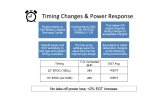
This graph was from Lyondell. I'm a bit skeptical. What does corrected horsepower actually mean?
Last edited:
There has to be a standard set of conditions to make measurements comparable when taken under different conditions.
Results like this will be corrected for variations from the standard in temperature, humidity and barometric pressure. There may be more variables that elude me at the moment.
Results like this will be corrected for variations from the standard in temperature, humidity and barometric pressure. There may be more variables that elude me at the moment.
- Joined
- Oct 16, 2019
- Messages
- 8,865
- Location
- Atlanta / Marietta
- Display Name
- Vintage Snazzy (so my adult children say)
- Home Airfield
- KPUJ
I am skeptical of a claim that retarding timing enough to affect detonation also doesn’t affect HP. And I’m skeptical one can extrapolate this to all current high compression / turbo engines that currently need 100 octane.
But I’m open to more data from independent sources.
But I’m open to more data from independent sources.
455 Bravo Uniform
Final Approach
It all “depends”. In running the big block Buicks on the drag strip decades ago, the ticket was to run advance upto 36 degrees BTDC, then once in 3rd gear retard it to 30 degrees for better times.
These dinosaur airplanes have fixed timing. If there was a way to adjust spark timing based on rpm and load (MP & prop setting), then I’m sure more power could be found for TO as well as cruise, safely (no spark knock). That’s why “it depends”.
These dinosaur airplanes have fixed timing. If there was a way to adjust spark timing based on rpm and load (MP & prop setting), then I’m sure more power could be found for TO as well as cruise, safely (no spark knock). That’s why “it depends”.
- Joined
- Oct 16, 2019
- Messages
- 8,865
- Location
- Atlanta / Marietta
- Display Name
- Vintage Snazzy (so my adult children say)
- Home Airfield
- KPUJ
My Continental 0 470 will get more HP if I advance timing. Not because of engine speed, but because of / when I get altitude. If I had a turbo - mostly constant “air pressure” - then I would not advance.
Hence, if installing a Surefly electronic mag I would disable the timing advance if I had a turbo.
So - how is this new wonder fuel going to behave at altitude if I have an electronic mag?
Hence, if installing a Surefly electronic mag I would disable the timing advance if I had a turbo.
So - how is this new wonder fuel going to behave at altitude if I have an electronic mag?
Fixed timing on aircraft engines is set where it results in best power and no detonation at full throttle and RPM, using the specified fuel. There is no better spark timing from the power point of view. The only possibility for some (fuel limited) engines would be if an increase in fuel octane allowed more spark advance at full power.These dinosaur airplanes have fixed timing. If there was a way to adjust spark timing based on rpm and load (MP & prop setting), then I’m sure more power could be found for TO as well as cruise, safely (no spark knock).
The reason for variable spark timing is to increase efficiency at lower power settings, where the required fuel octane is lower and more spark advance is appropriate. Testing on aircraft engines has shown there is a small increase in efficiency with more spark advance when operating at maximum rpm and low manifold pressure, in the operating regime of a non-turbo aircraft at high altitude.
It’ll be interesting to refer back to this thread in 2031. My guess is the issues and predictions will be just as they are in 2026, and we’ll be using 100LL. When no clear technical solution for lead free fuel has emerged, and with the perhaps silent recognition that lead in aircraft fuel does not actually endanger us, the can will be kicked down the road.
Last edited:
- Joined
- Oct 16, 2019
- Messages
- 8,865
- Location
- Atlanta / Marietta
- Display Name
- Vintage Snazzy (so my adult children say)
- Home Airfield
- KPUJ
I’d really like to get lead out of Av gas. More hours on an oil change, lot less sludge, and btw no lead in the air.
But as much Av gas is burned, its probably insignificant vs other sources. A coal power plant probably puts out all sorts of interesting things and at a level that the environment can deal with and isn’t harmful in general.
But as much Av gas is burned, its probably insignificant vs other sources. A coal power plant probably puts out all sorts of interesting things and at a level that the environment can deal with and isn’t harmful in general.
I’d really like to get lead out of Av gas. More hours on an oil change, lot less sludge, and btw no lead in the air.
Sure. The issue is that leaded fuel is very useful in the design of lightweight, simple, powerful engines designed to be operated at under biz-jet cost by a low volume market. And in that application it causes less problems to human health than a great many other things in daily life.
Ideologically driven initiatives that are unsupported by fact are being questioned as their negative effects become clearer. Not everybody wants to admit it, but this is a trend. Cost-benefit based decisions gain traction as the facts overcome idealism and emotion. The timeline is pushed back until the issue is overcome by events like e.g. UAV diesels developed for the military at taxpayer expense migrating into certified GA applications, the GA fleet getting smaller over coming decades etc.
Last edited:
Even more interesting is the scenario where Innospec stops making TEL in the 2028-2029 timeframe like they've already announced and then the FAA/EPA in 2030 decides to kick the can down the road.It’ll be interesting to refer back to this thread in 2031. My guess is the issues and predictions will be just as they are in 2026, and we’ll be using 100LL. When no clear technical solution for lead free fuel has emerged, and with the perhaps silent recognition that lead in aircraft fuel does not actually endanger us, the can will be kicked down the road.
tspear
En-Route
- Joined
- Dec 10, 2010
- Messages
- 4,010
- Display Name
- Timothy
1. What is the legal/regulatory basis for this belief?It’ll be interesting to refer back to this thread in 2031. My guess is the issues and predictions will be just as they are in 2026, and we’ll be using 100LL. When no clear technical solution for lead free fuel has emerged, and with the perhaps silent recognition that lead in aircraft fuel does not actually endanger us, the can will be kicked down the road.
2. What will be the source of TEL?
And for both, please provide an actual viable source; not just I believe.
Tim

hindsight2020
Final Approach
It’ll be interesting to refer back to this thread in 2031, my guess is the issues and predictions will be just as they are in 2026, and we’ll be using 100LL.
The reason why it's different than making that same claim 10 years ago, is that innospec has now actually said they'll shut down TEL production in 2029.
We're gonna hop on the China TEL cope now? Anything to keep the thumb on the scale I guess. This ain't the housing market chat, incumbents here don't have that kind of economies of scale to keep govco thumbing the scale, like they routinely do with the former.
There isn't any, it's just incumbency bias. A dogmatic belief in "Nothing changes" because "inertia" acts as the insurance policy for the holding that belief. It's a form of sunk cost fallacy, informed by other aspects of the economy where the govt does indeed routinely coddle incumbents at the expense of outgroupers (stock market pump/bailout at the institutional/lender level, housing market, et al).1. What is the legal/regulatory basis for this belief?
2. What will be the source of TEL?
And for both, please provide an actual viable source; not just I believe.
Tim
Why did innospec announce it early? That is an interesting question I'd love to know the answer to. As an accelerationist I would have preferred they didn't, but I have an axe to grind against the "nothing ever happens/line only goes up" payment-plan-millionaire crowd. Quickly removing thumbs from scales induces true price discovery, which validates my theory of the case.
If we get to 2029/2030 and a panic starts there's really nothing preventing congress or the FAA from extending the deadline or scrapping it altogether. And IIRC the price of TEL/gal of avgas is only a few cents vs the whole dollar+ we've been hearing for these alternative fuels. Double or even quadruple the price for TEL and it would still be cheaper for us and enough profitability will motivate someone to make it. You probably couldn't build that in the US or EU fast enough to fill the gap but if it was profitable enough a country like China probably could manage. Yes, I know the quality isn't currently up to snuff, but again China in particular can move quickly on these sorts of things and that could change.1. What is the legal/regulatory basis for this belief?
2. What will be the source of TEL?
And for both, please provide an actual viable source; not just I believe.
Tim
I'm not saying that's what will happen or it's even the most likely scenario but it's far from being in fantasy land. Right now I really feel like we're just in unknown territory waiting for something to develop, it will probably be interesting to look back on these discussions in a couple of years and see how far off some of our predictions were.
What is the basis to believe there will be an acceptable lead free fuel?
The source of TEL will be the existing source of TEL, or another, with no disruption. Words are not actions.
The reason nothing will change is because there is no rational reason for anything to change.
Nobody in the Federal Government including EPA is going to shut down US general aviation. It is unreasonable to think they could.
Last edited:
hindsight2020
Final Approach
The source of TEL will be the existing source of TEL, or another, with no disruption.
The reason nothing will change is because there is no rational reason for anything to change.
And there it is. See post 353, I'd hate to quote myself lol.
I don't know either. But if it were me, my thinking would be that this product is suddenly going to be worthless when the calendar turns a certain page, therefore I'd want to drain the pipeline.Why did innospec announce it early? That is an interesting question I'd love to know the answer to.
As a matter of fact, it might even be less than worthless as I'd then be liable for disposing of toxic material.
These discussions have kinda become the same mostly speculative things said over and over with no new information added.
Fuels and engines are a matter of physics/chemistry and pretty easy to understand once enough testing has been done and we have something new to look at. We have 3 probably viable fuels that will come with compromises and cost more. Exactly how bad those compromises will be and how bad the costs will be aren't entirely known yet, we've got some idea from the information that's come out so far but there's more testing to be done and many yet to be answered questions. There are many potential directions it could go in and I think once more has been tested/known we'll have a better handle on it.
The part of all of this that isn't so easy to predict or understand is down to people, markets, governments, etc. Right now those entities are all watching the developments with all these fuels as well. They could see a fuel that works in 90% of the fleet and call the problem solved, they could see a mess and decide to push the lead ban back another decade and really anything could happen as far as production. Right now it seems they're mostly operating under the assumption an acceptable alternative fuel will be available and the TEL ban will stand. There's no reason to assume that can't change.
I expect to see more concrete information and developments come out over the next year or two. It's fun and sometimes scary to speculate what might happen but until we know more I think we're just arguing over a bunch of educated guesses.

Jim_R
En-Route
- Joined
- Feb 17, 2010
- Messages
- 2,568
- Display Name
- Jim
Irrelevant. There will be no more TEL after 2030.But as much Av gas is burned, its probably insignificant vs other sources. A coal power plant probably puts out all sorts of interesting things and at a level that the environment can deal with and isn’t harmful in general.

Hang 4
En-Route
- Joined
- Aug 18, 2017
- Messages
- 3,425
- Display Name
- Hang 4
This is based on your deep understanding of the chemistry and process knowledge of making TEL?The source of TEL will be the existing source of TEL, or another, with no disruption. Words are not actions.
Not sure how saying words = "words are not actions"