
schmookeeg
Final Approach
- Joined
- Nov 6, 2008
- Messages
- 5,812
- Location
- Alameda, CA
- Display Name
- Mike Brannigan
- Home Airfield
- KOAK
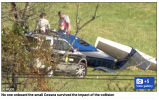
The cessna caption hurt my soul.

Not my experience. Why did they add a chute to get spin certified if the stall characteristics are so benign.I have done slow flight, stalls, and even falling leaf stalls in a Cirrus. Completely normal and benign response. The “equivalent level of safety” Cirrus demonstrated in lieu of spin recovery included not only CAPS but the split wing design - lower angle of incidence on the outer part of the wing, which allows more control in the stall.

Firstly, it was about spin recovery, not stall characteristics. Two different requirements. People do get their private and commercial in a Cirrus, after all. Stall recovery demonstrations are a PTS/ACS requirement.Not my experience. Why did they add a chute to get spin certified if the stall characteristics are so benign.

I’m trying to find stall recovery requirements for production aircraft. Seem to remember the FAA requires stall recovery in so many turns like maybe one? Maybe one and a half? All I find is How to do stalls.Not my experience. Why did they add a chute to get spin certified if the stall characteristics are so benign.


For a production aircraft, it has to be recoverable from a stall/spin in one rotation. CFR23.221I’m trying to find stall recovery requirements for production aircraft. Seem to remember the FAA requires stall recovery in so many turns like maybe one? Maybe one and a half? All I find is How to do stalls.
You'll find the CAPS was part of the original design and when it was certification time the FAA authorized an ELOS as mentioned above for the spin recovery requirement. For reference, the the JAA/EASA didnt allow an equivelent method and required the full spin recovery testing which it passed. But as I recall, the AFM remained the same and requires CAPS activation in the event of a spin. There were a number of documents released on the subject by the EASA.Why did they add a chute to get spin certified if the stall characteristics are so benign.
As mentioned, it was Part 23.221 but after the Part 23 rewrite in 2017 that rule was deleted and the requirement moved into one of the Advisory Circular consensous standards.I’m trying to find stall recovery requirements for production aircraft.


Got it thanks.For a production aircraft, it has to be recoverable from a stall/spin in one rotation. CFR23.221
I always heard the feel springs on the control stick caused less sensitivity to slow flight characteristics.Firstly, it was about spin recovery, not stall characteristics. Two different requirements. People to get their private and commercial in a Cirrus, after all. Stall recovery demonstrations are a PTS/ACS requirement.
They didn’t “get spin certified.” The requirement was waived, the FAA accepting the ELOS provided by the wing and chute (mainly the chute).
I’ve never been interested enough to research it extensively. I’ve heard various accounts of the reason ranging from “they couldn’t” to “they didn’t want to because they felt they had something better and more modern to offer” all the way to, “they were spun in testing for EASA and recover normally.” I’ve tried to verify none of them.
So… since it was different than mine, what was your experience with Cirrus slow flight and stalls? Big wing drop? Sudden huge break with no warning? I don’t have a huge amount of time in them - a bit under 40 hours - but I really found it quite similar to the Diamonds at the performance edges.
I think you mean spin recovery. Yes, it's 1.I’m trying to find stall recovery requirements for production aircraft. Seem to remember the FAA requires stall recovery in so many turns like maybe one? Maybe one and a half? All I find is How to do stalls.
Which Cirrus has fly by wire?Can you feel the mush in a cirrus fly by wire set up as well as you can in a rigged airplane ?
I have done slow flight in 30 or so different make/models of singles. Some are more sensitive, some are less. Some more reactive to small movements; some require large control pressures. No way I can think back and start comparing them; I just do what's needed to maintain heading and altitude. Besides, in the slow flight regimen, it's much more about rudder than aileron. If you are using a lot of aileron, I think you're making it more difficult than it is. (I'm a big slow flight fan.)I always heard the feel springs on the control stick caused less sensitivity to slow flight characteristics.
I find it difficult to believe they put a rudder on it that does nothing.they don’t have any rudder authority.
Which Cirrus has fly by wire?

Early models used to have a control spring that took away some of the feel of the airplane. Owners are now able to removed it.I don't know what the correct terminology is, but having sat in one listening to the salesman yap I know it's a different set up.
Do you have a reference? I've come across EASA documents where the ELOS is being considered, but I haven't see the final product.You'll find the CAPS was part of the original design and when it was certification time the FAA authorized an ELOS as mentioned above for the spin recovery requirement. For reference, the the JAA/EASA didnt allow an equivelent method and required the full spin recovery testing which it passed. But as I recall, the AFM remained the same and requires CAPS activation in the event of a spin. There were a number of documents released on the subject by the EASA.
they don’t have any rudder authority.
Not my experience.
"Fly by wire" refers to a system in which your movements of the stick or other controller do not directly control the flight control surfaces. To use ailerons as an example, your right movement of the stick tells a computer what you want done and the computer sends signals to the actuator to move the surface. The SR series is conventional - stick movement controls a combination of pushrods and calbes.I don't know what the correct terminology is, but having sat in one listening to the salesman yap I know it's a different set up.
So when you fly it like a 172 or an Archer, it only flies well in certain regimes?not that much time in one. not that intense. just my experience. great plane for longer cross countries where u set the auto pilot. not my favorite flying airplane.
Thanks. I'm not sure what you mean by "intense," but I guess I'll rely on my own experience and those of others who have flown them, and have also performed stalls and slow flight with no problem.not that much time in one. not that intense. just my experience. great plane for longer cross countries where u set the auto pilot. not my favorite flying airplane.

In my experience (~50 hours in an SR22T) it's not the fact that it's a side stick rather than a yoke or center stick. I have >3000 hours in my DA40 with center stick... and the location of the stick plays no role in my opinions of the two aircraft. What bothers me on the SR22 is the "spring loaded" feel of the Cirrus stick... rather than the "direct" feel of the DA40. I love both aircraft... but it seems to me that the Cirrus is a "passenger's aircraft" and the Diamond a "pilot's aircraft"... exactly because of this marked difference in "feel" of the stick.What's different is that its a sidestick rather than a yoke or center stick. And, if all you have ever flown is a Cessna or Piper, the "throw" to full deflection is much much smaller, and the rod/cable setup much tighter.
Agreed. It's about the feel, not the location.In my experience (~50 hours in an SR22T) it's not the fact that it's a side stick rather than a yoke or center stick. I have >3000 hours in my DA40 with center stick... and the location of the stick plays no role in my opinions of the two aircraft. What bothers me on the SR22 is the "spring loaded" feel of the Cirrus stick... rather than the "direct" feel of the DA40. I love both aircraft... but it seems to me that the Cirrus is a "passenger's aircraft" and the Diamond a "pilot's aircraft"... exactly because of this marked difference in "feel" of the stick.
I have no way of knowing if the "spring loaded" feel of the Cirrus plays any role in this or any other Cirrus accidents. I do know that these days the fatal accident rates for the SRxx, DA40, C172, C182, etc. are all about the same.
What specific reference? Once the JAA/EASA issued the CS-23 Special Condition on Spins for the SR20 series, they also initiated a report on addressing the spin resistant aspect which is linked below. However, since the EASA also rewrote their CS-23, the prescriptive CS-23.221 no longer exists and is now determined via a consensus standard like the FAA Part 23.Do you have a reference?
The one where they ultimately said no to Cirrus unless they did the spin test.What specific reference? Once the JAA/EASA issued the CS-23 Special Condition on Spins for the SR20 series, they also initiated a report on addressing the spin resistant aspect which is linked below. However, since the EASA also rewrote their CS-23, the prescriptive CS-23.221 no longer exists and is now determined via a consensus standard like the FAA Part 23.
https://www.easa.europa.eu/sites/default/files/dfu/EASA_REP_RESEA_2008_3.pdf
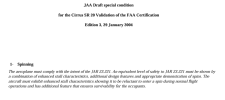
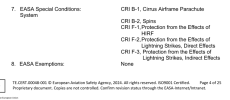
The closest reference I can get you to the Certification Review Item (CRI) B-2, Spins, listed in the EASA SR-20 TCDS is the final draft of the JAA Special Condition on the topic that states the aircraft must comply with the intent of JAR 23.221. The Special Condition is the regulatory side that enforces the CRI and is similar to the FAA Part 21.17 Special Conditions process.The one where they ultimately said no to Cirrus unless they did the spin test.

I have gotten used to it, but I hand fly often. I’m not a fan of the trim, but I now prefer the cirrus controls over having the yoke block the panel or hitting something in the passenger’s lap (like a purse or other carry on).Agreed. It's about the feel, not the location.
Thank you.The closest reference I can get you to the Certification Review Item (CRI) B-2, Spins, listed in the EASA SR-20 TCDS is the final draft of the JAA Special Condition on the topic that states the aircraft must comply with the intent of JAR 23.221. The Special Condition is the regulatory side that enforces the CRI and is similar to the FAA Part 21.17 Special Conditions process.
Special Condition Draft:
View attachment 145320
TCDS:
View attachment 145321
From my (limited) experience, if you don't watch the airspeed at low power states it will decay very fast.Cirrus seems to have a lot of low level maneuvering accidents where stick and rudder skills are a factor.
Exactly, you get slow and the thing will quit flying on you in a hurry.Fast means a thin wing. Fairly unforgiving of too slow.
Besides the lack of fly by wire (which was already explained), the Cirrus doesn't mush like a 172, it will drop quite suddenly by comparison.Can you feel the mush in a cirrus fly by wire set up as well as you can in a rigged airplane ?

Small follow-up. Your snapshot of the January 2004 draft led me to this March 2004 document. Beginning on page 3, it discusses the results of the stall and spin testing done to satisfy the EASA special condition. It's not really complete (the Appendices are missing), but it does tell us that the SR20 was tested with over 60 spin entries and the results indicated:The closest reference I can get you to the Certification Review Item (CRI) B-2, Spins, listed in the EASA SR-20 TCDS is the final draft of the JAA Special Condition on the topic that states the aircraft must comply with the intent of JAR 23.221. The Special Condition is the regulatory side that enforces the CRI and is similar to the FAA Part 21.17 Special Conditions process.
Special Condition Draft:
View attachment 145320
TCDS:
View attachment 145321

Altitude loss from spin entry to recovery ranged from 1,200 – 1,800 feet.


