Songwriter Brett James Cirrus SR22T Crash

John Spartan

Pre-takeoff checklist
Joined
Mar 22, 2022
Messages
370
Display Name
Spartan
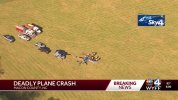
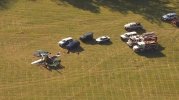
Brett James, 57, was onboard his Cirrus SR22T when it went down west of Iotla Valley Elementary School in Franklin, North Carolina Thursday afternoon, WLOS reports.

He and two others were pronounced dead at the scene, with the Nashville Songwriters Hall of Fame announcing the tragic news later in the night - noting that he was a 2020 inductee.

 
Had a friend that had a house there. Flew his Comanche 400 in there all the time. Never mentioned any difficulties with that airport.
 
Report linked above stated last data point showed GS of 70 knots. Go around at flaps 50 should be 80 KIAS according to the quoted info from the POH. Zero wind so KIAS should be same/very close to GS
 
Not that I’m an expert at FlightAware tracks, but there’s no slow speeds recorded in it.

I’m guessing it’s a go around that went sideways in a hurry.
IMG_0427.jpegIMG_0426.jpegI don’t see skid marks? As if the aircraft went straight in. I for one don’t always trust adsb data.

To me it looks exactly like a stall spin.
 
Had a friend that had a house there. Flew his Comanche 400 in there all the time. Never mentioned any difficulties with that airport.

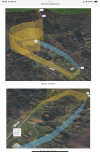
In a bowl, high terrain all around, which explains the circle before the first approach. Looking at flightaware, looks like he had to go around and had trouble on the downwind/base/final turn. I hope it isn’t the classic skidded base to final turn.
 
Not that I’m an expert at FlightAware tracks, but there’s no slow speeds recorded in it.

I’m guessing it’s a go around that went sideways in a hurry.
The last hit in that graphic in post #5 showed 70 kts at 2251 MSL. That appears to be after having made the runway, field elevation 2034. So it looks like climbing fast at low speed on a go around. Stall/spin would be a reasonable guess.
 
In a bowl, high terrain all around, which explains the circle before the first approach. Looking at flightaware, looks like he had to go around and had trouble on the downwind/base/final turn. I hope it isn’t the classic skidded base to final turn.
Don’t look like he got around to a second try so I doubt that.
 
Don’t look like he got around to a second try so I doubt that.

Track circles then goes the length of the runway then turns back to downwind. Track ends somewhere on the downwind/base/final turn.

Looks to me like he was still too high and/or fast after the 360 and had to go around.
 
"west of a school" :rolleyes:

was also north of an orphanage, south of a busload of nuns, and east of a priceless art gallery.

RIP.
I knew a lady who lost her engine, and dodged a minivan full of kids and went into the trees instead. I asked her about it later and she said that minivan looked like it would hurt if I hit it! Made a good story in the news though.
 
Cirrus seems to have a lot of low level maneuvering accidents where stick and rudder skills are a factor. That could be a reflection of pilot demographics, a new doctor killer. Or it could just seem that way because the parachute eliminates many of the fatal accidents up higher.
 
Cirrus seems to have a lot of low level maneuvering accidents where stick and rudder skills are a factor. That could be a reflection of pilot demographics, a new doctor killer. Or it could just seem that way because the parachute eliminates many of the fatal accidents up higher.
Is a Cirrus considered a “hot airplane “?
That or basic pilotage is lacking.
 
Is a Cirrus considered a “hot airplane “?
That or basic pilotage is lacking.
The smaller SR20 is still faster than most trainers, but they are appealing to new pilots for obvious reasons.
 
The smaller SR20 is still faster than most trainers, but they are appealing to new pilots for obvious reasons.
I’ve begun to wonder about the difference between people who start their training in a C172 then transitioned to a Cirrus versus those who just start in the Cirrus. Primacy training matters. In an emergency/unanticipated event, one might fall back to the thing that they learned first and the most. 70 knots looks like Cessna climb out speed right between Vx and Vy. Have to wonder.

I mean. Or he just got too slow and that’s that. But still….
 
Had a friend that had a house there. Flew his Comanche 400 in there all the time. Never mentioned any difficulties with that airport.
Its in a bit of a bowl with higher terrain on both sides. Basically it's a "mountain airport." Even in no-wind conditions, that means some degree of operational knowledge different from flatlands.
Is a Cirrus considered a “hot airplane “?
That or basic pilotage is lacking.

I guess that depends on what you consider "hot." To a 172 driver, cruise airspeeds in the mid 170 to the upper 190 KT range in a slick airframe might be considered "hot." To a TBM driver, maybe not.
 
I’ve begun to wonder about the difference between people who start their training in a C172 then transitioned to a Cirrus versus those who just start in the Cirrus. Primacy training matters. In an emergency/unanticipated event, one might fall back to the thing that they learned first and the most. 70 knots looks like Cessna climb out speed right between Vx and Vy. Have to wonder.
Maybe at the very early stages of training in the new type, but that shouldn't be happening after some experience. Let's not give primacy too much of an edge over exercise and recency. So far anyway, I haven't gotten confused by the 30 or so types of singles I've flown because one cruises at barely 100 KTS and the other 180 KTS.
 
Fast means a thin wing. Fairly unforgiving of too slow.

Parachute designed for spin survivability, not approach turn stalls…

So yes, it’s “hot” or high performance. Also probably less traditional cues of impending problems, and gets to the unsurvivable point quicker. Furthermore, doubt many folks doing a lot of stall training in one.

Simply GOTTA have impeccable speed discipline.
 
I'm curious what the median "Training and time" is for GA pilots, and how it relates to these incidents. Is it "lower time/less trained" pilots having these accidents close to the ground, or overconfident/cognitively impaired grey-hairs?

Or is it all right in the middle of the "killing zone?"
 
Lots of training in a cirrus, just not a lot of that is plain old stick and rudder.

It seems about anyone who has one is vulnerable. I think we’ll see changes to what CSIPs are taught and train.

I looked into the CSIP thing, they were very uninterested in my un-g1000 background. I found it amusing… and problematic. They REALLY wanted people they could train from scratch, or who were already familiar with Cirrus stuff. Didn’t want old bad habits (like maintaining airspeed?!!) tagging along.
 
It seems about anyone who has one is vulnerable. I think we’ll see changes to what CSIPs are taught and train.
I don't think so. At the beginning, Cirrus training was pretty awful. I saw some of it because a friend was a first generation owner. I actually ended up changing some of his habits - we had been doing trips together even before the purchase, so he wanted me to be able to fly it too. We went up to do some approaches and pattern work and he kept commenting that mine seemed to work out better than his.

But that really changed. The Cirrus training materials and recommended practices are both comprehensive and excellent. If there's a downside, it's kind of an overemphasis on (a) the airplane being special (but that's kind of a thing for all type zealots) and (b) an overemphasis on the automation. But the Cirrus pilots I've known and flown with have generally be excellent pilots, despite the bad rap.

Bottom line is, we don't know what happened here.
 
I'm curious what the median "Training and time" is for GA pilots, and how it relates to these incidents. Is it "lower time/less trained" pilots having these accidents close to the ground, or overconfident/cognitively impaired grey-hairs?

Or is it all right in the middle of the "killing zone?"
Next question. How many pilots continue to train with actual instruction vs take flights to train themselves on skills vs just fly places regularly and call that being current? A broad mix exists if I had to guess.
 
Never said bad instruction… it’s awesome. Just not prolly heavy enough on the plain old stick and rudder for the plain old visual missed or go around.

Instrument skills, tech driven… ya. VERY comprehensive.

And you’re right, no idea what happened here.
 
To their credit they are very serious about safety and deeply committed to it. I wonder, tho, if the parachute is always in their mind as a get out of jail free card. Maybe it unconsciously leads to let downs. Also, they added the chute to get certified. They do not perform well in slow flight and that may be what happened here. Very sad.
 
I don't think the parachute-on-the-mind is a thing that contributes to low altitude mishaps. Nobody steps too hard on the ball going too slow on base to final thinking "the chute will save me."

I think it's just a lack of skill/recency, compounded by the hazardous attitude classics.

That written, I have no idea what was behind this incident but I'm pretty sure there are heartbroken people left behind.
 
To their credit they are very serious about safety and deeply committed to it. I wonder, tho, if the parachute is always in their mind as a get out of jail free card. Maybe it unconsciously leads to let downs. Also, they added the chute to get certified. They do not perform well in slow flight and that may be what happened here. Very sad.
I have done slow flight, stalls, and even falling leaf stalls in a Cirrus. Completely normal and benign response. The “equivalent level of safety” Cirrus demonstrated in lieu of spin recovery included not only CAPS but the split wing design - lower angle of incidence on the outer part of the wing, which allows more control in the stall.
 
Juan's report up. He's calling it stall spin. Report says new wife and her daughter. Sad.
 
Back
Top