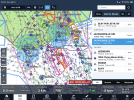
Pop Up IFR Clearance

Flying around VFR is nice for a multitude of reasons, fun, scenery, mission not matching ATC requirements for it being IFR, not enough info

She mentions the person is a CFII, if they were giving her dual, doing that VFR is MUCH easier than on a IFR.

She also doesn’t mention what the headache was, nor her experience, what may seem like a headache to an inexperienced pilot can seem a complete no factor to someone else.
I am also a CFII. The headache was that Flight Service sounded like they were communicating through a cup and a string. It was incredibly difficult to hear them and communicate effectively. Numerous transmissions had to be repeated. To me pop up IFR filing through Flight Service is an absolute last ditch effort to safely pass through unforecasted weather.

Our goal is airlines, and getting to 1500 in this manner is not wise imo.
 
Last edited:
I'm in the camp of Why not IFR File? Even if you're VMC, having ATC keep on eye on fast moving traffic coming up your back, or getting your through C airspace is worth it.

VFR XC is for "un sociable people who don't like talking to others" :p
What idiot is flying fast moving traffic coming up behind me below 1000 AGL?
 
I am also a CFII. The headache was that Flight Service sounded like they were communicating through a cup and a string. It was incredibly difficult to hear them and communicate effectively. Numerous transmissions had to be repeated. To me pop up IFR filing through Flight Service is an absolute last ditch effort to safely pass through unforecasted weather.

Our goal is airlines, and getting to 1500 in this manner is not wise imo.

Wait till you start playing with HF lol

But yeah always just have something on file, makes the transition much easier, when you get to 121 it’ll all be much more dumbed down
Unless it wasn’t planned,

Even then, just always file, costs nothing
 
Even then, just always file, costs nothing
I’m not sure what you mean. By “not planned” I mean being on a VFR flight (I still enjoy VFR flying) and encountering unplanned IFR conditions (all but one of my cold calls). I’m going to try to “file” via ATC in that situation, not accept the time and safety costs of diving through the clouds with no clearance so I can land and call or get low enough for a cell tower to pick up filing through an EFB. If I don’t have to, I’m not going to play relay tag with Flight Service if I can avoid it (too many experiences with that over the course of 30+ years).

You might choose differently, and that’s fine, but that’s my choice, and I’m comfortable with it. I guess if I had Starlink, I could have filed in the Denver situation I described earlier, but, after all, it was more than a dozen years ago.
 
Depends where you are. Out in the midwest, I can get away with (while on flight following):

27K: Indy Center, looks like it's going to be IFR ahead. Could I get IFR @ 6000.
ZIN: Navion 5327K, Indy Center. Cleared to Culpeper via Direct. Maintain 6000.

On the other hand Boston approach sent me to FSS and then I had to wait around on frequency until they got the clearance back. And the eventual clearance was your typical NE hodgepodge that started with going 90 degrees perpendicular to course for 100 miles.
Another glitch was trying to pick up an IFR south of Chicago on an Airventure departure.
Remind me to NEVER ask for a pop up from Indy Center. Culpeper Regional Airport (CJR) is located in Virginia, specifically 7 miles north of the town Culpepper northwest of Richmond and southwest of the Washington D.C. Class B airspace.
 
Since I got the instrument rating, the only flights I haven't filed for have been the prescriptive VFR stuff for CSEL training. With Foreflight, it's way too easy to file the flight plan before taking off. You can always cancel in the air if they become more trouble than they're worth.
 
Last edited:
I’m not sure what you mean. By “not planned” I mean being on a VFR flight (I still enjoy VFR flying) and encountering unplanned IFR conditions (all but one of my cold calls). I’m going to try to “file” via ATC in that situation, not accept the time and safety costs of diving through the clouds with no clearance so I can land and call or get low enough for a cell tower to pick up filing through an EFB. If I don’t have to, I’m not going to play relay tag with Flight Service if I can avoid it (too many experiences with that over the course of 30+ years).

You might choose differently, and that’s fine, but that’s my choice, and I’m comfortable with it. I guess if I had Starlink, I could have filed in the Denver situation I described earlier, but, after all, it was more than a dozen years ago.

I just always file, might end up going flignt following, might go IFR, might not talk to anyone, but good to have it in the system none the less, costs me nothing, takes nil time
 
I just always file, might end up going flignt following, might go IFR, might not talk to anyone, but good to have it in the system none the less, costs me nothing, takes nil time
Ah, I think I understand. Now I’m curious and I think it will answer someone’s question. What’s the furthest away - time and distance - you were when you opened one later in the flight? Same or different Center than your filed departure airport?
 
I guess my question would be, what is making a pop up IFR necessary “on a consistent basis”?
Exactly. If you come out of the same airport three times a week and consistently requesting a clearance, imo you are abusing the system.

Why not just have one on file? Seems easy enough unless you are super lazy.
 
Ah, I think I understand. Now I’m curious and I think it will answer someone’s question. What’s the furthest away - time and distance - you were when you opened one later in the flight? Same or different Center than your filed departure airport?

Hmm maybe hour, 150kt plane in that situation

flight following with it and picked up later as needed

Work plane we need to pull it 50nm after departure and that comes quick at our speeds
 
Indeed, cold call and nothing on file is silly in the age of foreflight on your phone
Bit sweeping there - what if the wx changes? VFR, cold calls, pop-ups, cleared on ground are all part of the proficient aviator's armamentarium.

When flying in rural hilly/mountainous areas with neither the ability to talk to ATC on the ground or maintain a reliable cell signal you hope for the ability to take off VFR and get clearance in the air. Or take 3-5 calls to ATC on cell to get clearance a few seconds at time.

I think we are talking the same thing
 
Remind me to NEVER ask for a pop up from Indy Center. Culpeper Regional Airport (CJR) is located in Virginia, specifically 7 miles north of the town Culpepper northwest of Richmond and southwest of the Washington D.C. Class B airspace.
I know exactly where Culpeper is. I was based there. I was somewhere in the vicinity of Terra Haute heading home. Not sure why you have a problem with that.
 
I have a related question that I've never been entirely clear about. If I file a long x-c IFR plan from my origin airport to destination, and then try to activate it halfway through the flight (assume I've crossed into another approach sector by this point), can the controller actually find my flight plan? Or will they input a new plan from scratch to issue the clearance? In other words, if the origin airport is far behind my present position, can I still get the original plan activated?
When your flight plan is in the proposed state, that is you filed but did not call for a clearance, then only the center which owns the departure airport has access to your proposed flight plan and even then, only for two hours past the filed EDT. So if you are outside of the responsible center that holds onto your flight plan, they will not have access to it. This can be more problematic when you are near a center boundary (like 50 NM or so) because which center is responsible is not charted and often does not match the charted center boundaries. Centers make agreements with each other for who is responsible for handling flight plans for a given airport, particularly when there is a TRACON near the boundary. If you look at the center boundaries between MIAMI and Jacksonville centers, they have traded responsibility around Tampa and Orlando that does not match the charted center boundaries. Every year at Sun N Fun, there are special NOTAM instructions on how to pickup a filed flight plan in the air that is due to the boundary swap. I have attached a screenshot of the Jacksonville Center (green shading) and the "surface boundary" which is the magenta dividing line between Miami and Jacksonville responsibility (see the magenta line just north of KBKV running to just south of KMLB). South of the Magenta line is Miami responsibility, north of the magenta line is Jacksonville responsibility. Most centers have similar cutouts near their charted boundaries.

miami and jacksonville filing boundaries.PNG
 
When your flight plan is in the proposed state, that is you filed but did not call for a clearance, then only the center which owns the departure airport has access to your proposed flight plan and even then, only for two hours past the filed EDT. So if you are outside of the responsible center that holds onto your flight plan, they will not have access to it. This can be more problematic when you are near a center boundary (like 50 NM or so) because which center is responsible is not charted and often does not match the charted center boundaries. Centers make agreements with each other for who is responsible for handling flight plans for a given airport, particularly when there is a TRACON near the boundary. If you look at the center boundaries between MIAMI and Jacksonville centers, they have traded responsibility around Tampa and Orlando that does not match the charted center boundaries. Every year at Sun N Fun, there are special NOTAM instructions on how to pickup a filed flight plan in the air that is due to the boundary swap. I have attached a screenshot of the Jacksonville Center (green shading) and the "surface boundary" which is the magenta dividing line between Miami and Jacksonville responsibility (see the magenta line just north of KBKV running to just south of KMLB). South of the Magenta line is Miami responsibility, north of the magenta line is Jacksonville responsibility. Most centers have similar cutouts near their charted boundaries.
John, I know you made some recommendations about this with the Charting Group some years ago. I know you've looked at this extensively, so correct me if I'm wrong.

As the FAA explains, the goal of the csv is to enable "Flight Plan system developers and submitters to match the correct ARTCC with off airport points of departure/arrival..." As you explained, that's important. If you file some lake or random fix as your departure, and Foreflight or Leidos sends it to the wrong Center, it gets rejected. There is simply no flight plan to pick up. Although obviously affecting pilots, that's really more a vendor problem. We'll know if the flight plan we filed is not accepted.

But, assuming the provider sends it to the correct Center, I think the pilot end is manageable. First, it's only going to be a problem near Center boundaries. Second, the only pilot problem is calling the wrong frequency. That happens all the time without boundaries. You call Approach on a frequency and they've set up their ad hoc sectors differently that day. Even happens at towered airports. What happens then? The controller you called tells you who to call.

I 'm sure it could happen, but I have a hare time imagining the following conversation not taking place.
Pilot (who filed XYZ VOR as the departure location): Jacksonville Center, N1234A over XYZ VOR. Would like to pick up our IFR to Lauderdale Exec.​
Jax: N1234A, I don't see a fight plan for you. Suggest you contact Miami Center on 1xx.xx.​

At the same time, forewarned is forearmed, so it's nice to know that if we are at a boundary, we might have to call the number on the other side of the low altitude boundary if the first one doesn't work.
 
Last edited:
When your flight plan is in the proposed state, that is you filed but did not call for a clearance, then only the center which owns the departure airport has access to your proposed flight plan and even then, only for two hours past the filed EDT. So if you are outside of the responsible center that holds onto your flight plan, they will not have access to it. This can be more problematic when you are near a center boundary (like 50 NM or so) because which center is responsible is not charted and often does not match the charted center boundaries. Centers make agreements with each other for who is responsible for handling flight plans for a given airport, particularly when there is a TRACON near the boundary. If you look at the center boundaries between MIAMI and Jacksonville centers, they have traded responsibility around Tampa and Orlando that does not match the charted center boundaries. Every year at Sun N Fun, there are special NOTAM instructions on how to pickup a filed flight plan in the air that is due to the boundary swap. I have attached a screenshot of the Jacksonville Center (green shading) and the "surface boundary" which is the magenta dividing line between Miami and Jacksonville responsibility (see the magenta line just north of KBKV running to just south of KMLB). South of the Magenta line is Miami responsibility, north of the magenta line is Jacksonville responsibility. Most centers have similar cutouts near their charted boundaries.

View attachment 151256
Here’s a less cluttered pic of the difference between the regular and the ‘surface’ Center boundary
 
I just always file, might end up going flignt following, might go IFR, might not talk to anyone, but good to have it in the system none the less, costs me nothing, takes nil time
How’s that work for towered airports?
What do you say when they ask you want your clearance?
 
How’s that work for towered airports?
What do you say when they ask you want your clearance?
You just tell them clearance on file, request VFR departure, "we will pick it up in the air." There are many places where you and they prefer that, as if the Delta is near say a Bravo or a Charlie, it can be a long wait for a clearance on a nice day.

Seems to be a dearth of real world experience popping up here. All the boundary stuff is just example by exception - for the most part, it is very easy to i) get a clearance on the ground, with or without a void time if needed; ii) take-off VFR and pick up clearance ('pop-up"); or iii) cold call, let them know "looking for instruments to KXYZ." Sometimes in certain parts of the country they've gone back to asking "are you IFR capable and equipped" and/or reading your basic pilot data over the air onto the tape. Other places, just a welcome.

Naturally if there's any doubt of completing the flight VFR, easiest to cold call when already getting flight following, but not required. Now cold call in NY or LA airspace may get you sent to Flight Service, but even there not always. Especially if start with flight following if conditions allow.
 
You just tell them clearance on file, request VFR departure, "we will pick it up in the air." There are many places where you and they prefer that, as if the Delta is near say a Bravo or a Charlie, it can be a long wait for a clearance on a nice day.

Seems to be a dearth of real world experience popping up here.
Might just be the usual mic fright when dealing with ATC.

But as you know, there's also a downside with that Delta near say a Bravo or Charlie. If it's that busy, you may be waiting quite a while for that in-air pickup. The "awaiting your release" may be something we are used to hearing on the ground, but the concept of ATC needing to fit you into the system applies in the air too. There's an older Baron Pilot video where he does that and is almost to the destination before he can get his clearance.

Excellent real world strategy when you can maintain VFR until well clear of the busy areas. Less so when you feel you can't.
 
Here's a slightly odd quirk of my local tracon...I often go up on IFR days to practice approaches. I used to file for these exercises, thinking that would save them some work typing everything in. I noticed that they would often ask me for information that was already on the flight plan. Our EAA chapter had a tower tour, so I asked "what's up with that?". The controllers said that it's more trouble to use your filed flight plan than to put you in on a local code. I didn't dig any deeper as to the why's and how's. They said they prefer that I just call on ground and ask for what I want when I'm staying local, so that's what I do. They also are very easy to get a pop up out of when I'm coming home VFR and there's a layer over the field, which is nice. I assume this is unique to up/down facilities like the one here, of which there are fewer and fewer.
 
That might lead them to toss it, making it a little more difficult to pick up in the air.

True. For me, tossing it is usually because an early morning fog layer has burned off enough to allow departing "Special VFR" granted from the tower, or the airport is no longer reporting IFR, and the remainder of the flight can be conducted in VMC.
 
Here's a slightly odd quirk of my local tracon...I often go up on IFR days to practice approaches. I used to file for these exercises, thinking that would save them some work typing everything in. I noticed that they would often ask me for information that was already on the flight plan. Our EAA chapter had a tower tour, so I asked "what's up with that?". The controllers said that it's more trouble to use your filed flight plan than to put you in on a local code. I didn't dig any deeper as to the why's and how's. They said they prefer that I just call on ground and ask for what I want when I'm staying local, so that's what I do. They also are very easy to get a pop up out of when I'm coming home VFR and there's a layer over the field, which is nice. I assume this is unique to up/down facilities like the one here, of which there are fewer and fewer.
There are several TRACONs where "local IFR" is done and, in some cases, preferred.

Aside from that, no, all the information we file is not accessible by ATC in the normal course of events. That's one of the things that makes the lost com rule so silly: it tells you to wait for your ETA before beginning an approach. ATC has no idea what your ETA is and could not care less about it. It's also the reason we never have to go to our filed alternate. ATC doesn't know what it is.
 
Last edited:
There are several TRACONs where "local IFR" is done and, in some cases, preferred.

Aside from that, no, all the information we file is not accessible by ATC in the normal course of events. That's one of the things that makes the lost com rule so silly: it tells you to wait for your ETA before beginning an approach. ATC has no idea what your ETA is and could not care less about it. It's also the reason we never have to go to our files alternate. ATC doesn't know what it is.
Back in the day that was called tower enroute clearance where it was all handled by tower and approach no center.
Never tried it.
 
There are several TRACONs where "local IFR" is done and, in some cases, preferred.

Aside from that, no, all the information we file is not accessible by ATC in the normal course of events. That's one of the things that makes the lost com rule so silly: it tells you to wait for your ETA before beginning an approach. ATC has no idea what your ETA is and could not care less about it. It's also the reason we never have to go to our files alternate. ATC doesn't know what it is.
Right, but what got my attention was asking for aircraft type, which should be right on the strip, which told me they weren't even looking at it...AFTER I spent a bunch of time trying to figure out how to squeeze my approach requests into the twentyish characters that will print in the comments section lol.
 
John, I know you made some recommendations about this with the Charting Group some years ago. I know you've looked at this extensively, so correct me if I'm wrong.

As the FAA explains, the goal of the csv is to enable "Flight Plan system developers and submitters to match the correct ARTCC with off airport points of departure/arrival..." As you explained, that's important. If you file some lake or random fix as your departure, and Foreflight or Leidos sends it to the wrong Center, it gets rejected. There is simply no flight plan to pick up. Although obviously affecting pilots, that's really more a vendor problem. We'll know if the flight plan we filed is not accepted.

But, assuming the provider sends it to the correct Center, I think the pilot end is manageable. First, it's only going to be a problem near Center boundaries. Second, the only pilot problem is calling the wrong frequency. That happens all the time without boundaries. You call Approach on a frequency and they've set up their ad hoc sectors differently that day. Even happens at towered airports. What happens then? The controller you called tells you who to call.

I 'm sure it could happen, but I have a hare time imagining the following conversation not taking place.
Pilot (who filed XYZ VOR as the departure location): Jacksonville Center, N1234A over XYZ VOR. Would like to pick up our IFR to Lauderdale Exec.​
Jax: N1234A, I don't see a fight plan for you. Suggest you contact Miami Center on 1xx.xx.​

Mark,

I haven't checked recently if Leidos uses the surface center boundary polygons that are published by the FAA on their website, but last time I checked they did not. I also don't know if pilots receive an indication that a flight plan has been rejected by an ARTCC. AIUI, when a flight plan is rejected, it goes on a trouble Q and a specialist has to analyze it and if possible remedy the issue. So the first indication of an issue may be when the pilot calls center to activate their flight plan. One strategy to pickup an IFR flight plan enroute and beyond the ARTCC that the aircraft departed from, is to file a flight plan departing an airport in the vicinity of the fix one wishes to have the option to switch to IFR. Lookup the airport's departure frequency and call departure to obtain the airborne clearance. That is effectively what the Sun N Fun NOTAM suggests for air pickup heading north.

As far as center suggesting the pilot contact the adjacent center, it is not my experience that they realize this and make the suggestion. A common pickup point going into the DC SFRA is at EMI, which is charted to be in New York Center, but is in the ZDC ARTCC surface boundary. So assuming you are still in communication with ZNY ARTCC and want to switch to IFR before entering the SFRA, they won't have your flight plan on file.

I worked on a support case for an irate customer who operated multiple aircraft. Two of their aircraft departed from the same non towered airport, one headed north and the other headed south. Both filed IFR, but departed VFR with the intention of obtaining airborne IFR pickups. The north bound flight called the ARTCC and got their clearance. The southbound flight did the same, but because they were near a boundary, they contacted a different ARTCC who did not have their clearance and had to refile.

So bottom line, I doubt that a center controller is going to offer the advice when you contact them to activate your IFR flight plan and they are unable to locate it. If you understand what is happening and plan for it in advance, particularly when you are not picking up your clearance close to your departure airport, but well down the road, you can more reliably obtain your IFR pickup.

Some day, filing will be national, but not in my lifetime.
 
Back in the day that was called tower enroute clearance where it was all handled by tower and approach no center.
Never tried it.
I think there's a difference between local IFR and Tower Enroute Control - TEC - routes. TEC routes are published in NORCAL, SOCAL, and the northeast corridor. It definitely existed in the "local IFR" - just call without filing - form in SOCAL From my friends who fly there, what changed a little is that its so easy to file these days (and you file them by name there) that the non-filing form is being used less.
 
That might lead them to toss it, making it a little more difficult to pick up in the air.
Actually, that can be used as a strategy. File IFR, depart VFR. Request VFR flight following. ATC will see your IFR flight plan (or you can remind them of the fact) and they can change if from IFR to VFR. That way they have your route. Later if you need IFR, it is a simple matter to switch from VFR back to IFR. This is not the same as filing a VFR flight plan, which ATC doesn't get and there is no overdue SAR service provided that a VFR flight plan that is activated offers.
 
Location


Some places you can not depart IFR like you can on a mile plus paved runway with facilities

Can’t tell you how many times I’ve filed from a radial DME because there was no identifier for the strip


Time

Opposite is true too, in some busy airspace you’ll be there all week if you depart in the system, vs getting out VFR and then once clear of the mess pulling IFR TEB is a good example here
Same here. I was based for decades at a 1700 ft grass strip on the edge of the Mode C veil, with an identifier. Traveling to Canada requires a flight plan, etc. so I usually just file IFR to my first airport of entry/clearance. For internationals I'd always call (telephone for the clearance on the ground). Clearance would always asked me where the airport was and I'd respond with the VOR/Bearing/Distance which put them on their map, and I got my clearance and VT but generally with "enter controlled airspace heading 270" which put me directly on course to run into 2100 ft radio tower set on a hill. I found out on a tour of the tower, that the TRACON charts did not even show my based airport on their charts. Now, whenever I have a doubt, especially when crossing or overflying the border, I always add the lat/long and VOR/bearing/dist to the remarks. Never a problem finding me after that. The VOR is an IAF for the Bravo airport.

When I'm departing IFR, whenever possible, depart VFR and call airborne for my filed IFR clearance, never been an issue at untowered airports.

Other reasons to file an IFR and not pick it up or cancel and re-file en route:
1. Weather. heading west at 3000 with stratiform ice filled clouds at 3500 ft. In certain areas, the secondary feeding APP controller will be required by the local Class B Tracon to "climb and maintain 4000 direct (IAF) no matter what. Responding, unable reported ice at 4, usually, but not always solves that problem. Then it's cancel IFR time, and if necessary, radar service.
2. Weather. heading east at 5000, transiting a local Class C controller wants you at 6000 for the plethora of traffic at 5000 holding waiting for the TRW to pass the primary airport. Stormscope reports badness nearby and being in clear air and eyeballing what the ADSB and the WX900 is telling me is invaluable. Controller's radar depiction of the weather at least at some facilities seems to be no better with respect to time lag than ADSB when my on board scope is saying they're guiding you straight into a building cell with sparks in it. At those times, if the weather permits I will cancel the present IFR and go on my own or just turn around and go back. Either way it solves the immediate threat: flying IMC into an area of convection that I don't want to be in.
 
Actually, that can be used as a strategy. File IFR, depart VFR. Request VFR flight following. ATC will see your IFR flight plan (or you can remind them of the fact) and they can change if from IFR to VFR. That way they have your route. Later if you need IFR, it is a simple matter to switch from VFR back to IFR. This is not the same as filing a VFR flight plan, which ATC doesn't get and there is no overdue SAR service provided that a VFR flight plan that is activated offers.
Yep, there are so many things one can do with a little creativity.
 
Ah, I think I understand. Now I’m curious and I think it will answer someone’s question. What’s the furthest away - time and distance - you were when you opened one later in the flight? Same or different Center than your filed departure airport?
BRD-FRH Total distance 670 nm TER usually 5.6-6.3 hours depending on winds and Chicago airspace activity; (Flight route crosses Minneapolis, Chicago, Indy Centers and Louisville APP) Weather was C8000 BKN, 11000 OVC, UA MDT Rime between 9 and 18, numerous aircraft. Downrange at CMI, warm air, no ice, C2000BKN Vis 3 light rain Freezing Level 11000. Filed for airborne pickup over a VOR at Monroe WI at my ETA and altitude, about 270 nm from departure airport. Same Center, but on the border between Minne and Chicago, but I picked it up with Madison approach (Class C).

Reasons to go hybrid: enroute delays/reroutes near MSP and ORD can be significant and put me at the edge of fuel reserves for the trip. A more direct route saves gas, time and potentially a fuel stop. Secondary reasons to go hybrid: If the ceiling were high enough to go VFR in the north where the ice fishermen live, but, as in this situation, low enough to be ice filled at normal cruising but warm down range it makes the trip possible, where it would otherwise be a very bad idea. Have to take into account the global picture as well as the stability of the overall airmass on these max range trips. Keep in mind, that both of these centers have always been very good to me along the way and I've made that trip many times in both directions.
 
Reasons to go hybrid: enroute delays/reroutes near MSP and ORD can be significant
Believe me. I sort of popped the other way when going to Oshkosh one year. I was approaching from the southeast at 10,000.

27K: Is there any altitude I can request that will avoid me having to go to KELSI?
C90: Let me check...
[short pause]
C90: Negative.
27K: OK, here's what we're going to do. I'm going to climb up to 10,500, cancel IFR, go direct OSH, and you can give me flight following.
C90: That will work.
 
I am also a CFII. The headache was that Flight Service sounded like they were communicating through a cup and a string. It was incredibly difficult to hear them and communicate effectively. Numerous transmissions had to be repeated. To me pop up IFR filing through Flight Service is an absolute last ditch effort to safely pass through unforecasted weather.

Our goal is airlines, and getting to 1500 in this manner is not wise imo.
Sometimes their radios are not as well maintained as we'd like them to be, and sometimes the FSS/controller don't know. If you have that problem in the future you can try your other radio and you can ask the controller to do the same. If the second radio is better, let them know that so they can squawk the first one and get it fixed.
 
Sometimes their radios are not as well maintained as we'd like them to be, and sometimes the FSS/controller don't know. If you have that problem in the future you can try your other radio and you can ask the controller to do the same. If the second radio is better, let them know that so they can squawk the first one and get it fixed.

I found that the newly installed GNS430 (with radio) was hooked up to the roof mounted antenna, and at times instances of weak radio transmit/reception was a lot more common than it was prior to the new radio installation.

Swapped the 430's antenna lead over to the belly antenna, and the problem went away. Best as we could figure the metal wing was positioned in-between the top mounted antenna and a distant ATC facility.

The remote communications outlets used by FSS facilities (and ATC) were in my case not completely at fault.
 
Do you subscribe to the notion that a pop up IFR clearance is acceptable to use on a consistent basis? Or does is show poor planning and use of the feature. Yesterday I had a crazy flight (to me) where the person I was flying with insists on flying everywhere VFR and then will pull out the pop up IFR request out of their back pocket when they need it. Even though they are a CFII. There were so many unnecessary headaches with it that I find it better and more prudent of me to plan and file on the ground. Especially in these spring/summer months when clouds pop up like this unwanted zit on my face.
It depends a lot on the airspace you’re flying in. In the New York area, you can wait 45 minutes or more to get your clearance. If it’s VFR where you are, sometimes it’s more practical to do a pop up after you’re out of the congested area, but well before you’re into less that VFR conditions.
 
Back
Top