And a healthy premium for year 1.…Even with a "real" PPL a low time pilot probably isn't getting insurance in a complex/HP without a crap load of dual received in type.

You are using an out of date browser. It may not display this or other websites correctly.
You should upgrade or use an alternative browser.
You should upgrade or use an alternative browser.
Mosaic: Certified planes who qualify. What actually changes?
- Thread starter Domenick
- Start date
Todd82
Cleared for Takeoff
Indeed. Almost all my time is in PA28, I got insurance quotes for a relatively cheap Arrow and it was $5500/yr more than a comparable hull value PA-28-180, AND they required 50 hours dual before I could solo the Arrow.And a healthy premium for year 1.
Good guessWhat are you flying, a BO209?

I checked the POH and it says clean stall is 59 kts clean “airspeed” but a couple of pages away in reference to takeoff performance tables showing a wide range of airspeeds down to stall speed it says quite simply “IAS differs from CAS negligibly at all altitudes”. The plane does have a very good pitot static system. I think I’m good to go.

flyingcheesehead
Taxi to Parking
- Joined
- Feb 23, 2005
- Messages
- 28,184
- Location
- UQACY, WI
- Display Name
- iMooniac
- Home Airfield
- KUES/KMKE
Dang, I'm good!Good guess
 (and/or a total aviation nerd.
 )
Cool plane. I've only ever seen one in person. I like the concept. It's too bad the regulations that would allow it to thrive arrived 55 years too late.

Baked Potato
Pattern Altitude
- Joined
- Jul 31, 2022
- Messages
- 1,658
- Display Name
- Baked Potato
Not for renter's insurance, surely?Indeed. Almost all my time is in PA28, I got insurance quotes for a relatively cheap Arrow and it was $5500/yr more than a comparable hull value PA-28-180, AND they required 50 hours dual before I could solo the Arrow.
Jon Wilder
Line Up and Wait
- Joined
- Oct 19, 2015
- Messages
- 613
- Display Name
- Jwylde
Your plane doesn't "fall under MOSAIC".How does my plane, falling under Mosaic, change my life?
Modernization Of Special Airworthiness Certification (MOSAIC), as it pertains to aircraft, modernizes the process for certifying experimental, restricted, limited, light-sport, and provisional aircraft with a Special Airworthiness Certificate (it's literally in the name). Aircraft in the normal, utility, acrobatic, commuter, or transport categories are certificated with a Standard Airworthiness Certificate.
MOSAIC dropped the certificated max gross takeoff weight limit required for the Light Sport category, and now bases it on a performance based metric. This greatly expands what Light Sport Aircraft manufacturers can offer as Light Sport Aircraft.
While the performance metrics that Light Sport category aircraft must meet overlap with aircraft in the Normal category, that does not recategorize Normal category aircraft meeting these same metrics as a Light Sport category aircraft.
Yes, it does expand the privileges of Sport Pilot Certificated pilots. Only because the performance metrics overlap.

bbchien
Touchdown! Greaser!
Yes you could. But why would anyone rational do anything like that?

Kiddo's Driver
Pattern Altitude
My son is taking his PP written next week & his oral/practical as soon as he can get it scheduled. He could have passed SP at 20 hours and I would have trusted him to fly it to SP restrictions had he been able to get a SP in my Tampico.Cherokee's in annual this week, so I spent some time at the shop. The two A&P/IAs and I decided that for the cherokee, nothing changes, it's stillPartCAR 23 compliance. A sport pilot is legally allowed to fly it (over my dead body!) after practical test to add Airplane. Still no experimental avionics, still subject to IA annual inspection (Part 43), still certified under Type Certificate.
The Sport Pilot limitations are only slightly less restrictive than the Private Pilot Student's restrictions at about the same number of hours.

N918KT
Line Up and Wait
Just wondering but is the Grumman AA-1 considered a sport pilot eligible aircraft under MOSAIC? I'm not exactly sure since the clean stall speeds I have looked online vary anywhere from below 59 knots to just over 59 knots.
Is there a very specific variant or model year that would make the AA-1 sport pilot eligible?
Is there a very specific variant or model year that would make the AA-1 sport pilot eligible?

wanttaja
Final Approach
- Joined
- Jun 7, 2008
- Messages
- 5,667
- Location
- "War-Torn" Portland
- Display Name
- Ron Wanttaja
- Home Airfield
- Twin Oaks Airpark
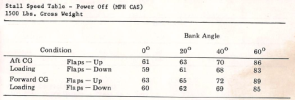
AA-1A POH:Just wondering but is the Grumman AA-1 considered a sport pilot eligible aircraft under MOSAIC? I'm not exactly sure since the clean stall speeds I have looked online vary anywhere from below 59 knots to just over 59 knots.
Is there a very specific variant or model year that would make the AA-1 sport pilot eligible?
AA-1B POH:
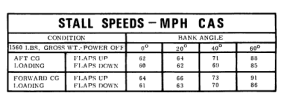
Note that the AA-1A and AA-1B tables are in MPH, not knots. But within the limits.
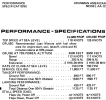
The AA-1C, on the other hand, is already in knots....
Ron Wanttaja
59 Knots = 67.85 MPHAA-1A POH:
View attachment 143494
AA-1B POH:
View attachment 143495
Note that the AA-1A and AA-1B tables are in MPH, not knots. But within the limits.
The AA-1C, on the other hand, is already in knots....
View attachment 143496
Ron Wanttaja

FPK1
Line Up and Wait
Because it will be a multi-engine you can fly with as a Sport pilot with a driver's license only, right?Yes you could. But why would anyone rational do anything like that?
Jon Wilder
Line Up and Wait
- Joined
- Oct 19, 2015
- Messages
- 613
- Display Name
- Jwylde
Sport Pilot is still limited to single engine aircraft.Because it will be a multi-engine you can fly with as a Sport pilot with a driver's license only, right?
Jon Wilder
Line Up and Wait
- Joined
- Oct 19, 2015
- Messages
- 613
- Display Name
- Jwylde
No, you couldn’t. Sport Pilot is still limited to single engine aircraft.Yes you could. But why would anyone rational do anything like that?
Jon Wilder
Line Up and Wait
- Joined
- Oct 19, 2015
- Messages
- 613
- Display Name
- Jwylde
No. Sport Pilot is still limited to single engine only.

Dana
Final Approach
You've said it three times, but I don't see anything in the revised rule (61.315 or .316) that says a SP is limited to single engine any more.No. Sport Pilot is still limited to single engine only.
Bottom of page 307.You've said it three times, but I don't see anything in the revised rule (61.315 or .316) that says a SP is limited to single engine any more.
Jon Wilder
Line Up and Wait
- Joined
- Oct 19, 2015
- Messages
- 613
- Display Name
- Jwylde
You've said it three times, but I don't see anything in the revised rule (61.315 or .316) that says a SP is limited to single engine any more.
MOSAIC Final Rule said:FAA did not propose a sport pilot airplane multiengine privilege and maintains the status quo that a person seeking to operate a multiengine airplane will need to obtain a private pilot certificate or higher with an airplane multiengine rating.
Neil Rubin
Pre-takeoff checklist
- Joined
- Aug 24, 2013
- Messages
- 147
- Location
- Santa Monica, CA
- Display Name
- Neil Rubin
- Home Airfield
- KSMO
This is the correct answer, but to slightly elaborate, § 61.3(m) requires sport pilots to have category and class privileges for the aircraft you fly via logbook endorsement (or on your pilot certificate if you have higher ratings). The rules don’t provide any way to get airplane multi-engine (or powered lift) logbook endorsements. So a sport pilots can’t get category and class privileges for such aircraft and you can’t fly them as a light sport pilot. That doesn’t mean that there can’t be a multiengine airplane with an LSA airworthiness certificate under the new rules (there can). It just means that a sport pilot can’t get privileges to fly it, because it is no longer the case that LSA means sport pilot can fly it.Bottom of page 307.
Jon Wilder
Line Up and Wait
- Joined
- Oct 19, 2015
- Messages
- 613
- Display Name
- Jwylde
To add, there seems to be a desire to level the playing field between Sport and Private Pilot. The whole point of Sport Pilot was to have a middle of the road alternative with a limited privilege set to get airmen in the sky cheaper and easier. The more we lax up the rules on it, the less of a difference it will make to get Sport or Private Pilot.This is the correct answer, but to slightly elaborate, § 61.3(m) requires sport pilots to have category and class privileges for the aircraft you fly via logbook endorsement (or on your pilot certificate if you have higher ratings). The rules don’t provide any way to get airplane multi-engine (or powered lift) logbook endorsements. So a sport pilots can’t get category and class privileges for such aircraft and you can’t fly them as a light sport pilot. That doesn’t mean that there can’t be a multiengine airplane with an LSA airworthiness certificate under the new rules (there can). It just means that a sport pilot can’t get privileges to fly it, because it is no longer the case that LSA means sport pilot can fly it.
Private Pilot minimums and ratings exist for a reason. Sport Pilot should remain the limited subset of privileges that it is.
Neil Rubin
Pre-takeoff checklist
- Joined
- Aug 24, 2013
- Messages
- 147
- Location
- Santa Monica, CA
- Display Name
- Neil Rubin
- Home Airfield
- KSMO
There is some expansion of privileges like manual prop control, retractable landing gear, and night flying, available with endorsements, but I suspect that if you go and get all of those endorsements on top of a sport pilot certificate, the amount and intensity of the training you’ve gotten along the way isn’t that much different than from a private pilot’s. The tasks and performance standards for the practical test are extremely similar. And sport pilots still have the limits on passengers, limits on altitude and visibility, and other privilege limitations they had before.To add, there seems to be a desire to level the playing field between Sport and Private Pilot. The whole point of Sport Pilot was to have a middle of the road alternative with a limited privilege set to get airmen in the sky cheaper and easier. The more we lax up the rules on it, the less of a difference it will make to get Sport or Private Pilot.
Private Pilot minimums and ratings exist for a reason. Sport Pilot should remain the limited subset of privileges that it is.
The FAA’s logic behind the changes seems to be the recognition that by-and-large LSAs are harder to fly safely than the traditional trainers made by the Cessnas and Pipers of the world. So if you are going to have the sport pilot certificate, and it appeals to people because they can’t get a medical or because they want a cheaper initial certificate, why not let them fly in aircraft that are both safer and more widely available?

- Joined
- Jun 7, 2008
- Messages
- 16,742
- Location
- DXO124009
- Display Name
- Light and Sporty Guy
- Home Airfield
- ONZ
And some unknown number of private etc. certificate holders flying under the sport pilot rules with a "drivers license" instead of a medical.There’ something like 7,000 Sport Pilot certificate holders compared to the ~445K student & private certificate holders.
I wonder how the insurance companies will handle a Private Pilot who has an Instrument rating, but who then chooses to fly under the new Sport Pilot…?
Alternatively, can a new Sport Pilot get an Instrument rating…?
Alternatively, can a new Sport Pilot get an Instrument rating…?
Presuming the PP is under SP because 3C/BM is lapsed, the limit is day VFR. Thus, the real question is whether the insurance companies are OK with the PP's general health in that situation.I wonder how the insurance companies will handle a Private Pilot who has an Instrument rating, but who then chooses to fly under the new Sport Pilot…?
FAR61.65:Alternatively, can a new Sport Pilot get an Instrument rating…?
(a) General. A person who applies for an instrument rating must:
(1) Hold at least a current private pilot certificate, or be concurrently applying for a private pilot certificate...
flyingcheesehead
Taxi to Parking
- Joined
- Feb 23, 2005
- Messages
- 28,184
- Location
- UQACY, WI
- Display Name
- iMooniac
- Home Airfield
- KUES/KMKE
What if you started with a PP-AMEL?This is the correct answer, but to slightly elaborate, § 61.3(m) requires sport pilots to have category and class privileges for the aircraft you fly via logbook endorsement (or on your pilot certificate if you have higher ratings). The rules don’t provide any way to get airplane multi-engine (or powered lift) logbook endorsements. So a sport pilots can’t get category and class privileges for such aircraft and you can’t fly them as a light sport pilot. That doesn’t mean that there can’t be a multiengine airplane with an LSA airworthiness certificate under the new rules (there can). It just means that a sport pilot can’t get privileges to fly it, because it is no longer the case that LSA means sport pilot can fly it.

- Joined
- May 25, 2006
- Messages
- 22,003
- Location
- KTTA, North Carolina
- Display Name
- Who you kiddin?
- Home Airfield
- KTTA
Handle what?I wonder how the insurance companies will handle a Private Pilot who has an Instrument rating, but who then chooses to fly under the new Sport Pilot…?
- Joined
- Jun 7, 2008
- Messages
- 16,742
- Location
- DXO124009
- Display Name
- Light and Sporty Guy
- Home Airfield
- ONZ
Same as they do now?I wonder how the insurance companies will handle a Private Pilot who has an Instrument rating, but who then chooses to fly under the new Sport Pilot…?
You are currently limited to Day VFR. Mosaic allows night if you have a medical.
You have to adhere to the limitations of 61.315 if you are flying with your drivers license (61.303).
Flight or surface visibility has to be greater than 3 miles and you have to be able to see the surface (no flying over an overcast).
- Joined
- May 25, 2006
- Messages
- 22,003
- Location
- KTTA, North Carolina
- Display Name
- Who you kiddin?
- Home Airfield
- KTTA
Sure. But I'm still wondering what @patrickw is thinking.Same as they do now?
wanttaja
Final Approach
- Joined
- Jun 7, 2008
- Messages
- 5,667
- Location
- "War-Torn" Portland
- Display Name
- Ron Wanttaja
- Home Airfield
- Twin Oaks Airpark
I suspect insurance companies are driven more by statistics than by social media speculation. The fact is, medical incapacitation is very rare. Yes, it may rise when pilots no longer have a biannual medical check for conditions, but there wasn't a major rise after Sport Pilot was implemented...and even before SP, pilots were flying with known, hidden, disqualifying medical conditions.I wonder how the insurance companies will handle a Private Pilot who has an Instrument rating, but who then chooses to fly under the new Sport Pilot…?
For homebuilts, the rate of pilot IMPAIRMENT (e.g, use of alcohol, drugs, etc.) is almost three times that the rate of pilot incapacitation.
Ron Wanttaja
Neil Rubin
Pre-takeoff checklist
- Joined
- Aug 24, 2013
- Messages
- 147
- Location
- Santa Monica, CA
- Display Name
- Neil Rubin
- Home Airfield
- KSMO
A fair question. Carefully reading § 61.303, § 61.315(a), and § 61.316, it’s not obvious to me why a private pilot with AMEL rating couldn’t fly one with a driver’s license for the medical, assuming it satisfied the requirements of § 61.316, including Vs1 <= 59 knots. But are there any four-seat or less conventional twins that meet that stall speed? I don’t think the trainers like Seminole, Duchess, or DA42 satisfy that requirement, and who wants to fly a twin that is slow limited to four seats, particularly if they aren’t training for a private rating or above?What if you started with a PP-AMEL?
61.316(a) includes:A fair question. Carefully reading § 61.303, § 61.315(a), and § 61.316, it’s not obvious to me why a private pilot with AMEL rating couldn’t fly one with a driver’s license for the medical, assuming it satisfied the requirements of § 61.316, including Vs1 <= 59 knots. But are there any four-seat or less conventional twins that meet that stall speed? I don’t think the trainers like Seminole, Duchess, or DA42 satisfy that requirement, and who wants to fly a twin that is slow limited to four seats, particularly if they aren’t training for a private rating or above?
(5) For powered aircraft other than balloons or airships, the loss of partial power would not adversely affect directional control of the aircraft and the aircraft design must allow the pilot the capability of establishing a controlled descent in the event of a partial or total powerplant failure.So I guess we're now down to the Cessna O-2 and Rutan Voyager.
- Joined
- Jun 7, 2008
- Messages
- 16,742
- Location
- DXO124009
- Display Name
- Light and Sporty Guy
- Home Airfield
- ONZ
Because there is no multi engine rating for sport pilot. And, if you are flying with your D.L. as your "medical" you are exercising the privileges of a Sport Pilot.Carefully reading § 61.303, § 61.315(a), and § 61.316, it’s not obvious to me why a private pilot with AMEL rating couldn’t fly one with a driver’s license for the medical,
To quote the federal register:
"A sport pilot cannot obtain multiengine privileges in the current, nor in the proposed or adopted, framework. Sections 61.311 and 61.313 only set forth flight proficiency and aeronautical experience requirements for single-engine land or sea privileges for the airplane category. FAA did not propose a sport pilot airplane multiengine privilege and maintains the status quo that a person seeking to operate a multiengine airplane will need to obtain a private pilot certificate or higher with an airplane multiengine rating."
To exercise privileges as a private pilot, you need a medical (third or basic). 61.23.3
Dana
Final Approach
Aircam? And there was a twin engine Aeronca Champ adaptation...But are there any four-seat or less conventional twins that meet that stall speed?
But a PP-AMEL already has multi privileges, so he doesn't have to "obtain" them, and doesn't need an unavailable endorsement. It's a gray area.A sport pilot cannot obtain multiengine privileges in the current, nor in the proposed or adopted, framework. Sections 61.311 and 61.313 only set forth flight proficiency and aeronautical experience requirements for single-engine land or sea privileges for the airplane category.
Neil Rubin
Pre-takeoff checklist
- Joined
- Aug 24, 2013
- Messages
- 147
- Location
- Santa Monica, CA
- Display Name
- Neil Rubin
- Home Airfield
- KSMO
Pretty sure that neither of those meet the stall speed limitation…61.316(a) includes:
(5) For powered aircraft other than balloons or airships, the loss of partial power would not adversely affect directional control of the aircraft and the aircraft design must allow the pilot the capability of establishing a controlled descent in the event of a partial or total powerplant failure.
So I guess we're now down to the Cessna O-2 and Rutan Voyager.
My original reading of § 61.316(a)(5) was the same as yours, as prohibiting flight in airplanes with asymmetric thrust, but other statements in the Final Rule clearly indicate otherwise. For example, 90 FR 35092 includes the statement:
“Currently, the light-sport aircraft definition set forth in § 1.1 does not expressly require an aircraft to have the capability to maintain directional control and a controlled descent in the event of a powerplant failure. As discussed in the NPRM, there was no safety of flight issue in this omission because the requirement was inherent in airplane manufacture design and the light-sport aircraft definition excluded helicopters and powered-lift, which are aircraft that are not inherently characterized to have the ability to maintain directional control and a controlled descent in the event of a powerplant failure. Proposed § 61.316(a)(7) included a requirement that sport pilots may only operate aircraft in which the directional control of the aircraft would not be adversely affected by the loss of partial power, and the aircraft design must allow the pilot the capability of establishing a controlled descent in the event of a partial or total powerplant failure (excluding airships and balloons).”
In other words, airplanes are “inherently” capable of directional control with no or partial loss of power, and this provision is all about limiting helicopters and powered-lift designs that require power to be capable of maintaining directional control (e.g., your typical quadcopter).
The discussion of the new Part 22 aircraft rules seems to suggest the same thing, including the part at 90 FR 35070 which says:
“AIR VEV commented that for the preamble description of proposed § 22.105 requiring no adverse effect on the aircraft's handling qualities is more restrictive than the proposed regulation text and seems unachievable. AIR VEV recommended that FAA clarify that § 22.105 allows for an acceptable amount of adverse effects. AIR VEV also recommended that FAA clarify that thrust asymmetry could occur in other multi-engine aircraft classes. FAA agrees the loss of an engine may cause an adverse effect on the aircraft's flight asymmetry through the air. However, to meet the standards of § 22.105, there should not be an adverse effect on the pilot's ability to provide proper inputs, using primary flight controls, to maintain directional control, i.e. the aircraft's handling qualities. . . . For example, for twin-engine airplanes, a bank angle of not more than 5° toward the operative engine accompanied with rudder deflection toward the operative engine may be necessary to maintain straight flight at or above minimum control speed. In this scenario, some acceptable level of sideslip would likely accompany the 5° of bank. These control inputs are commonplace for twin-engine airplanes under asymmetric power. The intent of § 22.105 in this final rule, and as discussed in the NPRM preamble, is that there should be no adverse effect on the pilot's ability to make these necessary control inputs to maintain directional control when under asymmetric thrust conditions. The precise condition of zero sideslip, determined by bank angle and rudder input, for twin-engine airplanes varies slightly from model to model and with available power and airspeed.56
“With the loss of an engine, the provisions of § 22.105 would require the aircraft to not require exceptional piloting skill, alertness, or strength to maintain directional control. . . . For aircraft with primary flight controls, whether through the use of distributed thrust, a combination of aileron, rudder, and power inputs, or by other means, an aircraft must remain controllable and maneuverable through all phases of flight, which would ultimately permit a controlled, engine-out emergency landing.”
Again, the FAA seems to be saying that as long as the pilot can still make appropriate control inputs to control the direction of the aircraft in the asymmetric thrust situation, which the pilot of a typical twin absolutely can—using perfectly natural and normal control inputs—so long as the plane isn’t too slow, then there is no “adverse affect” on directional control.
I assume that the FAA didn’t intend to let private pilots fly twins with a driver’s license medical. And I can’t think of any existing twins they would actually be able to use under the stall speed limitation of § 61.316, but I really think there is a strong argument that § 61.316(a)(5) by itself doesn’t ban twins.
Neil Rubin
Pre-takeoff checklist
- Joined
- Aug 24, 2013
- Messages
- 147
- Location
- Santa Monica, CA
- Display Name
- Neil Rubin
- Home Airfield
- KSMO
All of what you say is the way people (me included) typically think about these things, that somehow the private (or recreational, commercial, or ATP) certificate has a little sport pilot certificate hidden inside it, and when you don’t have a medical (or BasicMed) you are just a sport pilot, using that hidden little sport pilot certificate. But that’s not quite how the regulation is written.Because there is no multi engine rating for sport pilot. And, if you are flying with your D.L. as your "medical" you are exercising the privileges of a Sport Pilot.
To quote the federal register:
"A sport pilot cannot obtain multiengine privileges in the current, nor in the proposed or adopted, framework. Sections 61.311 and 61.313 only set forth flight proficiency and aeronautical experience requirements for single-engine land or sea privileges for the airplane category. FAA did not propose a sport pilot airplane multiengine privilege and maintains the status quo that a person seeking to operate a multiengine airplane will need to obtain a private pilot certificate or higher with an airplane multiengine rating."
To exercise privileges as a private pilot, you need a medical (third or basic). 61.23.3
§ 61.301(c) says that the sport pilot subpart J of Part 61 “also applies to holders of recreational pilot certificates and higher, as provided in § 61.303.” In other words, as a private pilot exercising privileges permitted under § 61.303, you are exercising private pilot privileges, not privileges of a sport pilot certificate you probably never even received. § 61.303 proceeds to spell out different privileges that apply to (1) sport pilots, (2) recreational and above pilots with a driver’s license, and (3) private pilots or above in gliders and balloons. The privileges for (2) and (3) are limited by § 61.315 and § 61.316, but nowhere does it say “if a sport pilot can’t do X, you can’t do it either.” In particular, there are a bunch of things a sport pilot needs an endorsement to do, but a private pilot with driver’s license does not.
Amended § 61.303 expressly says that if you hold “(ii) At least a recreational pilot certificate with a category and class rating” and have a driver’s license, “[t]hen you may operate . . . [a]ny aircraft in that category and class.”
Amended § 61.316 carves out gyroplanes without “a fixed-pitch, semi-rigid, teetering, two-blade rotor system” and helicopters without “the simplified flight controls designation,” and amended § 61.315 carves out aircraft requiring a type rating, but I don’t see anything that carves out twin-engine airplanes for pilots with higher ratings. For that matter, I also don’t see anything that carves out powered lift, so long as it meets the “directional control” requirement of § 61.316(a)(5).
Assuming I’m right in my reading here, the result that you can fly a twin without at least BasicMed was surely unintentional, given the restrictions on rotorcraft. It’s also academic, given the small number of (and lack of a likely market for) twins (or powered lift) that would meet the other sport pilot limitations. There are also going to be a very limited number of pilots for which there is even a point: They would need to have had a medical in the past (to have gotten the private AMEL), but not have had their most recent medical denied or revoked (so that they are still sport pilot eligible), and they would need to have one of the medical conditions requiring a special issuance to get BasicMed and be afraid they couldn’t pass that. On top of all of that, they would need to want to fly a slow, small twin with no more than one passenger. And even with all of that, you are taking a big risk the FAA will find a way to violate you.
flyingcheesehead
Taxi to Parking
- Joined
- Feb 23, 2005
- Messages
- 28,184
- Location
- UQACY, WI
- Display Name
- iMooniac
- Home Airfield
- KUES/KMKE
Clean stall of the Seminole is 57 knots.A fair question. Carefully reading § 61.303, § 61.315(a), and § 61.316, it’s not obvious to me why a private pilot with AMEL rating couldn’t fly one with a driver’s license for the medical, assuming it satisfied the requirements of § 61.316, including Vs1 <= 59 knots. But are there any four-seat or less conventional twins that meet that stall speed? I don’t think the trainers like Seminole, Duchess, or DA42 satisfy that requirement, and who wants to fly a twin that is slow limited to four seats, particularly if they aren’t training for a private rating or above?


- Joined
- Oct 16, 2019
- Messages
- 8,866
- Location
- Atlanta / Marietta
- Display Name
- Vintage Snazzy (so my adult children say)
- Home Airfield
- KPUJ
M2C -
Expanding the definition of LSA will be beneficial for developing new GA aircraft as the industry self certification what not will make things hopefully more affordable.
Allowing current sport pilots to fly heavier aircraft / those with greater wing loading will decrease accidents on landing/take offs, as the light wing loading of the old LSA defined aircraft made them tricky to land, etc. We might now get more aircraft closer to the C 150 that is cheaper to buy than a Skyhawk but easier/safer to fly than a 1250 pound LSA.
IMHO, the Sport Pilot should be renamed "Light General Aviation" pilots, have the identical training, requirements, and testing as a PPL, be required to have a Basic Med, be limited to aircraft allowed now under Basic Med, but not be required to have ever had an FAA medical.
Why? The extra training of PPL vs Sport isn't that much, isn't going to change the cost of flying in a way that prevents a person from getting a license, and provides necessary training. Examples: VFR flying into IMC is dangerous - get those required PPL hours under the hood to give you an idea how to get out of it. Night Flying can be tricky, and a person can find themselves in that situation. Just get some training on how to do that. You'll eventually want to talk to someone on the radio, want to talk to a D or C airport. Just get some initial training on how to do that.
Now, why they didn't ask me or run this by me before deciding the final rules, must have been an oversight on their part............
MauleSkinner
Touchdown! Greaser!
You need to include all the regs, not isolated regs. If we add 61.23, we see:§ 61.301(c) says that the sport pilot subpart J of Part 61 “also applies to holders of recreational pilot certificates and higher, as provided in § 61.303.” In other words, as a private pilot exercising privileges permitted under § 61.303, you are exercising private pilot privileges, not privileges of a sport pilot certificate you probably never even received. § 61.303 proceeds to spell out different privileges that apply to (1) sport pilots, (2) recreational and above pilots with a driver’s license, and (3) private pilots or above in gliders and balloons. The privileges for (2) and (3) are limited by § 61.315 and § 61.316, but nowhere does it say “if a sport pilot can’t do X, you can’t do it either.” In particular, there are a bunch of things a sport pilot needs an endorsement to do, but a private pilot with driver’s license does not.
(3) Must hold at least a third-class medical certificate—
(i) When exercising the privileges of a private pilot certificate, recreational pilot certificate, or student pilot certificate, except when operating under the conditions and limitations set forth in § 61.113(i);
….
(c) Operations requiring either a medical certificate or U.S. driver's license.
(1) A person must hold and possess either a medical certificate issued under part 67 of this chapter or a U.S. driver's license when—
….
(ii) Exercising the privileges of a sport pilot certificate in a light-sport aircraft other than a glider or balloon;
Multiengine is not a Sport Pilot privilege, so if a Private Pilot doesn’t have a medical certificate, he can’t fly a multiengine airplane.
- Joined
- Jun 7, 2008
- Messages
- 16,742
- Location
- DXO124009
- Display Name
- Light and Sporty Guy
- Home Airfield
- ONZ
Sorry. No. I got those hours back in the 1970's. I ain't gonna turn left here....Examples: VFR flying into IMC is dangerous - get those required PPL hours under the hood to give you an idea how to get out of it.
Western Lake Erie - smoke / haze yesterday