Have We Angered The Economy?

Car repos apparently up as well.
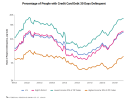
Auto loan delinquencies + defaults, particularly subprime, have been at peak levels for a while now. I think I put a chart in there about that at some point. It's been in the news dozens of times for the last couple years.
It's not a total surprise to see data like this from May.
1758811057531.png

Some say the same is true regarding FHA mortgages---way more defaulting that what we have been led to believe.
Personally, I need hard data to support the assertion. There's private+public groups that closely track the housing market (especially since '08) for any signs of weakness.
In my own view, I don't doubt that we'll reach a point where mortgages will be impacted. Not GFC style, but still impacted.

Unemployment far higher that we are told
The jobs market is most frequently cited reason for why we need to cut rates, and there is ample reading about the situation there. The problem is UE numbers don't capture the full picture about employment; not all job opportunities are created even kind of equal.
Anecdotally it's been pretty crazy to see some well-qualified, career-oriented friends/fam sitting unemployed for 6-12 months plus (and in one case, now 19 months).


Frankly -- I think the fact that we consider 4% to be a "moderately restrictive" interest rate tells you a lot about our current state.
 
It’s amazingly convoluted who actually is responsible for initiating collections on a defaulted federal student loan.


At least those held by the federal government can go to wage garnishment or an offset tax refund for “loan rehabilitation”.

For the private loans, the decision to collect is going to be up to each lender.
It is convoluted.
It also doesn't help that servicers messed up their communications about repayments multiple times, leaving many people scratching their heads about what they owe and when.
Though the root cause of the majority of these non-payment is still the student's capacity and willingness to pay.

I would love to know how many of those are just people refusing to pay the bill. There is a surprising amount of people in my age bracket who *could* pay but aren't because they believe the government should or will "forgive" the debt if they just wait long enough.
If I see a study showing the percentage of people estimated to be able to pay versus not, I'll post it.

For a lot of students, there's good reason to believe that the debt will be forgiven.
In a fair number of cases it makes economic sense to not repay the loan and accept garnishment instead, since it's capped at a relatively low percentage of disposable income. Of course that carries consequences for your credit.
But if you got a degree that can't get you a job, repaying the loan for that is probably a dead-last financial priority.
 
….For a lot of students, there's good reason to believe that the debt will be forgiven.
In a fair number of cases it makes economic sense to not repay the loan and accept garnishment instead, since it's capped at a relatively low percentage of disposable income. Of course that carries consequences for your credit.
But if you got a degree that can't get you a job, repaying the loan for that is probably a dead-last financial priority.
This comment brought to mind commentary on WSJ posted yesterday.
762418f089849c60b0dd81b1605385e4.jpg


Paywalled: https://www.wsj.com/opinion/is-gen-z-unemployable-288d2ec9?st=4hJ6sP&reflink=article_copyURL_share
 
But if you got a degree that can't get you a job,...

...then you can console yourself by remembering that everything happens for a reason, and sometimes the reason is that you're an idiot who makes bad decisions.

People who were smart enough to get into college but then dumb enough to borrow tens of thousands to finance a degree in ancient Peruvian poetry will get little sympathy from me.

We seem to have trained a large number of people to believe they are entitled to borrow money and not have to repay it, rather than training them that they have an ethical obligation to do so regardless of political pandering.

Shame on us for not raising up people to have a better sense of ethics.
 
Something I've been hearing more about lately, and have on two occasions witnessed it myself in the service is young people coming out of college expecting to operate at the very highest levels of the company within 2 years' time since being hired. (That may have been mentioned earlier) We have an entire generation, I believe who operate on unrealistic expectations. I suspect this may be due in part to the prevalence of social media and the constant feeling of needing to keep up with the Joneses without a moment's thought about how to pay for their unrealistic expectations.
 
...then you can console yourself by remembering that everything happens for a reason, and sometimes the reason is that you're an idiot who makes bad decisions.

People who were smart enough to get into college but then dumb enough to borrow tens of thousands to finance a degree in ancient Peruvian poetry will get little sympathy from me.

We seem to have trained a large number of people to believe they are entitled to borrow money and not have to repay it, rather than training them that they have an ethical obligation to do so regardless of political pandering.

Shame on us for not raising up people to have a better sense of ethics.
So what about us dumb guys who knew college wasn't for them and donated their college fund to their sister. I graduated high school early to stop going to school.

18 years later, I go back and forth on whether or not that was still the right choice for me. I feel like I've done alright. I probably could done better financially if I had. But I definitely don't have the same love for data @ArrowFlyer86 has.

But I do get a good laugh at the ones that got the useless degree. People that hope, or entitled enough that think the loan will be forgiven drives me bonkers. And the politicians that support the idea infuriates me. Because loans are partly why I made the decision I did. Instead I worked my arse off and bought a house 3 weeks after turning 23. Is someone going to forgive my mortgage? It's less than most college loans.
 
Last edited:
So what about us dumb guys who knew college wasn't for them and donated their college fund to their sister. I graduated high school early to stop going to school.

18 years later, I go back and forth on whether or not that was still the right choice for me. I feel like I've done alright. I probably could done better financially if I had. But I definitely don't have the same love for data @ArrowFlyer86 has.

More power to you.

There are lots of great careers that don’t require college, and many outstanding, successful people who didn’t attend college.

But people who expend the effort and go deeply in debt to acquire a worthless degree have a serious lack of common sense.
 
...then you can console yourself by remembering that everything happens for a reason, and sometimes the reason is that you're an idiot who makes bad decisions.

People who were smart enough to get into college but then dumb enough to borrow tens of thousands to finance a degree in ancient Peruvian poetry will get little sympathy from me.
What about those who got STEM degrees, which have been a path to a stable long term career for decades, and find themselves unable to get work? Meanwhile the much maligned philosophers have half the unemployment rate...

 
What about those who got STEM degrees, which have been a path to a stable long term career for decades, and find themselves unable to get work? ….
Having the paper is only half the equation. There’s a large number of folks, me included, who have one or more degrees and chose not to work in those fields. Motivating factors come into play here.

I make no bones about it. I wanted to be an Air Force officer, and that required a degree, so I chose the easiest path to a degree possible and never have used that degree/worked in that particular field. Same goes for my Master’s. One thing I also know for certain is I will also never work in the field my degree(s) are in.

I will say I learned things in both programs that I’ve been able to apply across the board in my .mil career and my second career.
 
What about those who got STEM degrees, which have been a path to a stable long term career for decades, and find themselves unable to get work? Meanwhile the much maligned philosophers have half the unemployment rate...

My rebuttal to the low art history unemployment numbers is the majority of people that have it are resigned to their fate as having a mostly useless degree and went to work at Starbucks.

Where someone is employed matters when comparing these things.
 
In defense of the 'useless degree'.

The graduate has displayed the ability to learn the surrounding required classes to the satisfaction of their professors. Not just in the proposed specialty. That is the nature of a degree. I personally do not have a degree because I skipped those side courses such as history, English, and a foreign language, but did take every class available in my specialty. But I was already employed in that specialty, and wanted to advance there.

Those other classes are the foundation for a career in many other fields.

The graduate who cannot find employment in their favorite field must pivot to a field that is hiring. They can then pay living expenses and pay down the education loan until they find a place in their desired field. Sitting in their parents home and sending resumes is not the answer.

Unfortunately for the late pre Covid graduates, the jobs that are now increasing in availability are low income, live with parents in general, and that will be the case for a while.

I did not live in an unshared place until I was 26, and married at 28. That was heavily influenced by economic considerations.

Both I and my wife were debt free when we married.
 
My rebuttal to the low art history unemployment numbers is the majority of people that have it are resigned to their fate as having a mostly useless degree and went to work at Starbucks.

Where someone is employed matters when comparing these things.
Entirely possible. I'll leave the debate as to whether college should be looked at as an education or a job training program for another thread. Right or wrong, the US is currently redlined on the "job training program" end of the gauge right now. It wasn't always that way.
 
My cousin graduated Texas A&M a little over a year ago. Communications degree. She worked in that field for about 6 months before she realized she hated it. Now she's back in school to be a teacher. Regarding college degrees, my theory is high schoolers don't have the foggiest idea what they want to do with their lives. All they know is the crowd of people droning on around them to go to college so you can make more money. Or the experience. Or football. Or something.

My wife graduated college over 20 years ago. She's never once worked a day in a field that aligns with her degree. Her story is a little more complex but the result is the same.

Mike Rowe makes great arguments as to the fallacy of the college education for the sake of a college education. If you want to work in a field that requires it or it will benefit you, great! Don't go just to go. Full disclosure, I have a degree that I obtained while in the service that aligns with my specialty. It could potentially make me a lot of money in my second career...if I could get all the civilian certifications required to go along with the degree.
My cousin spent 5 years at school for an eventual degree in hospitality. Then moved to the Tampa area got married to her high school sweetheart and sold art on the beach. And I'm using "art" very loosely. She is now one of the t shirt girls for Rays and Buccaneers games and in her mid 30's. Her dad is paying the student loan. And her mom works 2 full time jobs to support her daughters lifestyle.

I suspect she's not alone.
 
We seem to have trained a large number of people to believe they are entitled to borrow money and not have to repay it, rather than training them that they have an ethical obligation to do so
Shame on us for not raising up people to have a better sense of ethics.
I have very mixed feelings on that :)

On the one hand, yes, I agree that you shouldn't borrow money you have no intention to repay. And my sympathy for people who get majors in predictably absurd, low-value topics is minimal. Though I'd bet that most dumb college students 18-21 years old do start out with good intentions and do expect to live the American dream and repay their debts along their career journey. We're all optimistic about our futures. It's only later on when they near graduation and are applying for jobs that they realize "holy **** this degree isn't worth the paper it's written on!" and scaling their mountain of debt starts to look like an impossible feat. Sure, at that point much of the blame falls on them. But a lot of it also falls on a system that is utterly ***king broken.

An aside: When I say broken, I mean: we have lenders with no underwriting standards giving eye-watering sums of money to inexperienced almost-child aged people so they can spend money at institutions that provide little value and specialize more in marketing their own "college experience" than an education -- whilst constantly jacking up prices every year. And this all occurs while being supported by a societal backdrop where we collectively tell kids if they don't go to college they are essentially a dumb failure who wasn't smart enough. So the trap is kind of set for them, all they need to do is step into it (usually with happy parents in the background cheering them on for going to school).

On the other hand, being a finance guy, I view loans as contracts. And a not-small part of these contracts prescribes what will happen in great detail in the event of default. If you fail to pay, we enter this other part of the contract that tells us how to handle it per our agreement. There's nothing morally wrong*, unethical or illegal about defaulting. Defaults occur in the ordinary course of a lender's business and any decent sized lender/servicer is going to have departments dedicated specifically to workout situations (and not all of those situations are totally adversarial either).

As much as possible, defaulting on a loan like this should be a dispassionate, calculated financial decision. Governments, companies, sophisticated financiers and high net worth individuals involved in business ventures do this all the time and it's not considered moral rot or a lack of ethics, it's just business. They don't feel any moral compulsion to repay the full value even if they could, just fulfill the terms of the contract (including what occurs in default). I have a hard time looking at student loans any differently. If the debtor wants to take the wage garnishment route, that's an acceptable outcome of the contract they entered into. The same as a company might still have cash on hand to make a payment, but intentionally fails to pay, so too may a student.

Protecting against these outcomes is the role of the people who underwrite the loans, which because of our totally F'd up system, pretty much doesn't exist. Having a huge wave of people unwilling or unable to pay may help force our hand in finally addressing an issue that's been out of control for a long time.

*The only way I could consider it morally wrong is it you borrowed from an unsophisticated party, like family and friends, who are not in the business of assessing risk - and then you willingly fail to pay them back. Or if you flat out lied in your loan application to a sophisticated party, in which case it's obviously morally wrong.

 
Last edited:
I have very mixed feelings on that :)

On the one hand, yes, I agree that you shouldn't borrow money you have no intention to repay. And my sympathy for people who get majors in predictably absurd, low-value topics is minimal. Though I'd bet that most dumb college students 18-21 years old do start out with good intentions and do expect to live the American dream and repay their debts along their career journey. We're all optimistic about our futures. It's only later on when they near graduation and are applying for jobs that they realize "holy **** this degree isn't worth the paper it's written on!" and scaling their mountain of debt starts to look like an impossible feat. Sure, at that point much of the blame falls on them. But a lot of it also falls on a system that is utterly ***king broken.

An aside: When I say broken, I mean: we have lenders with no underwriting standards giving eye-watering sums of money to inexperienced almost-child aged people so they can spend money at institutions that provide little value and specialize more in marketing their own "college experience" than an education -- whilst constantly jacking up prices every year. And this all occurs while being supported by a societal backdrop where we collectively tell kids if they don't go to college they are essentially a dumb failure who wasn't smart enough. So the trap is kind of set for them, all they need to do is step into it (usually with happy parents in the background cheering them on for going to school).

On the other hand, being a finance guy, I view loans as contracts. And a not-small part of these contracts prescribes what will happen in great detail in the event of default. If you fail to pay, we enter this other part of the contract that tells us how to handle it per our agreement. There's nothing morally wrong*, unethical or illegal about defaulting. Defaults occur in the ordinary course of a lender's business and any decent sized lender/servicer is going to have departments dedicated specifically to workout situations (and not all of those situations are totally adversarial either).

As much as possible, defaulting on a loan like this should be a dispassionate, calculated financial decision. Governments, companies, sophisticated financiers and high net worth individuals involved in business ventures do this all the time and it's not considered moral rot or a lack of ethics, it's just business. They don't feel any moral compulsion to repay the full value even if they could, just fulfill the terms of the contract (including what occurs in default). I have a hard time looking at student loans any differently. If the debtor wants to take the wage garnishment route, that's an acceptable outcome of the contract they entered into. The same as a company might still have cash on hand to make a payment, but intentionally fails to pay, so too may a student.

Protecting against these outcomes is the role of the people who underwrite the loans, which because of our totally F'd up system, pretty much doesn't exist. Having a huge wave of people unwilling or unable to pay may help force our hand in finally addressing an issue that's been out of control for a long time.

*The only way I could consider it morally wrong is it you borrowed from an unsophisticated party, like family and friends, who are not in the business of assessing risk - and then you willingly fail to pay them back. Or if you flat out lied in your loan application to a sophisticated party, in which case it's obviously morally wrong.
Very well stated--across the board. These kids have been raised to believe a college degree is an imperative and born into a financial system that seldom seems to hold major defaulting institutions accountable. Not to mention subsidies for this industry or that industry. The application of "personal responsibility" seems to be on a sliding scale. While forgiving the debts for these students is obviously unfair to rest of us, if we have a generation garnished with bad credit ratings--that also comes with financial repercussions economically.
 
This mirrors my feelings on the thing. I can't decide whether to invest in a rental home or a bunker in eastern oregon with all t3h guns. "por que no los dos?" probably. :/
The right answer is both. I am whole hawg into the market (both RE and equities), but want to get our home paid off and have some diversity in our rentals. One in city "house" and one "trailer on land" in the country that gives me more options.
 
I'd like to know how much of that "couple of thousand" stayed in circulation in the US.

Which brings me to another question: Since "inflation" is defined as an increase in the money supply, does sending cash out of the country reduce inflation?
Yes, to an extent. It's not the same as destroying the money, but it does reduce the inflation, except as what % of it is used in another place to buy goods and services that impact the local market where you are.
 
Some say the same is true regarding FHA mortgages---way more defaulting that what we have been led to believe. Car repos apparently up as well. Unemployment far higher that we are told and inflation as well. Economically speaking, seems like we need to be prepared for low IFR conditions.

All the COVID era forbearance programs under the FHA are ending Oct 1st.
If you look at delinquency rates for FHA loans, some of the stuff posted on YT (so not the most reliable) show that delinquency rates are now as high as the 2008 to 2012 crash period. Just to be clear, a delinquency is something past due, that does not mean in foreclosure. When you dig into the date, the delinquency rates past 90 days, which are the ones likely headed for foreclosure, are actually still fairly low compared to the 2008-2012 period. However, the past 90 days have been climbing in 2025.

Tim
 
The jobs market is most frequently cited reason for why we need to cut rates, and there is ample reading about the situation there. The problem is UE numbers don't capture the full picture about employment; not all job opportunities are created even kind of equal.
Anecdotally it's been pretty crazy to see some well-qualified, career-oriented friends/fam sitting unemployed for 6-12 months plus (and in one case, now 19 months).


Frankly -- I think the fact that we consider 4% to be a "moderately restrictive" interest rate tells you a lot about our current state.

I have seen a few claims on CNBC and YT showing the UE rate would be an almost full percentage point higher if there was not such a huge crackdown on immigration. When I look around for supporting data, I have not found anything to back up the claim. So consider this rumor with a large grain of salt added to it.

Tim
 
All the COVID era forbearance programs under the FHA are ending Oct 1st.
If you look at delinquency rates for FHA loans, some of the stuff posted on YT (so not the most reliable) show that delinquency rates are now as high as the 2008 to 2012 crash period. Just to be clear, a delinquency is something past due, that does not mean in foreclosure. When you dig into the date, the delinquency rates past 90 days, which are the ones likely headed for foreclosure, are actually still fairly low compared to the 2008-2012 period. However, the past 90 days have been climbing in 2025.

Tim
There is a lady named Melody Wright that is on substack and has done many interviews addressing this subject matter. I think she is worth listening to if anyone is interested in where property prices MIGHT be headed. The picture she paints is certainly not a positive one for the overall real estate market. I think she was around during the whole "GFC" in 2008, so its an interesting perspective.
 
Something I've been hearing more about lately, and have on two occasions witnessed it myself in the service is young people coming out of college expecting to operate at the very highest levels of the company within 2 years' time since being hired. (That may have been mentioned earlier) We have an entire generation, I believe who operate on unrealistic expectations. I suspect this may be due in part to the prevalence of social media and the constant feeling of needing to keep up with the Joneses without a moment's thought about how to pay for their unrealistic expectations.

I have a co-worker who's daughter was an intern for us for a few months this summer. She graduated with a 4-yr degree in Human Relations and is starting her Master's. She has absolutely reiterated that she doesn't want to apply for entry-level jobs, she wants to find a senior-HR position because she has the degree now. There is ZERO functional experience in HR, she barely has the skills to be a data clerk at this point, however in her mind she thinks she should be on the fast-track to upper management. It's simply jaw-dropping to me.

Very well stated--across the board. These kids have been raised to believe a college degree is an imperative and born into a financial system that seldom seems to hold major defaulting institutions accountable. Not to mention subsidies for this industry or that industry. The application of "personal responsibility" seems to be on a sliding scale. While forgiving the debts for these students is obviously unfair to rest of us, if we have a generation garnished with bad credit ratings--that also comes with financial repercussions economically.
Well, when 99% of corporate businesses started adding 4-yr degree requirements for jobs that never previously needed them, it became a de facto requirement for many kids to attend college just to land an accounts payable clerk job. Only very recently have companies started to remove those degree hurdles from jobs where it isn't imperative. On the job experience should be much more heavily weighed than the existence of a degree.
 
… She graduated with a 4-yr degree in Human Relations and is starting her Master's. She has absolutely reiterated that she doesn't want to apply for entry-level jobs, she wants to find a senior-HR position because she has the degree now. There is ZERO functional experience in HR…..
Yeah, HR is a space where you absolutely need real world experience, preferably in multiple domains…Talent Management/Development and Talent Acquisition are good starting points.
What gets even seasoned HR pros in trouble is forgetting that each of the domains is very specialized and a generalist is worse than being a Jack of all trades. It’s easy to get crosswise in the legal/regulatory compliance part and that can cost the employer a lot of money in the long run.
 
Those other classes are the foundation for a career in many other fields.
My PenState CompSci program required anthropology and sports (among other useless 'electives'). So instead of 'electing' to take two more CompSci classes they wanted me to pay $1800 each to learn about tribes in Africa and learn the rules of softball.

Absolutely not.

Being an AMT is a trade, but that trade is making me more money with less effort than any desk job I had at Fortune 50 companies.
 
It’s easy to get crosswise in the legal/regulatory compliance part and that can cost the employer a lot of money in the long run.
Fun fact- my old employer had an exec that insisted on putting a yes man from bizDev department into the top HR role for our division. They had minimal background in it and knew virtually none of the ropes but the power to overrule all the people below him.

I think we had two employee initiated lawsuits inside of a year that we lost? No idea what the $ settlement values were but the embarrassment was very real. Had to reverse course and put a professional back in there. And broham yes man had to find a new job. Turns out the only thing the big boss likes less than being told NO is being sued lol.
 
The first time I saw this in action was as the info below was unfolding.


ETA: the final outcome for all involved was less than satisfactory for the employer.
I don't think any employer wants:
1) the publicity
2) the punitive damages

In my industry: It's one thing if the lawsuit just forces them to privately fulfill the employment contract. OK. It is quite another when their name is in the news for and they're writing totally avoidable checks for damages.
 
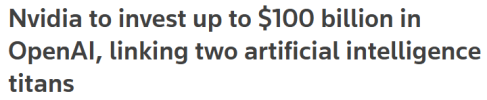
Our market Savior, AI, is ripe with circular financing deals. That's got to be a good sign for like the strongest pillar of our stock rally, right?
... I mean, vendor financing was a super bullish sign during the '00 DotCom fiber build out!

1759763017527.png
1759763071040.png
1759763092978.png

(There was a good article recently in FT concluding that these AI companies need to grow AI revenue by crazy, crazy, crazy exponential numbers by 2030 to meet their financial obligations from this convoluted network of deals all these players have signed)
 
Last edited:
Over the past few months, we have been meeting with retirement advisors (starting early, I still have over a decade to go).
It was really funny how all of them suggested Ai investments are a short term play (as in less then 2-3 years). They think the larger more stable companies like Microsoft, IBM, Google.... will end up winning the race as they all have massive revenue which can support AI R&D, combined with in-house HW and SW designers. Everyone else are viewed as one trick ponies that really on meme status.

It definitely feels like a house of cards to me; on the financial front at least.

Tim
 
Our market Savior, AI, is ripe with circular financing deals. ….
I mean, that’s the VC model anyways….is open AI doing Reg D-type offerings? Danger Will Robinson, Danger.

Who was it in the auto loam space…Tricolor Holdings(?)…with some ugly balance sheets that recently collapsed overnight?
Over the past few months, we have been meeting with retirement advisors (starting early, I still have over a decade to go).
It was really funny how all of them suggested Ai investments are a short term play (as in less then 2-3 years). ….
And that should be an indicator…given you’ve got to hold the stuff for a year to avoid the short term cap gains rate, they might be a target for tax loss harvesting, but at that point you’re kind of out of middle of the road investing strategies.

This space is all still speculative in my view.
 
Over the past few months, we have been meeting with retirement advisors (starting early, I still have over a decade to go).
It was really funny how all of them suggested Ai investments are a short term play (as in less then 2-3 years). They think the larger more stable companies like Microsoft, IBM, Google.... will end up winning the race as they all have massive revenue which can support AI R&D, combined with in-house HW and SW designers. Everyone else are viewed as one trick ponies that really on meme status.

It definitely feels like a house of cards to me; on the financial front at least.

Tim

Consider investing in power generation. Those AI 'datacenters' are more like supercomputers and require staggering amounts of electricity. Each.
 
Who was it in the auto loam space…Tricolor Holdings(?)…with some ugly balance sheets that recently collapsed overnight?
Tricolor + First Brands both failed!
First Brands (the auto supplier) being interesting because from the news it sounds like no one expected that, they'd just been issued a clean bill of health by the ratings groups for their latest debt issue.

I think it was Jim Chanos who recently criticized a lot of the financing deals behind some of these companies. Essentially saying something to the effect of (about private credit): "it's a big red flag that the market stupidly believes you can earn stock market returns while buying into senior tranches of debt". When a company is willing to pay you that kind of return to borrow and you're content to skip the due diligence because you're blinded by yield, bad things happen.
 
Last edited:
Tricolor + First Brands both failed!
First Brands (the auto supplier) being interesting because from the news it sounds like no one expected that, they'd just been issued a clean bill of health by the ratings groups for their latest debt issue.

I think it was Jim Chanos who recently criticized a lot of the financing deals behind some of these companies. Essentially saying something to the effect of (about private credit): "it's a big red flag that the market stupidly believes you can earn stock market returns while buying into senior tranches of debt". When a company is willing to pay you that kind of return to borrow and you're content to skip the due diligence because you're blinded by yield, bad things happen.
So, if its too good to be true......?
 
AI is going to eat internet search, and then be en<edit>ttified by advertising, and all in very VERY short order. I'd argue it's already started and the horse will not be returning to the barn.

I work in this space, but do not have any specific investments in this space other than my RSUs. FWIW though I took a 2/3 comp paycut to bet on the company I currently work for. First time I've even wanted options in a 30 year career.

The good news is it's a bet on a spin of a wheel, and will either be "the new paradigm" or a fast fizzle :) I like the tech under the hood though, so I'll at least be having fun if we crash the plane.
The replacement of internet search and inevitable en****ification is, as you say, underway:
1759768177451.png
1759768192165.png
1759768233942.png
1759768253837.png
 
Consider investing in power generation. Those AI 'datacenters' are more like supercomputers and require staggering amounts of electricity. Each.
Yep. Look at the spinoffs and dependencies. I'll avoid crypto like the plague but companies that are determining where block-chain may help are going to be winners (surprise, they're the same solid players in AI). However both AI and BlockChain are still in the hype curve so tread carefully.
 
Over the past few months, we have been meeting with retirement advisors (starting early, I still have over a decade to go).
It was really funny how all of them suggested Ai investments are a short term play (as in less then 2-3 years). They think the larger more stable companies like Microsoft, IBM, Google.... will end up winning the race as they all have massive revenue which can support AI R&D, combined with in-house HW and SW designers. Everyone else are viewed as one trick ponies that really on meme status.

It definitely feels like a house of cards to me; on the financial front at least.

Tim
I remember thinking the same about BitCoin. I was very, very wrong. Could've bought my house with cash by now.
 
Back
Top