Have We Angered The Economy?

Its HILARIOUS to see the bias in these posts. People from the richest country that ever existed are complaining about people who don't have money and how OTHER people should give them more. TThe Gov't spent TRILLIONS on the war on poverty, yet even after spending 50-60% of the US budget on 'the poor' nothing has has changed.... but hey, the barista still needs to make a 'living wage'.

I suggest everyone go on a trip to another country (second or third world) and see how 'fair' life is. In China, the first thing you do when you go to the hospital is PAY. No money? Then security walks you out. Socialism/communism. The social safety net in many countries is FAMILY. The socialists in the US want us all to 'get along' yet we are also the same culture that puts our INDIVIDUALISM above all else. Look at Japan, or Holland or Norway, most middle eastern countries ... there is not a lot of diversity (ie most people agree on social issues) in those countries that kind of social hemodigny can never exist in the USA (can't say much more without getting another TOS violation).

Being poor in the USA (sinlge person income $15,000) still puts you in the top 22% compared to the rest of the world.

These "wars" on poverty or drugs or just good ole fashion lets blow some stuff up or overthrow some alleged dictator are all done for political expedience. I do not regard the US as "rich", I regard it as broken to the point that any recovery would require either a hard or more soft defaulting. The entire system is broken beyond repair because we have wasted resources on foreign adventurism and handouts. No politician wants to say no---not when it comes to spending. But I would agree to your point that its probaby better to be poor in the US than in many other places.
 
What about those who don't want to excel? Do they not deserve to be able to make enough to survive by providing labor that some business needs for its own survival? What about the people with the 80IQ that are never going to do skilled work, but show up every day and do as they are told? My taxes should make up for the fact that Walmart doesn't pay them enough to get by? The people with ADHD or depression or dyslexia or dysgraphia that will never be able to "find the necessary paths to achieve'? If they are high functioning enough to stock shelves overnight, should my taxes be paying for their housing? Or should their employer?
I don't think you should be paying for anyone's housing unless its a personal call on your part. No one should. And no man ought to be taxed at a higher rate than another. Its immoral and only leads to "class warfare" and social division---which is exactly that our elected officials want.
 
Been through a WalMart checkout lately? Did a cashier ring up your purchases or did you go through self-checkout?
Yep, automation is a threat to labor. I've been writing about this here for a long time. AI/robotics/automation is going to obviate the need for 95% of human labor over the next century. It's important to be talking about what that will mean, because currently (as this thread proves once again) our culture is not ready for the reality that most humans will shortly not be needed in the workforce. But our culture (and this thread) basically says, 'if you don't work, that's on you. it's not my job nor the governments to assure even the simplest existence consisting of someplace to live and food to eat'.

Yeah, the work would still need to be done, but they would have to pay more to get better employees.
Yes, that's what I'm advocating for. That walmart pay their employees more so that I don't have to subsidize their employees via taxes.

Of course, they would then have to raise their prices which leads to inflation which causes those poor guys that lost their job to be in still worse shape and require more government subsidization. And those new guys they hired all of a sudden have to pay more for everything thus requiring they get yet another wage increase.

Where does it stop?
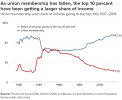
Keep in mind, corporate profits and executive salaries are at record highs. That's where it can stop. There is no constitutional requirement that we continue to enable funneling of money into a few pockets instead of into many.

1757428603303.png

So I guess you don't know much about Walmart. Around half of the employees are part-time and by choice. So is it your stance that Walmart pay a living wage to part-time employees?
On an hourly basis, yes.

I don't think you should be paying for anyone's housing unless its a personal call on your part. No one should. And no man ought to be taxed at a higher rate than another. Its immoral and only leads to "class warfare" and social division---which is exactly that our elected officials want.
I totally disagree that one person shouldn't be taxed more than another. The poor can't afford to pay taxes. The wealthy can. That's an economic fact.

But it is also true that the wealthy pay a smaller percentage of their wealth to taxes because so much of it comes from investments that are sheltered by capital gains, rather than income. I would be absolutely fine if the tax code where refactored such that the wealthy paid a similar amount of taxes on their total wealth as the middle class does. That would fix a ton of problems basically overnight.
 
On an hourly basis, yes.
So since the part-time employees already make the same hourly wage as full-time employees, your point is to pay the part-time employees more per hour than the full-time employees to offset the reduced hours they work in a week? You do understand why some adults want to work part-time?
 
So since the part-time employees already make the same hourly wage as full-time employees, your point is to pay the part-time employees more per hour than the full-time employees to offset the reduced hours they work in a week? You do understand why some adults want to work part-time?
Come on man. Try harder. Of course not. The minimum hourly wage is the minimum hourly wage regardless of whether it's for part time or full time.

Yes, this leads to problems. Many companies offer benefits to full time staff that they don't to part time and, therefore, cap hours at a part time level to avoid having to pay those benefits.

Currently the bigger problem is people working full time and being unable to support themselves without public assistance. When we solve that problem and the problem of companies gaming the system becomes the biggest problem, we can tackle that one in due course.
 
So explain what a fair tax is.
"Fair" is in the eye of the beholder and it is a sliding and slippery slope, which is a huge part of the problem. I have yet to hear any politician who rallies for "the rich to pay their fair share" define "fair share". Scaling the system or rigging it to promote "fairness" without a definition is a disaster and fodder for class division.

There is no moral justification for one man to pay at a higher rate than another. Its fundamentally unfair and a pathway to a socialist hellscape---which is pretty much what we already have. Those who "do" end up paying for those who "don't" and/or those who "won't"--and its often generational.

The reality is you could strip Elon, Buffett, Bezos and Saylor (and all the billionaires) of all their wealth and it would not make any difference-our representatives would blow it before it could even be counted. What is needed is a deep embrace of austerity. At the very least, cap entitlements and end foreign adventurism entirely--seems painfully clear we cannot afford it--hence the 37 trillion we hear so much about these days. When you cannot even pay the interest on the debt, you are in a spiral right into the ground.
 
FWIW, it isn't restricted to just part-time people who are on public assistance programs.
CNBC and Fox both wrote about it and it specifically cites: "About 70% of the 21 million federal aid beneficiaries worked full time, the report found"

For instance, here's the front page of the GAO report:
1757434078119.png
 
I totally disagree that one person shouldn't be taxed more than another. The poor can't afford to pay taxes. The wealthy can. That's an economic fact.

But it is also true that the wealthy pay a smaller percentage of their wealth to taxes because so much of it comes from investments that are sheltered by capital gains, rather than income. I would be absolutely fine if the tax code where refactored such that the wealthy paid a similar amount of taxes on their total wealth as the middle class does. That would fix a ton of problems basically overnight.

So explain what a fair tax is.

I haven't checked in a while, but the last time I looked the top 5% of earners paid about 2/3 of all the income tax. That doesn't seem very fair to me.

@172andyou and I will probably never reach an agreement on this question, but IMHO tax rates should not be aimed at wealth transfer or social engineering. I would be in favor of a national sales tax, one single rate, instead of an income tax. That avoids quibbling over hourly rates, salaried positions, capital gains (or losses), inheritance, gifts, etc., etc. It wouldn't matter where the income originated, since the tax would be on the expenditure side.
 
Exactly. It's time the Walmart family grew up and stood on their own two feet without the tax payer subsidizing them.
No, stocking the Mac-n-Cheese in aisle 21 is NOT a skill worth $20/hr. EVER. The standard of living for these unskilled workers is still much better than 75% of the rest of the people ON THE PLANET.

If your choice is to stagnate at the low level of stock-boy, you don't get the same nice things as someone who got an education, worked hard, and provides a skill/service worth $30-40-50 an hour.

I've met people who never left the small town they grew up in. Like they literally never went more than 30 miles from where they were born or even left the county. Are they expecting money to just magically come to them? They won't even make the effort to GO WHERE THE MONEY IS TO GET IT. I've had over a dozen jobs, and starting (in my mid 50's) a second career. Every step has been up. My reward? A beautiful house, two cars, an airplane (in progress), a beautiful wife, a kid in honors classes. I never have less than $1000 cash in the bank, and a credit score of 850.

I DID ALL THAT. I never graduated Uni. I ran my own company. I worked retail (K-Mart $4/hr) was a prison guard ($13.50/hr) a business owner, IT, and half a dozen more jobs. So some 20-something wanker complaining that their 4 years of drinking and getting an degree in renewable underwater basket weaving while trying to live in NYC or SanFran and would never consider moving to get a good paying job because they don't want to leave friends/family or some other idiotic reason is going to fall on my ever ringing tinnitus deaf ears.

I just applied for a NEW job that kicks my pay UP by $15k a year. What has that stock boy/barista done to improve their lot in life? Gonna guess NOTHING. And no, tictok don't count. The gov't giving them money won't change anything. What has the TRILLIONS of dollars we already gave 'the poor' done? Nothing. They didn't go to school, they didn't get better jobs (why risk losing free gov't money?) they haven't done a think except complain and hold their hand out asking for more free money.
 
I do not regard the US as "rich"
And that is your bias showing. Every country has poor people. Take a country like UAE or Saudi. The average worker in Saudi salary is $2700 a month, in the US the average salary is $5700. Is Saudi richer than the US? SOME Saudi's are.

I'll ask again, have you ever been outside the US? Its hard to compare when you have nothing to compare to.

Many States have free community collage/technical schools. Nothing is stopping a person from moving to one of those States, getting residency, learning a trade, FOR FREE, and then going off and making a good wage. Nothing is stopping a person other than that person's lack of desire. The main reason people are poor (general term) is that they are not motivated (dare I say lazy?).

There is a lot of money to be made in the US. But its not gonna fall in your lap.
 
So explain what a fair tax is.
I want a minimum cover charge. 3k/yr or GTFO. Now exempt any income tax under, say, 200k. Then flat rate above that.

I'd say kill all deductions too, which only serve to distort the economy; but killing the mortgage deduction would cause riots where nothing else seems to. :D
 
Last edited:
Many States have free community collage/technical schools. Nothing is stopping a person from moving to one of those States, getting residency, learning a trade, FOR FREE, and then going off and making a good wage.
I have a brother who works FT since leaving the military and doesn't have two nickels to rub together. He's severe working poor. As we speak he's relocating to Arkansas for a job. That move would not have been possible without financial assistance from family.
Your life circumstances might have been different -- but not everyone can just pickup and move, unless they intend to be homeless at their new destination. Landlords don't normally accept promises in lieu of security deposits. Community colleges don't normally accept smiles in lieu of tuition for credit hours. And your food and transportation isn't going to buy itself while you're attending that program. To you, this may not be a lot of money (a few k for a security deposit, gas money to move, $75 a credit hour/lab fees, etc). For people making $15an hour at their peak -- this can be a massive investment and might be out of reach.

The properly motivated person can save that money over time to make the move, but it isn't just snap your fingers, join a community college, learn that trade and live prosperously. There's some intermediate steps that have been glossed over.

However, I do agree that the single biggest factors there are going to be your own personal ambition to make it happen -- and to some extent your cognitive abilities (... not everyone has the requisite mental faculties to become an electrician, a carpenter, etc...). I think there's a lot of truth the quote: "where there's a will, there's a way".
 
I haven't checked in a while, but the last time I looked the top 5% of earners paid about 2/3 of all the income tax. That doesn't seem very fair to me..
Grossly underestimated.

The 2025 update current thru tax year 2022.

In all, the top 1 percent of taxpayers accounted for more income taxes paid than the bottom 90 percent combined. The top 1 percent of taxpayers paid $864 billion in income taxes while the bottom 90 percent paid $599 billion.

The top half of taxpayers shouldered 97% of the burden. The cut rate for top half is $50K/year. The top quarter of earners are at $99K/yr; top 10% is $178K/year; top 5% being $260K/yr and top 1% at $665K.
You can't look at this in a vacuum. What was the percent of the total income "pie" earned by each group? What about % of income that went to FICA taxes, etc.? Percent of income spent on state sales/use/property taxes (including the portion of rent that goes to property taxes). Anyone who throws out a few numbers without looking at the whole picture is missing the point of the analysis, either intentionally or unintentionally.

There is no definition of "fair" or "moral" when it comes to taxes. Using such terms is irrelevant to any productive discussion. Taxes are part of the social contract of living in an advanced society, and all contracts, quite simply, are subject to negotiation.
 
There is no definition of "fair" or "moral" when it comes to taxes.

Moral may be up for debate, but fair is a different story. No one should pay a higher or lower percentage than any other person. That is fair. Some accept a certain level of unfairness to favor a particular group (low-income earners), but that doesn't make their decision any more fair.
 
You can't look at this in a vacuum..

I’m not.

… What was the percent of the total income "pie" earned by each group? What about % of income that went to FICA taxes, etc.? Percent of income spent on state sales/use/property taxes (including the portion of rent that goes to property taxes).…

Many of those questions are answered at the source link I provided earlier is provided again below.

…Anyone who throws out a few numbers without looking at the whole picture is missing the point of the analysis, either intentionally or unintentionally….
I’m not preferring an analysis; I’ve provided a source foe others to find data and make their own conclusions.
…There is no definition of "fair" or "moral" when it comes to taxes….
Quite true and I’ve not made a statement whether the current system(s) is/are fair or moral. I will say the starting point for that discussion would be Article 1, Section 8 and the 16th Amendment as a practical matter in the US.

Going any further down this path continues to push this thread off topic and likely will devolve into politics which is verboten on this site.
 
Come on man. Try harder. Of course not. The minimum hourly wage is the minimum hourly wage regardless of whether it's for part time or full time.
Except my reply was specifically to your example of Walmart whose minimum wage average is double the federal rate for part/full time workers. So how does a company pay a “living” wage if half their employees only work full-time?

"About 70% of the 21 million federal aid beneficiaries worked full time, the report found"
Interesting. So this whole discussion on "subsidizing" companies due to low wages only applies to roughly 8% of the entire workforce? Or stated another way, 92% of the workforce is currently earning a "living wage"?
 
No one should pay a higher or lower percentage than any other person.
Percentage of what? Total income, including capital gains? Include the value of loans taken against equity holdings (for the uber-rich)? Does that percentage need to be uniform for all individuals across all states? What type of tax counts towards that percentage? Income? Payroll? Capital Gains? State-level taxes? Municipal-level? That degree of "fair" is not practical/possible to implement. Again, it all comes down to a social contract negotiation, which is what politicians are supposed to be doing, preferably with some level of good-faith.
 
Percentage of what? Total income, including capital gains? Include the value of loans taken against equity holdings (for the uber-rich)? Does that percentage need to be uniform for all individuals across all states? What type of tax counts towards that percentage? Income? Payroll? Capital Gains? State-level taxes? Municipal-level? That degree of "fair" is not practical/possible to implement.

Right. Much too complicated. So let's make all that moot by going to a national sales tax, at a single flat rate. Everyone get's treated the same, regardless of where the income came from.
 
Right. Much too complicated. So let's make all that moot by going to a national sales tax, at a single flat rate. Everyone get's treated the same, regardless of where the income came from.
Just one snag---our "leaders" in no way want you to realize just how much you are paying in taxes. They want it complicated, divisive and opaque. If there was a national sales tax, people would flip out and the value of pitch forks would shoot up faster than bitcoin when it's running hot. Otherwise, completely agree. I find it absurd that we have different tax rates or that I should be punished if I have a good year. I find it equally absurd that we have paid for generations of people who do not contribute nor have any desire to contribute. Of course, I find foreign adventurism for military purposes absurd as I do medicare and medicaid expenses. Maybe someone can explain why fractional reserve banking is so cool, but fractional reserve poker tends to be a "no-no".
 
When I was a younger man I though corporations should pay their workers more, pay higher taxes, make it more fair so everybody profits more equally on the results of the buisness, yadda yadda. The older I’ve gotten the more I recognized that without the corporations (and a few percent of very high earners) generating that excess they would not be able to expand, start new ventures, take risks that then create far more jobs and opportunities for far more people. Each individual worker may not do as well but it creates a much larger group of people who are “doing okay”, a net greater good overall. It’s a very complex balance, and no matter what anybody tells you NOBODY knows the answer. In my opinion the more regulation and controlling to try to improve the world the more it will disrupt it. The “invisible hand” of the economy/society works best when left alone to do its thing. But I’m an uneducated Jed clampet type…
 
Money is nothing more than recognition of one's contribution to prosperity. When governments get involved by printing more, giving more, or mandating higher wages, only damage is done, not good. This is because the additional money is not in recognition of any further contributions. It serves only to cheapen the currency.
 
Money is nothing more than recognition of one's contribution to prosperity. When governments get involved by printing more, giving more, or mandating higher wages, only damage is done, not good. This is because the additional money is not in recognition of any further contributions. It serves only to cheapen the currency.
Bingo.

Government involvement makes prices go up.

Look at housing.

Look at education costs.

The "dollar" has lost what, 97% of its original value?

They are literally printing money out of thin air and most of society has never known anything but--so they have a hard time seeing through the fiat bubble. And, some studies suggest that all the gains in the S&P are really just illusionary once you back out the M2 and to take it a step further, we really have negative GDP if you remove government spending. So, you can make an argument that most "investments" are merely treading water--the numbers go up---the purchasing power represented by those numbers do not.

What we have here is the result of "sound money" being viewed as quaint.
 
Why did we get off the gold standard? Why are 100% of global currencies fiat?

Hint: It's not because printing money is only bad, as some here have been asserting.
 
Why did we get off the gold standard? Why are 100% of global currencies fiat?

Hint: It's not because printing money is only bad, as some here have been asserting.
Because we could not honor the remittance---out of money--years of "guns and butter" ala the "War on Poverty" and the "Space Race" not to mention Vietnam. It was/is actually known as the Nixon Gold Default. Money that is printed out of nothing is worth nothing, and that appears to be exactly where the dollar is headed. Why do they do it? Its got zero to do with honor, it has to do with spending and the impact is that of a hidden tax---that debasement is what the consumer ends up seeing as inflation.
 
fun fun!
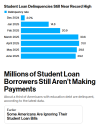
(an interesting bloomberg read this morning)
View attachment 145450
Some say the same is true regarding FHA mortgages---way more defaulting that what we have been led to believe. Car repos apparently up as well. Unemployment far higher that we are told and inflation as well. Economically speaking, seems like we need to be prepared for low IFR conditions.
 
fun fun!
(an interesting bloomberg read this morning)
View attachment 145450
I would love to know how many of those are just people refusing to pay the bill. There is a surprising amount of people in my age bracket who *could* pay but aren't because they believe the government should or will "forgive" the debt if they just wait long enough.
 
I would love to know how many of those are just people refusing to pay the bill. There is a surprising amount of people in my age bracket who *could* pay but aren't because they believe the government should or will "forgive" the debt if they just wait long enough.
I suspect the greater weight of those not paying falls on those who cannot, those who have sketchy degrees and are either unemployed or under employed. Federal involvement leads to excess liquidity--student loans as well as real estate--which leads to higher prices all around.
 
fun fun!
(an interesting bloomberg read this morning)
View attachment 145450

It’s amazingly convoluted who actually is responsible for initiating collections on a defaulted federal student loan.


At least those held by the federal government can go to wage garnishment or an offset tax refund for “loan rehabilitation”.

For the private loans, the decision to collect is going to be up to each lender.
 
Back
Top