Have We Angered The Economy?

ArrowFlyer86

En-Route
PoA Supporter
Joined
Jul 17, 2019
Messages
3,285
Location
Around
Display Name
Flight
This isn't "the sky is falling," but I'm trying to understand what the heck is the growth spot in the economy over the next 0-5 years? I'd like to see + hear some data/opinions if you have any you'd like to share.

My observations in no particular order:
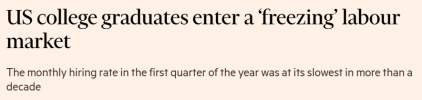
The white collar job market is not healthy; most of the "were hiring" stories you hear about are for low paid gigs. Personally I have a few friends who have been unemployed for almost a year, so that contributes to my pessimism (since they're all pretty solid workers in previous growth fields). But the data also supports this.
Commercial real estate has been extending terms for a while waiting for a recovery that isn't actually arriving, and their mortgages aren't getting any smaller... There's certainly not any booming investment in CRE office.
Private equity saddled with several trillion dollars of portfolio companies they can't unload which are purchased with leverage on leverage on leverage; their limited partners are anxious to get their money back... the current solution seems to be write an executive order making people's 401k's a honeypot for bad valuation deals that PE needs to get rid of.
Artificial Intelligence: hit a pretty significant road bump that doesn't have an obvious path forward to fulfilling investor (or user) expectations. Llama4 and GPT5 are both examples. That isn't to say the craze is over, but it could well be a catalyst that causes a recalibration in people's expectations and investments. TBD.
Manufacturers have tariffs to contend with and will eventually have to trim costs or boost prices to deal with it; in no case can that be considered a positive thing
Inflation risk is omni-present
The IPO market is still in the toilet
Homebuilders for most of the market (ex high end) can only sell new houses with big financial incentives and hurling discounts at people, which has dropped profitability
Existing housing market has decidedly flipped, with the national data showing it takes longer to sell and for lower prices. There's some geographic variation, but on the whole it's in favor of buyers.
To save money lots of people have switched to DIY rather than paying laborers; prioritizing $ over your time is usually a tightening sign
I know some will argue this point, but from the data I see the aircraft market is also a lot weaker than the numbers show. Listings sit for a long time.
Restaurants are feeling pinched with consumers cutting back
The boom/bust pilot cycle is not booming
The boom/bust energy cycle is not booming
The boom/bust real estate cycle is not booming, unless you're building data centers
Gov't and healthcare employment accounts for over half the job growth over the last 3 years, and that growth engine is dead (no judgment on that, it's just a fact)
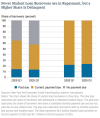
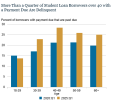
Student loan payments are in the toilet, with delinquencies having increased substantially despite fewer people actually being in a payment phase of the loan
Last but not least, we're >35 trillion in federal debt -- and with fed independence in jeopardy. There is no situation where this could be considered a positive development.


Here's the only bright spots I see:

If you're part of the military complex, you're doing great. War is good for business and the recent budget bill gives you a hefty piggy bank boost to play with.
If you're lighting venture capital investor money on fire to build a GPT wrapper, things are great until you have to re-raise.
If you're in the construction or real estate biz building data centers, you're doing great
If you build semiconductors or semicap equipment, you're doing great
If you have your 401k in speculative/growthy assets, you're currently doing wonderful (but that's not the economy, that's the fickle equity markets)


But to me, by all accounts, the underlying economy does not seem great. It seems like... pretty not great?


Random bits of data:
1756150950946.png

The "gen z kids can't get jobs because of AI taking the entry level jobs" narrative doesn't really hold, based on the age distribution. It's just a crappy market all around.
1756151385789.png

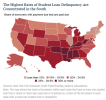
Also worth noting that the south/sunbelt is getting hit the hardest for housing, after also having a big boom.
1756150741285.png


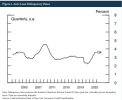
Auto market. The subprime submarket (not broken out here) is at all time high delinquencies, that's even including the 2007-2010 disaster.
1756151861382.png

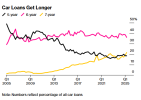
Car affordability has been getting worse for a while now.
1756150548703.png

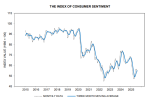
Consumer sentiment is bad.
1756152151802.png

Jobs:
1756152615754.png
1756153109507.png

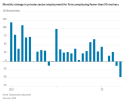
And existing jobs (note this is ADP, not the BLS numbers which are subject to substantial revisions):
1756152636910.png

Homes:
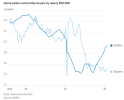
Still at record unaffordability. So sure your house is climbing in value on paper, but can it sell? And the answer is it depends, but for many people it's often not for the price you think it can.
Also worth noting that we're seeing a record rate of home purchase cancellations.
1756153310089.png

As for new homes (Lennar is not unique): """Stuart A. Miller, a chief executive of Lennar, one of the nation’s largest residential builders, said on a June call with analysts that the company had offered incentives of more than 13 percent of a home’s cost in the second quarter and that it would continue focusing on “lower cost structures.” That’s more than double the normal incentive rate, which Mr. Miller said on a March call should be around 5 or 6 percent."""
 
Last edited:
Aren’t you a cheerful ray of sunshine!

I do know that local to me (Central Florida) prices on homes have not dropped any though time on market has stretched out a bit. Commercial real estate is still just nuts. Landlords will not sign longer leases unless a substantial premium is paid and long term leases actually hurt the value of buildings (which is the darndest thing I’ve ever seen in commercial real estate). But the fundamentals of the economy have seemed off for several years. The stock cap on things like Tesla or Apple are nowhere near rational to normal values. But “the market can stay irrational longer than you can stay solvent.”
 
IBTL. :goofy:

I don't really have anything substantial to add, but the economy has been weak for a long time, and most of the "booms" of recent years have been artificial and funded by the taxpayer. I suspect that it will take a long time to correct the last 20-30 years of fiscal gamblings on both the private and government side - and although I firmly believe that in the long run, it will/would lead to a healthier economy, in the short term...it will really suck. People massively overextended in the latest "free money" era, and now they are learning the hard way that "free money" is definitely not free and always has strings attached.
 

Yeah, this is not intended to be a political post.
We have had weakness for a while now and I'm confident it would be pervasive across different regimes. It has "felt" dislocated for years, yet the party keeps going. Yet, when I look at the data I keep scratching my head and ask what's driving it?
And how much of the continued optimism is just based on the market performance (SPY/Nasdaq) instead of actual fundamentals?

Aren’t you a cheerful ray of sunshine!

I do know that local to me (Central Florida) prices on homes have not dropped any though time on market has stretched out a bit. Commercial real estate is still just nuts. Landlords will not sign longer leases unless a substantial premium is paid and long term leases actually hurt the value of buildings (which is the darndest thing I’ve ever seen in commercial real estate). But the fundamentals of the economy have seemed off for several years. The stock cap on things like Tesla or Apple are nowhere near rational to normal values. But “the market can stay irrational longer than you can stay solvent.”
Agree the market caps don't make sense. But a valuation bet can take years to play out, as you highlight with your quote :)
I actually was not aware that longer leases are requiring premiums. I obviously would have thought the reverse, since longer leases for us meant better deals and more landlord concessions. I'll have to research that.
 
Not a solid indicator of the overall economy, but in several Los Angeles area zip codes houses are still going 10-20% above already unbelievably high asking prices.
 
I've been bearish for like 15 years so I dunno anything. I'm at about 33% cash currently and "enjoying" both the FOMO from that cash making 4% instead of what my stonks are doing, PLUS the "waiting for a deal" that apparently will never materialize.

I hate the sugar high our economy has been riding. I'm fundamentally annoyed by it and hate investing in it. It just seems that every other country is doing the exact same thing, so "quo" is statused. Our property market (which was fookin insane and we nailed the "top" of perfectly in March 2022) is cooled and we were going to acquire something new, but... there are still buyers with cash. Instead of the "lost out to a 40%-over-ask all-cash 3 days after listing" situation, now it's merely "lost out to ask-all-cash 3 weeks after listing", so, that's something. :D

I worry most about our citizenry being further divided into haves and have-nots. I also have a lot of colleagues out of work right now. I personally lost a bunch of contract work and have retrenched a bit. I'm using the free time to pursue personal projects, but... I'm fortunate that I had steaks in the freezer. I'm also having people reach out looking to give me more contracts, so... the 2 month lull I experienced was short-lived.
 
I'm also having people reach out looking to give me more contracts, so... the 2 month lull I experienced was short-lived.
Sounds like maybe I'll wait a little longer on selling off some of my portfolio.

And I think I'll start calling this "The Mike Brannigindicator".
 
Sounds like maybe I'll wait a little longer on selling off some of my portfolio.

And I think I'll start calling this "The Mike Brannigindicator".

Contra-indicator is probably the mot juste. :D
 
I've been bearish for like 15 years so I dunno anything. I'm at about 33% cash currently and "enjoying" both the FOMO from that cash making 4% instead of what my stonks are doing, PLUS the "waiting for a deal" that apparently will never materialize.

I hate the sugar high our economy has been riding. I'm fundamentally annoyed by it and hate investing in it. It just seems that every other country is doing the exact same thing, so "quo" is statused. Our property market (which was fookin insane and we nailed the "top" of perfectly in March 2022) is cooled and we were going to acquire something new, but... there are still buyers with cash. Instead of the "lost out to a 40%-over-ask all-cash 3 days after listing" situation, now it's merely "lost out to ask-all-cash 3 weeks after listing", so, that's something. :D

That sounds like some improvement in your local housing market, though still pretty insane. The housing economy in SF and LA is mind boggling to a simple midwesterner like myself.

The sugar high is a good analogy, except that it's been going for a lonnnngggg time. When you dripfeed low interest rates into the arteries of the economy for 15 years and get everyone hooked on cheap debt, then apply M2 afterburners around COVID -- you give people a reason to party. Trying to wean people off that debt, whether at the personal or industry level (like private equity), has proven impossible. People are just looking to get their next fix so they can go back to how things were, without any understanding that how things were is not sustainable. A lot of people don't connect the dots between interest rates and crazy speculative risk taking. It's kind of like how the Chinese treated their property market. For the longest time it was a sure thing, it's where you park your savings, it only goes up no matter what.... Until it no longer went up cuz all crazy sugar highs must come to an end.
 
That sounds like some improvement in your local housing market, though still pretty insane. The housing economy in SF and LA is mind boggling to a simple midwesterner like myself.

The sugar high is a good analogy, except that it's been going for a lonnnngggg time. When you dripfeed low interest rates into the arteries of the economy for 15 years and get everyone hooked on cheap debt, then apply M2 afterburners around COVID -- you give people a reason to party. Trying to wean people off that debt, whether at the personal or industry level (like private equity), has proven impossible. People are just looking to get their next fix so they can go back to how things were, without any understanding that how things were is not sustainable. It's kind of like how the Chinese treated their property market. For the longest time it was a sure thing, it only goes up no matter what.... Until it no longer went up cuz all crazy sugar highs must come to an end.
This mirrors my feelings on the thing. I can't decide whether to invest in a rental home or a bunker in eastern oregon with all t3h guns. "por que no los dos?" probably. :/
 
Yeah, this is not intended to be a political post.
We have had weakness for a while now and I'm confident it would be pervasive across different regimes. It has "felt" dislocated for years, yet the party keeps going. Yet, when I look at the data I keep scratching my head and ask what's driving it?
And how much of the continued optimism is just based on the market performance (SPY/Nasdaq) instead of actual fundamentals?


Agree the market caps don't make sense. But a valuation bet can take years to play out, as you highlight with your quote :)
I actually was not aware that longer leases are requiring premiums. I obviously would have thought the reverse, since longer leases for us meant better deals and more landlord concessions. I'll have to research that.
The longer lease thing is pretty localized to an exceptionally high growth area but I expected commercial real estate to crash due to work from home and while big city centers have, local centers with retail space didn’t. At least here.
 
So you're asking POA to do your work for you?
you know I've seen it quite often throughout the years.... someone posts a thread and then voila, a few weeks later there's an article in some aviation magazine with the exact same title and hints of replies from the thread. I've seen the same thing with youtubers. not saying that's what's going on here, but it most def wouldn't be the first time.
 
It's really not about worrying, it's about understanding.

To me it's no different than reading about geopolitics. I can't change the course of it, but I still want to understand it.

And I freely admit I don't know the entire state of the economy or the markets. I have blind spots all over and like to hear different perspectives.
 
I like to think of it as crowdsourcing inspiration...
And PoA happens to be a place with people from a wide cross section of backgrounds, many of whom are quite smart, so why not?
I need to learn how to get my day job in on that action.
 
I’m honestly remind of the “farm crisis”. I strongly recommend everybody study it a bit. An extremely abbreviated clip note version.. a situation of foreign trade policy and economic growth spurred record levels of return on investments for farmers. Lenders were full tilt in support of what they saw as sure bet loans, local loan officers were telling all their clients (many being childhood friends they went to kindergarten with) to leverage what they own and expand, it was a sure bet. Then policy/global trade changed at the stroke of a pen. Market collapsed, return on investment was negative. The farmers couldn’t cover their notes. It started small, a little behind this years operating loan, leverage some more equity of owned land to cover. Next year the same, then interest started going up. Then farms started to sell (this drove down land prices) reducing equity to borrow against, just like a rising tide lifts all boats, a falling one lowers them. Nobody was buying, they were trying to save the farms they owned so the price of land dropped further. This lowered the equity reserve further and put many underwater forcing bankruptcy sales… that further lowered the value of land in a feed back loop. It was devastating to almost all but the “I don’t borrow money” few. I thank god my dad had a personal vow (that I also hold) to never borrow against the “family farm”. He had others he had bought (and lost) but the “core” farm survived.
 
The “Economy” isn’t some homogenous blob that’s accurately represented by all the various data sources.

I think economists are having a hard time understanding what the economy is doing right now because, well, they don’t really know how to deal with things like gig workers whose data is not captured in a lot of official data. Then again, economists rarely understand what’s happening ‘right now’; they need to context time provides.

Broadly, we know savings have been depleted and debt has increased, but if the foreclosures and repos aren’t being appreciably affected, then cash is being generated and flowing. For some, it’s probably a losing battle, for others they’re likely treading water, some are sitting on the sidelines, and some are still doing deals.

I know we’ve paused some entry level hiring for the rest of the year but we’ve been backfilling staff attrition. Most of our folks that have been laid off were able to find elsewhere in the company during the notice period. The one person I know who’s been out of work for a year is that way by choice.
 
Last edited:
The “Economy” isn’t some homogenous blob that’s accurately represented by all the various data sources.

I think economists are having a hard time understanding what the economy is doing right now because, well, they don’t really know how to deal with things like gig workers whose data is not captured in a lot of official data. Then again, economists rarely understand what’s happening ‘right now’; they need to context time provides.

Broadly, we know savings have been depleted and debt has increased, but if the foreclosures and repos aren’t being appreciably affected, then cash is being generated and flowing. For some, it’s probably a losing battle, for others they’re likely treading water, some are sitting on the sidelines, and some are still doing deals.

I know we’ve paused some entry level hiring for the rest of the year but we’ve been backfilling staff attrition. Most of our folks that have been laid off were able to find elsewhere in the company during the notice period. The one person I know who’s been out of work for a year is that way by choice.

Generally speaking, economists seem to be accurate only in hindsight. They are adept at conjuring up explanations for what happened, but for what's going to happen they're like weather forecasters with Ouija boards.

Something I've noticed in the past few years is the growth of an underground economy. I realize that the plural of anecdote is not data, but personal experience leads me to wonder whether the off-the-record activity has not grown to the point of misleading the analysts.

One minor example: when we had tree work done after a recent hurricane, the company had a crew of a half-dozen workers at our place. When they finished, the supervisor asked if I would mind paying in cash so he could pay his workers in cash. I ran up to the bank, took out a couple of thousand, and paid, and he then handed out cash to his crew. I would be astonished if all that was recorded correctly in the books, and even more astonished if the workers paid taxes on any of it.

I could list several other examples, but the particulars aren't really the point. I'm just curious as to how large the "off the record" economy might be. I suspect employment is higher than the numbers indicate, but people are working privately for cash (and probably collecting unemployment checks, too) and that part of the labor market isn't captured in the records.
 
Speaking for the O&G industry, we've been really slow this year. All of the go-to analysts had crude prices pegged at over $80/bbl for 2025 year-end predictions. We've been on a steady decline since January toward $60/bbl, and we're down about 45 drilling rigs in North America over that same period (we're down around 400 drilling rigs since 2020). That's a drop in drilling capacity of over 30% in 5 years. Producers aren't doing a ton of exploration right now, and what is being drilled isn't being completed (mostly so that they get to keep the lease agreements active). Everyone seems to be in a "wait and see" pattern because they'd rather not sell their product at $60/bbl. Conflicts in the Middle East/Russia haven't seemed to really have any material impact on gas/oil futures from what I have seen, just temporary blips, probably because the conflicts have been going on for so long that the "fear" of interruptions has subsided in the market. All of the service companies (Halliburton/SLB/Baker/etc) have squeezed their workforce down and are keeping their cards close to the vest in terms of forecasts and investment announcements. Tariffs have hit a lot of stuff pretty hard (aluminum/rubber/chemicals) which has driven up the production costs.

As far as the real estate market, it's been pretty solid in OK/TX from what I've seen. Houses that are priced right (like my parents') will move within weeks, but those that are still trying to fleece some California transplant with absurd pricing tend to go unsold. New auto prices are insane, and I'm not even sure who's still buying them these days. There's definitely a increasingly bigger chasm between the have's/have-nots where those at the bottom barely make enough to cover rent/bills.

I've been mostly invested in the S&P 500 indexes since Covid, but I've been looking at parking the money in something more insulated here soon waiting for the market to nosedive.
 
I stopped timing the market or picking stocks in 1998.

Wise man.

I'm stricly a funds investor. Picking individual stocks is like playing roulette, but investing in funds is more akin to owning casinos. Much better odds for long-term sustained returns. I did my own investing inside my 401k while working, but since retiring, I have a financial planner that handles all of it for me and I've been pleased with the results.
 
I'll let my crazy flag fly for a bit here.....

For most of the time I've been an adult what I've seen is an overall economy treading water. Sometimes we see a rise but it's usually following a big downturn. Most economic policy regardless of which variety of politicians have control have been targeted towards either making the DOW rise in the short term or bailing out people and businesses to avert a larger disaster. There's been little to no attention paid to doing anything foundational that would put us back in track for the long term- that sort of thing won't pay off within an election cycle and might even temporarily cause a downturn so they won't do it.

We've also consolidated... just about everything. Most industries are controlled by just a few gigantic companies. Now, there's some benefit to that- it tends to be more efficient and that makes our dollar go farther as consumers but it also means starting a competing business is nearly impossible. We don't have the kind of competition we need for a capitalist economy to thrive. Everything has become 'too big to fail'. But now and then businesses NEED to fail to make room for something new/innovative.

We shipped most of our manufacturing overseas and threw up tons of red tape that makes building anything new nearly impossible. We don't do much building of new facilities/businesses or much making of stuff. We just keep patching up our old stogy infrastructure and industries while keeping our population afloat on a sea of ridiculously cheap foreign(mostly Chinese) goods. Yes, I know we have a 'service' economy but IMHO there's a limit to how far you can keep 'servicing' before you run out of stuff to service and we're pretty much there.

Bottom line here is we're a stagnant society still riding what's left of a wave of prosperity that's several generations old. There needs to be a fundamental change above and beyond anything we've seen in the past decades. I fear that change will also have to start off with a collapse above and beyond anything that's happened in my lifetime. Back in 08' I was sure something bigger and worse was coming and I'm truly surprised it hasn't happened yet. Maybe it won't, maybe I'm wrong. Maybe we'll make enough small corrections and manage foundational changes gradually enough for that not to hit. Maybe. Either way I've set up my family's situation to be as insulated as one can reasonably be from the economy falling out from under us.... I am not confident.
 
So, I'll come at this from a different perspective. Since that's what @ArrowFlyer86 was looking for.

I deal with a rather wide range of industries being in the welding repair/fabrication trade. Currently in the shop I have a 40' gooseneck horse trailer that needs the ramp repaied. A large Hyundai wheel loader with arms that are misaligned. Small railings for an elderly woman's front steps. Weed harvester for a lake for a local municipality. 150lf of railing for a local bar. And fabricating aluminum ramps/doors for 4 landscape trailers. And that's not to mention all the commercial/industrial building repair and maintenance we do off site that makes up a large chunk of business.

Perhaps we're diverse enough to be rather insulated from slow downs. Up until the last couple weeks we were a month out from starting any new work thats longer than a few hours. My steel and aluminum especially have really gone up, but I've never gotten a complaint or a job not approved because of material prices.

Finally sort of caught up that I can get some personal projects on the shop/building taken care of. Currently have a guy making grates for new storm drains for the driveway were putting in alongside our shop.
I will say, some of the build outs we were doing has slowed. Is that because the property owners we deal with have everything already leased out? Or because companies are in a holding pattern. I think it's a mixed bag, but my customers deal with a handful of very large property owners and I still get the bums rush to repair something or add rtu's cuz the new tenant is moving in next week.

My electrician buddies are still slammed. My excavation buddies arent quite that extreme. But busy enough. The bobcat dealer is a little slow. Not a ton of equipment coming back to the shop for repair. But not sit on their hands slow.

From a personal point of expansion. Im kind of holding off on the new building. Steel has gone up. And interest rates a little volatile. Now historically rates arent bad. However, I think myself and alot of others are just waiting things out to see if they get stupid low again.
 
One minor example: when we had tree work done after a recent hurricane, the company had a crew of a half-dozen workers at our place. When they finished, the supervisor asked if I would mind paying in cash so he could pay his workers in cash. I ran up to the bank, took out a couple of thousand, and paid, and he then handed out cash to his crew. I would be astonished if all that was recorded correctly in the books, and even more astonished if the workers paid taxes on any of it.
I'd like to know how much of that "couple of thousand" stayed in circulation in the US.

Which brings me to another question: Since "inflation" is defined as an increase in the money supply, does sending cash out of the country reduce inflation?
 
Back
Top