Have We Angered The Economy?

I remember thinking the same about BitCoin. I was very, very wrong. Could've bought my house with cash by now.

Bitcoin is still a meme. It has zero intrinsic value, from a technical standpoint it is also a very limited transactional ledger... there are many problems with it, and it is still a solution looking for a problem.
With that said, if you want to gamble, it is as good a bet as anything else.
Maybe if I was younger, I might have considered it. But it was and is still too risky for my taste, because I typically hold assets at least a couple years. If I wanted to play the short term, it would have been an awesome market to pay attention too, and maybe play in.

Tim
 
Oh yeah with a rewind and edit button on my life, my investment strategies would be a little different. :yesnod:
 
The AI craze is reminding me so much of the Dot Com boom. I was consulting for a lot of start ups (not my field) that were trying to transform the markets for basic materials like steel, paper, lumber, chemicals and mining (which was my field). I would go to silicon valley and sit with combination of older execs from the industries and earnest 20-30 year olds that were going revolutionize these markets. 100% of the startups failed. Several offered me sweet packages to go to work for them instead of my firm. I did get sorely tempted.
The only one that made money out of that was one of the industrial companies sold their share of an emerging marketplace to the other members of the consortium. This was in the early days on the way up the speculative curve. He got $700 million, which was more money than the company made in the previous 10 years. The ones who bought lost it all.
Real stuff came out of that, like Amazon, but the world is littered with the losers.
AI really, really feels like that. A few will win, many will lose.
 
@Hang 4

Minor nitpick. I think a lot will win, e.g. I am making extensive use of AI as a tool. And there will be a lot of companies, and individuals who do so.
I do think that most of the companies that are built on the concept of building a revolutionary AI will lose though.

Tim
 
@Hang 4

Minor nitpick. I think a lot will win, e.g. I am making extensive use of AI as a tool. And there will be a lot of companies, and individuals who do so.
I do think that most of the companies that are built on the concept of building a revolutionary AI will lose though.

Tim
Correct, lot's of companies "won" with internet commerce. The early, big bets based on "it's the internet", where there was either no value proposition or the industry wasn't ready to change business practices, tended to lose.
 
And that is your bias showing. Every country has poor people. Take a country like UAE or Saudi. The average worker in Saudi salary is $2700 a month, in the US the average salary is $5700. Is Saudi richer than the US? SOME Saudi's are.

I'll ask again, have you ever been outside the US? Its hard to compare when you have nothing to compare to.

Many States have free community collage/technical schools. Nothing is stopping a person from moving to one of those States, getting residency, learning a trade, FOR FREE, and then going off and making a good wage. Nothing is stopping a person other than that person's lack of desire. The main reason people are poor (general term) is that they are not motivated (dare I say lazy?).

There is a lot of money to be made in the US. But its not gonna fall in your lap.
I went to Aviation Maintenance school to get my A&P. It wasn't exactly free, I paid for gas, books, and $2 per semester. I worked for 2 months as an A&P before I went to ERAU for my Aviation Line Maintenance Certificate. That took 3 months, and I networked my way into a job at Cessna on the way back to CA. That job got me the experience I needed to get a job back in Silicon Valley, where I spent the rest of my career, except for a gig in Alameda, and another one in Concord.

As John Wayne is reported to have said, "A man's gotta do what a man's gotta do."
 
Bingo.

Government involvement makes prices go up.

Look at housing.

Look at education costs.

The "dollar" has lost what, 97% of its original value?

They are literally printing money out of thin air and most of society has never known anything but--so they have a hard time seeing through the fiat bubble. And, some studies suggest that all the gains in the S&P are really just illusionary once you back out the M2 and to take it a step further, we really have negative GDP if you remove government spending. So, you can make an argument that most "investments" are merely treading water--the numbers go up---the purchasing power represented by those numbers do not.

What we have here is the result of "sound money" being viewed as quaint.
Depending on where you start, the dollar has lost at least 99% of its value since 1900.
 
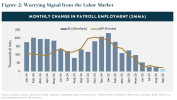
With BLS down for a bit, anyone else looking at reports like Carlyle’s?
The ADP report is composed only of private sector data which are ADP clients, with a heavy weighting on mid-size companies, and is based on data less than a few days old (consider it almost real-time)

Historically, the ADP report had pretty good correlation to the second revision non-farm numbers from BLS. But that is just a piece of the economy. Carlyle’s is based on data pulled from its thousands (I think hundreds of thousands, but not positive) investments. Again it is focused more mid-size companies.

The reason I mention mid-size company focus is small companies still dominate the total employment picture.

So, with the hazy picture ahead, anyone making adjustments? (I am not) Consumer sentiment surveys on inflation is getting worse (as in people are expecting inflation to remain elevated longer). Any bets on which way the Fed will go? (I think at least one rate cut)

Tim
I don't see how they have any choice but to cut, which is not a good sign for an administration that likes to brag about America's economic health. Obviously, the current situation goes beyond any one administration, but they have no way out other than deflating the debt and that will lead to more inflation.
 
@Hang 4

Minor nitpick. I think a lot will win, e.g. I am making extensive use of AI as a tool. And there will be a lot of companies, and individuals who do so.
I do think that most of the companies that are built on the concept of building a revolutionary AI will lose though.

Tim
What strikes me as curious is that you have NVDA pumping out chips for Open Source AI and Open Source AI is apparently losing a lot of money. No one seems concerned, but perhaps they ought to be. "Build it and they will come"? Maybe. Maybe not. The hype is going to have to lead to practical and profitable integration at some point. If you are in---best of luck.
 
Oh yeah with a rewind and edit button on my life, my investment strategies would be a little different. :yesnod:
Same here. If you had a DeLorean and went back to the 1980s, seems like a safe bet would be defense stocks. I learned to late that our primary export was war.
 
Same here. If you had a DeLorean and went back to the 1980s, seems like a safe bet would be defense stocks. I learned to late that our primary export was war.

Defense stocks are still a good bet. Wars have existed as long as humanity, and will continue through however much future humanity has left.
 
Defense stocks are still a good bet. Wars have existed as long as humanity, and will continue through however much future humanity has left.
A long time ago when I was in HS; I had a history teacher said war can always be traced back to the three Gs.
1. Gold (as in resources)
2. Glory
3. God

Those three motivations have not disappeared or changed in thousands of years.

Tim
 
Defense stocks are still a good bet. Wars have existed as long as humanity, and will continue through however much future humanity has left.
There is absolutely no evidence that you are incorrect. No matter who runs for office and no matter who gets elected, they love to fire up the printing press and wind up the military. I looked at a few defense stocks, but sort of had a morality issue with it. Seems akin to buying tobacco stocks. Of course, blending morality with economics is probably not much of a winning thesis.
 
I looked at a few defense stocks, but sort of had a morality issue with it. Seems akin to buying tobacco stocks.

Well, I spent 36 years as an engineer at a defense contractor and had a hand in developing some of our most sophisticated weapon systems. I have zero morality issues with providing our military with the best possible equipment. In fact, I take a lot of pride in what my colleagues and I created. Any morality issues I see arise from how an administration decides to use those soldiers and that equipment.

It's similar to handguns. I wouldn't hesitate to buy stock in S&W just because some thugs may abuse handguns.

Tobacco, OTOH, is an indiscriminate poison.
 
A long time ago when I was in HS; I had a history teacher said war can always be traced back to the three Gs.
1. Gold (as in resources)
2. Glory
3. God

Those three motivations have not disappeared or changed in thousands of years.

Tim

He's not wrong, but much of the time 2 and 3 are just excuses to get 1.
 
There is absolutely no evidence that you are incorrect. No matter who runs for office and no matter who gets elected, they love to fire up the printing press and wind up the military. I looked at a few defense stocks, but sort of had a morality issue with it. Seems akin to buying tobacco stocks. Of course, blending morality with economics is probably not much of a winning thesis.
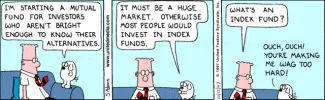
The Dilbert investing strategy... invest in evil, it always makes money.
 
The Dilbert investing strategy... invest in evil, it always makes money.

Interesting.

Perhaps I misunderstood you. Are you categorizing defense contractors and members of the military (there are many of us on this forum) as "evil?"
 
Well, I spent 36 years as an engineer at a defense contractor and had a hand in developing some of our most sophisticated weapon systems. I have zero morality issues with providing our military with the best possible equipment. In fact, I take a lot of pride in what my colleagues and I created. Any morality issues I see arise from how an administration decides to use those soldiers and that equipment.

It's similar to handguns. I wouldn't hesitate to buy stock in S&W just because some thugs may abuse handguns.

Tobacco, OTOH, is an indiscriminate poison.
Any chance you built a laser paired with a large mirror directed by a secret phase conjugate tracking system? :)
1759941066356.png
 
Interesting.

Perhaps I misunderstood you. Are you categorizing defense contractors and members of the military (there are many of us on this forum) as "evil?"
They ain't making sunshine and rainbows and unicorn farts.
Evil is what you make of it. Take Google for instance. They started off with a company moto "Do no evil". That lasted only as long as they realized they can make a ton of money selling targeting ads to people and tracking every instance of your life and reselling that data.
Cisco selling routers to China that allowed the gov't to easily monitor and filter content people in their country had access to.
Amazon started off as an online bookstore. Now they've changed into a cloud computing space that consumes a ton of electricity and is a major pipeline for cheap consumer garbage being imported into the country, a lot of which is circumventing US patents.
Walmart... destroys small community stores, many of their employees are on welfare to make ends meet.
Facebook... :deadhorse:
But they're very profitable.
Don't get me wrong, I invest in a lot of these companies. It would be silly not to. Heck, during one of the tech busts where the wife and I were unemployed for a long period and had to reinvent ourselves, I threw a bunch of our retirement $ at google and a few other stocks and ignored it while we got out lives back together. It worked out pretty well.

1759941838082.webp
 
With BLS down for a bit, anyone else looking at reports like Carlyle’s?
The ADP report is composed only of private sector data which are ADP clients, with a heavy weighting on mid-size companies, and is based on data less than a few days old (consider it almost real-time)

Historically, the ADP report had pretty good correlation to the second revision non-farm numbers from BLS. But that is just a piece of the economy. Carlyle’s is based on data pulled from its thousands (I think hundreds of thousands, but not positive) investments. Again it is focused more mid-size companies.

The reason I mention mid-size company focus is small companies still dominate the total employment picture.

So, with the hazy picture ahead, anyone making adjustments? (I am not) Consumer sentiment surveys on inflation is getting worse (as in people are expecting inflation to remain elevated longer). Any bets on which way the Fed will go? (I think at least one rate cut)

Tim
Yeah I almost posted the Carlyle letter yesterday.

Big PE firms are not in the business of touting a deteriorating economic picture since it hurts their business on most fronts (hard to exit a leveraged investment or get cheap financing if the econ picture is crap), so I do give it a little more credibility than most other private numbers.
To me, ADP is the gold standard on the hiring front because of its timeliness and coverage, and outplacement reports by Challenger/Gray+Christmas are the standard on the firing front.

For those who didn't see the report...
1759943370171.png
 
Last edited:
Yeah I almost posted the Carlyle letter yesterday.

Big PE firms are not in the business of touting a deteriorating economic picture since it hurts their business on most fronts (hard to exit an investment or get cheap financing if the econ picture is crap), so I do give it a little more credibility than most other private numbers.
To me, ADP is the gold standard on the hiring front because of its timeliness and coverage, and outplacement reports by Challenger/Gray+Christmas are the standard on the firing front.

For those who didn't see the report...
View attachment 145919

So what does this tell us about forward expectations on equities?
 
Well, I spent 36 years as an engineer at a defense contractor and had a hand in developing some of our most sophisticated weapon systems. I have zero morality issues with providing our military with the best possible equipment. In fact, I take a lot of pride in what my colleagues and I created. Any morality issues I see arise from how an administration decides to use those soldiers and that equipment.

It's similar to handguns. I wouldn't hesitate to buy stock in S&W just because some thugs may abuse handguns.

Tobacco, OTOH, is an indiscriminate poison.
I would not provide a handgun to someone with ill-intent either
 
So what does this tell us about forward expectations on equities?
*licks finger, puts it up in the air...
"BUY BUY BUY!"

In a rational world, which we don't live in, declining hiring numbers are a bad thing (I know I'm captain obvious). Employment declines, low consumer sentiment, persistent (albeit somewhat moderated) inflation, jammed up home market, PE backlogs, stretched public company valuations, private credit gone wild, etc.
Counter to that is a Federal Reserve who is being pushed to cut rates, which will of course encourage people to plow their money into equities because it means speculative assets are the only place to make money. Which is funny, because the valuations on speculative assets are already... "frothy" (as the financiers like to say). Trying to push rate policy down to crisis levels when you're not in a crisis is a sign that all is not well.

But re: equities... Truth is it's anyone's guess.
My belief is that in the not distant future we will see another 2022, but this time without AI coming to the rescue. At least for a time.
But I know that's just a guess based on the data in front of me and worth exactly what ya paid for it :)
 
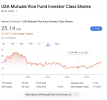
Actually not what I expected to find. I wonder if someone has the opposing VIRTUEX setup to counter VICEX's lackluster 5Y performance :D

1759975160347.png
 
providing our military with the best possible equipment.

Seriously not throwing shade but as a prior service member who was forced to used this equipment I have to respectfully disagree.

"I politely request the thread return to talking about the economy/markets"

In 3 years my house appreciated $20k, my investments are up 12% YTD and I start a new job with a SIGNIFICANT bump in pay.

Covid was the best thing to happen to me personally and I have seen a massive improvement in QOL, income and wealth.

If you're not getting ahead in these times you are not making good decisions IMHO.
 
Last edited:
Wicked high expense ratio.

Someone has to evaluate all of that vice before investing I guess. :D

(I don't own VICEX, I just think it's hilarious to have vanity/theme funds... because why not)
 
Back
Top