Have We Angered The Economy?

2 bit speed has it exactly right. I made double payments on my mortgage every time that I had the cash to spare.

I had a terrible overtime event, 80 hours in one week is not fun, but paid principle for 5 months and the interest saved was much more than twice the extra pay.

Later, I got a low interest home improvement loan from the Credit Union, and paid off the balance. That loan was payroll deduction, and only 2 years, but paid off the last 5 years of the mortgage. Conversion to the Credit union loan ended the existence of the insurance and property tax escrow account that paid no interest, and we just wrote 2 checks a year. That money went into the CU and paid interest. We also paid the insurance 3 years at a time, for a 20% discount.

The money saved from those payments more than paid for my next 2 cars. :) :)
Similar experience: my wife got an amortization table when we bought our house. Did double payments for a while, enough to save more than 100k in interest. Highly recommended.
 
You can accomplish a similar result by financing for 20 years. When we moved back to the US in 2003, interest rates were 6%. We got a 30 year mortgage. A few years later, rates had dropped to under 3% and we were able to refi for 20 years with a similar monthly payment. I think our last payment is next year.
 
When the rates were below 3%, we refinanced on a 30 year adjustable rate mortgage. I would normally not consider an ARM, especially when rates are low - I saw way too many people fall for that con game and lose or come close to losing their homes. And I would be even less likely to ever consider a 30 year ARM. But - there was a 7 year rate lock. With the ridiculously low P&I on that loan I knew I could have the principal paid down enough by the time the rate increased that I could probably just pay off the remaining balance. After the 7 years the terms allowed the lender a 2% max rate adjustment per year, which was exactly what happened. We paid off the last of it a bit before the second interest rate bump.
 
Thought this was both a good headline and graphic to represent the problem brewing in that space :)
I just wish the arrows were sized to show how tremendously large some of these deals are (on paper... and will never actually materialize into real spend unless the AI market grows by like 20x+ in the next few years).
1761148212570.png
 
Thought this was both a good headline and graphic to represent the problem brewing in that space :)
I just wish the arrows were sized to show how tremendously large some of these deals are (on paper... and will never actually materialize into real spend unless the AI market grows by like 20x+ in the next few years).
View attachment 146449
It's not the only worrying thing. I read an article this morning in the NYT that said Amazon is investing billions into automating their warehouses with tech that can eliminate over half a million (!) jobs in the coming years.

Not that I envy Amazon warehouse workers, but it has been a lifeline for many people in areas with few other opportunities.

This kind of automation will not be limited to Amazon.
 
No politician is ever going to be elected on a 'cut social spending' platform. So we can't reduce the budge as a solution. The only reasonable path forward is more tax revenue aka increase consumer spending aka lower interest rates (also reduce regulations and get as many people off social programs as possible).

That's exactly the platform the current admin ran on.
 
It's not the only worrying thing. I read an article this morning in the NYT that said Amazon is investing billions into automating their warehouses with tech that can eliminate over half a million (!) jobs in the coming years.

Not that I envy Amazon warehouse workers, but it has been a lifeline for many people in areas with few other opportunities.

This kind of automation will not be limited to Amazon.
It's already been happening. I go into warehouse buildings repairing columns from forklift damage. The warehouse was beginning to introduce autonomous forklifts. They were so freaking slow.
 
It's already been happening. I go into warehouse buildings repairing columns from forklift damage. The warehouse was beginning to introduce autonomous forklifts. They were so freaking slow.
But it doesn't matter how slow they go if the price is right. If the robot-lift takes four times as long, but costs ten times less, it's still an economic winner. Just buy four of them for every human you want to fire. Even if that's not the cost scenario today, it will be soon. The end of human labor is coming.
 
But it doesn't matter how slow they go if the price is right. If the robot-lift takes four times as long, but costs ten times less, it's still an economic winner. Just buy four of them for every human you want to fire. Even if that's not the cost scenario today, it will be soon. The end of human labor is coming.
The slowness was just an observation. I thought they said they they were 160k a piece.
 
They work 24 hour days, 7 day weeks, and no holidays off. Monthly 2 hour checks for preventive maintenance. That equates to 5 employees replaced.
 
$160,000/5 employees=$32,000 a year for each displaced employee, so if it only lasts a year, it is the equivalent of $16 per hour.

If it lasts longer, maintenance creeps into the equation, but will be far less than 160,000, so the related hourly cost will be well below $16 per hour.

It was mentioned that they were slow, but if properly geolocated and aware of the "co worker robots", there should be no bumps with fixed or moving objects, so net faster. Reminds me of the tortoise and hare race. AI is going to gradually make those speeds go up without a collision penalty.

The Honda plant in Marysville Ohio was so automated that they did not have lights on the production floor unless maintenance was taking place.
 
Thought this was both a good headline and graphic to represent the problem brewing in that space :)
I just wish the arrows were sized to show how tremendously large some of these deals are (on paper... and will never actually materialize into real spend unless the AI market grows by like 20x+ in the next few years).
View attachment 146449

Here is why I do not care about this potential investment bubble from an investor angle.
It does NOT materially affect the consumer, our economy is consumer driven.
Think of every major downturn in the USA economy in the past hundred or so years. The downturn was caused by damage affecting the consumer. Everything from the Great Depression, to the Great Recession were directly related to the effect the bubble popping had on the consumer. For example, the great recession, impacted the ability of the consumer to access equity in their home, and this very quickly spiraled into a general malaise.

These AI deals and data centers, will impact some 401Ks, but they will have minimal if any impact on the consumer.

What is more "scary" economically is when will companies learn to leverage these are AI data centers, and what will they do with it? Will they replace all the drive through order taking staff (I went to a McDeath that had a sign up about a pilot AI drive through taking orders, and it did a better job than most humans). What about Walmart Greeters? Or as someone else said, Amazon fulfillment staff? What about all the grocery store stockers?

Tim
 
$160,000/5 employees=$32,000 a year for each displaced employee, so if it only lasts a year, it is the equivalent of $16 per hour.
I'm not sure I understand your math, so here's mine.

First, 32K for an employee is low. Even if salary is 16/hr, there are overheads. I'm going to use 50K per year per employee including taxes, benefits and costs of HR/accounting/etc. Even 50K is probably a little low, but my gut is that it's closer.

I'm using 2000 hours per year worked by an employee, but there are almost 9000 hours in a calendar year. The robot can work 24/7 without being paid overtime.

Given that, this robot costs about three years of FTE time. And since the robot can work 4.5 FTE years per calendar year, the breakeven is less than a year.

And, of course, the math just gets better in year two...
 
….
Given that, this robot costs about three years of FTE time. And since the robot can work 4.5 FTE years per calendar year, the breakeven is less than a year.

And, of course, the math just gets better in year two...
Don’t forget robots don’t file workman’s comp claims, either. On the plus side that means fewer human injuries/deaths/disfigurements and associated claims payouts.
 
Don’t forget robots don’t file workman’s comp claims, either. On the plus side that means fewer human injuries/deaths/disfigurements and associated claims payouts.
Quoting this to throw back at you after passage of the Robotic Civil Rights Act of 2035 following their unionization. Are we sure we know how smart AI is going to get?
BenderHurtBeck.jpg
 
I was taught (through family, not “schools” that the mechanization of farming and the model T.. replacing horses with tractors and cars… was the true cause of the Great Depression. It created a massive increase in productivity, while at the same time destroying the market for hay… this displaced market for hay lead to planting other crops that then flooded those respective markets driving their prices down…. A huge reduction of need for human labor in a short period of time is going to be rough..and I can’t help but think that anybody whom has a job they are able to do “remotely” will be replaced with AI (automation isn’t going to just affect the laborers this time).
 
I was taught (through family, not “schools” that the mechanization of farming and the model T.. replacing horses with tractors and cars… was the true cause of the Great Depression.
There was no one true cause of the great depression. And that's not generally viewed as one of the main ones. However, ironically given that we have some gold bugs on this forum, the gold standard is widely accepted as one of the contributors and getting rid of it accelerated recoveries in countries that switched to fiat currencies.

 
Timely and good reality check on AI investments today. BL: can’t make power plants fast enough to meet today’s planned projects; likely 5-15 years to meet just today’s demand.

d0c39dca9dc8c27ebd11f006a55615e7.jpg


Probably paywall:

 
A key component of a future data center will be its dedicated nuclear reactor.

If we can run reactors aboard ships and subs, I see no barriers beyond political ones, and political issues can u$ually be $olved.
 
A key component of a future data center will be its dedicated nuclear reactor.

If we can run reactors aboard ships and subs, I see no barriers beyond political ones, and political issues can u$ually be $olved.
If the Navy ran the reactors, I'd have no problems. It's the cheap$kate companies taking shortcuts that make me concerned about nuclear.
 
I havent followed this thread, I have been listeming to teaching company audiobook lectures on the econnomy when I drive. The way I understand things now, global economy models have as many variables as the world weather models. When a politician says I did XYZ to make sure there will be no rain clouds over your house, I'd take it with a grain of salt.
 
I havent followed this thread, I have been listeming to teaching company audiobook lectures on the econnomy when I drive. The way I understand things now, global economy models have as many variables as the world weather models. When a politician says I did XYZ to make sure there will be no rain clouds over your house, I'd take it with a grain of salt.
Economic models are even more complex than weather models since man actually affects those. :biggrin:
 
Thought this was both a good headline and graphic to represent the problem brewing in that space :)
I just wish the arrows were sized to show how tremendously large some of these deals are (on paper... and will never actually materialize into real spend unless the AI market grows by like 20x+ in the next few years).
View attachment 146449
I vote for a bubble. Market is trading at ~27 times margins. Everything is way over valued at the moment.
 
I'm not sure I understand your math, so here's mine.

First, 32K for an employee is low. Even if salary is 16/hr, there are overheads. I'm going to use 50K per year per employee including taxes, benefits and costs of HR/accounting/etc. Even 50K is probably a little low, but my gut is that it's closer.

I'm using 2000 hours per year worked by an employee, but there are almost 9000 hours in a calendar year. The robot can work 24/7 without being paid overtime.

Given that, this robot costs about three years of FTE time. And since the robot can work 4.5 FTE years per calendar year, the breakeven is less than a year.

And, of course, the math just gets better in year two...

I would assume they can be depreciated, so the taxpayer can subsidize eliminating jobs.
 
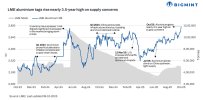
Aluminum has a global price, set on the London Metal Exchange or the Chicago Mercantile Exchange which is more of a US price. The base price of the metal tracks pretty closely between the two, the CME price includes more local supply demand as well as tariffs. The US has little aluminum production, relative to demand, due to high electricity prices. Aluminum is very electricity intensive, so most production is in areas with "stranded energy" like Canada, Norway, and Iceland. They all have high electric production due to hydro power that is difficult to export. Aluminum ingots are a great way to send "electricity" to another place.
The current Tariffs have had the dual effect of increasing US pricing (the "premium" to the LME price) and reducing prices in Europe due to increased supply. Here's a chart with the LME price over the last few years. While it shows the price rising, note the scale on the left which is does not have an origin of zero. The chart posted earlier reflects the regional premium by region which includes demand, shipping costs and tariffs. Key thing to note, aluminum is pretty volatile and artificial pricing shocks (like tariffs) tend to have only short term effects.

image-2025-10-09T115759.735.jpg
 
I was taught (through family, not “schools” that the mechanization of farming and the model T.. replacing horses with tractors and cars… was the true cause of the Great Depression. It created a massive increase in productivity, while at the same time destroying the market for hay… this displaced market for hay lead to planting other crops that then flooded those respective markets driving their prices down…. A huge reduction of need for human labor in a short period of time is going to be rough..and I can’t help but think that anybody whom has a job they are able to do “remotely” will be replaced with AI (automation isn’t going to just affect the laborers this time).
People give too much credence to AI.

Does it help? Yes. Does it replace masses of jobs? Depends.

The funny thing for me is AI is going to hit the tech market first. And mostly in roles that exists to regurgitate new versions of the old stuff. I mean in my view which could very well be wrong but lots of developers don’t actually contribute much value. I mean they can code, but the output is not really worth a lot. E.g. ios26 has new look and feel, but didn’t change anything really? Can I do something I couldn’t before? For the look and feel parts? No.

And big tech and spent generously to hire people to do stuff that to me delivers limited real value. And they can only do that cause the incremental costs is low. And guess what AI can make some of that lower, maybe. Ironically, I do know that the UI part is likely the one area where AI cannot fully replace humans.

Take a look at developer roles where they need to say develop a new stack to support new hardware, suddenly whoops AI can’t do a lot of that. Cause it’s new and no one’s done it before. Or like UI they can maybe regurgitate some variation, but will need humans to make final decisions and decide what is actually usable.

I guess what I am saying is yeah there could be large labour contraction and it wouldn’t be only in low skill jobs. And that some of the high skill jobs isn’t as high skill as maybe generally thought to be.
 
@SebIp

I am fairly sure you are not a developer. I use AI tools for software development among other tasks. AI Tools are going to completely change software development, and the skills required of software developers. For those organizations and IT members who embrace the new skills it will have significant positive impacts on productivity.

There are negative aspect to AI tools though. For example, here is one, for a recent project I wrote a specification/direction of a series of tasks dealing with a library upgrade. This is a typical project I would have assigned to junior developer. Now, the assignment I gave the AI was much more detailed and took me longer to write than the directions to the junior developer would have taken. However, the AI was faster to complete the work (minutes versus days), and was significantly cheaper (a week's salary vs one month subscription to CoPilot for example).
The downside, that junior developer now has no place to learn and become a senior developer.


Tim
 
….However, the AI was faster to complete the work (minutes versus days), and was significantly cheaper (a week's salary vs one month subscription to CoPilot for example).
The downside, that junior developer now has no place to learn and become a senior developer.


Tim
I use both copilot and Atlassian’s in product AI tool to write JQL queries and automations in Jira Cloud. CoPilot seems more adept than Atlassian’s own product, but neither is direct cut & pastable.

What both do is get me close enough to not waste 8hrs reading vague documentation and searching for how others have done similar things in the past. Instead, there’s some minor fiddling to work out the bugs.
 
I'll be a bit nervous when such tools are being used for DO-178C Level A and B code, and the V&V tools use the same knowledge base.
 
Still won't stop the inexorable march higher of the US equities market!
View attachment 148006
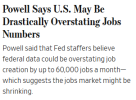
I caught that also. Plus did you see how the ADP relaunched numbers compare to the non-farm BLS revised data? They are dam close, and the ADP data was only a few days old while it took BLS three months (as in the second revision) to match.

BLS really needs to get some funding, and revamp the data gathering approach.

Tim
 
Back
Top