G5’s vs Gl275 which would you consider?

I didn't bother reading the other replies... I'm on the GI-275 side.

G5s are older and were initially just built as a backup device, then later made it into the market on their own. 275 has a much better display and, pending how it is configured, gives you a LOT more info. Also, a lot of people will say the G5 is bigger. Well... the overall size of the device is bigger, but the actual display is bigger in the 275 and much better resolution.
 
Lately, I've been bugging DTK to see how that compares to bugging heading. They added the magenta trend indicator to the AI's compass tape last year and then I keep that centered within the AI's heading bug. My thinking is that this might be useful practice if the HSI ever fails or goes into reversionary mode.
If I understand what you’re saying, you might wanna be careful with that, especially in a strong crosswind. On the 275, the magenta diamond is the ground track and the magenta arrow is the DTK, so I steer until the diamond is on the arrow and then bug the heading (assuming no cross track error). If you bug the arrow (DTK), you could be re-bugging it pretty often as the wind blows you off course. But I may be misunderstanding you.

I do like the altitude bug on the 275, though: the visual alert when you’re within 1000 ft and the tone for +/-200ft are all big helps.
 
Maybe it's the hours I've got with this panel, but I have no difficulty switching between glass and the steam. The steam is just easier to glance at when in the pattern so I can keep eyes outside.
Oh, it’s not about difficulty. I have no trouble switching between full glass and full steam.
 
  • Like
Reactions: WDD
Lately, I've been bugging DTK to see how that compares to bugging heading. They added the magenta trend indicator to the AI's compass tape last year and then I keep that centered within the AI's heading bug. My thinking is that this might be useful practice if the HSI ever fails or goes into reversionary mode.
Sounds interesting.
 
If I understand what you’re saying, you might wanna be careful with that, especially in a strong crosswind. On the 275, the magenta diamond is the ground track and the magenta arrow is the DTK, so I steer until the diamond is on the arrow and then bug the heading (assuming no cross track error). If you bug the arrow (DTK), you could be re-bugging it pretty often as the wind blows you off course. But I may be misunderstanding you.
I'm talking about this: https://atlaske-content.garmin.com/...attachments/24086B_ASDN_Time1750430670273.pdf

Specifically, the part that says
• ADI Display improvements:
◦ Added track diamond to the heading tape

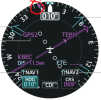
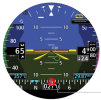
But perhaps a few pictures might help. Basically, that v3.40 update copied this magenta diamond:
1782694483474.png

...to here:
1782694635348.png

Except that in a crosswind, that magenta diamond in the ADI might not be so centered within the tape so bugging the course helps with the visualization.

Of course, the exercise assumes that not only is the HSI unavailable but so are the FD bars and syn vis. :)
 
I'm talking about this: https://atlaske-content.garmin.com/...attachments/24086B_ASDN_Time1750430670273.pdf

Specifically, the part that says
• ADI Display improvements:
◦ Added track diamond to the heading tape

But perhaps a few pictures might help. Basically, that v3.40 update copied this magenta diamond:
View attachment 152986

...to here:
View attachment 152987

Except that in a crosswind, that magenta diamond in the ADI might not be so centered within the tape so bugging the course helps with the visualization.

Of course, the exercise assumes that not only is the HSI unavailable but so are the FD bars and syn vis. :)
Aah. With the HSI right below the AI, I personally opted to get rid of the heading info on the AI and go with the data - GS, OAT, wind, and something else I apparently don’t use much
 
Aah. With the HSI right below the AI, I personally opted to get rid of the heading info on the AI and go with the data - GS, OAT, wind, and something else I apparently don’t use much
Exactly what I did. I just show TAS, but thinking of adding OAT in winter/icing season.

GS, Desired Track, Actual Track, and Distace to Destination is on the GNC.
 
Today, I would go for the GI275, but to be honest, either is a huge step-up from analog gauges and vacuum driven instruments. I upgraded my panel before the GI-275s came out, so I have dual G5s, and still have them. They are great to fly, even with old presbyopic eyes. They are stone-simple to operate. The early G5s did come with some firmware glitches that drained the backup battery even when they were powered off. That was resolved under a recall (both of mine were affected) and there have been zero issues with them since. I would expect the GI275s to be as reliable.
 
Aah. With the HSI right below the AI, I personally opted to get rid of the heading info on the AI and go with the data - GS, OAT, wind, and something else I apparently don’t use much
Exactly what I did. I just show TAS, but thinking of adding OAT in winter/icing season.

GS, Desired Track, Actual Track, and Distace to Destination is on the GNC.
Dude. Partial panel practice. ;)

In any case, this latest 3.50 update looks interesting:
  • Added HSI Orientation – Allows for Track centered navigation
Wonder what that entails?
 
Dude. Partial panel practice. ;)
What partial panel? Loose the top AHRS and I twist the knob on HSI and have AHRS and all the heading and needles. I have track on GTN and GNC.

Not sure how I could get my panel as partial as when I trained on a vacuum pump six pack.
 
What partial panel? Loose the top AHRS and I twist the knob on HSI and have AHRS and all the heading and needles. I have track on GTN and GNC.

Not sure how I could get my panel as partial as when I trained on a vacuum pump six pack.
Right. A foreign object punctures the ADI screen so you twist the knob on the HSI. You now have to use the compass tape on the ADI because you no longer have an HSI (you replaced it with an ADI). Have you practiced using the magenta diamond that's on the ADI's compass tape?

I'm assuming where you say "AHRS" you mean "ADI". Also, I think you're supposed to toggle the reversionary switch in that situation rather than rely on the twisting the HSI knob.
 
Also, I think you're supposed to toggle the reversionary switch in that situation rather than rely on the twisting the HSI knob.
I have dual GI 275s and don't have a reversionary switch. The system will auto switch if it detects a failure in the primary display. Manually, it's a twist of the outer knob.
 
  • Like
Reactions: WDD
I have dual GI 275s and don't have a reversionary switch. The system will auto switch if it detects a failure in the primary display. Manually, it's a twist of the outer knob.
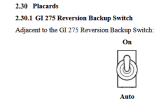
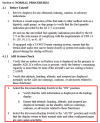
That's interesting. Does your copy of the AFMS say this?
1782829891983.png

...or this?

1782829942901.png
 
That's interesting. Does your copy of the AFMS say this?
It does not. Section 1.7.3 (Placards) shows the switch as optional and is not checked. Section 4.1.1 says "If installed, select the Reversion Backup Switch..."

Similarly, the GI 275 Pilot's Guide references an update to the reversionary capability language in Jan 2022 (version 2.42) and on page 12 talks about panel-mounted switches "if installed".

I think that your information was previously correct, but it appears that a reversionary switch is no longer required.
 
I think that your information was previously correct, but it appears that a reversionary switch is no longer required.
I concur. I consider it mildly curious that they changed course.
 
My RV-14 has a G3X Touch panel with a G5 backup instrument. Our 310 has a G500 TXi panel with a GI 275 backup instrument. I would rank the choices, if installed alone as the primary instrument, as follows:

G3X Touch
TXi
GI 275
G5

The G3X Touch has some real advantages over the TXi from a usability standpoint and a much lower price point. It would be nice to get newer hardware, but function trumps form. The 310 wasn’t eligible for the G3X Touch, which drove what went into the panel when we upgraded.

As a primary instrument, the GI 275 is easier on the eyes than the G5 and a cluster of them can give you a great panel with great failover. It is also round and therefore more likely to look like a clean install in a legacy panel.

The G5 is a very easy install. I believe a certified installation may require an external GPS antenna, and if it talks to a GFC 500 or other LRUs in the G3X family you need a two-wire CAN bus connection, but other than those it is literally two wires: +12V and ground. It also fits in a much shallower depth behind the panel than the GI 275 requires.

I would rather have a G5-based panel than steam gauges, whether as a pilot, an installer, or a maintainer. Fewer wires, less plumbing, and no moving parts.

My time in front of Dynon and other brands of panels is limited and my time behind them was limited to what I studied to decide on Garmin in the RV-14. I would need a few hundred hours with those panels to rank them amongst my list above. Who here has one of those panels and wants to come visit to take me flying? :cool:
 
One comment on the G5 - don't they pretty much require a valid GPS signal to aid/stabilize pitch/roll data? How reliable would they be in a GPS inop/jamming environment?
 
One comment on the G5 - don't they pretty much require a valid GPS signal to aid/stabilize pitch/roll data? How reliable would they be in a GPS inop/jamming environment?
So does a GI-275. However, both the G5 and the GI275 have a failover mode if the GPS signal itself is jammed.
 
The G5 is much shallower and lighter than the 275. In one aircraft that was the deciding factor.
 
I looked at both and chose the G5. I liked the full circle compass card (I use the bottom for reciprocal direction -- "10 miles, uh, southeast. . ."). I also liked that they didn't require yet another subscription, and I felt that the screen was more legible because it's much less cluttered.

As for the battery, both fail the ICA with one hour capacity. Nominally, the G5 is good for 4 hours and the 275 for "1-2 hours." My G5s checked good for over 3 hours this year, and they're 6 years old. The battery check on a G5 is pilot - doable and takes less than a minute. For the GI275, it takes a shop 2-3 hours.

They're both great -- 10000x improvement over vaccuum gauges.
 
The battery check on a G5 is pilot - doable and takes less than a minute. For the GI275, it takes a shop 2-3 hours.
Wouldn't the GI275 battery check fall under Part 43 Preventive Maintenance? ({c}{24} "...servicing batteries")
 
For the GI275, it takes a shop 2-3 hours.

For convenience, I had my shop do the battery rundown test during my annual. They did not charge nor take 2-3 hours for it.

Wouldn't the GI275 battery check fall under Part 43 Preventive Maintenance? ({c}{24} "...servicing batteries")

Yes
 
I just had this check done today, after my ASI/HSI GI 275s underwent software reversion and reload to get rid of an "LCD board fault" error. The reversion/reload worked, but seemed to wipe the battery check periodicity. My avionics guy just dropped by the hangar, put it into whatever test mode was required, and then came back 30 minutes later. Both were at about 70% charge and apparently as long as they last more than 30 minutes, that's a "pass". Extrapolating, I'd guess somewhere around 90+ minutes before those batteries ran out.
 
  • Like
Reactions: WDD
Wouldn't the GI275 battery check fall under Part 43 Preventive Maintenance? ({c}{24} "...servicing batteries")
Yes, but it involves a battery rundown, which requires equipment I don’t have, and takes as long as it takes to run the battery down, after which the battery is run down until the next time you fly. The G5 test is simple: turn the G5 on with the master off and read the time remaining. Literally less than 2 minutes if it passes. If it fails, you have to repeat the test with the battery fully charged, which obviously takes longer.
 
Yes, but it involves a battery rundown, which requires equipment I don’t have,
What equipment is that? I printed off the instructions for this, and there is no equipment needed.
 
Yes, but it involves a battery rundown, which requires equipment I don’t have, and takes as long as it takes to run the battery down, after which the battery is run down until the next time you fly.
It is really not a big deal. Really not a big deal if your plane is hangared. On a day you're going to fly, just go to the hangar early and turn it on and go to breakfast or whatever. Then come back and check to see if it passed and then go flying to charge it up (VFR of course). You'll want to choose a destination at least an hour away to get a good 2 hour flight in to make sure the battery is fully charged.

Hangared or not, the other option is to do it the next time you wash the plane. Take your time getting the all the bugs off, etc., and maybe even wash your car. Then check the status and once it is done, go for a flight.

Then there's always paying the shop to run it down, then attach a charger to your plane while they charge up the 275 again. Hopefully they'd only charge there minimum fee since they only have to be at your plane for a few minutes.
 
My mistake. I thought it was more like a battery capacity test. Obviously not a deal breaker either way.
 
Yes, but it involves a battery rundown, which requires equipment I don’t have, and takes as long as it takes to run the battery down, after which the battery is run down until the next time you fly. The G5 test is simple: turn the G5 on with the master off and read the time remaining. Literally less than 2 minutes if it passes. If it fails, you have to repeat the test with the battery fully charged, which obviously takes longer.
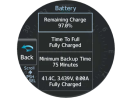
I don't think this is correct. The GI 275 has the ability to display the time remaining as a pilot-level check (as you describe for the G5):

Screenshot 2026-07-02 113021.png

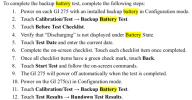
And the battery run-down test doesn't require any equipment at all (which I witnessed for myself yesterday) but does require being in configuration-mode, which I think may make it questionable as an owner/pilot preventative maintenance task:

Screenshot 2026-07-02 113707.png
 
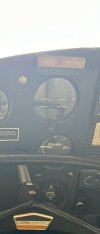
I have a 1966 Cessna 150f that I'm finishing my private in. This is not my forever plane so I don't want to spend a ton on avionics but I want to replace the attitude indicator. See picture.

Also the DG is old and is precessing much sooner than I would like. According to my A&P this is typical for older DGs.

Thinking of going with a Garmin G5 for AI and swap DG with a new one that has a bug.

Avionics shop is quoting $4,200 for G5, includes labor/install. $1,300 for DG including labor/install. Does this sound reasonable?

I asked about a dual G5 install as I read about some discounts if you buy two. Shop said yep, $600 discount on dual install kit. However total for dual install jumps to $12,500. Is that because there is a big jump in labor for DG/G5 swap?

Would either plan, G5 and stick with new DG or dual G5's help with future sale of plane? Or should I just deal with what I have and save my money?

Thanks for any advice!

Chris
 

Attachments

  • Screenshot_20260701_185512_Gallery.jpg
    Screenshot_20260701_185512_Gallery.jpg
    105.7 KB · Views: 6
However total for dual install jumps to $12,500. Is that because there is a big jump in labor for DG/G5 swap?
Adding the HSI means adding a magnetometer. Depending on what you want to hook up to the HSI, it also probably means adding a GAD29. Your installer is probably assuming that nothing is going to get wired to the G5 AI, which besides fewer boxes also means less labor.
Would either plan, G5 and stick with new DG or dual G5's help with future sale of plane? Or should I just deal with what I have and save my money?
It might attract more buyers, but that may or may not equate to a higher price IMHO. The bigger question is how much it adds to your enjoyment of the plane while you still have it. Money should only be the primary factor if this is purely a business asset.
 
shrug, i'd do it. FAA themselves have said be sensible. if it takes 20 mins, whatever.
 
I don't think this is correct. The GI 275 has the ability to display the time remaining as a pilot-level check (as you describe for the G5):

View attachment 153055

And the battery run-down test doesn't require any equipment at all (which I witnessed for myself yesterday) but does require being in configuration-mode, which I think may make it questionable as an owner/pilot preventative maintenance task:

View attachment 153056
I can confirm that no special tools are required for this test. I'll add that to get into configuring mode you have to hold (press)the small knob while powering the device on to enter configuration mode.
 
Last edited:
Back
Top