Foreign accents on the radio

I was just going to write that. I’m at a busy training field with 2 schools & one runway, yet they yammer on about their taxiing intentions. I blame their instructors who mostly came out big name pilot mills who are headed to the “bigs.”
I think I'm on some sort of fence about this. I think taxi announcements can be overblown. The one that gets me is when the ramp is empty of moving aircraft. Exactly who are you warning? Where's the potential conflict?

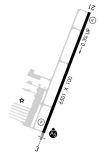
OTOH, there's one I always do. This is our runway. When 21 is in use, there's a real potential for a conflict between aircraft taxiing from the ramp to 21 and aircraft turning off the runway at the 2nd taxiway. So at least there's someone for whom the information may be helpful.

Blame pilot mills? Nah/ The worst offenders at my airport are definitely not from pilot mills. I think it's more about teaching standardized processes, but leaving out the judgment piece. Yammering tends to be a personal trait.
1777473951680.png

2nd place goes to IFR training flights announcing on the radio to a full vfr pattern that they’re at the IFR fix dodad & their intended route is on the “RNAV to what ever,” as if that information had any meaning to the rest of us. “15 miles south of the airport at 2000 inbound,” is all we need
That's my first place (after nonsensical phrases like "last call"). When I do instrument recurrent training, it often becomes a debrief topic. Personally, mostly because there is so much of it at my airport, I like a short combo. Something like "10 miles south; straight in Runway 3. Practice instrument approach" is concise, understandable to the student pilot soloing, is an undetailed explanation for the long straight for the pattern police, and might be informative to that other airplane doing the same thing.
 
If you listened to any freq in the Phoenix area, you'd understand his comment.

It's bad....I mean really bad. And one of the reasons PHX TRACON has had such an adversarial relationship with GA.

Unfortunately that adversarial approach is how the FAA deals with it. Only way it is going to change is when the flight schools prioritize quality of training over raking in the cash.

Sounds like Florida.

I once heard so many foreign accents (some unintelligible) at Apopka, X04, that I made my own traffic calls as "Apopka International traffic,..."

It's made worse around here because we have so many non-towered airports sharing the same frequency. I think there are 5 airports in the area all using 123.05, encompassing multiple flight schools, and a couple of airports that have automated wx going over the CTAF. Toss in a few hard-to-decipher accents and it's a hot mess.

And even when the accent can be understood, it's not uncommon to hear slow and verbose calls, like they're trying to read a script accurately. "Weenter Haveen Moonicipal Airport Traffic, Ched-Oh-Key Nowembuh one two trree foh is on de left downweend foh wunway zero fife."
 
Last edited:
Don’t forget “established” and “nautical miles”. For some reason, many of the Florida trainers feel a need to use extra verbiage. “Okeechobee Traffic, Cherokee 234 is seven nautical miles northwest of the airport at 3,000 feet, will enter the 45 to left traffic, runway 5, Okeechobee Traffic.” Repeat calls at six, five, and 4.5 nautical miles. Once in the pattern, throw in “established” - “established on the downwind”. And as mentioned, throw in the same traffic from multiple fields.
 
The provisions of 1.2.9 refer to Annex 10, Volume II, Chapter 5, whereby the language used for radiotelephony communications may be the language normally used by the station on the ground or English. In practice, therefore, there will be situations whereby flight crew members will only need to speak the language normally used by the station on the ground.
"""

Doesn't that translate to "if you're in China, you can speak Chinese or English" or "if you're in Mexico, you can speak Spanish or English"?
True story: years ago, on a visit to the UK, I made arrangements with a local pilot to go flying. We flew from Biggin Hill to Le Touquet, a popular GA destination just across the Channel. As we approached Let Touquet, from the northwest, we heard another pilot call in (I'll try not to screw this up),
Other aircraft: "Let Touquet Tour. [Aircraft ID] six sud-ouest. Atterrissage avec Delta."​
My friend complained, "Every time I come here someone's speaking French!"​
"If you come here often, haven't you picked up a few French phrases, like 'six southwest'?"​
"English is the language of aviation!" he replied through gritted teeth,​

One of the reasons Le Touquet is a popular destination other than the short flight across the Channel, is the beach resort. It's about a 2 mile walk from the airport through a very nice residential area. It's so popular with Parisians that it's often referred to as "Paris-Plage." We go to an outdoor restaurant and my friend turns to me:
"You'd better order. They hate us here."​
Aside from chuckling at the idea that being an American is better than being a Brit in that environment, I'm mentally going, "Gee, I can't imagine why!"​
 
As a native born son of the South, I’ve studied English as a Second Language all my life.
Looks like you're in Virginia Beach. If that's where you're from, it's a unique form of Southern'

I've got friends from Ohio that sound way more 'Southern' than most Virginians. I lived in Williamsburg for several years, and to my ear, Virginian is an interesting blend of Southern and Yankee.... Sorta makes me think of an American version of the British Received Pronunciation accent
As a point of reference, by ear is tuned mostly to Eastern NC, but growing up included CA, HI, IA, KY, NC...and as an adult it's been tainted by years in VA, FL, GA...with quite a bit of extended travel through the South, Midwest, Pacific NW, New England, Western Canada, and Eastern Canada
 
The person I had the most trouble understanding due to accent was a Canadian controller with Victoria Terminal. Fargo times five.
 
Is that true? I would expect flight training in China to be in Chinese.

but which version of (spoken) Chinese? Mandarin? Cantonese? or one of the many other dialects?
 
I knew one C152 pilot that was pretty good at impressions and would answer every radio call with a different accent. After a while, ATC would ask "say number souls aboard".
I've always wanted to learn how to speak with a British accent so I could read FL300 as FL"three-hundred" instead of FL"three-zero-zero".


Center: "China Cargo 115 now cleared J82 Crazy Woman J82 Rapid City then as filed"
Well, the controller should have known better than that and cleared them to "Charlie Zulu India" and "Romeo Alpha Papa". That's what most foreign controllers have usually done with non-native speaking pilots.

Just last week I was flying through Hatai airspace, and I was told to report "Papa Alpha Papa", not "Port-au-Prince". Although, I would have understood it either way.

The most difficult controllers for me to understand were Karachi Control (Center) in Pakistan. We'd guess what we thought he said and read that back. We could tell how wrong we were by how high the pitch of his voice went.
 
Probably NOT true story....

At at airport in Germany, a plane calls the tower in German.

"Aircraft calling, please use English" says the tower.

"I'm a German flying in Germany. Why must I speak in English?"

A third voice, in an English accent: "Because you lost the bloody war!"


Ron Wanttaja
 
True story: years ago, on a visit to the UK, I made arrangements with a local pilot to go flying. We flew from Biggin Hill to Le Touquet, a popular GA destination just across the Channel. As we approached Let Touquet, from the northwest, we heard another pilot call in (I'll try not to screw this up),
Other aircraft: "Let Touquet Tour. [Aircraft ID] six sud-ouest. Atterrissage avec Delta."​
My friend complained, "Every time I come here someone's speaking French!"​
"If you come here often, haven't you picked up a few French phrases, like 'six southwest'?"​
"English is the language of aviation!" he replied through gritted teeth,​

One of the reasons Le Touquet is a popular destination other than the short flight across the Channel, is the beach resort. It's about a 2 mile walk from the airport through a very nice residential area. It's so popular with Parisians that it's often referred to as "Paris-Plage." We go to an outdoor restaurant and my friend turns to me:
"You'd better order. They hate us here."​
Aside from chuckling at the idea that being an American is better than being a Brit in that environment, I'm mentally going, "Gee, I can't imagine why!"​
You have to give 24 hours’ notice so they can have the English-speaking controller on duty.
 
Probably NOT true story....

At at airport in Germany, a plane calls the tower in German.

"Aircraft calling, please use English" says the tower.

"I'm a German flying in Germany. Why must I speak in English?"

A third voice, in an English accent: "Because you lost the bloody war!"


Ron Wanttaja


Well, if it ain't true, it oughta be!
 
You have to give 24 hours’ notice so they can have the English-speaking controller on duty.
The controller was completely fluent in both languages. Barely an accent in English. My friend was complaining about the pilot, not the controller.

I enjoy watching European YouTube videos, so I get to hear that kind of stuff a lot. Some controller English is pretty bad but, at least in some countries, bilingual controller fluency seems to be the rule rather than the exception. On a trip to France on United, il y a longtemps, I was listening to Channel 9. Airlines approaching De Gaulle were calling in in either English or French. The controller responded in the same language the pilot used without skipping a beat. Back and forth switching languages with amazing ease. I was super-impressed.
 
Is there some rule you even have to use the radio at uncontrolled fields?

edit: seems no.
communicating on this frequency is not a requirement when flying to or from an airport without an operating control tower.
 
you get to hear a lot of gibberish if you fly up and down the east coast of Florida. Feel sorry for some of the local tower folks
 
you get to hear a lot of gibberish if you fly up and down the east coast of Florida. Feel sorry for some of the local tower folks
It’s just the nature of the training.
Never bothered me. But the again non towered airports were my favorite.
I get to decide if I have enough time for take off instead of someone else.
 
I said unicorn once.

Allfa
Bravado
Chuck
Deltoid
Eh-cho
Fox
Gulf
Motel
Indigo
Juliette
Kilogram
Limabeans
Michael
Noviembre
Ozkar
Daddy
Kay-bek
Romayo
Sierras
Two to Tango
Unicorn
Victory
Vodka
Xrays
Yanks
ZooLoo
 
Last edited:
About a month ago, I was flying in Japan. The Japanese controllers had a very strong accent to their English, and it was often hard to understand what they were saying.
I had a hard time with that initially. They don't end words in hard consonant sounds, so they'd add a syllable to those works. Direct became Directo. When I figured that out it became much easier.
 
The thick accents aren't the complete problem, I can usually suss out from context what they're up to -- at least near a pattern or in practice areas (usually :D )

It's the complete rote nature of some of the comms -- they'll spam their canned remark out on the air, but you cannot engage with them in any meaningful way to clarify their intent if it's unclear.

Hearing SoCal try to wrangle some of the worst offenders was... scary/impressive/scary again. Those controllers are saints. I dunno why Phoenix can't figure it out. I think PHX are just grumpy in general, in any language.
 
About a month ago, I was flying in Japan. The Japanese controllers had a very strong accent to their English, and it was often hard to understand what they were saying. When is the FAA going to do something about that?
At NAF Atsugi, there was a controller with a very, very thick Japanese accent. I have no doubt that he was genuinely trying his best, but it was very difficult to understand. The tower sup (presumably) would usually come on after the second "say again" to give directions in a much more clear, somewhat accented English. We also had American military controllers in the tower, but as far as I was aware, they were only there for emergencies and didn't do routine controlling.

It makes me recall something I read recently in which an ESL pilot thought they had pretty good English proficiency until they came to the USA, at which point the rapid ATC English with a lot of non-standard phraseology mixed in made it far more challenging for anything beyond standard phraseology.

Personally, I give them a bit of grace. If Xhosa was the international language of aviation, I'm sure my accent would be tough to understand too.
 
I think that it was Jim Weir who came up a phonetic alphabet using words that sound like they're for different letters... such as "Knight" instead of "Kilo," "Xenophobe" for "X", "Phrase" for "P", etc.

Ron Wanttaja
 
Probably NOT true story....
At at airport in Germany, a plane calls the tower in German.
"Aircraft calling, please use English" says the tower.
"I'm a German flying in Germany. Why must I speak in English?"
A third voice, in an English accent: "Because you lost the bloody war!"

Saw that one years ago and this one:

Pilot being admonished by German controller years ago (circa 1960) about why he couldn't follow taxi instructions and had he never been to Berlin, which he replied,"I've been to Berlin DOZENS of times, but we never landed!" (insinuating bombing runs);).
 
I think I got my answer.

And I very much got put in my place too.

I deserved it.

Moving on…
 
I think that it was Jim Weir who came up a phonetic alphabet using words that sound like they're for different letters... such as "Knight" instead of "Kilo," "Xenophobe" for "X", "Phrase" for "P", etc.

Ron Wanttaja

In my ham callsign, I sometimes use “cerebral” for C, “Julio” for J, and “mnemonic” for M.

I could get on board with using “scent” for S and “cent” for C. Maybe “know” for K and “no” for N, too!
 
I read somewhere that Broadcasters, etc. are coached to speak as people do who are from the Ohio Valley in Ohio, Indiana and Illinois as the best understood accent throughout the country. Have been born and raised in Cincinnati, I agree, even if it means I love Skyline Chili Four Ways and Cheese Coneys.

My pet peeve as mentioned before is the call of position on practice instrument approaches which usually means they are at some undetermined location someplace near.
 
Last edited:
It would take just a little nudge to push this thread into lockdown territory. This should do the trick:

Screenshot_20260429-171247.png
 
I flew in SFO Bravo airspace recently, and was surprised by the number of accents, not just pilots of foreign airlines, but tower controllers. I had a hard time following, especially with the rapid fire pace, after getting used to the lazy slow pace of the midwest.
 
Saw that one years ago and this one:

Pilot being admonished by German controller years ago (circa 1960) about why he couldn't follow taxi instructions and had he never been to Berlin, which he replied,"I've been to Berlin DOZENS of times, but we never landed!" (insinuating bombing runs);).
Yes, I remember that one. It was a classic.
 
I think I'm on some sort of fence about this. I think taxi announcements can be overblown. The one that gets me is when the ramp is empty of moving aircraft. Exactly who are you warning? Where's the potential conflict?

Here is something that happens way too often for me. Base turn is coming up, but pilot flying feels like he can't turn until he makes his "turning base" call, even if there is no conflict. I need to remind them to fly the airplane first, and talk later. This is not because they are being overly cautious - it is a habit. When every turn you have made had an associated radio call, one feels naked when making that turn and skipping the call.
 
Celebrate diversity!

Cualquier tráfico en el circuito, por favor avise.

All trafik i mönstret, vänligen meddela.

Meydan turunda trafik varsa lütfen bilgi verin.

Муьлхха а трафик шаблонехь хилча хьехам бе.

Eventuale traffico nel circuito, prego avvisare.
 
Sitting here on my back deck, listening to the chatter on the local small airport CTAF.

Lots of very hard to understand transmissions due to accents. Mostly Asian. Many of these transmissions tend to be way longer than they need to be — using up valuable airtime on a busy frequency.

Many of the transmissions are simply useless due to unintelligibility.

When is the FAA going to do something about this?
Most of the wasted air time I hear on the radios where I usually fly is comming from native English speakers who never learned correct phraseology per the FAR-AIM. I'm amazed at how tolerant controllers are of this sometimes. I think the FAA should do something about this (LOL).
 
Back
Top