Crimps and Crimpers

WDD

Final Approach
PoA Supporter
Joined
Oct 16, 2019
Messages
8,861
Location
Atlanta / Marietta
Display Name
Vintage Snazzy (so my adult children say)
Home Airfield
KPUJ
A simple item, but I'd like to get the right one and not have a wire connection go bad, and then I have to find it and take apart lord knows what to get to it and fix.

What connectors and terminals do you all recommend? I'm looking for a nice assortment box of terminals and connectors, the standard red, yellow, blue sizes. Assume you'd want the ratchet crimper that was the same brand to be the most compatible?

Thanks
 
Like everything else in aviation, how much money are you willing to spend on things?

This is top tier, they're used by the big OEMs and major mod centers for a reason:


Machined contacts are the best.

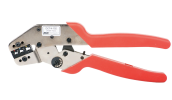
AFM8 crimper with the K13-1 and K41 positioners should cover typical wire sizes.

The larger AF8 can handle stuff up to 12AWG.
 
Last edited:
Assume you'd want the ratchet crimper that was the same brand to be the most compatible?
Current guidance requires rachet crimpers for aircraft applications. Most professional level crimpers meet this requirement and there are various brands. If you look around enough you can find used top shelf crimpers like DMC, etc. for a decent price. As to connectors any ones that meet a government or industry standard will work as they are considered standard parts. I prefer TE or AMP brand for general use.
 
wtf. I thought my ratcheting kleins were pretty okay. $533 for this mofo. Apparently my kleins are hot garbage.

1789681159891.png
 
Try steinair.com. They sell quality tools and hardware for aviation work. They are THE big vendor in homebuilt avionics and associated bits, pieces, and tools. They even have a Youtube channel with useful how-to videos.
 
Try steinair.com. They sell quality tools and hardware for aviation work. They are THE big vendor in homebuilt avionics and associated bits, pieces, and tools. They even have a Youtube channel with useful how-to videos.
Bingo - thanks. Nice site. I just ordered their kit of assorted fasteners as well as their crimper and crimper die.
 
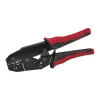
In my experience, most or all of the relatively inexpensive interchangeable die crimpers that look like the ones that @rockyfatcat posted above work great for the red/blue/yellow insulated crimp terminals. And, some of the name brand ones that look like that work great, too. The ones to avoid, just in my experience, are non-ratcheting tools of any brand that claim they can reliably crimp those terminals. Just not reliable. For red/blue/yellow it's the terminal that's the most important part, and I've had good luck with all the name brand ones. Generic ones can sometimes just fall apart when being crimped.

For uninsulated terminals, or wire above 10 gauge, then you usually need to match the manufacturer of the die and often tool to the terminal to get them to work right. Don't know if those are used in aircraft, but they are for some industrial/commercial work. The crimper I have for those is T&B, I believe, and goes up to maybe 4 gauge or something.

Terminals for battery cables/lugs are different, and I have no experience with those.
 
The Greenlee 45500 ratcheting crimper and Ancor marine type terminals are bulletproof. The terminals have heat shrink insulation and heat activated adhesive. The crimper isn't the most expensive available, but it's reliable with repeatable excellent results every time. Done correctly, the joint is sealed from outside contamination and permanent.
 
Different tools required for insulated and non insulated terminal. For things larger than 8 gauge, make sure you go with welded or tubular terminals. The split type will fail. 8's and larger will require hydraulic crimpers. I use T&B terminals almost exclusively and was able to get a set of the correct crimpers fairly cheap from a fellow memeber of another forum.

Wire strippers are a whole 'nuther things as well. I deal with MS22759 wire, which can be a real pain to strip with the wrong tool, or even a razor blade.
 
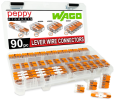
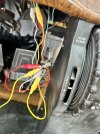
Wait.... no one suggested these for aircraft applications:
(In all seriousness, I do wonder what kind of mystery wiring might lurk out of sight on some planes.)

1789728640561.png
 
I do wonder what kind of mystery wiring might lurk out of sight on some planes.
Everything you can possibly imagine and then some. But when you ask an owner about removing it or repairing it, they balk at the added cost. At one point even had to include that work as a condition of my installation or I'd walk from the project.

One big item to check is to make sure the existing wires are sized properly for the current loads as some would upgrade alternators to a higher output or add equipment but not verify the installed wire was rated for the increased load.
 
For machined pins, the JReady crimpers and positioners on Amazon are knockoffs of the expensive AFM8. For occasional use, they work really well. Much nicer than the cheap 4-way crimper SteinAir sells, and much cheaper than the big-dog DMC. I probably spent $250 or so total for the crimper and positioners for regular and HD sockets/pins.
 
I would use IDEAL push-connectors before those Wago lever things. Both have ****ed me off in non-aviation settings, although I have quite a few ideals in my hangar AC wiring. I have appx none of the wagos in anything active right now.

I'd have a hard time calling them standard hardware when the FAA peeps found them in my plane, so none there. :D
 
For machined pins, the JReady crimpers and positioners on Amazon are knockoffs of the expensive AFM8. For occasional use, they work really well. Much nicer than the cheap 4-way crimper SteinAir sells, and much cheaper than the big-dog DMC. I probably spent $250 or so total for the crimper and positioners for regular and HD sockets/pins.

These really are a great value and work very very well.
 
The following isn't aviation related. I didn't like or use the wago's for anything. Since then I've found them handy for extending short wires in an existing box, and as maybe my favorite way to connect solid and stranded #10 or #12 in a box. I don't think I'd use them in any kind of damp situation, and certainly not where there was any force on the wires, but that's true of a lot of connectors.
 
These really are a great value and work very very well.
I'm pretty sure they are a straight Chinese copycats of the DMC products. Other than colors and logos, it looks and feels nearly identical to the DMC tool my local avionics shop has.

Here's the one I have:

 
Back
Top