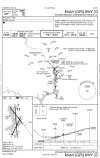
IMO being at the same altitude isn't the issue. PAT25 was instructed to fly behind the CRJ and for some reason didn't do that. I've been in traffic patterns and on visual approaches where I've been instructed to pass behind traffic at my altitude so I adjusted my course to follow instructions. PAT25 didn't hit the CRJ because they were at the same altitude they hit because PAT25 didn't adjust their course.
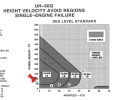
200' max altitude is the "law" for those helicopters. PAT 25 hit the RJ
mainly because they were at the wrong altitude.
Yes, there were plenty of other reasons - the pilot in the left seat with inexperience of 500 hours or less certainly
didn't help. I'm thinking that her
recency of experience might have been very low as well, but we'll find out soon enough.
It's a bad combination to be low-time and not proficient due to a lack of flying in very complex airspace at night.
PAT 25 hit the RJ because they were looking at the wrong plane - they most likely identified the Airbus on final for
01 instead of the RJ on base to final for 33. A major flaw there was not starting at the Wilson bridge as a starting
point as to where to look because that's where they were called out by tower.
So, even with all of those screw ups, this accident would NOT have happened if PAT 25 was following the "law"
of that corridor -
flying at a maximum altitude of 200' over the eastern shore of the Potomac. The only
reason to deviate from that "law" would be when the PIC was using his / her command authority due to avoiding
traffic, birds, big balloons, a drone, etc. Here, none of that was a problem - so PAT 25 should have been following
the "law."
It's my personal opinion that the PIC was too inexperienced to hold altitude at night. But I can't particularly
blame her for that - we all screw up like that when we're nervous in tight airspace with little time. I have
a feeling that she was so busy trying to identify the traffic that she couldn't hold altitude. It's very similar
to instrument flying - when you're not current you easily get fixated on one thing and everything else falls
apart. For example, you're so 'happy' that you're holding your bank angle that you're too engrossed to hold altitude -
your mind can't do everything that's necessary to be proficient. Before you know it, your VSI is reading a decent of
1,500 FPM (or worse) and then you overcorrect - that's how spatial disorientation happens. I guess we can call it
tunnel vision - we can't put the old fashioned "six pack" into one cohesive flow of understanding everything all at once.
The bottom line is that the more I fly and practice instrument flying (ideally at night) all of those procedures become
second nature. But that takes a lot of time - probably akin to a delicate surgical procedure. But the problem is
that skill deteriorates quickly - so it must be done regularly. And please don't test that out in class B airspace with
a lack of recency like PAT 25 - go to less busy airspace to get current again.
Lastly, I also read that four pilots should have been aboard PAT 25 - which would have one on each side of the helo in
the back- that could have prevented this tragedy - in this accident there were only three with the third on
the right side and that couldn't helps spot the RJ that was in the 10 o'clock position. That's what I read
elsewhere - so don't quote me on that just yet.