Coupled approach - GTN650Xi & GFC500

mandm

Avionics Upgrade
Joined
Feb 7, 2020
Messages
3,616
Location
Chicago
Display Name
Michael
Home Airfield
KUGN
I’ve been practicing some coupled approaches and I’m wondering how do you know that the autopilot is going to start descending at the FAF and intercept the approach?

I loaded and activated an approach then hit direct to the FAF using NAV (autopilot) and altitude hold at the correct altitude for the FAF and it flew right through approach course, so then I started to vector myself to something that the autopilot would be able to handle using the HDG and correct altitude hold.

So let’s assume we are being vectored in, you’d use the altitude hold and HDG adjustments, then if you were direct to the FAF you’d hit NAV and altitude hold. Then you’d configure for landing, and press APP on the autopilot, I feel like it may or may not descend because of my previous altitude hold. Does altitude sections need to have no lights? Because I’m not setting a rate of descent for the approach? What step am I missing here? I know if the G5 says GP that it’s pretty much going to start to descend but I’m just missing some assurance that it’s going to actually descend and follow the GP.
 
Let us know which approach and which FAF.

But here are two good possibilities:

1. Approaches are not designed to start at the FAF. Even with vectors to final, ATC is supposed to to vector you onto the extended final approach course at least 2-3 nm before the FAF. I most cases, the AP knows that and won't capture by itself.

2. On the GFC500, NAV mode doesn't capture the glidepath. APR mode captures the glidepath

Are you getting transition training or playing a game on your own?
 
Last edited:
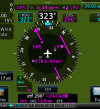
Be sure to check the autopilot status at the top of the G5 or G3X.
Green is active mode, white is pending mode. Should show a white GP, the diamonds will show where you are in relation to the approach path.
 
Let us know which approach and which FAF.

But here are two good possibilities:

1. Approaches are not designed to start at the FAF. Even with vectors to final, ATC is supposed to to vector you onto the extended final approach course at least 2-3 nm before the FAF. I most cases, the AP knows that and won't capture by itself.

2. On the GFC500, NAV mode doesn't capture the glidepath. APR mode captures the glidepath

Are you getting transition training or playing a game on your own?

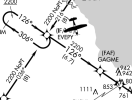
For example last night I was flying to KGYY and I loaded and activated the RNAV 12 Y approach and went to the FAF GAGME. Funny name btw lol.

I did a 360 to attempt to intercept the course again where I probably cut it to short. Also trying to stay away from Midway and Ohare’s airspace too in the process.

Procedurally, load and activate the approach in the 650, then use NAV to the IAF or HDG to vector into the course, then press APP once intercepted the course? Then it’s good to go?

I’m playing around with this myself for now, I learned on the 650 & 500 combo but not much experience with flying coupled approaches. On the way home, the RNAV23 at KUGN worked fine down to minimums.
 
For example last night I was flying to KGYY and I loaded and activated the RNAV 12 Y approach and went to the FAF GAGME. Funny name btw lol.

I did a 360 to attempt to intercept the course again where I probably cut it to short. Also trying to stay away from Midway and Ohare’s airspace too in the process.

Procedurally, load and activate the approach in the 650, then use NAV to the IAF or HDG to vector into the course, then press APP once intercepted the course? Then it’s good to go?
I don't know the area, but in the normal course of events, considering that Gary is towered, I'd probably want to be using Chicago for practice approaches into it. Far more realistic than making up maneuvers that won't happen. But if I didn't, here's how I would handle it:

It looks like all three IAFs are below the Class B shelf. Let's leave out doing the procedure turn, although that wouldn't make a difference. So two examples, one without vectors the other with.

For the non-vectored, I'll use ZANIN for the example. You are in ALT and NAV (not HDG) mode.
With the approach loaded, proceed direct ZANIN. No need to activate anything. Once you are direct to a waypoint on or have activated a leg of the approach, the approach is activated. There is never a need to touch "Activate Approach" and a very good reason not to. Anyway, at some reasonable point (it could be as early as when heading to ZANIN or as late as crossing EVEPY inbound, be ATC and say the words, "cleared for the approach." In the real world, that's the cue to tap the APR button on the GFC500. That will turn on the "GP" white annunciation on your PFD scoreboard. Once you oare n the EVEPY-GAGME leg, the glidepath marker will appear. When it centers, the AP will capture it and start down.

For vectors to final, let's be clear. Most pilots and many CFIIs suck at doing vectors. I include myself in that group, although at this point I have made most of the mistakes (I hope). I'm assuming downwind on the lake side. You are in ATL and HDG mode. Once you start receiving vectors, do either one of two things. Activate the leg to GAGME (my preferred technique) or activate Vectors to Final (which some others may prefer but I don't use). At the appropriate point somewhere around here (you want to touch the extend FAC at least 2 mines before GAGME), you again want to be ATC and say " X miles from GAGME, fly heading 160,mintain 2,200 until established, cleared for the ..." Again, "cleared for the approach" is the cue to hit APR. The GP will arm, glidepath marker will be active, and the GFC will fly it down when it's captured.

1741031525897.png

Whew, I forget how easy it is to demonstrate this and haw hard it is to write it out!
 
I don't know the area, but in the normal course of events, considering that Gary is towered, I'd probably want to be using Chicago for practice approaches into it. Far more realistic than making up maneuvers that won't happen. But if I didn't, here's how I would handle it:

It looks like all three IAFs are below the Class B shelf. Let's leave out doing the procedure turn, although that wouldn't make a difference. So two examples, one without vectors the other with.

For the non-vectored, I'll use ZANIN for the example. You are in ALT and NAV (not HDG) mode.
With the approach loaded, proceed direct ZANIN. No need to activate anything. Once you are direct to a waypoint on or have activated a leg of the approach, the approach is activated. There is never a need to touch "Activate Approach" and a very good reason not to. Anyway, at some reasonable point (it could be as early as when heading to ZANIN or as late as crossing EVEPY inbound, be ATC and say the words, "cleared for the approach." In the real world, that's the cue to tap the APR button on the GFC500. That will turn on the "GP" white annunciation on your PFD scoreboard. Once you oare n the EVEPY-GAGME leg, the glidepath marker will appear. When it centers, the AP will capture it and start down.

For vectors to final, let's be clear. Most pilots and many CFIIs suck at doing vectors. I include myself in that group, although at this point I have made most of the mistakes (I hope). I'm assuming downwind on the lake side. You are in ATL and HDG mode. Once you start receiving vectors, do either one of two things. Activate the leg to GAGME (my preferred technique) or activate Vectors to Final (which some others may prefer but I don't use). At the appropriate point somewhere around here (you want to touch the extend FAC at least 2 mines before GAGME), you again want to be ATC and say " X miles from GAGME, fly heading 160,mintain 2,200 until established, cleared for the ..." Again, "cleared for the approach" is the cue to hit APR. The GP will arm, glidepath marker will be active, and the GFC will fly it down when it's captured.

View attachment 138661

Whew, I forget how easy it is to demonstrate this and haw hard it is to write it out!

Excellent description, thank you!

Just want to repeat back, let me know if I misunderstood something.

Load (not activate) approach, then NAV + ALT mode to IAF / IF. Once intercepted the course somewhere between ZANIN and EVEPY, ATC “clears” the approach, you press APR (and the GP changes from green to white) on the GFC500 and the autopilot takes over from there.

Now if you are vectors to the approach, load the approach, HDG + ALT mode per the vectors, activate the leg you are heading to or activate vectors to final. Once ATC clears you (still not on the FAC?), press APR, green GP to white GP. Now are you lined up straight in on the FAC or will the vectored course A/P now intercept and turn onto the FAC as it’s coming in?

Another question, if your A/P is not intercepting the FAC, can you ask ATC to re-vector you? Or do you need to take over and hand fly the course?
 
Two minor things
Load (not activate) approach, then NAV + ALT mode to IAF / IF. Once intercepted the course somewhere between ZANIN and EVEPY, ATC “clears” the approach, you press APR (and the GP changes from green to white) on the GFC500 and the autopilot takes over from there..
White is "armed" meaning it's ready to do something, but not doing it yet. Green is active. So the change is from white to green.

For the glide path to capture, you must be below the glide slope. It will not capture from above. Another reason direct to the FAF isn't a good practice.
 
I'll crystalize what Mark very nicely explained... never (repeat, never) go Direct to the FAF.

For reasons of obstacle/terrain protection, the Autopilot/FlightDirector MUST intercept the Course before it captures the Glideslope/Glidepath (lateral before vertical). This isn't geometrically possible if you try to go Direct to the FAF.
 
Like mentioned, you must activate APR mode on the AP a certain distance before the FAF. At least one mile prior to the approach gate; >2 miles before the FAF for the GFC500 IIRC. If inside this distance it won’t capture the approach.
 
Be sure to check the autopilot status at the top of the G5 or G3X.
Green is active mode, white is pending mode. Should show a white GP, the diamonds will show where you are in relation to the approach path.
I cannot emphasize this ^^^ strongly enough. The GFC 500 will tell you exactly what it's going to do, and you should pay attention to these indications. If you do, you won't have a "what's it doing now" moment.

Procedurally, load and activate the approach in the 650,
It's important to understand what activating the approach does, and how you should load the approach as well.

First of all, IMO you should always load the approach from whatever IAF makes the most sense with where you're coming from. If you load "Vectors" as the transition and ATC tells you to do direct to an IAF or IF, those fixes won't be in your flight plan and you'll need to reload the approach. I do this even when they say "expect vectors" because I've had ATC change their mind. Once you're actually on vectors, then you can "Activate vectors to final" which will extend the FAC out from the FAF and activate that leg. Some instructors (I think @midlifeflyer might be one) advocate actually activating the intermediate (IF-to-FAF) leg instead of using "Activate vectors to final". Both work in most situations.

What "Activate Approach" does is send you direct from present position to the selected IAF. Often this isn't the desired behavior; if you want to go direct to the IAF you can just select the IAF and go direct as well. There isn't a need to activate the approach separately.
then use NAV to the IAF or HDG to vector into the course, then press APP once intercepted the course? Then it’s good to go?
Yes on using NAV (to IAF) or HDG for vectors, but no to pressing APP once intercepted. There are two things you may want to do...

The main behavioral difference between NAV and APP on the Garmin autopilots is that APP will descend on the vertical approach guidance and NAV will follow the lateral path but not leave the set altitude. NAV is only a lateral mode, APP is lateral and vertical.

On a Garmin autopilot, You should *always* press "APP" right when you hear "Cleared for the approach." If you are on vectors and hear "intercept the final approach course" or "intercept the localizer", do NOT push APP, push NAV. That will intercept but not descend. When they say "Cleared for the approach" you push APP.

Load (not activate) approach, then NAV + ALT mode to IAF / IF. Once intercepted the course somewhere between ZANIN and EVEPY, ATC “clears” the approach, you press APR (and the GP changes from green to white) on the GFC500 and the autopilot takes over from there.
No need to wait until you've intercepted. You can be 20 miles from the IAF and hear "Cleared for the approach" and hit the button.*

* The one caveat that you may want to verify on this - And I apologize, I have a lot more time with the 700-series autopilots than the 500 - I'm not sure if the 500 will arm two modes (IE, if the initial leg of the approach is at 3000 and you're still at 5000+ and descending in VS or VNAV mode, will it have VS in green and then ALT and GP in white, or is it limited to only one). Admittedly, this is rare, but it gives one possible exception to the "APP at approach clearance" rule if you're not leveled out yet.

Now if you are vectors to the approach, load the approach, HDG + ALT mode per the vectors, activate the leg you are heading to or activate vectors to final. Once ATC clears you (still not on the FAC?), press APR, green GP to white GP. Now are you lined up straight in on the FAC or will the vectored course A/P now intercept and turn onto the FAC as it’s coming in?
If you're getting vectors to final and have activated VTF or the leg to the FAF, and you're in HDG + ALT, and then you get cleared for the approach, you push the APP button and you should see (for RNAV approach with vertical guidance): (Using gray instead of white because you can't change the background color...)

HDG GPS | ALT GP

After intercepting the FAC:

GPS | ALT GP

After intercepting the glidepath:

GPS | GP

Another question, if your A/P is not intercepting the FAC, can you ask ATC to re-vector you? Or do you need to take over and hand fly the course?
You can always take over and hand fly. As far as getting the autopilot to cooperate, that depends why it didn't intercept the FAC. Generally speaking, the reason it wouldn't intercept the FAC is that either you didn't arm NAV or APR before you got there, or you didn't have a valid input for the FAC (for example, GPS was in VLOC instead of GPS mode, or you're flying an ILS and you weren't picking up the localizer). If there's room to re-vector and you hit all the buttons in time, you're good - Just always check the "scoreboard" to ensure that you have the correct modes active and armed.

 
It won’t intercept from above, and I think it won’t intercept if it’s at an acute angle. The only problem I’ve had is when engaging it after takeoff, I now am more careful to have plane in a stable straight ahead climb, trimmed and heading bug forward, autopilot IAS and HDG modes activated before enabling the autopilot (you can do this while on the ground).
I like the AP flying the plane before picking up my IFR clearance. Getting radar vectors and altitudes and a clearance with a reroute is a bit stressful.
 
Some instructors (I think @midlifeflyer might be one) advocate actually activating the intermediate (IF-to-FAF) leg instead of using "Activate vectors to final".
You are correct. I do.

To a large degree its’s based on early experience with pre-GTN navigators, in which VTF wipes out every preceding waypoint. The downside- being sent to one of them after starting to receive vectors - happened to me on my very first G1000 flight in 2009. It’s the behavior that led to the AIM warning against using it.

When Garmin partially fixed the issue in the GTN, I saw no reason to change. Part of that is teaching a variety of systems. And part of that is realizing that activating the leg to final gives me everything VTF does with zero downside.

But let me clarify one thing. “Advocate” does not mean I try to change a pilot who uses VTF. I won’t do that. What I may do is create a realistic in-flight scenario where I send the pilot to a missing waypoint. If the pilot handles it (which involves an essential skill I also check for), the subject is closed. If they fumble around or worse, we can look at alternatives.
 
The only problem I’ve had is when engaging it after takeoff, I now am more careful to have plane in a stable straight ahead climb, trimmed and heading bug forward, autopilot IAS and HDG modes activated before enabling the autopilot (you can do this while on the ground).
One of the biggest issues I see on departure is the same one I see on missed approaches - rushing to engage the autopilot. It’s more of a problem on the missed because for departure most APs have a limitation like 800’ AGL before engaging. But I still see fumbling around in departure.

Looks like you found your solution :yes:
 
To a large degree its’s based on early experience with pre-GTN navigators, in which VTF wipes out every preceding waypoint. The downside- being sent to one of them after starting to receive vectors - happened to me on my very first G1000 flight in 2009. It’s the behavior that led to the AIM warning against using it.

When Garmin partially fixed the issue in the GTN, I saw no reason to change. Part of that is teaching a variety of systems. And part of that is realizing that activating the leg to final gives me everything VTF does with zero downside.
So... What happens when you activate the leg to the FAF, but you get vectored on prior to the beginning of that leg? Does the CDI still work, and does it still intercept?

But let me clarify one thing. “Advocate” does not mean I try to change a pilot who uses VTF. I won’t do that. What I may do is create a realistic in-flight scenario where I send the pilot to a missing waypoint. If the pilot handles it (which involves an essential skill I also check for), the subject is closed. If they fumble around or worse, we can look at alternatives.
As a good instructor should! :thumbsup:
 
Just a little expansion on that. Basically, the pink needle CDI (like it's green cousin), really only knows one thing - the dialed in GPS course. Unless you are dealing with one of the few approaches where there is a bend between the intermediate and final segments, the activated leg to the FAF wouldn't be any different than extended FAS. Even in NAV or APR mode with the GPS choosing the intercept, it's going to intercept the course painted on the CFI.
 
I'll crystalize what Mark very nicely explained... never (repeat, never) go Direct to the FAF.
Correct. At least not if you want to fly the instrument approach. Now, if ATC tells you "N123, proceed direct WAVUM for the visual approach runway 27" and WAVUM is the FAF for the ILS or LOC 27 approach, then of course it's OK to use the direct-to function and go to the FAF. Just don't expect the autopilot to descend to the runway from there.

And for the sake of completeness, I'll add that activating the leg to the FAF is an acceptable way to join the final approach course of an instrument approach, equivalent to activating vectors to final.

- Martin
 
Just a little expansion on that. Basically, the pink needle CDI (like it's green cousin), really only knows one thing - the dialed in GPS course. Unless you are dealing with one of the few approaches where there is a bend between the intermediate and final segments, the activated leg to the FAF wouldn't be any different than extended FAS. Even in NAV or APR mode with the GPS choosing the intercept, it's going to intercept the course painted on the CFI.
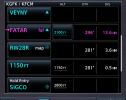
That was going to be my next question. How does it work when you have a turn at the FAF, for example on the RNAV(GPS) RWY 28R into KFCM?

Presumably activating VTF is going to give you a 278º course to FATAR, while activating the intermediate leg from VEYNY to FATAR will give you the 293º? I've flown this approach a bunch of times, but never as vectors because our shortcut clearance into FCM always included FGT so we always got the full procedure.
 
Last edited:
Presumably activating VTF is going to give you a 278º course to FATAR
I haven’t looked to see what the GPS does (I thought you might to answer your question) but my “presumably” is different than yours. I’d expect that VTF will put you on course to intercept a published leg outside the approach gate - 293 - not an un-TERPsed extension, so no difference there either.

I think @John Collins has dealt with this issue.
 
my “presumably” is different than yours. I’d expect that VTF will put you on course to intercept a published leg outside the approach gate - 293 - not an un-TERPsed extension
I had a chance to quickly check before heading out. Yep. This is Vectors to Final activated in a GTNxi. Extension of the published leg to the FAF. So again, no difference.

1741353488416.png1741353447935.png
 
That was going to be my next question. How does it work when you have a turn at the FAF, for example on the RNAV(GPS) RWY 28R into KFCM?

Presumably activating VTF is going to give you a 278º course to FATAR, while activating the intermediate leg from VEYNY to FATAR will give you the 293º? I've flown this approach a bunch of times, but never as vectors because our shortcut clearance into FCM always included FGT so we always got the full procedure.
Mark provided the answer, though I can see that it's not intuitively obvious what exactly VTF is going to do in this case.

As an alternative, for vectors to intercept the intermediate leg you could load the full procedure (from FGT) and then activate the leg from VEYNY (IF) to FATAR (FAF). Same result as VTF, but you don't have to think about what course VTF is going to apply since it's explicit in the leg you activate.

Regards,
Martin
 
I can see that it's not intuitively obvious what exactly VTF is going to do in this case.
I kinda figure it this way... the difference between a RNAV and a ground-based navaid approach is that you can put an RNAV waypoint anywhere. So, if there is a change of direction between the intermediate and final segments on an RNAV approach, there must be a reason. It could be traffic-related, but I think it more likely to be a TERPs-based reason, like unacceptable obstacles. If that's the case, I wouldn't expect a navigator to provide a route - here a VTF course - to bypass that.

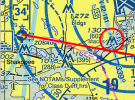
Looking at the Sectional after the fact, I saw pretty much what I would expect. My WAG is that the bend is there because that obstacle is too high and too close for an extended straight in at an appropriate altitude. I guess a controller could send you to intercept the extended FAC if their MVA was low enough, but I wouldn't expect the coded procedure to send you there.

@flyingcheesehead, you mentioned that you normally get FGT. That's not surprising. Coming from that direction, I would expect either FGT or direct to VEYNY rather than vectors. Particularly with RNAV approaches, I think were seeing increased ATC use of NoPT and other straight-in segments, whether IAF or IF instead of vectors. The difference between vectors and direct to a straight in fix from an appropriate direction tends to be negligible and it reduces workload for both pilot and controller.

1741379023988.png
 
On a Garmin autopilot, You should *always* press "APP" right when you hear "Cleared for the approach." If you are on vectors and hear "intercept the final approach course" or "intercept the localizer", do NOT push APP, push NAV. That will intercept but not descend. When they say "Cleared for the approach" you push APP.

Are you sure about that "always"? I can't remember the specifics of all Garmin autopilots (and it's been a while since I flew one and this scenario came up), but one concern with many autopilots is that if you engage Approach mode on the autopilot, yes it follows the glidepath, but it also DOESN'T level off at a preselected MDA. So if you're flying an LNAV-only approach, or any approach to circling minimums, and engage Approach mode, it'll fly you all the way to the runway when you instead needed to be leveling off at MDA. If, instead, you engage NAV with VNAV or VSI, it would level off at the MDA (if you have it set).

It's also possible I'm confusing my main autopilot system that I fly every day with the Garmin units that I only fly sporadically. So please let me know if what I wrote above is not correct.

This is why I highly advocate (and provide!) thorough transition training when pilots get new avionics. So many key details that are specific to the exact autopilot/GPS installation are easy to overlook.
 
Are you sure about that "always"?
The only "always" problem I've seen is mandatory stepdowns that will be violated by following a real or advisory glidepath (especial when they are hard altitudes). But those are few and noticeable. But no, it doesn't automatically stop at a preselected MDA unless you tell the autopilot to.
 
As an alternative, for vectors to intercept the intermediate leg you could load the full procedure (from FGT) and then activate the leg from VEYNY (IF) to FATAR (FAF). Same result as VTF, but you don't have to think about what course VTF is going to apply since it's explicit in the leg you activate.
Yep, I just wanted to verify that it really was the same behavior.

I kinda figure it this way... the difference between a RNAV and a ground-based navaid approach is that you can put an RNAV waypoint anywhere. So, if there is a change of direction between the intermediate and final segments on an RNAV approach, there must be a reason. It could be traffic-related, but I think it more likely to be a TERPs-based reason, like unacceptable obstacles. If that's the case, I wouldn't expect a navigator to provide a route - here a VTF course - to bypass that.
I didn't either, but I also didn't know for sure.

@flyingcheesehead, you mentioned that you normally get FGT. That's not surprising. Coming from that direction, I would expect either FGT or direct to VEYNY rather than vectors. Particularly with RNAV approaches, I think were seeing increased ATC use of NoPT and other straight-in segments, whether IAF or IF instead of vectors. The difference between vectors and direct to a straight in fix from an appropriate direction tends to be negligible and it reduces workload for both pilot and controller.
Yep. It was super easy, especially since we *always* got FGT in our reroute. Initial clearance was always on the AGUDE5 around the north side even though we were always coming from the southeast. Once you checked in with ZMP, you could ask for a shortcut and it was always FGT, then a later (Center) sector would issue a crossing 20-30nm east of FGT at 6000 or 4000 to keep you out of their way. Approach hardly had to say a word to you other than responding to your check-in, clearing you for the approach, and handing you off to tower.

And from the pilot perspective, we hardly had to push a button in the last 100 miles - Just VNAV (and twist), and APR when we got the clearance, and frequency changes.

Are you sure about that "always"? I can't remember the specifics of all Garmin autopilots (and it's been a while since I flew one and this scenario came up), but one concern with many autopilots is that if you engage Approach mode on the autopilot, yes it follows the glidepath, but it also DOESN'T level off at a preselected MDA. So if you're flying an LNAV-only approach, or any approach to circling minimums, and engage Approach mode, it'll fly you all the way to the runway when you instead needed to be leveling off at MDA. If, instead, you engage NAV with VNAV or VSI, it would level off at the MDA (if you have it set).
True, but in real life the only people who fly non-vertically-guided approaches once they have all these gadgets available to them is Flight Check. ;)
 
True, but in real life the only people who fly non-vertically-guided approaches once they have all these gadgets available to them is Flight Check. ;)

Humorous point taken....

However, this would be applicable at any airport where there aren't LPV or LNAV/VNAV minimums. A pilot flying any approach with only LP or LNAV minimums would face this consideration. There are a lot of airports with only these lines of minima. And as you know, LP+V and LNAV+V do not count as vertically-guided procedures, so descent below MDA is not permitted, and Approach mode won't protect for that while NAV with VNAV or VSI will.
 
However, this would be applicable at any airport where there aren't LPV or LNAV/VNAV minimums. A pilot flying any approach with only LP or LNAV minimums would face this consideration. There are a lot of airports with only these lines of minima. And as you know, LP+V and LNAV+V do not count as vertically-guided procedures, so descent below MDA is not permitted, and Approach mode won't protect for that while NAV with VNAV or VSI will.
True... But I'd also expect that when using +V, people aren't going to be just leveling off at MDA, we're going to be hitting TOGA and going missed if the weather is that bad. There's not a lot of point to leveling at MDA on a +V approach unless the weather really is *right at* minimums such that the decision time takes you from in the muck to seeing the runway. I'd expect that there would be some inkling of this without having to get to MDA, such as ground contact prior to MDA.

Point well taken about transition training, though, and this particular item (that the autopilot will not stop at MDA in APR mode) is a very important thing to learn. With all of the tiny but important details like this, it boggles my mind how many pilots don't bother with transition training.
 
it boggles my mind how many pilots don't bother with transition training.
I think part of it is the local availability of good transition training. It may be only perception and It’s changing, but I’m not seeing a lot of CFII in my area with much more than the rudimentary knowledge of these systems sufficient to pass a checkride. I see the results all the time.

Gary Reeves has managed to tap that market pretty effectively. I’m too old to want to market, but I nevertheless get requests to travel to give avionics training, just based on seeing me answer questions like this online. Sometimes from areas that surprise me.
 
I think part of it is the local availability of good transition training. …
Gary Reeves has managed to tap that market pretty effectively...
When I do my CFII, that’s likely one of the areas I’m going to try to exploit.

The last two CFIIs I’ve flown with, I’ve had to train them how the system(s) work.
 
The last two CFIIs I’ve flown with, I’ve had to train them how the system(s) work.
No surprise there.

One of the six "GPS Tasks Pilots Don't Know How to Do" I've posted before (all of which happen regularly) joined the list when three pilots in a row failed it. One was a young CFII who was trained on that system. This is one I now do on every IPC or instrument checkout unless it's a repeat client who has done it before.

It gets more problematic when you get to less common systems. A popular non-Garmin combo is an Aspen panel with an IFD, either one of which alone is beyond the knowledge/skill level of other than a relative handful of CFIs.
 
I think part of it is the local availability of good transition training. It may be only perception and It’s changing, but I’m not seeing a lot of CFII in my area with much more than the rudimentary knowledge of these systems sufficient to pass a checkride. I see the results all the time.
Hmmm. Maybe I need to finally knock out my CFI, as this would be a good area of specialty for me.
 
Hmmm. Maybe I need to finally knock out my CFI, as this would be a good area of specialty for me.
Do it!

If you get involved in teaching instrument students, beware of the pressure to teach to the test. It’s one of the two main reasons I don’t. My only involvement is to help with a few flights just before the checkride and that’s to probe for weaknesses in expected ACS tasks. I don’t want to confuse them at that point by offering alternatives, even easier ones. Although I do usually manage to sneak in one my favorites (which has made a difference).
 
IMG_8315.jpegIMG_8316.jpegIMG_8317.jpeg

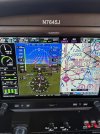
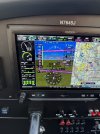
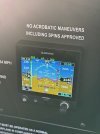
I was practicing the KJVL RNAV 32, if anyone checks my tracks, it’s a bit embarrassing how many times I went back to intercept the course.

My confusion here was that I was originally focused on getting lined up with 32 prior to TIRRO. Pushed APR and the white GP appeared, then past TIRRO it’s still white, I know that JODER is at 2600, so I’m thinking what’s going on, between TIRRO we need to descend from 3100’ to 2600’.

What I learned is that at your TOD or top of descent, that is when the autopilot will start to descend you, at that point, the GP changes from white to green and then the airplane starts to descend.

I’m happy that I’m doing this myself because sometimes with an instructor, they just do it for you and you kind of know how to do that particular approach but you don’t necessarily understand the brain thinking behind the Garmin to apply in all cases.

So I have been loading and activating an approach, you can use NAV / autopilot with direct to an initial fix, and then run the APR from there if at the correct altitude. But to cut in between an initial and final fix is more of an art required for the autopilot to pick up the track. White GP will appear and then change to green when it starts to descend so it’s important to know the descending points to monitor the autopilot is on track. I think if in IMC, I’d request to fly the entire approach to allow me the extra time to monitor everything is working properly.

On the way back, I went in for the KUGN ILS 23 via WAUKE, winds were 250 at 15 gusting 23-25, the autopilot was having a hard time lining up with the runway, it was basically lined up with the taxiway. I do think the winds felt a lot stronger than 25 but I asked tower for a wind check and the 15-25 was confirmed from 250. I’d guess they were closer to 35-40 kts based upon how my hangar was making noise and past experiences. I don’t understand how that wind pushed me that much off track though.

To add, the autopilot flew the KJVL RNAV 32 perfectly with a hefty crosswind, the xw was so much that I did a touch and go, or a bounce and go. I was not confident that I could safely land with that crab and gusting winds and it didn’t improve in ground effect like it normally does. So bounce and go.
 
was practicing the KJVL RNAV 32, if anyone checks my tracks, it’s a bit embarrassing how many times I went back to intercept the course.

My confusion here was that I was originally focused on getting lined up with 32 prior to TIRRO. Pushed APR and the white GP appeared, then past TIRRO it’s still white, I know that JODER is at 2600, so I’m thinking what’s going on, between TIRRO we need to descend from 3100’ to 2600’.

What I learned is that at your TOD or top of descent, that is when the autopilot will start to descend you, at that point, the GP changes from white to green and then the airplane starts to descend.
Sorry, but I'm not understanding your description of what happened. So I don't know whether this answers your question in any way.

Crossing TIRRO 3100', lateral already captured, altitude held at 3100, and APR armed (white), I would expect the airplane to remain at 3100' until the glidepath centers and then start down. That kind of surprises pilots who are used to diving and driving down from 3100 to 2600. Think about the difference. Without dive and drive, you change configuration once - when the glidepath captures. With dive and drive, you change configurations 3 times. The box is basically adopting the FAA's current CDFA (continuous descent final approach) mantra for a stabilized approach.

But that might not be what is concerning you.
 
Last edited:
Sorry, but I'm not understanding your description of what happened. So I don't know whether this answers your question in any way.

Crossing TIRRO 3100', lateral already captured, altitude held at 3100, and APR armed (white), I would expect the airplane to remain at 3100' until the glidepath centers and then start down. That kind of surprises pilots who are used to diving and driving down from 3100 to 2600. Think about the difference. Without dive and drive, you change configuration once - when the glidepath captures. With dive and drive, you change configurations 3 times. The box is basically adoption the FAA's current CDFA (continuous descent final approach) mantra for a stabilized approach.

But that might not be what is concerning you.
I expected the autopilot to start a slow descent at TIRRO, GP remained white, I thought I didn’t intercept it so I did a 360 to intercept TIRRO a few more times. Finally I just went with it and after the TOD (about midway from TIRRO to JODER) it started to descent and the GP changed to green. So it was set up properly all along, it just didn’t act as I predicted it would have. If I was hand flying, I would have started descending at TIRRO with plans to cross JODER at 2600’. If that makes sense?
 
I expected the autopilot to start a slow descent at TIRRO, GP remained white, I thought I didn’t intercept it so I did a 360 to intercept TIRRO a few more times. Finally I just went with it and after the TOD (about midway from TIRRO to JODER) it started to descent and the GP changed to green. So it was set up properly all along, it just didn’t act as I predicted it would have. If I was hand flying, I would have started descending at TIRRO with plans to cross JODER at 2600’. If that makes sense?
It does but even hand flying, I would have waited at 3100 until the glidepath captured. I would do the same on an ILS unless there was some need to get down early.
 
It does but even hand flying, I would have waited at 3100 until the glidepath captured. I would do the same on an ILS unless there was some need to get down early.
Ah ok that makes sense if you have vertical guidance. My old avionics, the Garmin GNC300XL, only provides lateral guidance. There was no vertical guidance with GPS approaches. Only my King KX155 provided vertical guidance on LOC and ILS approaches.
 
Ah ok that makes sense if you have vertical guidance. My old avionics, the Garmin GNC300XL, only provides lateral guidance. There was no vertical guidance with GPS approaches. Only my King KX155 provided vertical guidance on LOC and ILS approaches.

On any approach with vertical guidance, I’ll stay level until the glide slope/path is centered, then begin the descent. This does result in staying level at the FAF altitude until on slope/path. The result is a constant descent.
 
Back
Top