Amazon Freighter Runway Overrun, Fire, MIA, 9/6

Don’t know if slaps 20 is an optional setting for a 767 landing, but if not wouldn’t the GPWS be activating because the flaps were not at 30 yet?
The flaps not being at a landing setting is why they were getting the "Too low, terrain" aural warning.

When you have to land at a flap setting that is not a normal landing flap setting, engine-out landing or flap/slat failure, you inhibit the flap warning on the GPWS.
 
Don’t know if slaps 20 is an optional setting for a 767 landing, but if not wouldn’t the GPWS be activating because the flaps were not at 30 yet?
Yes. The GPWS was reinforcing the need for a go around because they were not stable due to not having landing flaps selected. I would be willing to be the PF did not hear it.

IMG_0068.jpeg
 
Have they said who was PF and who was PM? IF so maybe I've missed it.
 
Have they said who was PF and who was PM? IF so maybe I've missed it.
I've not seen that.
The captain, whilst having [probably] fewer hours in the 767, also had 737 and 757 type ratings (and Challenger.)
Depending on the exact model, panels could be similar or vastly different. I have no clue on flying characteristics.
But too fast is too fast.
 
I've not seen that.
The captain, whilst having [probably] fewer hours in the 767, also had 737 and 757 type ratings (and Challenger.)
Depending on the exact model, panels could be similar or vastly different. I have no clue on flying characteristics.
But too fast is too fast.

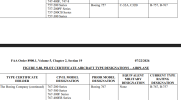
The 757 type is issued as a 757/767 type. it's one in the same and not seperate.
 
We hear the FO on the radio so that has me thinking he's PM with the Captain at the controls, but I didn't want to assume. Low experience captain who was a copter guy.
 
I know 1,000' isn't much at 120 knots, but with most of the fuel gone (and therefore a better T/W ratio and lower stall speed), what was the likely unstick speed? Point is, was "accelerate and fly away" completely out of the picture?
Don’t forget there was 13 knots of tailwind component, so 120kts of ground speed (which is what is being quoted, right?) might look more like 107 on the ASI.
 
They have made nothing offical, but based on the identities of the pilots and the ATC radio transmissions during the approach, it was likely the Captain flying and FO was PM.

I would also assume the Captain was flying and FO was PM, just from the interactions. If a Captain really let an FO ignore his multiple warnings, fly an unstable approach, and not have the aircraft configured, and didn't immediately step in or take corrective action, then he was no Captain.
 
Don’t forget there was 13 knots of tailwind component,
From the 1753Z METAR wind of 19017G26, I calculated a tailwind component of 5.5 kts G8.5 kts. Is there a source of relevant wind info other than the METAR?

For 767 limits, see post #7.
 
I’m surprised there was no mention on the CVR of being well above glidepath in addition to being too fast. They flew through a thunderstorm and came out fast and high into a tailwind. There was a moment in all of that, just as they entered the storm, where they were pretty close to normal, but that all disappeared as they flew through that storm and just got worse.
From the 1753Z METAR wind of 19017G26, I calculated a tailwind component of 5.5 kts G8.5 kts. Is there a source of relevant wind info other than the METAR?

For 767 limits, see post #7.

Yeah, it’s in the remarks section of the same METAR. Peak wind of 180@26 measured at the time of the accident. Could be construed as a gust, but either way, that’s 13 knots of tailwind component.
 

I'm not a fan of multiple "Bitching Betty" audio callouts for "reminders" that the flight may not be proceeding as well as expected by the aircraft's computer.

IMO, at best Bette is annoying, and at worst distracting and potentially scrambling brain waves during a flight condition that may need a higher level of adrenaline fueled concentration to save the day.

In the case of this Amazon package delivery gone bad, Betty shouted out 10 callouts in 36 seconds prior to touchdown without anyone up front doing anything about it.
 
Knowing virtually nil about the industry, I have this question. Say a captain typed in a 737 gets a promotion/upgrade/whatever and gets typed on a larger aircraft 767, 787, whatever, does he/she remain in the left seat or do they go to the right seat until they gain sufficient hours in the new equipment?

If no, is the green (on the new equipment) captain paired with high experience FO’s until they gain sufficient hours/experience?
 
At a typical U.S. carrier, it's purely a matter of seniority. A pilot can bid on any position he wants. A senior 737 first officer could conceivably go directly to the left seat on the 767.
Long ago, Delta had flight engineers that bid directly to a captain seat. At some point, the company intervened, but I don't remember the details.
Part of my captain upgrade training (2000, not Delta) was to fly a 3-day trip with a check airman in the right seat, and for the first 100 hours, no low-visibility approaches. Might have changed over time or vary between carriers.
 
Last edited:
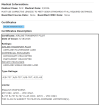
My turn for a question. In post #250, the pilot certificate shows a restriction for circling approach - VMC only.
I've never seen that before. Who's doing circling approaches, a visual maneuver, in IMC?
 
If that's so, then he may have had many hours of experience in similar aircraft.
No. He got his 767 type rating earlier this year. Since it is a common type rating, that is also when he got his 757 type rating.

I did the same thing in 2012. All of my training was on the 767. All of my sims were in 767 sims. My new ATP said, "B757, B767". A year later, I took 757 differences training prior to flying 757s.

Say a captain typed in a 737 gets a promotion/upgrade/whatever and gets typed on a larger aircraft 767, 787, whatever, does he/she remain in the left seat or do they go to the right seat until they gain sufficient hours in the new equipment?
21 Air does not fly the 737. He received that type rating from a previous job.

Upgrading or transitioning at a single employer is usually done by bidding in seniority order. You are trained on whatever bid you are awarded without regard from which seat or airplane you are currently in.

My turn for a question. In post #250, the pilot certificate shows a restriction for circling approach - VMC only.
I've never seen that before. Who's doing circling approaches, a visual maneuver, in IMC?
That restriction prohibits circling approaches with weather less than 1000'/3sm. Most, if not all, US airlines choose not to train for circling approaches and all of the type ratings produced under their programs include that restriction.
 
My turn for a question. In post #250, the pilot certificate shows a restriction for circling approach - VMC only.
I've never seen that before. Who's doing circling approaches, a visual maneuver, in IMC?

The main reason you see that limitation on certificates is training. If the applicant is not trained for this procedure then he is not tested on it, therefore it's placed on the certificate.

Not many 121 OpSpecs for carriers include circling approaches, so there is a cost savings in the training by not including them.
 
Number of airliner type ratings: 7
Number of airliner type ratings with the VMC-only restriction: 2
Number of 121 operators I worked for whose ops specs permitted circling approaches in IMC: 0
Number of airline flights in which a straight-in approach was unavailable (airport IMC): 0

Airlines stopped training circling approaches because they represented an unnecessary expense, and in the real world, unacceptably high risk.
 
Yeah, it’s in the remarks section of the same METAR. Peak wind of 180@26 measured at the time of the accident. Could be construed as a gust, but either way, that’s 13 knots of tailwind component.
We should keep in mind the fact that METAR winds are recorded at one specific location on the airport. At large airports such as MIA (and, notoriously, DEN), the actual winds for a specific runway may be significantly different from the METAR. It looks like the wx observation station for MIA is located on the southwest corner of the airport, maybe a mile from the approach end of runway 30.
 
We should keep in mind the fact that METAR winds are recorded at one specific location on the airport. At large airports such as MIA (and, notoriously, DEN), the actual winds for a specific runway may be significantly different from the METAR. It looks like the wx observation station for MIA is located on the southwest corner of the airport, maybe a mile from the approach end of runway 30.
True. It could have been worse than reported just as easily as it could have been the same or better.
 
We should keep in mind the fact that METAR winds are recorded at one specific location on the airport. At large airports such as MIA (and, notoriously, DEN), the actual winds for a specific runway may be significantly different from the METAR. It looks like the wx observation station for MIA is located on the southwest corner of the airport, maybe a mile from the approach end of runway 30.

Also keep in mind METAR winds are largely an average not a minute-to-minute weather reading, and don't do real well keeping up with rapidly changing conditions. It is entirely possible a gust front was crossing the airport as the aircraft was attempting to land, that the METAR didn't report.

Not that it is any excuse to continue an unstable approach, botched landing, attempted go around, etc.
 
True. It could have been worse than reported just as easily as it could have been the same or better.
Two airlines landed minutes before same runway reported no problems. This wind thing is a red herring.
 
My turn for a question. In post #250, the pilot certificate shows a restriction for circling approach - VMC only.
I've never seen that before. Who's doing circling approaches, a visual maneuver, in IMC?
VMC, in this instance, means weather 1000 & 3 or better.
 
Number of airliner type ratings: 7
Number of airliner type ratings with the VMC-only restriction: 2
Number of 121 operators I worked for whose ops specs permitted circling approaches in IMC: 0
Number of airline flights in which a straight-in approach was unavailable (airport IMC): 0

Airlines stopped training circling approaches because they represented an unnecessary expense, and in the real world, unacceptably high risk.
The only place I can ever remember circling to land in an airliner was in Juneau (and maybe Sitka) on Alaska airlines.
 
Two airlines landed minutes before same runway reported no problems. This wind thing is a red herring.
Every aircraft that crashed on short final or landing was preceded by several other aircraft that did not report any problems. Remember DL 191?

Wind may or may not have been a factor--we don't know what we don't know.
 
Every aircraft that crashed on short final or landing was preceded by several other aircraft that did not report any problems. Remember DL 191?

Wind may or may not have been a factor--we don't know what we don't know.
Yes I remember they hit the fuel farm.
 
Every aircraft that crashed on short final or landing was preceded by several other aircraft that did not report any problems. Remember DL 191?

Wind may or may not have been a factor--we don't know what we don't know.
OK if you say so.
Yes I do remember they hit the fuel farm.
 
Two airlines landed minutes before same runway reported no problems. This wind thing is a red herring.
The wind was peaking at the time of the accident, coming from an outflow from the storms farther to the south (check out the wind shift noted in the same METAR and the conditions in the issuance prior). The thunderstorm they flew through at the final approach fix was also intensifying at that time.

The approach was problematic the whole way through. The weather may or may not have played a significant role in destabilizing it to begin with, but it could have also made it very difficult to salvage anything from there onward - all the way to the end of the rollout. Out of the pan and into the fryer.

The point I think we can all agree on is that they should have gone around well before it got to that point, no later than the time they exited the storm and found themselves high and very fast, unable to config. Who knows what kind of helmet fire was going on, but the bad decisions just kept coming.
There is a plot on another site that shows a short period of level off at about 1600'. The flight path shows slightly above GP so it probably wasn't captured and autopilot leveled off and added power. I think that is when they disconnected autopilot but we don't know if it was just "click click" or "click click, click clik". I'm wondering if Captain was proficient in glass cockpit/FMS. I doubt his previous Kalitta 737 was glass. But we agree, bad decisions happened after that.
 
I'm sure the contract between 21Air and Amazon is tight and Amazon has zero responsibility. Much like regionals have with the big carriers. Mary Schiavo has covered this topic thoroughly. Her example was the Colgan Air accident where Colgan got pinned for everything.
Yeah, I note it didn't take Scary Mary to take to the press on this one.
 
As distasteful as this may be, here's the complaint:

https://www.miaminewtimes.com/wp-content/uploads/sites/4/2026/09/Amazon-plane-crash-Complaint.pdf

There are some interesting allegations regarding the ownership and lease arrangements.
Typical shotgun pleading which is entirely frowned upon by the court. You can expect motions from all the spurious parties early on to be excluded.

So we have:
Amazon.com - parent company
Amazon.com Services (d/b/a Amazon Air Cargo)
21 Air
Avia Acquisition - They own 21 Air.
Avia Investments - They own Avia Acquisition
Andromeda Leasing II - They appear to actually own the aircraft
Titan Air - Owns Andromeda
Atlas Air - Owns Titan
[REDACTED] - The pilots.
 
Have they said who was PF and who was PM? IF so maybe I've missed it.
Didn't document officially, but it was stated in passing that based on what was on the CVR, the captain was the one flying and the FO was the one telling him he was too fast, etc...
 
Number of airliner type ratings: 7
Number of airliner type ratings with the VMC-only restriction: 2
Number of 121 operators I worked for whose ops specs permitted circling approaches in IMC: 0
Number of airline flights in which a straight-in approach was unavailable (airport IMC): 0

Airlines stopped training circling approaches because they represented an unnecessary expense, and in the real world, unacceptably high risk.
At my 121 Airline a side step to a parallel runway was considered a circling approach, So if in MCO Tower asked us to side step from 17L to 17R we needed the weather to be 1000 and 3 at a minimum.
 
Typical shotgun pleading which is entirely frowned upon by the court. You can expect motions from all the spurious parties early on to be excluded.

So we have:
Amazon.com - parent company
Amazon.com Services (d/b/a Amazon Air Cargo)
21 Air
Avia Acquisition - They own 21 Air.
Avia Investments - They own Avia Acquisition
Andromeda Leasing II - They appear to actually own the aircraft
Titan Air - Owns Andromeda
Atlas Air - Owns Titan
[REDACTED] - The pilots.

I'm actually surprised they skipped Boeing, GE, Goodyear, Rockwell Collins, etc.
 
Back
Top