Amazon Freighter Runway Overrun, Fire, MIA, 9/6

I'm sure the contract between 21Air and Amazon is tight and Amazon has zero responsibility.
That may be the case yet Amazon has to decide whether they want to defend themselves in court or settle. The optics of a 2.7T company mounting a vigorous defense with high-powered lawyers against hapless victims ain’t good. Settling out of court is frequently the least costly option for a business even if that business could ultimately prove zero liability in court.
 
That may be the case yet Amazon has to decide whether they want to defend themselves in court or settle. The optics of a 2.7T company mounting a vigorous defense with high-powered lawyers against hapless victims ain’t good. Settling out of court is frequently the least costly option for a business even if that business could ultimately prove zero liability in court.
Defend what? ACMI contract likely in place with 100% indemnification clause. Time will tell what kind of agreement they have, but just because your name is painted on a plane doesn't mean you have responsibilities.

It's all about the contract.
  • Wet Leases / ACMI: The carrier provides the Aircraft, Crew, Maintenance, and Insurance (ACMI). Because the operator handles the actual flight mechanics, the corporate "major" buyer is insulated from standard operational faults.
 
That may be the case yet Amazon has to decide whether they want to defend themselves in court or settle. The optics of a 2.7T company mounting a vigorous defense with high-powered lawyers against hapless victims ain’t good. Settling out of court is frequently the least costly option for a business even if that business could ultimately prove zero liability in court.
My guess is there is a pretty strong indemnification requirement in the contract. Amazon will probably tender this to the air carrier to defend. When the carrier settles, they will no-doubt make sure to include Amazon on the release.
 
Do the pilots have to testify? Seems it would be in their best interest not to. Or have their attorney give a statement.
Yes. And the NTSB also has subpoena power as well. But its more an interview at this point. And yes, they can have their attorney present during the interview.

I was told numerous times Amazon doesn’t own the plane?
Not directly. But "Amazon" bought 10 767s in 2020 and is lessor of about 100 more aircraft. However, they do not operate those aircraft. Last I heard, Amazon never paid any damages in the Texas 767 nosedive either. Regardless, it can get rather complex in these type of arrangements once it gets to the civil side.
 
Can they sue the people who ordered the boxes. If no one placed orders then no accident correct?
I remember a case where a environmental law group sued a landfill for contaminating.
They requested all invoices sent to local companies that dumped there and sued them also.
 
First lawsuit filed by wife of white van driver. Named defendants:

Amazon
Amazon Air Cargo
21 Air
Captain
First Officer
Yep, the shotgun approach. "Losing party pays" would fix that, but it will never happen with legislatures full of lawyers.
 
They allege a lot they won't be able to prove.

It is Morgan and Morgan so we know this will get loads of publicity.
No doubt. I haven't seen the first bit of evidence that the condition of the aircraft had anything to do with the cause of the accident, yet they allege the aircraft was defective. I guess we shall see.

Just reading through the complaint, I see several allegations that I would move to dismiss and/or move for summary judgment against on the basis of federal preemption.
 
after more than 15k hours and many of them in the left seat of a transport catagory jet, landing on that runway in those types weather conditions, i think i have a bit more insight than the average aviator on this site. ive seen the videos, the adsb data, and the crash site. i have been on go teams, been in training events with the ntsb.

bottom line is 121 flying has strict sop's on stable approaches, they didn't follow any of them. they were not stable at 100ft, they were not stable at 00ft, they were at least 40 kts fast over the numbers, they were not on the pavement in the touchdown zone. every one of those is a mandatory go around. they pushed on. they pushed the nose over trying to plant it 3000 feet down the runway, they had no crosswind correction evident by the left main rising as the right main touched down. this is all fact shown on multiple camera angles supported by adsb data.

pilots alwas look for some reason to blame other than pilot error, fact is for commercial aviation, pure pilot error accounts for 50 to 60 percent of accidents and human factors accounts for 80 to 90 percent. the cvr and fdr will only backup what we already know. five people would be alive if one of the two people on that flight deck followed sop's and common sense and said go around.

the only thing that has yet to be determined in my mind is, was this landing fixation by these two pilots or, is it a deeper systematic problem in the training program at this carrier?
 
five people would be alive if one of the two people on that flight deck followed sop's and common sense and said go around.
if the captain was flying and the copilot called the go around (or vice versa) it would take agreement from both at some level.
 
Someone on another site had used ADS-B data and tried to match it up with the briefing reports. Not sure who accurate it is, but if correct, they were less than 1000' from the threshold when they applied Go-Around thrust. It would have been ugly.

But because of that second-guess, they didn't bring the throttles back to idle and reapply the brakes until they were crossing over the numbers at 117 kts...
I know 1,000' isn't much at 120 knots, but with most of the fuel gone (and therefore a better T/W ratio and lower stall speed), what was the likely unstick speed? Point is, was "accelerate and fly away" completely out of the picture?
 
That captain is terrible.

1) Calling for flaps outside limit speed.
2) "The other pilot made comments about the aircraft's excessive speed throughout the remainder of the recording." and, it seems, got ignored.
3) Calling for more flaps as they're already crossing the threshold.

Now, the go-around getting called 16 seconds after touchdown sounds like the first time the captain listened to the FO... Unfortunately, it's also the one he probably should have ignored.
 
So just curious for the large jet drivers here, I assume that if you hear "sink rate" or "too low, terrain" below 1000' that'd typically be an immediate go around? Just curious what the "stablized approach" criteria would be in something like a 76? If so, they had a good amount of time to safely go around.
 
I'm sure the contract between 21Air and Amazon is tight and Amazon has zero responsibility. Much like regionals have with the big carriers. Mary Schiavo has covered this topic thoroughly. Her example was the Colgan Air accident where Colgan got pinned for everything.
Well. They should. Just like 21 air is responsible for this accident.

It won’t happen but the FAA should do to Amazon what they did to UPS and force them to bring everything in house. Once the pilot group gets big enough to reach critical mass there is a metamorphosis that occurs. One day everyone suddenly decides they are not paid enough and work way too hard. Then airplanes start breaking in fun cities and everyone wants to go around every couple days just for a little extra block time.
 
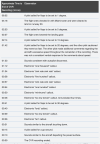
Stable approach criteria is your reference speed (calculated for weight, maybe modified a bit for conditions, and manually bugged on the ASI. Plus or minus a few knots.

Established on the approach (on a glide path and course).

Rate of descent 1000 max usually.

Completely configured.

Engines spooled up.

You can survive a GPWS alert if pre briefed. CVG landing south, east side comes to mind. It’s a known nuisance for a cliff. If visual and on glide path you can ignore it, otherwise no, it’s a rejected landing.

And most of that done by 1000 agl, there’s some relief for lower if visual.

Ya, they violated EVERYTHING.

Hell, could even say the capt was not responsive… another good reason to go around and figure it out.

The pilot monitoring should be able to (basically) force a go around by just hitting the go around buttons. Somebody this weak will simply follow that guidance.
 
if the captain was flying and the copilot called the go around (or vice versa) it would take agreement from both at some level.
Yeah. That’s kinda a cultural thing isn’t it. I know every one of the five 121s I’ve worked for had different vibes going. I have zero expectation 21 air has a safety forward culture.
 
Hell, could even say the capt was not responsive… another good reason to go around and figure it out.
"There was not a consistent verbal response to the comments about speed". But I think he was the guy who left via L1 so he had some cognition. I could believe punch drunk due to fatigue and poor training of when FO needs to be assertive. Shame we don't get the whole transcript.
 
So just curious for the large jet drivers here, I assume that if you hear "sink rate" or "too low, terrain" below 1000' that'd typically be an immediate go around? Just curious what the "stablized approach" criteria would be in something like a 76? If so, they had a good amount of time to safely go around.
Not necessarily, I think the general guideline is to go around if you hear two in a row. That said I don't believe I've ever heard a GPWS warning on the line.

Here's an example of stabilized approach criteria from Delta, courtesy NTSB.
 
That captain is terrible.

1) Calling for flaps outside limit speed.
2) "The other pilot made comments about the aircraft's excessive speed throughout the remainder of the recording." and, it seems, got ignored.
3) Calling for more flaps as they're already crossing the threshold.

Now, the go-around getting called 16 seconds after touchdown sounds like the first time the captain listened to the FO... Unfortunately, it's also the one he probably should have ignored.
16 seconds seems like eternity before initiating a go around. That callout was like closing the door after the horse had left the barn
 
after more than 15k hours and many of them in the left seat of a transport catagory jet, landing on that runway in those types weather conditions, i think i have a bit more insight than the average aviator on this site.
That's very nice, thank you. You must be aware that there are many of us here with similar, or even greater levels experience. But all of that plumage is not necessary in order to figure out WHAT happened, and there are a lot of smart people on this board who may not have 15k hours but they can figure out what's what. Aqualand posted ADSB data and the METAR way back in post #3 and it was immediately obvious, to any reasonably knowledgeable pilot, what led to the tragedy. Video clips only confirmed suspicions. What we do not know is why, but that too will come out. Your educated guess that the root cause lies in deep, systemic issues will likely prove correct, and will be the most interesting aspect of the investigation.
pilots alwas look for some reason to blame other than pilot error,
OTOH, some of us seem much too eager to convict before all of the facts are known. If you have truly been on go-teams and NTSB training sessions, you undoubtedly know the importance of fairness, impartiality, and not jumping to conclusions. Seek truth.
 
Don’t know if slaps 20 is an optional setting for a 767 landing, but if not wouldn’t the GPWS be activating because the flaps were not at 30 yet?
 
Tried a go around with 5 seconds of runway left then mashed the brakes.

Do these carriers do the Evil Knievel stuff like this all the time?
 
Don’t know if slaps 20 is an optional setting for a 767 landing, but if not wouldn’t the GPWS be activating because the flaps were not at 30 yet?
Five "too low terrain" annunciations seems to indicate that. From what I can tell, normal landing flaps for a 767-300 is 25° or 30°.
 
Back
Top