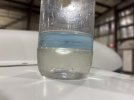
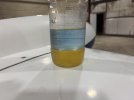
You all sump fuel? Also, what is this!!??? (Not clickbait)

Do you sump your fuel tanks?

  • Yes, before every flight

    Votes: 39 36.4%
  • Yes, before first flight of the day

    Votes: 65 60.7%
  • No way.

    Votes: 3 2.8%

  • Total voters
    107

kaiser

Thinking about a Citation
Joined
Mar 6, 2019
Messages
2,838
Location
Chicagoland
Display Name
The pilot formerly known as Cool Beard Guy
found this in the mains last night
IMG_5007.jpeg

and it got me thinking whether I’m the only one that sumps. The flight before mine didn’t sump the tanks but refueled.


Pt2… what the heck did I pull out of the left main? Any ideas?
IMG_5008.jpeg
 
found this in the mains last night
View attachment 144756

and it got me thinking whether I’m the only one that sumps. The flight before mine didn’t sump the tanks but refueled.


Pt2… what the heck did I pull out of the left main? Any ideas?
View attachment 144757
Kinda looks like what I run in my experimental. A mix of 100LL and non-ethanol unleaded.
 
found this in the mains last


Pt2… what the heck did I pull out of the left main? Any ideas?

Looks like the fuel tank that the pump was drawing on is low and you are getting the trash from the bottom. I take it was refueled at a pump and not a truck?
 
That's the TwinCo?

Because of your "invention" at RR, I sump now. I created my own version and it makes the painstaking process of sumping a Comanche simpler.
 
Wow doesn't look good.
The aircraft must sit outside and needs filler cap gaskets...at least.
Although I think something more is going on to have that much contamination in the tanks.
 
Pt2… what the heck did I pull out of the left main? Any ideas?
View attachment 144757
Pulled something similar from a rental 152 parked in the ramp years ago. They used a truck to fuel it, and it had rained the previous couple days. My thought is that it's algae/bacteria growing in the water.

My sumping approach is, after refueling, if enough time has passed (no real point in sumping two minutes after), first flight of the day, and after any rain if the plane sat outside.
 
I don't sump my plane before every flight, but I do after every fuel up and every time the plane overnights outside or gets rained on. To date, maybe a ml of water.

Now the club plane... yeah that gets sumped before I fly it. Then on subsequent flights, the above rule applies. Almost all the water I've found has been in club planes.

As to the second pic, I'd be tempted to stick my borescope in that tank. Maybe something got dropped in there and is rusting? More likely some crapola from a fuel tank though. I thought you flew that plane enough that i can't imagine something growing in there, but i also can't imagine that amount of water. Has it been inactive? That's a scary amount of water.

If you cared enough, I bet a fuel analysis lab could tell you what it is.

Maybe somebody took the "o-320's will run on anything" too seriously.

Maybe they were low on fuel and added the only fluid they had on hand to raise the fuel level up to the pickup.
 
That’s a lot of water. I think I’d want to sump and taxi and sump some more.

Only seen that much water in a boat tank.
Is it a seaplane?
 
Maybe they were low on fuel and added the only fluid they had on hand to raise the fuel level up to the pickup.

haha...or cheap bastards. No reason to waste money on that stupid unusable fuel portion.

That also looks like the 2 month old oil that Long John Silvers used for my very last fish and chips order several years ago.
 
I take it was refueled at a pump and not a truck?
Not entirely 100% but very likely it came from a pump - based on the time of night and airport where the plane refueled. This airport has recently lowered prices so I think it's getting lots of volume.

That's the TwinCo?

Because of your "invention" at RR, I sump now. I created my own version and it makes the painstaking process of sumping a Comanche simpler.
Yes it's the TwinCo. I'm proud to have made you a safer pilot.

Wow doesn't look good.
The aircraft must sit outside and needs filler cap gaskets...at least.
Although I think something more is going on to have that much contamination in the tanks.
The aircraft sits in a hangar (though that hangar does turn into an indoor swimming pool when it rains). All fuel gaskets except the tip tanks have been replaced to the "new" style. All were checked tight.

What does it taste like?

I’m thinking it came from the fuel truck. Sump it out, shake the wings, sump again, wait 5 min, sump again, until clean.
There was soooooo much sumping last night. By the end it was all coming out that beautiful blue color. But to 6PCs point, it was a giant pain. The Twinkie is not for the old or inflexible. My biggest complaint is that it sits too low to the ground (score +1 for high wings).

As to the second pic, I'd be tempted to stick my borescope in that tank. Maybe something got dropped in there and is rusting? More likely some crapola from a fuel tank though. I thought you flew that plane enough that i can't imagine something growing in there, but i also can't imagine that amount of water. Has it been inactive? That's a scary amount of water.
That's an interesting theory. I mean - the plane sat from early July until Monday in that community hangar. It flew 1.3 on Monday (.3 after refueling), then I got to it last night. So maybe 320's really do burn anything? The flight operation on Monday didn't sump the tanks. Other than sitting over the summer, I fly this plane 100-150 hours per year and recently caught a bit of water on one side (not the brown side). I attributed this to the fuel cap seals being loose - got fixed and didn't reoccur. It's got the squeeze fuel caps and they are all still in good squeezable shape.

That’s a lot of water. I think I’d want to sump and taxi and sump some more.

Only seen that much water in a boat tank.
Is it a seaplane?
not a seaplane, but is a see plane
 
Every flight because I preflight every flight. Sometimes it’s obviously not really necessary but I will not break my routine.
I have an anecdote on this topic. My aircraft procedures usually state to put my gear into neutral setting for cruise. They operate on air pressure, and it's best to relieve the pressure once the gears is on the uplock hooks. However, I had an issue where the uplock hooks refused to work on one main gear. I spent hour upon hour trying to resolve the problem, these air systems are notoriously finicky.

If you move the gear from UP to DOWN, there is no problem, however, if you move the gear from NUETRAL to DOWN, there will be no air pressure on the UP side of the system and the gear will slam down violently. It's quite jarring.

So, my concern was that flying in UP all the time, I would learn to not move the gear from NEUTRAL to UP before moving it to DOWN upon landing. To alleviate this, I intentionally verbalized "Gear UP", verified it was in UP, even though I knew it always would be, then "Gear DOWN". I flew this way for more than a year before the problem finally was resolved. (There is no issue with leaving the gear UP other than if you develop a leak in flight you may run out of pressure - but the emergency tank resolves this even if it does occur)

To my pleasure, I've flown 20 landings now since the uplock hooks started working and have not forgotten to put the gear UP before going DOWN once yet. I *have* forgotten to put it in NEUTRAL at the right stage of climb out because I neglected to verbalize this every flight during that year.

I'm a firm believer in doing the RIGHT thing, not just the thing on the checklist. Thinking about each checklist item before doing it is a good thing. Skipping something that serves no purpose is fine as long as you actually have good reason to skip it.

 
Last edited:
I have an anecdote on this topic. My aircraft procedures usually state to put my gear into neutral setting for cruise. They operate on air pressure, and it's best to relieve the pressure once the gears is on the unlock hooks. However, I had an issue where the unlock hooks refused to work on one main gear. I spent hour upon hour trying to resolve the problem, these air systems are notoriously finicky.

If you move the gear from UP to DOWN, there is no problem, however, if you move the gear from NUETRAL to DOWN, there will be no air pressure on the UP side of the system and the gear will slam down violently. It's quite jarring.

So, my concern was that flying in UP all the time, I would learn to not move the gear from NEUTRAL to UP before moving it to DOWN upon landing. To alleviate this, I intentionally verbalized "Gear UP", verified it was in UP, even though I knew it always would be, then "Gear DOWN". I flew this way for more than a year before the problem finally was resolved. (There is no issue with leaving the gear UP other than if you develop a leak in flight you may run out of pressure - but the emergency tank resolves this even if it does occur)

To my pleasure, I've flown 20 landings now since the unlock hooks started working and have not forgotten to put the gear UP before going DOWN once yet. I *have* forgotten to put it in NEUTRAL at the right stage of climb out because I neglected to verbalize this every flight during that year.

I'm a firm believer in doing the RIGHT thing, not just the thing you learned. Thinking about each checklist item before doing it is a good thing. Skipping something that serves no purpose is fine as long as you actually have good reason to skip it.
Hmm. I do the gear down and welded thing when GUMP’ing to. Maybe something like that could be worked into the preflight. I think I might grab the sump and carry it with me though. When getting to the sump part, touch it and say ‘not needed this flight’
 
That's an interesting theory. I mean - the plane sat from early July until Monday in that community hangar.
I will also say that every time I've found a significant amount of water, it's been in a plane that's been sitting for a while. I've always discounted the condensation thing, but maybe it adds more water than I thought. I'd still put my money on picking that up from a dispenser. Previous pilot made a withdrawal from his luck bucket. Hopefully he is smart enough to put a deposit into the experience bucket.
 
I've told this story before......rented a cherokee years ago....plane was out with an instructor/student....they came back, parked the plane and went inside for debrief. I started preflighting and when I got to sumpin' I said sumpin' aint right with this fuel.....it was 90% water......kept sumpin and sumpin. instructor walked by me and I showed him how much water was there....he said "I personally watched the student sump and there was no water"....I said well there's water now lol. he was shocked. I was shocked. kept sumpin and sumpin til there was no more water. but mine was clear water, not sploogy lookin stuff like kaiser got. this plane was always parked outside.
 
I sump before the first flight of the day and after every refueling. Also if the plane has been out on the ramp overnight or has been rained on.

I saw something similar to the second photo recently, though. In June, after my engine OH and reinstallation, I sumped before the first engine start. Both tanks were fine, but when I sumped the gascolator I got a yellow fluid much like the pic. I sumped out about a half pint before I started getting clear blue 100LL and it's been fine since.

My fuel hoses had been open at the firewall while the engine was off. The plane was hangared, but did moisture get in as far as the gascolator? Beats me. We had to put a fresh annual on the plane before my first flight, and during that we did pull the gascolator and clean it out, but by then all trace of the yellow fluid was gone so I'm still not sure what it was. Some fungus growth in water? Some other contaminant? I dunno, but it's had clear fuel ever since.
 
Since I started flight training (way) back in 1966 I have ALWAYS pre-flighted and sumped the tanks for my first flight of the day. No exceptions - ever. If/when I need to refuel during the day, I always wait a while (10-15 minutes) and then sump the tanks again.
 
First flight of the day and after refueling for me. Been flying for around 12 years now and I found water for the first time this summer after my plane had been tied down outside and got rained on.
 
Private hangar parked, fueled from my own secure tank. I sump and check oil level before every flight.

Your pic shows avgas floating on water. Why is the water colored? Because tanks are normally filled with fuel. Water soluble contaminates lay in wait for water to dissolve them. No big deal.
 
I will also say that every time I've found a significant amount of water, it's been in a plane that's been sitting for a while. I've always discounted the condensation thing, but maybe it adds more water than I thought. I'd still put my money on picking that up from a dispenser. Previous pilot made a withdrawal from his luck bucket. Hopefully he is smart enough to put a deposit into the experience bucket.
I used to fly a 150 that always, always had water in one tank. I came to believe it was both from a poor-sealing cap AND condensation. Texas gulf coast so always humid, and plane on a tie-down rather than in a hangar.
 
he said "I personally watched the student sump and there was no water"
How much you wanna bet that it was water and no fuel?

Ive had a copilot tell me that hydraulic fluid level was normal after a broken line dumped all the fluid. Some people don’t understand what they’re actually looking at.
 
I sump before the first flight of the day and after every refueling. Also if the plane has been out on the ramp overnight or has been rained on.

I saw something similar to the second photo recently, though. In June, after my engine OH and reinstallation, I sumped before the first engine start. Both tanks were fine, but when I sumped the gascolator I got a yellow fluid much like the pic. I sumped out about a half pint before I started getting clear blue 100LL and it's been fine since.

My fuel hoses had been open at the firewall while the engine was off. The plane was hangared, but did moisture get in as far as the gascolator? Beats me. We had to put a fresh annual on the plane before my first flight, and during that we did pull the gascolator and clean it out, but by then all trace of the yellow fluid was gone so I'm still not sure what it was. Some fungus growth in water? Some other contaminant? I dunno, but it's had clear fuel ever since.

I had weirdness when my fuel system sat empty for 18 months during my restoration. In my case it was little bits of grit that made it to the gascolator and jammed the drain sump valve open, causing a leak. Flushing the cup resolved it.
 
I’ve observed different outlooks on sumping Jet A burners vs pistons…
 
First flight of day and after refueling for me. It adds maybe 15 seconds to my preflight, so a no brainer.
 
Aircraft parked in private hangar and I've flown within the last week: not sumping
Aircraft parked outside overnight or somewhere else: definitely sumping
I don't sump after getting fuel at my top refueling spots. I do sump if the place looks janky.
 
FWIW: Sumping fuel before flight is one of the cheapest insurances out there. Especially since one of the first things the FAA/NTSB does after an aircraft incident/accident is to locate and take a sample from the last place the aircraft was fueled.
 
How much you wanna bet that it was water and no fuel?

Ive had a copilot tell me that hydraulic fluid level was normal after a broken line dumped all the fluid. Some people don’t understand what they’re actually looking at.

Definitely couldn’t rule that out but this CFI was a stickler. Military guy that was very thorough. But still could be easily missed, I reckons.
 
First flight of day and after refueling for me. It adds maybe 15 seconds to my preflight, so a no brainer.
Sumping immediately after refueling probably isn't going to reveal much, since water would likely be in suspension for some time. Give it 15 minutes instead of 15 seconds, in my opinion.
 
Back
Top