
Whelen strobes inop

Domenick

En-Route
PoA Supporter
Joined
Sep 11, 2019
Messages
2,885
Display Name
Domenick
My 1979 Warrior II (PA-28-161) has Whelen stobes--wingtips and tail beacon.

Strobes are inop. Not just one but all 3.

I believe they stopped working over the winter when it appeared my hangar would flood. Airport management tugged the plane from its enclosed hangar onto high ground. It stood in the rain for a few days before they put it back. (Hangar did not flood but just barely). Not sure this has anything to do with the inop strobes.

I cut plywood floor to lay under the control cables in the empennage and I am about to begin troubleshooting. Any tips?

I've read documentation on how the strobes work, and the troubleshooting in the MX manual seems suspect. I'm pretty sure it needs to be tested under load.

Here is the power supply:
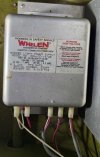
Whelen.HDACF.Power.Supply.jpg
Thanks.
 
About all you can do is check for power to the supply. Haven't opened one up before, but understand that the high voltage side of things can be lethal.
 
If they all failed, the odds are it is the power supply. And it may or may not have had anything to do with the flooding.

Since Whelen is pretty common, maybe your local shop has a plane with the same strobes and they can plug in your power supply to see if it drives those strobes. And a lot of people are going LED, so there are probably some power supplies out there that you can pick up at a good price. I had one for a while when I went LED, but I just left it with my old mechanic when I moved a few years ago.
 
Check power and ground at the supply. Could be a bad switch, ground or supply.
 
Any tips?
Just asking, is the CB set properly?
When checking buss power in, try and back probe the connector first. If show 12v with meter then check it with a trouble light. Repeat with same connector disconnected.
If buss 12v good at power supply, disconnect all three out connectors, turn on and see if hear charge cycle whine from within supply.
If now hear charge cycle, turn off and plug one of your strobe bulbs directly into suppley and turn on. If bulb fires issue with one of output cables somewhere.
Also, just be sure you let the internal capacitors discharge after turn power off for a few minutes before mess with any output connectors. Even though the supply may not seem to be working, it can still bite you at times.
 
I did that but it was about 5K to do everything. Not for the faint of heart nor wallet. Saved about ~5 lbs. But the components were 46 years old....and this or that or this or that other would fail. PITA rectified.

Dom, life is short. Just do it.
 
Last edited:
Just asking, is the CB set properly?
When checking buss power in, try and back probe the connector first. If show 12v with meter then check it with a trouble light. Repeat with same connector disconnected.
If buss 12v good at power supply, disconnect all three out connectors, turn on and see if hear charge cycle whine from within supply.
If now hear charge cycle, turn off and plug one of your strobe bulbs directly into suppley and turn on. If bulb fires issue with one of output cables somewhere.
Also, just be sure you let the internal capacitors discharge after turn power off for a few minutes before mess with any output connectors. Even though the supply may not seem to be working, it can still bite you at times.
CB is not tripped, but could be old and tired with internal resistance. Same with the panel switch.
Great idea with using strobe as test probe. I'll put that in the troubleshooting list.
Back in the day, I would play with old cathode tube TVs. Got bit by a few flyback transformers. 20K volts (at microAmps) will wake you up!

Here's my initial troubleshoot plan:
The power pack, switch, and breaker, are the only common elements, and the power pack's power input is the only common element at the pack. However ...

I've been bit by testing with isolated power supplies in the past. Ohm's law is inconvenient (I=V/R). An isolated power supply's voltage may test good, but spurious resistance up stream can create a large voltage drop under load. Think of a collapsing garden hose with a manual sprayer. With the sprayer off, turn the spigot on full and the hose swells up. Squeeze the sprayer and water shoots out. Now turn the spigot barely on and wait for the hose to fully swell up. Squeeze the sprayer and you get a weak flow. For both cases, inside the bloated hose the pressure (voltage) is the same, but squeezing the sprayer gives much different flows (amps (I)).

Luckily, I'm a cute little guy and it only takes a bit of contortion to get into the empennage. The input molex connector only has 2 wires, a hot and a ground. It's easy enough to clip a test lead to the ground--it's a screw. I think I can jam a spear probe or a wire into the back of the molex hot lead and test voltage while the unit is on.

I did that but it was about 5K to do everything. Not for the faint of heart nor wallet. Saved about ~5 lbs. But the components were 46 years old....and this or that or this ot that other would fail. PITA rectified.

Dom, life is short. Just do it.
That's plan B.
 
Last edited:
I've been bit by testing with isolated power supplies in the past. Ohm's law is inconvenient (I=V/R). An isolated power supply's voltage may test good, but spurious resistance up stream can create a large voltage drop under load. Think of a collapsing garden hose with a manual sprayer. With the sprayer off, turn the spigot on full and the hose swells up. Squeeze the sprayer and water shoots out. Now turn the spigot barely on and wait for the hose to fully swell up. Squeeze the sprayer and you get a weak flow. For both cases, inside the bloated hose the pressure (voltage) is the same, but squeezing the sprayer gives much different flows (amps (I)).

Luckily, I'm a cute little guy and it only takes a bit of contortion to get into the empennage. The input molex connector only has 2 wires, a hot and a ground. It's easy enough to clip a test lead to the ground--it's a screw. I think I can jam a spear probe or a wire into the back of the molex hot lead and test voltage while the unit is on.
This. I once got fooled when the strobe quit on an airplane when I was an apprentice, and spent money on a new powerpack, which did not fix the problem. It was a tired breaker with oxidized contacts due to simple age. Disconnecting the connector at the powerpack and measuring the voltage showed a normal 12.8 or so, but once I got smart and measured it under load, I got practically nothing on the meter. That meter needs only a few microamps to make it indicate, and the breaker's resistance will provide that but drops the voltage way down when several amps are demanded of it. Ohm's Law messes up a lot of mechanics.

Switches can do it too, as can connectors of any sort. Bad grounds, bad/corroded crimps, whatever.
 
Back in the day, I would play with old cathode tube TVs. Got bit by a few flyback transformers. 20K volts (at microAmps) will wake you up!
Got hung up with a leaky lead on a flyback in a monitor at work, long years ago. Got my hand caught and couldn't get it out of the chassis. Other techs were wondering why I beating that monitor on the bench, until I managed to get a foot hooked on the power strip for the bench and shut it all down. Took an early and long lunch to settle back down. :crazy:
 
When I was a lot younger I fixed TVs and radios, most of them full of vauum tubes. I too got hammered a few times by the flyback voltage, usually at the anode clip on the crt. The really old radios sometimes had anode ("plate") clips that carried around 350 volts but it still hurt. More current there too.
 
LEDs are such a no brainer. Find an A&P that will let you do it under supervision. Super easy project. $5K is insane.
Disconnect power/ground. Unscrew old. Screw in new. Reattach power/ground. Am I missing something?
 
Disconnect power/ground. Unscrew old. Screw in new. Reattach power/ground. Am I missing something?

A little more to it if you are converting from non-LED. You have to remove the power supply box and bracket, and modify the harness by splicing some wires. You'll want to install a sync circuit, which may require fishing a wire to each location. Plus the usual checking of wire gauge and breaker size, weight and balance calc, log entry, etc.

WAT says shielded cable is not required for LEDs, so I might be tempted to yank out the old harness and install fresh wire, but I'm fussy that way.

But yes, all very basic skills.
 
Update:
Yesterday I folded up and climbed into the empennage to troubleshoot the powerpack.

Since the powerpack input simply uses the mounting plate as a ground, I clipped the negative multimeter lead to the plate. Ground was good. Then I jammed a short piece of twisted safety wire into the back of the molex hot side, flipped on the master, ensured the panel switch was on, CB was in, and checked the voltage. 13.1 V. I believe this rules out spurious resistance in the switch and CB.

Next, I pulled all 3 outputs and plugged them in one at a time. None of the strobes fired. I think this means, either all 3 bulbs are bad or the powerpack is shot. What I failed to do yesterday was check all 3 output voltages. That's for today.

I visually checked the wingtip bulbs and they are both rather ugly. A ladder is needed to check the tail strobe.

And the powerpack is not riveted to the airframe, there are screws holding it to the mounting plate.
 
13.1 V. I believe this rules out spurious resistance in the switch and CB.
As mentioned above, did you apply a load to those voltage readings with a trouble light or some other method?
You may want to rethink checking the output voltages. If the bulbs are good that would have done it. Know of several voltmeters that had their smoke released on the output side.
 
I think this means, either all 3 bulbs are bad or the powerpack is shot.
I believe it is pretty common for the power pack to fail before the bulbs. Maybe even 2-3 power packs before you loose one bulb.
 
I believe it is pretty common for the power pack to fail before the bulbs. Maybe even 2-3 power packs before you loose one bulb.

I guess I'm an anomaly. I've replaced both wing tip strobes and the tail strobe. The power supply is fine.

@Domenick , if you can get hold of one known good strobe, try it in each wing tip before you assume the power supply is bad. It would be unusual to have three flash tubes go bad at the same time, but you should rule it out before sinking the money into replacing the power supply or converting to LEDs.
 
As mentioned above, did you apply a load to those voltage readings with a trouble light or some other method?
You may want to rethink checking the output voltages. If the bulbs are good that would have done it. Know of several voltmeters that had their smoke released on the output side.
Domenick said:
Then I jammed a short piece of twisted safety wire into the back of the molex hot side, flipped on the master, ensured the panel switch was on, CB was in, and checked the voltage. 13.1 V.
This is under load.

I believe it is pretty common for the power pack to fail before the bulbs. Maybe even 2-3 power packs before you loose one bulb.
I've replaced 2 bulbs since 2002. The system was installed around 1995.

Half Fast said:
if you can get hold of one known good strobe, try it in each wing tip before you assume the power supply is bad. It would be unusual to have three flash tubes go bad at the same time, but you should rule it out before sinking the money into replacing the power supply or converting to LEDs.
Will do.

UPDATE:
First, if you are going to work in the empennage on an electric component, I suggest you have a second person to flip the master switch on and off. Climbing over and over and over through the 16" square hatch not much farther than that behind the rear bench seat will take it's toll. I think I pulled a groin muscle. Oh, and ensure your multimeter is on the correct setting! And finally, if you are heavier than me, which I suspect most of you are, block up the tail skid--the empennage is a long lever. (No, it did not teeter-totter on me).

Visually examined all 3 strobe bulbs. Both wings quite dark. Tail perfectly clear.

Checked all 3 output voltages:

First run I had the multimeter on the wrong setting, so had to practice my contortion act all over again.

With the meter on DCV:

No Power / Power
Tail (connector 3): 193 mV / 193 mV
Wing (connector 4): 193 mV / 193 mV
Wing (connector 5): 192 mV / 192 mV
Conclusion: Powerpack dead.

However, I engaged in one last in and out contortion maneuver to remove the powerpack. It's now at home awaiting a bench test later today.

Unfortunately, the powerpack case is riveted on the unit. If the bench test gives the same result, I am on the hunt for a replacement.
 
Might be worth calling Whelen and see if they still service that old of a power pack. They used to have a flat rate repair fee for the power packs. If they say no longer serviceable, replace only and no suggestion for someone else that will service it, might as well drill the rivets and open it up and see if you can spot anything that did fail.
 
UPDATE:
At home bench test results:

Quick note: The spurious no-power voltage of a few hundred millivolts seen in this and yesterday's tests are simply stray electromagnetic signals being picked up by the wires acting as antennas. Without touching the leads, just changing your body position or moving your hands will alter the readings. I consider the mV readings as a 0 V reading.

These tests were done with my other multimeter. Also, yesterday's in-plane tests were done with an input voltage of 13 VDC bus voltage.

Bench test results:

Input voltage: 14 VDC
Output voltage: (No input power / With input power)
Tail: 299 mV / 0.920 VDC
Wing: 308 mV / 0.882 VDC
Wing: 305 mv / 0.883 VDC

I can't explain the difference between yesterday's results and today's results.
Personally, I trust the bench test more than the in-plane test.

In either case, I believe these results point to a bad powerpack.
 
If I can find them, I probably have two kjnown-good power supplies like that in my hangar, after having converted to LEDs (which I can endorse is a good idea, albeit expensive).

If you're interested, and I find them, they're yours for the cost of shipping.

I do also recall that, if one strobe tube goes bad, it can inhibit all three from working, so be aware of that.
 
I do also recall that, if one strobe tube goes bad, it can inhibit all three from working, so be aware of that.

Really? Each of my three strobes failed at separate times, and each time the other two continued to work. Maybe only with certain model or s/n power supplies?
 
This is under load.


I've replaced 2 bulbs since 2002. The system was installed around 1995.


Will do.

UPDATE:
First, if you are going to work in the empennage on an electric component, I suggest you have a second person to flip the master switch on and off. Climbing over and over and over through the 16" square hatch not much farther than that behind the rear bench seat will take it's toll. I think I pulled a groin muscle. Oh, and ensure your multimeter is on the correct setting! And finally, if you are heavier than me, which I suspect most of you are, block up the tail skid--the empennage is a long lever. (No, it did not teeter-totter on me).

Visually examined all 3 strobe bulbs. Both wings quite dark. Tail perfectly clear.

Checked all 3 output voltages:

First run I had the multimeter on the wrong setting, so had to practice my contortion act all over again.

With the meter on DCV:

No Power / Power
Tail (connector 3): 193 mV / 193 mV
Wing (connector 4): 193 mV / 193 mV
Wing (connector 5): 192 mV / 192 mV
Conclusion: Powerpack dead.

However, I engaged in one last in and out contortion maneuver to remove the powerpack. It's now at home awaiting a bench test later today.

Unfortunately, the powerpack case is riveted on the unit. If the bench test gives the same result, I am on the hunt for a replacement.
Could have stuck your head under the panel, disconnected the strobe wire from its switch, and connected the multimeter (set to 10 amps) in the line to measure the draw. No draw, or very small draw, means it's dead if everything else is good.

Fixing that stuff is difficult. The circuit boards are often totally encapsulated in epoxy to prevent damage from moisture and vibration. And to discourage fixing it too, of course.
Next time. :)
 
Final report:
More troubleshooting led me to open the powerpack and test the big capacitors. Isolated from themselves and the PCB, one cap tested at 409 uF and the other at 0.05 nF. Oops.

Two days ago I received a new powerpack. Installed it and it works.

Does anyone have a dead wing or tail strobe laying around? I'll pay for shipping. I never saved my dead strobe tubes from year's past. I'm thinking of dismantling the housing and seeing if I can find a bare replacement for much less dinero.
 
Here’s my strobe story, Whelen. I had one wingtip that was intermittent, so I looked at options, new bulb no change. Yes LED is all the rage, kinda costly. Since everyone is upgrading, old parts can be almost free. A guy told me I could have his old stuff, I paid his expenses ++.

Low & behold my intermittent wingtip has been working lately, but I have replacement parts when needed.
 
I kinda resent you wouldn't let us spend your money, but congrats on successful resolution. :p
 
Final report:
More troubleshooting led me to open the powerpack and test the big capacitors. Isolated from themselves and the PCB, one cap tested at 409 uF and the other at 0.05 nF. Oops.

Two days ago I received a new powerpack. Installed it and it works.

Does anyone have a dead wing or tail strobe laying around? I'll pay for shipping. I never saved my dead strobe tubes from year's past. I'm thinking of dismantling the housing and seeing if I can find a bare replacement for much less dinero.

I have an entire set of used Hoskins strobes components. Was told two out of three power packs are toast. Free for anyone who wants parts, just pay shipping.
 
Final report:
The new A&P-IA I was "courting" blew me off yesterday, wasting me 2 weeks and a grand.
But I'm not bitter.

So now, I have a plane sitting in my hangar all ready for an owner-assisted annual, inspection covers, wheel pants, seats, tail cone, engine cowling, and ELT all pulled.
 
Back
Top