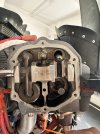
Vividia Borescope

Narwhal

Pre-takeoff checklist
Joined
Aug 6, 2019
Messages
248
Location
Alaska
Display Name
?

Attachments

  • IMG_5252.png
    IMG_5252.png
    386.1 KB · Views: 60
  • IMG_5237.png
    IMG_5237.png
    385.8 KB · Views: 60
  • IMG_5249.png
    IMG_5249.png
    385.3 KB · Views: 60
  • IMG_5242.png
    IMG_5242.png
    364.5 KB · Views: 52
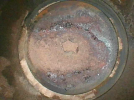
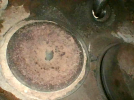
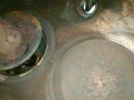
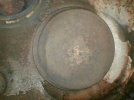
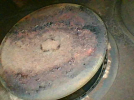
As little as I know, I think #2 need a good look at the seat on that one.
 
+1 I just did this a few weeks ago. 66pics in all (IO-540) and it took a bit of practice but wasn’t difficult. The hardest part was collecting all the pics off my phone and renaming them using Savvy’s file convention for upload to their site. I already has a break-down subscription but upgraded my accpun5 account it so they would analyze all the pics.
 
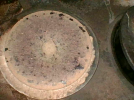
#2 (5237) is not a pizza, but that doesn't mean it's burnt.
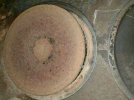
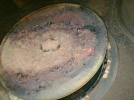
They all seem to have more combustion products accumulating on them than I see on mine.
Aggressive ground leaning needed?
 
#2 (5237) is not a pizza, but that doesn't mean it's burnt.
They all seem to have more combustion products accumulating on them than I see on mine.
Aggressive ground leaning needed?


Maybe, although I do lean to stumble on all ground ops so that to go up a hill I have to enrich. I lean to 150F rich of peak for climb and usually 100 rich of peak cruise at 65-75%, sometimes 20-30 lean. If anything I thought I might be too lean. Rarely see any CHT above 360 and usually they’re 320-350 at cruise.
 
How are your compressions and oil usage? Those won't tell you everything, but could be helpful if you're not seating properly. (Hissing noise in exhaust).
 
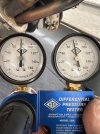
oil usage is 1 qt per 20 hours. Differential pressure on the rough looking one is fluctuating between 40 and 60 depending on the day so the IA says I have to pull the jug and am grounded. Today it was 50 hot 45 cold. Air leaking out the exhaust. Other 3 compressions are in the high 70’s hot, mid 70’s cold.
 
Last edited:
Rebuild or buy new cylinder?
 
Not sure what you are supposed to do with the pictures. If you have a leaking valve it's going to reveal itself in the compression test long before you see anything visible on the valve face with a little camera. So what if compression is 40/80 but the picture looks good? Do you just ignore it? How about 78/80 but you think you see something weird in your picture? Pull the cylinder?
 
:yeahthat:. Had low compression and hissing in the exhaust on two cylinders in my Hatz. Lapped them in place and all was well again.

Both the IA’s I talked to said it was too far gone to lap, one said I might’ve gotten away with that 200 hours earlier. It was 74/80 cold last year at this time. Maybe if I had borescoped it then I could’ve lapped it. Right after that condition inspection it started a little bit of morning sickness which I mistakenly shrugged off since it was only occasional for a few seconds.

I actually thought the morning sickness was related to #1 based on slow to rise EGT though, and it may still be. I’m going over my electronic engine logs on the G3X.
 
Last edited:
Three thoughts:
-- what's the hurt in trying a lapping of 5237? Exhaust Valve Lapping procedure.
-- going forward, use that awesome camera to do the full 11-photos-per-cylinder borescope protocol at every Annual.
-- upload all those borescope photos to the Savvy repository, so that sometime in the maybe not-so-distant future AI conclusions might benefit another pilot.
 
Ok, maybe I will try the lapping. Really never done much engine work before but I guess there’s nothing to lose trying except a day of time, half of which would’ve gone into the same steps to take the cylinder off anyway.
 
Check the intakes on that cylinder real good too, looks like it might have been running lean.
 
Preparing for the lapping today. Had to settle for the permatex valve grinding compound from AutoZone. If it doesn’t work I’ll maybe try honing the valve guide then pull the jug. Crazy thing is as bad as this one looks and as low as the compression is the engine runs fine, no reduction in cruise or takeoff distance. More pictures of the bad one:

IMG_5246.png
With the intake
IMG_5243.png
Intake
IMG_5238.png
 

Attachments

  • IMG_5246.png
    IMG_5246.png
    545.6 KB · Views: 15
Last edited:
@Narwhal , very cool to hear that the lapping did some good, at least for now.
If the stars are aligning for you... over the next few months, it's even conceivable for that exhaust valve to "heal itself" a bit. Make sure to post a borescope to POA every so often.
Wayne
 
Maybe both IA's learn something also.
 
Same question but I'll ask it differently. What specifically do you think those IAs from Post 18 will learn from this?
That lapping is a viable option until the valve turns green and starts coming apart. They both wanted to overhaul the cylinder as I understand the story.

Cold compression coming up does not necessarily equal a cured cylinder, but it's surely a good sign. Put 50 hours on it and check again, but I'd bet on narwhal having saved a bunch of time, money, and MIF risk.
 
Just a cautionary opinion (I am not an airplane mechanic) - you don’t know how the metal changed in that valve from the lesser cooling that occurred (as a result of poor seat contact). You might have fixed the leak-down, and corrected the cause so that it might never happen again, but that doesn’t mean that the valve longevity is going to be the same as it would otherwise have been. Not saying that it will fail catastrophically either. Just keep a closer eye on it, which you were gonna do anyway…which in hindsight, why did I even post this (lol!).
 
That lapping is a viable option until the valve turns green and starts coming apart.
Or maybe in their experience lapping tends to be a temporary fix at best? Actually, I’m pushing more toward the lapping method used in this thread then anything else. What I also find interesting is there is no mention of trying to stake the valve first. Regardless, while the OP has an E/AB, would you use this in place lapping method on your engine to correct a problem?
 
Or maybe in their experience lapping tends to be a temporary fix at best? Actually, I’m pushing more toward the lapping method used in this thread then anything else. What I also find interesting is there is no mention of trying to stake the valve first. Regardless, while the OP has an E/AB, would you use this in place lapping method on your engine to correct a problem?
I would absolutely try lapping a valve in situ before pulling a cylinder. I will freely admit though that most of my knowledge is theoretical.

The mention of morning sickness upthread does bring about the question of sticky valves though. @Narwhal was the valve free when you removed the spring? It has enough hours to see a stuck valve, and the morning sickness is the symptom. If the valve is being held off the seat slightly, that will quickly burn it, which is what I assume Bell is hinting at.
 
Last edited:
Absolutely sir, even on a certified aircraft.
 
I would absolutely try lapping a valve in situ before pulling a cylinder.
Absolutely sir, even on a certified aircraft.
So what would be the Part 43.13 reference you'd use to sign off the in-place lapping?

Just to add, I've lapped a number valves over the years and only once in-place of which I still pulled the cylinder.
 
So what would be the Part 43.13 reference you'd use to sign off the in-place lapping?

Just to add, I've lapped a number valves over the years and only once in-place of which I still pulled the cylinder.
So what was your reference for signing off lapping those valves? The only place Lycoming references lapping valves that I could find is in SB301, and it says that it shouldn't be needed, but if you do it, make sure to clean up well. I'd argue that valve lapping is such a standard and well known procedure that referencing manufacturer guidance is not needed. No one references manufacturer's guidance when changing oil. Many things are just logged with a good description of the work, leaning on "other methods, techniques, and practices acceptable to the Administrator". The only thing novel here is doing it with the cylinder in place, and even then, Lycoming tells you how to remove the valve with the cylinder in place if you need to ream the guides.
 
Good discussion. One of the IA’s did mention I could try staking the valve too. I skipped it and went straight to lapping, probably because I didn’t have a rubber mallet and there seems to be less internet guidance on staking, although from what I gather it’s just hitting the valve from the spring side a bunch with a mallet.

Now I think I need to ream the valve guide on the other front cylinder because it’s giving me morning sickness every 4th or 5th start, especially when it has been shutdown in the cold for a day or more.
 
Just to add, I've lapped a number valves over the years and only once in-place of which I still pulled the cylinder.

My experience has been similar, only I’ve been stubborn and tried lapping a number of valves in place. In almost every case I’ve been involved with, the cylinder still ended up coming off.

I wouldn’t be surprised to find out that the mechanics suggested pulling the cylinder from the outset to save wasting the time of trying to lap in place, since more often than not the cylinder is coming off anyway.
 
I referred to it as 'buying time' because I believe in many cases, the cylinder will need a re-work down the road.
Probably like everything, there is a bell curve - some do not improve at all & need pulling soon; some last longer.....and maybe some like the last ones I did will last for over 5 years (IO-520) with no sign of leakage.
 
So what was your reference for signing off lapping those valves?
Ha. I asked first. However, Part 43.13 is a performance standard, ie., how you perform the task, and is different than what reference you state in your mx record entry which falls under Part 43.9 guidance. So considering SB 301 has you remove the cylinder for the valve work and SB 1425 has you leave the cylinder installed for reaming a valve guide, how would you connect the two to meet the Part 43.13 performance requirement?

One of the IA’s did mention I could try staking the valve too. I skipped it and went straight to lapping, probably because I didn’t have a rubber mallet and there seems to be less internet guidance on staking, although from what I gather it’s just hitting the valve from the spring side a bunch with a mallet.
Staking is using a "fiber" or soft metal drift and placing it on the rocker directly above the valve stem and hitting it several times with a small hammer. However, once you do that you need to pull the prop through one revolution to make sure the valve reseats properly. Its always best to stake before any other task even though you have only a 50/50 chance it will do anything. But if you're lucky it can dislodge a piece of carbon or other debris that was holding the valve open.

Now I think I need to ream the valve guide on the other front cylinder because it’s giving me morning sickness every 4th or 5th start, especially when it has been shutdown in the cold for a day or more.
If you think you're having valve issues get a copy of SB 1425 and follow its recommendations prior to the reaming part. Keeping your oil clean along with several other items can help manage a number of valve issues sometimes.

 
Ha. I asked first. However, Part 43.13 is a performance standard, ie., how you perform the task, and is different than what reference you state in your mx record entry which falls under Part 43.9 guidance. So considering SB 301 has you remove the cylinder for the valve work and SB 1425 has you leave the cylinder installed for reaming a valve guide, how would you connect the two to meet the Part 43.13 performance requirement?


Staking is using a "fiber" or soft metal drift and placing it on the rocker directly above the valve stem and hitting it several times with a small hammer. However, once you do that you need to pull the prop through one revolution to make sure the valve reseats properly. Its always best to stake before any other task even though you have only a 50/50 chance it will do anything. But if you're lucky it can dislodge a piece of carbon or other debris that was holding the valve open.


If you think you're having valve issues get a copy of SB 1425 and follow its recommendations prior to the reaming part. Keeping your oil clean along with several other items can help manage a number of valve issues sometimes.

Thanks, I’ve been doing 25 hour oil and filter changes with Aeroshell W15W-50 with Camguard added at the prescribed ratio. Also been running MMO in the fuel at 0.4 oz per gallon on one of the IA’s recommendations. Maybe it was placebo but the MMO did seem to help reduce the frequency and duration of the cold start morning sickness once I started it at ~350 tach. Sitting at 550 now. Always 100LL only since it’s 9:1.

The engine runs cold being as I’m in Alaska with typical cruise CHT 330 on 1 & 2, 310 on 3 & 4 at 65% 100F rich of peak or 20F lean of peak. I’ve read that low temps can lead to lead buildup on the valves and guides. Yet the warmer cylinders are seemingly the ones with the problems. I’ve tried to cover up some of the cowling vents to raise temps in winter but it’s only good for maybe a 10 degree change.
 
Back
Top