Well SB 1425 points more to the higher the temp the more issues possible. Theres another bulletin that discusses but can't seem to find it at the moment.I’ve read that low temps can lead to lead buildup on the valves and guides. Yet the warmer cylinders are seemingly the ones with the problems.

You are using an out of date browser. It may not display this or other websites correctly.
You should upgrade or use an alternative browser.
You should upgrade or use an alternative browser.
Vividia Borescope
- Thread starter Narwhal
- Start date

wayneda40
Line Up and Wait
- Joined
- Jul 31, 2017
- Messages
- 682
- Display Name
- waynemcc
- Home Airfield
- KSBA
Apropos: The June 2025 issue of AOPA Pilot (pg 94-96) has an excellent article on Borescoping and discovered exhaust valve issues. From an initial analysis of the 100,000+ images in the SavvyMx Borescope repository, a concerning 20% of the uploaded engines (likely elevated by "selection bias") showed some degree of exhaust valve distress. The good news is that 85% of those distressed exhaust valves were classified as "early stage"... and therefore excellent candidates for Lapping in-place. There's even an example given (Bonanza IO-520) of such a valve that was lapped in-place... then flown a few hours... with noticeable "healing" of the exhaust valve (and return to acceptable compression). @Narwhal's experience might prove over time to be another such success story. Cool stuff!!

Will Kumley
Line Up and Wait
Does the vividia borescope connect directly with and work with an ipad or iphone? I just got one to replace a cheaper borescope I have that still works but presents its own challenges. Looking at the paperwork that came with the vividia, it appears I have to connect to apple devices via an extra wifi/bluetooth box. But if I can connect directly and use a specific app I'd rather do that. Currently, I can use it with my laptop but I don't always have my laptop at the hangar.
Yes, but it is a specific model I believe. My Vividia does connect directly to either an iPhone or iPad via cable without the extra box. Unfortunately the pics from it don't transfer to the photo album though which makes it more challenging to sort and send them.Does the vividia borescope connect directly with and work with an ipad or iphone? I just got one to replace a cheaper borescope I have that still works but presents its own challenges. Looking at the paperwork that came with the vividia, it appears I have to connect to apple devices via an extra wifi/bluetooth box. But if I can connect directly and use a specific app I'd rather do that. Currently, I can use it with my laptop but I don't always have my laptop at the hangar.

Silvaire
En-Route
- Joined
- Oct 10, 2012
- Messages
- 4,799
- Display Name
- Silvaire
Bottom line: valves fail for a reason and it's not just cause they need a good ol' lapping. All you're doing is kicking the can down the road. Also, all those pictures of "distressed" valves are on cylinders that had already failed a compression test. That's going to happen long before you'll see any visible signs with a cheap low-res digital camera.

- Joined
- Oct 16, 2019
- Messages
- 8,857
- Location
- Atlanta / Marietta
- Display Name
- Vintage Snazzy (so my adult children say)
- Home Airfield
- KPUJ
What is the main reason for valve failure in your opinion?

Dana
Final Approach
Yes, but once a compression test has found a problem, the borescope can help determine the reason for and extent of the trouble.Bottom line: valves fail for a reason and it's not just cause they need a good ol' lapping. All you're doing is kicking the can down the road. Also, all those pictures of "distressed" valves are on cylinders that had already failed a compression test. That's going to happen long before you'll see any visible signs with a cheap low-res digital camera.

JimBirk
Pre-takeoff checklist
I have a Vividia borescope and I use an iOS app on my iPad mini called Genki Studio (https://apps.apple.com/us/app/genki-studio/id6466343285). No need to purchase a Vividia wifi device...just run the app and plug the borescope into your iOS device and you're good to go! It works great! Oh, and it's a free app!Does the vividia borescope connect directly with and work with an ipad or iphone? I just got one to replace a cheaper borescope I have that still works but presents its own challenges. Looking at the paperwork that came with the vividia, it appears I have to connect to apple devices via an extra wifi/bluetooth box. But if I can connect directly and use a specific app I'd rather do that. Currently, I can use it with my laptop but I don't always have my laptop at the hangar.
The only bummer is that I have not been able to get the take-a-photo button on the borescope to work with Genki Studio. I have to press a button on my iPad screen to take a photo. Still, it works very well for me.
- Joined
- Oct 16, 2019
- Messages
- 8,857
- Location
- Atlanta / Marietta
- Display Name
- Vintage Snazzy (so my adult children say)
- Home Airfield
- KPUJ
I need to get a borescope now. I have no need for one, but no need hasn’t prevented me from buying tools before so why start now.
Last edited:
Dana
Final Approach
I've found mine to be very useful around home, too, looking at wires or pipes inside the walls.I need to get a borescope now. I have no need for one, but no need hasn’t prevented me from buying tools before so why start now.

Silvaire
En-Route
- Joined
- Oct 10, 2012
- Messages
- 4,799
- Display Name
- Silvaire
I don't think there is a concise collection of data on it. A cylinder fails and it gets overhauled or replaced but rarely gets a detailed forensic inspection to determine the actual cause. There could be rotator issues but mostly I think it's due to eccentric forces put on the valve stem by the rocker arm that eventually eggs out the guide. Not much you can do about that, it's the nature of the beast and doing an in-situ valve lap ain't going to fix it.What is the main reason for valve failure in your opinion?
But in the case originally shown, the seat of the valve had obvious deposits on it keeping the valve from sealing well. That is a prime example where lapping is a good idea. How long it will last depends on what caused it in the first place. Carbon or more likely a small piece of lead deposit could have come off the piston and lodged in valve seat.
Lack of flying. And in cases where that inactivity exceeds the OEM recommendations the lack of any preventative measures can increase the odds of premature failures with several items to include valves.What is the main reason for valve failure in your opinion?
Silvaire
En-Route
- Joined
- Oct 10, 2012
- Messages
- 4,799
- Display Name
- Silvaire
That does occasionally happen and one of the first things you hope for when failing a compression test. The established routine is to turn it over a few times, try again, run it for five minutes, try again, fly it for an hour or two and try again and if none of that works chances are pretty slim that it was just a piece of carbon. As Bell206 pointed out when the plane sits for a lengthy period of time some of those valves are open and nature has a plan for exposed shiny surfaces like that.But in the case originally shown, the seat of the valve had obvious deposits on it keeping the valve from sealing well. That is a prime example where lapping is a good idea. How long it will last depends on what caused it in the first place. Carbon or more likely a small piece of lead deposit could have come off the piston and lodged in valve seat.
Here is oil analysis after the lapping (on line 2). BL is the unused A/S 15W-50 with camguard for reference. Unfortunately I also had to sit the airplane for 4 weeks on the ramp at a maitnenance shop in april due to a fuel tank leak that required replacement of the whole tank. I'm hoping that's what spiked the iron. I found the bad valve right after that, although it was the worst one last annual (condition insp.) at 74/80 cold. The IA that helps me said he could hear a slight exhaust leak, but said just to keep an eye on it. After lapping I did my best to clean out all the lapping compound but maybe there was residual that made it in the oil. The CH48108-1 filter was completely clean on cut-open. I'm only 10 hours away from next change (18 hours since lapping) so we'll see if Iron and Chromium come back to earth.

Last edited:
JimBirk
Pre-takeoff checklist
@Narwhal, I had Blackstone do my last oil analysis after lapping two exhaust valves in my Lycoming O-540. I also had increased iron--it's normally around 45ppm, but was 65ppm after the lapping. I mentioned that I did the lapping when I sent in the sample. My chromium was normal. Here is what the Blackstone folks wrote in my report:
Thanks for letting us know about the low compressions and valve leaks. Iron climbed quite a bit, and that makes sense following the cylinder and valve/guide work. We should find an improvement starting with the next sample.
FWIW, I haven't yet done another oil change since that report.
Thanks for letting us know about the low compressions and valve leaks. Iron climbed quite a bit, and that makes sense following the cylinder and valve/guide work. We should find an improvement starting with the next sample.
FWIW, I haven't yet done another oil change since that report.
Yeah it makes sense to see some elevated wear metals after lapping, and I think the valve guides are high chrome while steel while the valves are stainless steel, but not 100% sure. I lapped my #2 in addition to my #1 during this oil change interval so it’s not going back to normal soon. My only question is if I should do an early oil change first flight after any lapping.@Narwhal, I had Blackstone do my last oil analysis after lapping two exhaust valves in my Lycoming O-540. I also had increased iron--it's normally around 45ppm, but was 65ppm after the lapping. I mentioned that I did the lapping when I sent in the sample. My chromium was normal. Here is what the Blackstone folks wrote in my report:
Thanks for letting us know about the low compressions and valve leaks. Iron climbed quite a bit, and that makes sense following the cylinder and valve/guide work. We should find an improvement starting with the next sample.
FWIW, I haven't yet done another oil change since that report.
Also I’m running at peak EGT cruise now, come what may, unless my CHT go over 380 and they haven’t yet in 5 hours of using peak as high as 75% power.
Last edited:
- Joined
- Oct 16, 2019
- Messages
- 8,857
- Location
- Atlanta / Marietta
- Display Name
- Vintage Snazzy (so my adult children say)
- Home Airfield
- KPUJ
Also I’m running at peak EGT cruise now, come what may, unless my CHT go over 380 and they haven’t yet in 5 hours of using peak as high as 75% power.
I’ve heard the same - that EGT doesn’t matter that much as long as your lowest CHT doesn’t exceed 380. But I also remember that the university flight school testing 94UL had valve recession because they ran at peak EGT.
Thoughts?
I’ve heard the same - that EGT doesn’t matter that much as long as your lowest CHT doesn’t exceed 380. But I also remember that the university flight school testing 94UL had valve recession because they ran at peak EGT.
Thoughts?
I think there is some relationship between CHT, Outside air temp (OAT), and Internal Cylinder Pressure that isn’t widely discussed, particularly the OAT/environmental part. I would probably not run at peak EGT all the time if my OAT at cruise was 60-80F but as it is I’m rarely over 50F OAT at cruise where I fly and quite often it’s less than 20F but at altitudes where the engine can still make 75%+. I’ve been asking every pilot with a 4 cylinder lycoming that I know up here and almost all of them say they run peak. I would be interested to know how a FADEC/computer controlled engine is programmed to make these fuel mixture settings.
I was afraid that internal cylinder pressure could be high enough to result in high power setting detonation risk at relatively moderate ~380 CHT if OAT was artificially suppressing the CHT, but that appears not to be a valid concern.
Last edited:

I've wondered about that too. I hear Mike Busch say that CHT is the only proxy we have for ICP, but does that hold true for engines that are "over cooled"? My Lance runs very cool CHTs. It's hard to keep it over 300 in the winter, and might hit 360 on a full power climb on a hot summer day.I think there is some relationship between CHT, Outside air temp (OAT), and Internal Cylinder Pressure that isn’t widely discussed, particularly the OAT/environmental part. I would probably not run at peak EGT all the time if my OAT at cruise was 60-80F but as it is I’m rarely over 50F OAT at cruise where I fly and quite often it’s less than 20F but at altitudes where the engine can still make 75%+. I’ve been asking every pilot with a 4 cylinder lycoming that I know up here and almost all of them say they run peak. I would be interested to know how a FADEC/computer controlled engine is programmed to make these fuel mixture settings.
I was afraid that internal cylinder pressure could be high enough to result in high power setting detonation risk at relatively moderate ~380 CHT if OAT was artificially suppressing the CHT, but that appears not to be a valid concern.
I generally run near peak egt in cruise, but I also usually run 65% power, so I don't think I can hurt anything anyway. Does keep the plugs nice & clean. I did have one exhaust valve i didn't like the looks of and was keeping an eye on, but it didn't seem to be changing. Of course now everything is new. Haven't stuck a borescope in it yet, but probably will at the next oil change when I get to 50 hours.
- Joined
- Oct 16, 2019
- Messages
- 8,857
- Location
- Atlanta / Marietta
- Display Name
- Vintage Snazzy (so my adult children say)
- Home Airfield
- KPUJ
So…. I have a “low” compression, auto gas approved IO 470 R. I’m thinking it’s going to be hard / harder to get to detonation issues with this lower compression. Cruising in full manifold and even full rpm at altitude (8,000 or so) should not be a problem as long as hottest CHT is not more than 380. I could even get dual electronic ignitions providing spark advance and I’m still not going to have a problem.
On a related topic, you’d think an engine monitor could somehow provide a detonation/knock warning.
On a related topic, you’d think an engine monitor could somehow provide a detonation/knock warning.
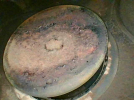
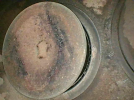
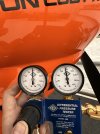
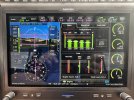
Now have about 80 hours since I lapped #1. Average CHT in cruise dropped about 10 degrees. Just did a compression test, 79/80.
I have also changed my operating practices and now run at peak EGT and usually 65% power, although sometimes as high as 75%.
Before with compression 40/80
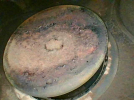
80 hours after lapping:
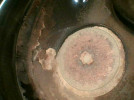
I have also changed my operating practices and now run at peak EGT and usually 65% power, although sometimes as high as 75%.
Before with compression 40/80
80 hours after lapping:

455 Bravo Uniform
Final Approach
Nice! Thanks for sharing!!