AKiss20
Line Up and Wait
Captain stated his preferred glideslope is 3 red 1 white. Why is that? Is that a routine thing for heavy approaches to 29?


Captain stated his preferred glideslope is 3 red 1 white. Why is that? Is that a routine thing for heavy approaches to 29?
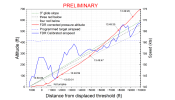


Holy backwards x-axis! It makes my brain hurt.
Yeah I saw that graphic, just struck me as odd that they are targeting below nominal but I guess that’s standard for wide bodies?A widebody pilot should be looking for 3 white and 1 red due to the distance between the cockpit and the main landing gear. But even at that, had he been at 3 red and 1 white he would have still cleared the highway with some margin. He was well below 4 reds a mile from the runway and never corrected it.
View attachment 152515

Does anyone know how low you can be and still see any PAPI? IOW, once you have four reds, can you see that down to ground level (from the same distance from the threshold)? My local airport has a major highway 0.45 nm from the approach end, so I don't really want to experiment! (Can't see the PAPI from the highway, a line of low trees blocks it.)
Basically, when you see four reds have you lost any information besides "too darned low"?

Reminds me of the old joke about the PAPIs turning green when you get low enough, because it's filtered through the grass.I can't speak for all brands and installations of PAPI, but I know ours is all red until you are way underground. The upper and lower limits are pretty wide.
Reminds me of the old joke about the PAPIs turning green when you get low enough, because it's filtered through the grass.
Based on the NTSB's graph, it looks like they just kept getting further and further below the glideslope with decaying energy except for a brief level-off to change their underwear after hitting the light pole.In those conditions, you aren't going to have a nice, stable, WWRR the whole way down. You'll be bracketing the desired glidepath, whether electronic or visual.
As I thought, which means (if all the lights are red) you have zero protection from light poles. (Gimme three whites any day.)I can't speak for all brands and installations of PAPI, but I know ours is all red until you are way underground. The upper and lower limits are pretty wide.
As I thought, which means (if all the lights are red) you have zero protection from light poles. (Gimme three whites any day.)

Gimme three whites any day.


Red over red, or all red, you're dead. The four red is your final layer of protection, it doesn't get any redder. @RussR can probably give more detail just how close 4 red can put you over the obstacles.
And if you're wondering, yes, PAPI commissionings can be one of the most fun inspections we do (and, naturally, one of the most dangerous as well). Lots of low level flying and maneuvering.
when you see four reds have you lost any information besides "too darned low"?
Interestingly, C-FOQA data indicates that coming in lower and flatter more often results in longer touchdowns rather than shorter.Aiming for 3 reds sounds like intentional noncompliance with SOPs. I'd be worried about my job if I was that crew.
Aiming for 3 reds sounds like intentional noncompliance with SOPs. I'd be worried about my job if I was that crew.
The FO called out getting low after they were already way too low.I might would do it in a Cessna or Piper if aiming for the numbers, but not a 767. In practice, widebody and other large aircraft usually teach 3 white to account for the distance between the cockpit and the main gear.
Even at that, had the captain maintained 3 red, he probably would have gotten away with. Probably has done it in the past too. But he was not even near 3 red, he was well below 4 in no man's land. The FO called out getting low, but maybe not forceful enough. The Captain was clearly not stable and should have gone around.
My experience in mobile and when letting studs drag in an approach is exactly that.Interestingly, C-FOQA data indicates that coming in lower and flatter more often results in longer touchdowns rather than shorter.

Did you mean to say “when should the FO have called the go around”I wonder if the PIC was focusing too much on the runway being shorter than what they were originally planning for.
Also, the FO called out the situtaion. That's a good start. At what point should the FO have taken the controls?
As they descended, the airspeed began to decay, and the first officer recalled that he stated,“hey you are slow,” followed moments later by, “you are still slow and a little low.”

"I said don't ask about PAPII feel a Skynyrd tune coming on....
Gimme three whites,Gimme three whites mister,Gimme three whites toward the ground.Gimme three whites,Gimme three whites mister,And I won't have to go around!

Usually??!??!!?!??Since we usually try to not hit anything (pro tip there)
Are there times when a FO is supposed to take direct action vs making request, etc. ? Given the captain not responding to the first call out and how time critical it was becoming, should he have called “go around” or just taken the controls?Did you mean to say “when should the FO have called the go around”
Because that’s what should have happened.

The prelim indicates the FO did a good job monitoring altitude and airspeed on final, and kept the captain apprised of the situation. It appears the FO considered making the call for a go around, but didn't have time to do so before the plane touched down.Did you mean to say “when should the FO have called the go around”
Because that’s what should have happened.

The other part of the job is obstacle removal.Usually??!??!!?!??
I’m going to take the position that since the airplane hit an obstacle on the approach the FO should have called for a go around much earlier.The prelim indicates the FO did a good job monitoring altitude and airspeed on final, and kept the captain apprised of the situation. It appears the FO considered making the call for a go around, but didn't have time to do so before the plane touched down.
At 500 ft, the first officer stated, they were on speed and on profile, and the captain was maintaining his planned profile of 3 red and 1 white on the PAPI. Once again, the CVR did not capture any discussion of PAPI lights for runway 29 prior to landing. Additionally, the captain, as the PF, was looking outside the airplane, and the first officer as the PM was “more committed to being inside the airplane, looking for trends.”
As they descended, the airspeed began to decay, and the first officer recalled that he stated, “hey you are slow,” followed moments later by, “you are still slow and a little low.” The PM then looked back outside, and at that point recalled “I thought we were low”, however they were just about to touch down, and he didn’t process the information in time to get a go-around callout verbalized. The airplane landed, taxied to the gate, and all passengers and crew deplaned normally.
As several posters have mentioned above, when ATC informed the crew they would be landing on RWY 29 using the published RNAV approach, the captain decided he would fly to touchdown using three red and one white on the PAPI. Runway length wasn't an issue, but it appears that the captain may have thought it was. One would think he had flown the RNAV approach to RWY 29 many times. It's all very odd.
After the incident, and clearly in response to the captain's decision regarding the PAPI, United took the following actions:
After the accident, United Flight Operations issued an Ops Alert that applied to EWR arrivals specific to the RNAV vertical guidance for runway 29. It reminded pilots that the visual glideslope indicator (VGSI) was designed to provide safe obstruction clearance within 10 degrees of the runway centerline up to 4 NM. In addition, United Flight Operations issued Pilot Bulletin 26-069 revision 1 to all pilots that applied to short runway landing guidance.
It mentioned that a hazard was identified through their Safety Management System (SMS) that the pilot technique of shifting the aimpoint of electronic or visual glide path indications, or “ducking under”, contributes to low approach altitudes during the visual segment into certain airports and runways.
It emphasized that all approaches shall be conducted so that
touchdown occurs 1500’ from the runway threshold, but not prior to 1000’ from the threshold, in accordance with their Flight Manual, Chapter 3.
Fighting over the controls is not a good idea and it is not procedure.Are there times when a FO is supposed to take direct action vs making request, etc.

Yeah, whoever decided that graph should go in that direction deserves a Blanket Party.Holy backwards x-axis! It makes my brain hurt.
Did Wi Tu Lo also pilot this aircraft?
Except the data contradicts the FO's statement. They didn't get to three red until around 300'. And how would the FO have known to be monitoring for the Captain's very nonstandard plan if they never briefed it? I We'll have to wait and see what's on the final, but I think whoever wrote the prelim is leaving some breadcrumbs in the next sentence and asking you to read between the lines.The prelim indicates the FO did a good job monitoring altitude and airspeed on final, and kept the captain apprised of the situation. It appears the FO considered making the call for a go around, but didn't have time to do so before the plane touched down.
At 500 ft, the first officer stated, they were on speed and on profile, and the captain was maintaining his planned profile of 3 red and 1 white on the PAPI. Once again, the CVR did not capture any discussion of PAPI lights for runway 29 prior to landing. Additionally, the captain, as the PF, was looking outside the airplane, and the first officer as the PM was “more committed to being inside the airplane, looking for trends.”

A widebody pilot should be looking for 3 white and 1 red due to the distance between the cockpit and the main landing gear. But even at that, had he been at 3 red and 1 white he would have still cleared the highway with some margin. He was well below 4 reds a mile from the runway and never corrected it.
View attachment 152515
I'm not disagreeing with you guys, but in all my widebody flying, I aim for WWRR. I've never been taught or even heard WWWR until this thread (maybe I have and dismissed it). I know when we do a CAT III approach the AP flies WWRR all the way down to touchdown. YMMVI might would do it in a Cessna or Piper if aiming for the numbers, but not a 767. In practice, widebody and other large aircraft usually teach 3 white to account for the distance between the cockpit and the main gear.
Even at that, had the captain maintained 3 red, he probably would have gotten away with. Probably has done it in the past too. But he was not even near 3 red, he was well below 4 in no man's land. The FO called out getting low, but maybe not forceful enough. The Captain was clearly not stable and should have gone around.
I'm not disagreeing with you guys, but in all my widebody flying, I aim for WWRR. I've never been taught or even heard WWWR until this thread (maybe I have and dismissed it). I know when we do a CAT III approach the AP flies WWRR all the way down to touchdown. YMMV
