Transponder Function Buttons - Purpose?

WDD

Final Approach
PoA Supporter
Joined
Oct 16, 2019
Messages
8,855
Location
Atlanta / Marietta
Display Name
Vintage Snazzy (so my adult children say)
Home Airfield
KPUJ
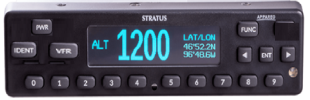
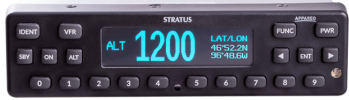
A minor question borne from too much time on my hands, but here goes: What is the purpose of these functions? Seem to cause more harm than good.
1748389676600.png

PWR button = Turn the thing on. OK, all good. BUT....

SBY = Getting power but transponder doesn't do anything. Why bother? Just turn it off?
ON = Not really "On". Just turning it "on" means sending out the squawk code, but no altitude. Besides being mis labeled, when would I ever want to not have it "on" and transmit a squawk code? When would I want to send a squawk code and no altitude?
ALT = This means it sends your altitude out. OK, but again, when would I ever not want to do that?

Net Net, why have the SBY, ON, and ALT function buttons? Just leave them off. Hit one of them by accident and you're not pinging out what you need to.
 
SBY vs PWR: You aren't waiting for the thing to boot up. Also, you might still want to see your PALT or use the timer while you are flying under a bridge.

ALT vs ON vs SBY: FAR/AIM 4-1-20 and 4-1-21 say that ATC can ask you to "STOP SQUAWK". One example is if you're in a formation flight and they only want the lead aircraft to be squawking. "STOP ALTITUDE SQUAWK" is also something ATC can tell you for whatever reason, say for example something is wrong with your altitude encoder and they don't want to deal with the distraction.
 
I had a bad altitude encoder once. ATC asked me to turn off mode C (ALT) since it was incorrect/distracting but they still wanted my squawk code.

The story I heard (which may or may not be true) is that historically you had standby because you couldn't just go from OFF to ON without warming up the vacuum tubes. You had it in standby on the ground to warm it up and then it was ready to be ON in time for takeoff. That might not be technically necessary now but they kept the same user interface.
You also did not want it transmitting on the ground. With the antenna on the belly there could be issues. So start engine, transponder to Standby, switch to On or Alt just before take off.
 
At busy airports, you do not usually squawk on the ground. It clutters their radar scope.

As already mentioned, when my altitude was in large error, ATC did not want to see it jump up and down, so asked to stop altitude squawk. Water in the static line.

2 or more planes flying together, all squawking, make an unreadable blob on some radars.
 
With cpdlc now at most airliners, they use sby , till after they get their clearance, then they do squawk their code even before pushback.
 
At busy airports, you do not usually squawk on the ground. It clutters their radar scope.
Is Class B busy enough? I think most Class B airports contain language like this in the AFD Remarks:
Operate transponders with altitude reporting mode and ADS–B (if equipped) enabled on all airport surfaces.​
They are on to track ground movement.

And as I recall, the AIM guidance was changed some years ago to suggest a default of on rather than SBY on the ground. (I recall the original the same as you.)
Transponder and ADS-B operations on the ground. Civil and military aircraft should operate with the transponder in the altitude reporting mode (consult the aircraft’s flight manual to determine the specific transponder position to enable altitude reporting) and ADS-B Out transmissions enabled at all airports, any time the aircraft is positioned on any portion of the airport movement area. AIM 4-1-20.a.3. ​

In the case of the Stratus unit, according to the manual, the default is “ground” mode - on, but with no altitude reporting. The Garmins, like the 345 do report altitude on the ground,

I guess the takeaway is that there is still use for the ability to change transponder reporting modes, both in the air and in the ground,
 
I remember back when I learned the transponder was always on SBY until cleared for takeoff at a towered airport, at least in the San Diego area where I was.
start engine, transponder to Standby, switch to On or Alt just before take off.
At busy airports, you do not usually squawk on the ground. It clutters their radar scope.
That was the old guidance.
And as I recall, the AIM guidance was changed some years ago to suggest a default of on rather than SBY on the ground. (I recall the original the same as you.)
Transponder and ADS-B operations on the ground. Civil and military aircraft should operate with the transponder in the altitude reporting mode (consult the aircraft’s flight manual to determine the specific transponder position to enable altitude reporting) and ADS-B Out transmissions enabled at all airports, any time the aircraft is positioned on any portion of the airport movement area. AIM 4-1-20.a.3.
Yup. According to this article, the change was made in 2012.

The FAA also issued SAFO 15006.

 
SBY = Getting power but transponder doesn't do anything. Why bother? Just turn it off?
Because transponders used to have a vacuum tube in the transmitter section.
SBY kept the filament on and the tube warm, so it would start transmitting as soon as needed.
When would I want to send a squawk code and no altitude?
ALT = This means it sends your altitude out. OK, but again, when would I ever not want to do that?
When your (mechanical, at the time) encoding altimeter developed a fault and was sending out erroneous altitude. Or maybe you didn't even have one.
 
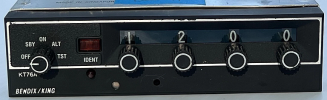
@WDD, a minor question back to you. What was your old transponder? I'd be surprised if it didn't have a set of similar functions for the same purposes. Here's the KT76A, one that I saw in numerous aircraft.

1748436649771.png
 
Last edited:
I’m not sure that explains the reason for it in a brand new transponder.
Because we're creatures of habit, and manuals/SOPs are written in a certain way. Then the new tech has to blend in with the old tech.
I'd have to read the transponder TSOs, but there's a good chance some of those functions are mandated there, because of how the old tech worked. Then nobody wanted to go through the effort to write and release a new TSO.
 
  • Like
Reactions: WDD
Because we're creatures of habit, and manuals/SOPs are written in a certain way. Then the new tech has to blend in with the old tech.
I'd have to read the transponder TSOs, but there's a good chance some of those functions are mandated there, because of how the old tech worked. Then nobody wanted to go through the effort to write and release a new TSO.
...or, as a number of people have mentioned, there are still reasons to be able to switch various reporting modes on and off without powering down. I suspect you are right about the TSOs but in 2025, that's about required functionality, not vacuum tubes.
 
Altitude encoders may or may not need time for the internal heaters to bring the barometric sensor up to a "stable" temperature for accuracy.
 
I’m not sure that explains the reason for it in a brand new transponder.
OP. One reason is that in your example the transponder shown also has ADS-B in. So you can put it in standby mode and as as far is I know it is still receive ADS-B in data. I don't know if the in data is limited when in standby mode, I could see that it might be?

Brian
CFIIG/
 
I had a bad altitude encoder once. ATC asked me to turn off mode C (ALT) since it was incorrect/distracting but they still wanted my squawk code.

The story I heard (which may or may not be true) is that historically you had standby because you couldn't just go from OFF to ON without warming up the vacuum tubes. You had it in standby on the ground to warm it up and then it was ready to be ON in time for takeoff. That might not be technically necessary now but they kept the same user interface.
It’s more than just distracting to the Controller. It can cause TCAS to give bogus RA’s, Resolution Advisory. It can cause false Conflict Alerts. It can lead other pilots astray. With ADSB it’s not just ATC that see’s it. Other pilots also see it. What’s the old adage, bad information is worse than no information.
 
A minor question borne from too much time on my hands, but here goes: What is the purpose of these functions? Seem to cause more harm than good.

View attachment 141434

PWR button = Turn the thing on. OK, all good. BUT....

SBY = Getting power but transponder doesn't do anything. Why bother? Just turn it off?
ON = Not really "On". Just turning it "on" means sending out the squawk code, but no altitude. Besides being mis labeled, when would I ever want to not have it "on" and transmit a squawk code? When would I want to send a squawk code and no altitude?
ALT = This means it sends your altitude out. OK, but again, when would I ever not want to do that?

Net Net, why have the SBY, ON, and ALT function buttons? Just leave them off. Hit one of them by accident and you're not pinging out what you need to.

Did you read the fine Pilot's Guide? It's required to be in the aircraft, you know.

SBY is there to stop responses to ATC without powering down the unit. This is especially useful for the ESG version which has a protracted start up time for the GPS, but still is useful for the ES version as it lets you turn it back on without delay and keeps the other functions active.

The ON is indeed somewhat mislabeled, but it surpresses altitude interrogations. On older transponders this might be marked Mode A or the like, but in this case the transponder does respond to A and S interrogations, but just doesn't indicate an altitude.

THe ALT button are also useful to get the thing out of GND mode (supressed altitude message) automatically triggered when the thing thinks you are on the ground.
Further SBY puts you in GND mode (where it will automatically go ALT when it thinks you took off).

As others point out, ATC can ask you to stop altitude squawk at times. I had this happen when my static plugged up.
 
Appreciate the replies. Given that I'll probably never in my life ever use any of these functions, what about removing the buttons and only leaving the buttons for functions that are used on a frequent basis. Want to stop squawking or stop altitude reporting? Hit "FUNC" and select it from there. Reserve the "button real estate" for things you use. I'm doing this for the betterment of all pilots everywhere. (OK, in reality I'm doing this to stall from going outside and continue working on the blasted front porch columns. Use of non treated wood, leaking caps have rotted these two story killers. Removing one 2X4 at at time and not having the thing turn into a Farmers Insurance commercial has been a challenge. Blah - off to work on them......)

Did I mention how trivial this all is BTW?

1748452115350.png
 
….Given that I'll probably never in my life ever use any of these functions, what about removing the buttons and only leaving the buttons for functions that are used on a frequent basis…..

d310902e5b59c96daa47881cec6ab120.gif
 
Appreciate the replies. Given that I'll probably never in my life ever use any of these functions, what about removing the buttons and only leaving the buttons for functions that are used on a frequent basis. Want to stop squawking or stop altitude reporting? Hit "FUNC" and select it from there. Reserve the "button real estate" for things you use. I'm doing this for the betterment of all pilots everywhere. (OK, in reality I'm doing this to stall from going outside and continue working on the blasted front porch columns. Use of non treated wood, leaking caps have rotted these two story killers. Removing one 2X4 at at time and not having the thing turn into a Farmers Insurance commercial has been a challenge. Blah - off to work on them......)

Did I mention how trivial this all is BTW?

View attachment 141457
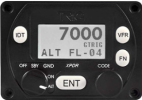
Like this.. is what I have in my sailplane.
1748453340794.png
 
Appreciate the replies. Given that I'll probably never in my life ever use any of these functions, what about removing the buttons and only leaving the buttons for functions that are used on a frequent basis. Want to stop squawking or stop altitude reporting? Hit "FUNC" and select it from there. Reserve the "button real estate" for things you use. I'm doing this for the betterment of all pilots everywhere. (OK, in reality I'm doing this to stall from going outside and continue working on the blasted front porch columns. Use of non treated wood, leaking caps have rotted these two story killers. Removing one 2X4 at at time and not having the thing turn into a Farmers Insurance commercial has been a challenge. Blah - off to work on them......)

Did I mention how trivial this all is BTW?

View attachment 141457
Might as well get rid of all the buttons then. The normal mode of operation is to leave the thing powered on all the time and let the ground/flight mode detection swithc it for you. Hell, unless I am getting ATC services of some sort, it never comes off 1200.
 
@WDD, a minor question back to you. What was your old transponder? I'd be surprised if it didn't have a set of similar functions for the same purposes. Here's the KT76A, one that I saw in numerous aircraft.

View attachment 141447
I often wonder what the knobs under the 1200 do.
 
It’s more than just distracting to the Controller. It can cause TCAS to give bogus RA’s, Resolution Advisory. It can cause false Conflict Alerts. It can lead other pilots astray.
It is required at towered airports with ASDE-X or ASSC. We squawk ATL prior to pushback at all airports and TA/RA just before takeoff. Squawk ATL when we land and until reaching the gate. If we don't, ground will quickly remind us to turn it on when we don't we don't appear on their ADSE-X/ASSC display.

We do see muted TAs from aircraft on the ground with some regularity. Can't recall ever having one with an audible alert.
 
I often wonder what the knobs under the 1200 do.
REALLY?

That is how you set the assigned transponder code. You turn each knob to the proper digit.

Fun fact, transponder codes on use the digits 0 - 7. This is because they selected code of 3 binary digits, so 0 - 111.

In the very early days, the codes were only 2 decimal digits, so 00 - 77. Why would need more codes than that??? :D
r/wooooooooooooooooooooooooooooooooooooooooooooooooooooooooooooooosh

His point was he only flies non-radar services.
 
REALLY?

That is how you set the assigned transponder code. You turn each knob to the proper digit.

Fun fact, transponder codes on use the digits 0 - 7. This is because they selected code of 3 binary digits, so 0 - 111.

In the very early days, the codes were only 2 decimal digits, so 00 - 77. Why would need more codes than that??? :D
1748546138276.png
 
It is required at towered airports with ASDE-X or ASSC. We squawk ATL prior to pushback at all airports and TA/RA just before takeoff. Squawk ATL when we land and until reaching the gate. If we don't, ground will quickly remind us to turn it on when we don't we don't appear on their ADSE-X/ASSC display.

We do see muted TAs from aircraft on the ground with some regularity. Can't recall ever having one with an audible alert.
Yeah. On the airport squawking has been an evolution. Many moons ago it wasn’t wanted because it cluttered the scope and would cause a thing called ring around. This was before automated radar systems when there were not digits on the scope. Even secondary radar returns were ‘blips.’ Well defined rectangular blips, but blips nonetheless, called beacon control slashes. There was a time when Transponders had normal and low settings. Controllers would say Squawk Low if a close in airborne plane was causing ring around.
In the early days of TCAS pilots were reminded to Squawk Standby on the ground because they were causing RA Go Arounds. We’ve come a long way.
 
Net Net, why have the SBY, ON, and ALT function buttons? Just leave them off. Hit one of them by accident and you're not pinging out what you need to.
Guessing you're new to aviation (not a dig, just an observation).

Standby: Not so long ago, we had the pre digital age in Transponders and I'm sure there are still units that have a cavity oscillator tube. Standby is where you first put the Transponder to warm up this cavity oscillator tube so that it functioned properly. The reason we still have "SBY" is for continuity for all those pilots that have been flying for a while and there is no reason to have an "Off" since you have an Avionics Master. (If you didn't, I bet the installer would put it on a switch.)

But the other reason for the modern day SBY mode is also referred to as the Ground Mode. When you get a chance to read the manual you'll get the full explanation, but unlike the old SBY that stopped all transmission, the new SBY still sends out ADS-B position for ADS-B displays. So Ground in those airports that have it can see where you are while taxiing. (In reality most, if not all xponders, now go into Ground Mode when the aircraft slows down. (30kts with my GTX345))

On and Alt really shouldn't be a question but... There are times that ATC will as you to turn off your Altitude because it is displaying the wrong altitude. This is often because of an issue on their end where they don't want to see your Altitude display, but it could also mean your xponder is putting out the wrong altitude. But leaving the xponder "On" still shows your code and position.
 
Last edited:
Guessing you're new to aviation (not a dig, just an observation).
Trained in 2019, got PPl Jan 2020. New? I guess that’s all relative.

In 500 + hours I’ve never been requested to or have changed a thing on the transponder except the squawk codes. Mostly fly out of D airports, ATL Tracon, etc.

Maybe in the next 500 or 1000 hours I might come across that.
 
REALLY?

That is how you set the assigned transponder code. You turn each knob to the proper digit.

Fun fact, transponder codes on use the digits 0 - 7. This is because they selected code of 3 binary digits, so 0 - 111.

In the very early days, the codes were only 2 decimal digits, so 00 - 77. Why would need more codes than that??? :D
4b3eor.jpg
 
Back
Top