SR22T down outside Raleigh

I recall at least one such case. CAPS was pulled and somehow trailed uselessly behind the plane, which landed successfully anyway. I’ll see if I can dig it up.

Edited to add:


Pretty sure there’s at least one more, but they are exceedingly rare.
There was one at Addison, where the handle was pulled and the chute remained in the canister. The pull was supposedly outside of the performance envelope.
 
Already being discussed.
 
Looking at the wreckage, the wings are interesting. Both appear attached and mostly intact. However, both are oriented vertically with their trailing edges on the ground. Almost looks as if the aircraft impacted tail first. Fuselage tail cone is sticking up with no surfaces. Looks like maybe a rudder to the left of the wingtip? But no other obvious remnants of tail structure.

Possible theory (one of many): pilot and pax incapacitated from CO. Autopilot shut off when it reached destination waypoint. Uncontrolled aircraft entered steep dive, exceeded Vne, and tail surfaces departed due to flutter.
 
If local news is correct and he was having radio, nav and engine issues since shortly after launch, then here's a thought experiment:
Why on god's green ****ing earth would you take your plane 20 miles out over the Atlantic with your family onboard if you were having those problems? That seems like a death wish.
1752084206814.png
 
Why on god's green ****ing earth would you take your plane 20 miles out over the Atlantic with your family onboard if you were having those problems? That seems like a death wish.

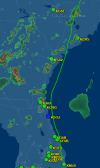
That was my thought when I saw the ADSB track. Well out of glide range and NORDO! ????????
 
If local news is correct and he was having radio, nav and engine issues since shortly after launch, then here's a thought experiment:
Why on god's green ****ing earth would you take your plane 20 miles out over the Atlantic with your family onboard if you were having those problems? That seems like a death wish.
View attachment 142697
Being NORDO he was likely doing this to stay out of airspace as to create issues for others.
 
If local news is correct and he was having radio, nav and engine issues since shortly after launch, then here's a thought experiment:
Why on god's green ****ing earth would you take your plane 20 miles out over the Atlantic with your family onboard if you were having those problems? That seems like a death wish.
View attachment 142697
Had the same thought in post 49.

How strong is get-there-itis when you pass up the opportunity to have easy commercial transportation at DAB or MCO or JAX and full send for 350 more miles. He could have put her on the ground when instruments and radios still had power. But he soldiered on and killed his family over possibly an alternator belt?

Will add on anger to my previous post about being sick.
 
Being NORDO he was likely doing this to stay out of airspace as to create issues for others.

Man, if that was his logic then it is just a terrible, terrible, terrible set of decisions. I'd say that whether he crashed or not.
Having a radio is great for FF and traffic awareness, but it's not required. At 11500 altitude, you can safely cruise cross country over any of the enroute airspace down there and just look out the window and keep your eyes open for others. That's a heck of a lot safer than taking 4 people in a shoddy aircraft over the Atlantic. But he didn't go down in the ocean, so that's a moot point I guess.

The bigger problem is he should have never continued flying after he realized there were significant issues with the aircraft.
 
Looks like he tried to stay within glide range up the FL coast, but that cell at JAX pushed him east.
I believe thats current weather not weather when track was made.

KJAX 071456Z 25007KT 10SM SCT027 BKN250 30/23 A3010 RMK AO2 SLP192 T03000233 51010
KJAX 071556Z 24008KT 10SM SCT027 BKN060 BKN250 32/23 A3010 RMK AO2 SLP192 T03170228
 
Man, if that was his logic then it is just a terrible, terrible, terrible set of decisions. I'd say that whether he crashed or not.
Having a radio is great for FF and traffic awareness, but it's not required. At 11500 altitude, you can safely cruise cross country over any of the enroute airspace down there and just look out the window and keep your eyes open for others. That's a heck of a lot safer than taking 4 people in a shoddy aircraft over the Atlantic. But he didn't go down in the ocean, so that's a moot point I guess.

The bigger problem is he should have never continued flying after he realized there were significant issues with the aircraft.
Seriously. EVB,OMN, FIN. Walk to DAB, uber to MCO. Why?! Why full send for 400 more miles? Why over the ocean? Why that far over the ocean? Its such a minor inconvenience being AOG, especially with commercial transport RIGHT THERE. He deserves his fate. His family absolutely does not.

He probably didnt know his actual altitude any longer. He was set up with flight following but that crapped out when the electric did. Could controllers have had him in the system at that altitude and just left it and thats why we see 11,700 til the end? Im trying to make excuses, but none of that makes up for continuing.
 
I thought the SR22T had 2 alternators. Does it?
 
I believe thats current weather not weather when track was made.

KJAX 071456Z 25007KT 10SM SCT027 BKN250 30/23 A3010 RMK AO2 SLP192 T03000233 51010
KJAX 071556Z 24008KT 10SM SCT027 BKN060 BKN250 32/23 A3010 RMK AO2 SLP192 T03170228
That screenshot is indeed the weather that was current when that was posted, but there were some buildups (smaller than those) between Savannah and Jacksonville during the flight.

Keep in mind also that there are warning areas that converge with the coast right about where he crossed the coastline at Hilton Head. His route kept him just clear of those.

11,500 also kept him over the top of the Beaufort and Gamecock MOA complexes.

Then there were a few buildups north of Florence, SC that he went behind (to the west of) before taking a final course that kept him just NW of R-5311 at Fort Liberty.

Still a bit of a risk staying over the ocean and continuing on, presumably without electronics, but with all the above in mind, the route kind of makes sense.
 
It does indeed look like poor ADM. From what I can see he got the plane in Jan 24, the same time he got his private pilot ASEL certificate. Sad. I wonder what his training included re. system failures and what to do?
 
I can't specifically recall the incidents, but there have been other recent crashes where inexperienced pilots reported cascading failures, but the issues were due to an inability to properly diagnose what was happening.
 
That screenshot is indeed the weather that was current when that was posted, but there were some buildups (smaller than those) between Savannah and Jacksonville during the flight.

Keep in mind also that there are warning areas that converge with the coast right about where he crossed the coastline at Hilton Head. His route kept him just clear of those.

11,500 also kept him over the top of the Beaufort and Gamecock MOA complexes.

Then there were a few buildups north of Florence, SC that he went behind (to the west of) before taking a final course that kept him just NW of R-5311 at Fort Liberty.

Still a bit of a risk staying over the ocean and continuing on, presumably without electronics, but with all the above in mind, the route kind of makes sense.
Only second guessing ocean part of the actual route. And we don't actually know what altitude he was really at.

But I just cannot wrap my head around the decision to keep carrying on and go as far as he did.
 
Autopilot shut off when it reached destination waypoint.
The autopilots likely to be in the Cirrus don't have a clue about waypoints. They are just slaves of whatever GPS navigator is there. The popular ones for the CIrrus all just continue on the last course after passing the final waypoint.
 
If local news is correct and he was having radio, nav and engine issues since shortly after launch, then here's a thought experiment:
Why on god's green ****ing earth would you take your plane 20 miles out over the Atlantic with your family onboard if you were having those problems? That seems like a death wish.
View attachment 142697
Remember, 35 year olds are invincible.
 
The requirements for certification HAVE NOT kept up with tech.

When the requirements were conceived, I don’t know if there was even an airplane in existence that had this kind of performance or capability.

The knowledge that doesnt help you out in these cases has increased, but the practical knowledge you need has dwindled.

Couple that with folks aren’t as mechanical and cars are STUPID reliable.

These incidents are more common, albeit the consequences aren’t usually this bad. It’s awful…

Some of these newer GA aircraft seem more like mini airliners in the level of systems knowledge necessary to troubleshoot. High tech gives the illusion of reliability when the opposite may be true in some cases.
 
So, the plane has 2 alternators. One fails right after take off. Then, some get-there-itis sets in and pilot thinks "I have another alternator, I can continue".
But, like someone mentioned, the backup alternator may not be as powerful as the main one and may have failed later in the flight.
 
So, the plane has 2 alternators. One fails right after take off. Then, some get-there-itis sets in and pilot thinks "I have another alternator, I can continue".
But, like someone mentioned, the backup alternator may not be as powerful as the main one and may have failed later in the flight.

And you also have a chute, and have a lot of recent flying hours/confidence.

Hopefully it’s not like what everyone is thinking.

Is someone able to determine the last ADSB/ATC ping coordinates vs the impact coordinates and thus the distance between? Would give some more conjecture about profile near the end, if the 11k ft altitude happened to be correct.
The horizontal distance between the last ping and the crash site was roughly 7.5 statute miles (6.5nm), or 39,600 feet. If the final ADS-B altitude of 11,700 was correct (and that’s very unconfirmed at this time), the vertical distance was roughly 11,500 feet (and give or take for nonstandard baro, errors, etc).

Curvature of the earth being negligible, the direct descent angle from the last ping to the crash site is 16.2° or a gradient of about 1,766ft/nm.

We don’t know the average descent rate because we don’t know the time of impact.

 
Ran across this account on Facebook:

"A Cirrus SR22T pilot transmitted to approach control that they might be losing their radios and asked to have the destination airport advised of a possible NORDO (no radio) landing. The PIC also mentioned a possible electrical issue. Despite these warnings, the Cirrus continued flying VFR (as the PIC stated he would do) for at least another 200 miles before joining a three-mile final at its home airport, KTTA.
ADS-B data shows the aircraft was still at 11,500 feet as it turned final for runway 03."

IMO he was thinking and troubleshooting. He gave a no comms plan to ATC and then executed that plan. So what happened at the end?

Two big and obvious questions:
1. Why did he not descend for a normal approach (assuming ADS-B was accurate)?
2. Why did the aircraft crash when it had plenty of gliding range AND a parachute?

I can think of three possible explanations:
A) Everyone was incapacitated by CO, and the autopilot got the airplane as far as it could, before shutting down due to loss of electrical power or fuel exhaustion.
B) He was trying to spiral down to land and botched the maneuver terribly.
C) We are missing key information.

I'm going with C.
 
With my above calculations, you can do a matrix of hypothetical average descent rates using various slant speeds along that angle (note these will not translate directly into TAS, GS, or IAS unless we also know and use the atmospheric conditions at each slice of altitude, which I am not doing here):

@60 knots: -1696 fpm
@90 knots: -2544 fpm
@120 knots: -3392 fpm
@150 knots: -4240 fpm
@180 knots: -5088 fpm
@210 knots: -5927 fpm
 
Is it possible that the last adsb altitude was just a primary radar hold from a facility, and not actual altitude?
That’s what I’m wondering as well. If he wasn’t actually at 11k+, then there are fewer things that don’t make sense about the outcome.

Edit to add: for all the manual flying that was being done and the fairly wobbly course that resulted from that, I was very surprised to see the altitude being so dead-on throughout. That was kind of a tip-off that we needed more information, hence the (unanswered) questions upthread about how Flightaware ingests non-ADS-B data.
 
Last edited:
The horizontal distance between the last ping and the crash site was roughly 7.5 statute miles (6.5nm), or 39,600 feet. If the final ADS-B altitude of 11,700 was correct (and that’s very unconfirmed at this time), the vertical distance was roughly 11,500 feet (and give or take for nonstandard baro, errors, etc).

Curvature of the earth being negligible, the direct descent angle from the last ping to the crash site is 16.2° or a gradient of about 1,766ft/nm.

We don’t know the average descent rate because we don’t know the time of impact.
Thanks for doing that. I means it didn’t just plummet straight down from that last ping (maybe later, or not).
 
Ran across this account on Facebook:

"A Cirrus SR22T pilot transmitted to approach control that they might be losing their radios and asked to have the destination airport advised of a possible NORDO (no radio) landing. The PIC also mentioned a possible electrical issue. Despite these warnings, the Cirrus continued flying VFR (as the PIC stated he would do) for at least another 200 miles before joining a three-mile final at its home airport, KTTA.
ADS-B data shows the aircraft was still at 11,500 feet as it turned final for runway 03."

IMO he was thinking and troubleshooting. He gave a no comms plan to ATC and then executed that plan. So what happened at the end?

Two big and obvious questions:
1. Why did he not descend for a normal approach (assuming ADS-B was accurate)?
2. Why did the aircraft crash when it had plenty of gliding range AND a parachute?

I can think of three possible explanations:
A) Everyone was incapacitated by CO, and the autopilot got the airplane as far as it could, before shutting down due to loss of electrical power or fuel exhaustion.
B) He was trying to spiral down to land and botched the maneuver terribly.
C) We are missing key information.

I'm going with C.

Is there a way to trim a Cirrus without electrical power? If the A/P stopped working in altitude hold mode due to low electrical power at cruise speed and density altitude, is the trim stuck where it’s at? How easy or difficult would it be to slow and land at 11k cruise trim? Also would have no electrical power to the flaps.
 
So, the plane has 2 alternators. One fails right after take off. Then, some get-there-itis sets in and pilot thinks "I have another alternator, I can continue".
But, like someone mentioned, the backup alternator may not be as powerful as the main one and may have failed later in the flight.
There are 2 alternators. ALT1 and ALT2. There are 2 busses. Main and essential. If you lose ALT1 Batt1 will eventually drain. ALT2 and the essential bus are isolated from the Main bus. When Bat1 drains as it inevitably will the plane loses everything on the main bus (including Flaps, MFD and anything deemed non-essential). The plane is completely flyable on the essential bus (including Autopilot and electric trim)

I thought they should have called the essential buss the emergency bus. BAT2 and ALT2 are really your emergency backup if you lose the main bus. If you lose ALT1 and BAT1 you have a crippled aircraft.
 
Is there a way to trim a Cirrus without electrical power? If the A/P stopped working in altitude hold mode due to low electrical power at cruise speed and density altitude, is the trim stuck where it’s at? How easy or difficult would it be to slow and land at 11k cruise trim? Also would have no electrical power to the flaps.
No way to trim w/o electric, but you could lose the main bus and still have the Autopilot and electric trim as those are on the essential buss. The flaps are on the main bus, so you will lose flaps if you lose ALT1 and Bat1 (as well as a sizable list of other things)

There are things that will drop the autopilot out of Nav/Hdg mode (loss of GPS is one that will also take out ADSB). In that case it will fall back to ROLL mode (wings level) and continue to hold altitude.
 
Back
Top