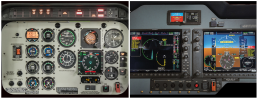
If planes were still being made in any numbers, and the regulations moved forward like they do for cars, every single engine plane would probably be required to have a parachute. Think about how airbags, antilock brakes, and rear cameras filtered down from luxury add-on to required equipment as the technology matured and became cheaper.
It’s honestly pretty surprising to me that it’s still legal to fly over a congested area (think the LA basin, Manhattan, or most other large cities) without either a twin or or airframe parachute. Transiting those urban hellscapes offers no practical emergency landing options, and what few airports are there are increasingly being swallowed up by development.
I’ve been reading this thread with interest, because I’ve just marked 10 years and nearly 1000 hours of owning a Cessna T210N. During that time I’ve done an engine, avionics, interior, and paint. I LOVE my 210. But I’m taking delivery of an SR22T in June. I had several reasons for moving to the Cirrus, and for choosing it over other options:
- 20 extra knots is 20 extra knots; that’s a free 20 knot headwind
- I don’t need the seats or useful load of a 210 (never really did)
- Following from the above, improved fuel efficiency
- Air conditioning for summer days in the southwest
- A desire to have FIKI when penetrating layers in the winter
- Newer system designs with more redundancy than my particular aircraft has
- Retractable gear driving increasing insurance premiums
- Better rate of climb over urban areas
- CAPS for more time spent flying at night, in IMC, over urban areas with no landing options, and freak accidents (which, rare as they may be, are usually unsurvivable: flight control malfunction, structural failure, or midair collision)
- Still fits in a 40-foot T hangar
- Still charged by FBOs as a single engine piston
- Mostly still has the mx burden of a single engine piston
Any one of those is something I “don’t need”, but everything together is a decent sized list. As someone mentioned earlier, it’s also true that when I bought the 210, I was a fairly new pilot (~3 years flying, ~250 hours, and no emergencies). I was fresh from a vacation where I flew a rental Cessna 172 between the Hawaiian islands that was burning a quart of oil every hour. After a few years in the 210, I’ve had a couple of emergencies that led me to look into my soul. I’m 10 years older and wiser. CAPS is an appealing part of the package, and I hope I never need to use it.