Taildragger 172That looks like a Piper arrow or?
I recently helped a AP/IA remove the shroud off the muffle for a annual inspection.

You are using an out of date browser. It may not display this or other websites correctly.
You should upgrade or use an alternative browser.
You should upgrade or use an alternative browser.
Small dent on stabilator trim - Disagreement with current mechanic on airworthiness.
- Thread starter kwarwick
- Start date

Gary Ward
En-Route
- Joined
- Jan 16, 2020
- Messages
- 3,640
- Location
- Lawrenceburg, Indiana
- Display Name
- Challenger1
- Home Airfield
- I67
NotTaildragger 172

Ed Haywood
Final Approach
Taildragger 172
Or Taildragger 206

Nobody was seriously hurt, thankfully.
Bonus points for the little girls waving.

 www.facebook.com
Bonus points for the little girls waving.
165K views · 892 reactions | PLANE CRASH | UPPER CAPTIVA Four people have been injured, including two young children, after a plane that was attempting to take off crashed on the Salty Approach on Upper Captiva Island. — 03.21.26 — Our coverage of
PLANE CRASH | UPPER CAPTIVA Four people have been injured, including two young children, after a plane that was attempting to take off crashed on the Salty Approach on Upper Captiva Island. —...
www.facebook.com
- Ed Haywood
- Replies: 40
- Forum: Aviation Mishaps

I’d encourage you to have a look at the definition of structural buckling. It is related to the load a structure can take in compression before it becomes unstable, at a stress typically below the elastic limit and involving no plastic deformation.What you seem to be describing are elastic deflections as the skins move from one energy state to another under the influence of heating or cooling. More akin to oil canning.
OP trim tab underwent buckling, which involves large displacements and plastic deformation of the metal which is permanent.

Buckling - Wikipedia
My comment was in response to a previous comment highlighting the criticality of damage in stressed skin structures like fuselages, with the possibility of buckling instability under load brought about by damage to the skin, and this buckling preventing a shear panel from carrying load.
In the case I described on my aircraft's fuselage, when the panel is heated in the sun it induces compression that in combination with the gravity load causes panels to buckle, however in this case there is no impact on the load carrying capability because it operates in diagonal tension, not as a shear panel.
The B-52 is a great example of exactly what I was describing, but on a completely different aircraft. I was unaware that that B-52 skins may also operate buckled, in diagonal tension. When this is the case, previous damage in a buckled area of the panel that is not in diagonal tension will have no effect - which was my point. Conversely if the design requires that the panel operates unbuckled, as a shear panel, damage is more likely to be unacceptable because buckling may be induced by the damage.
Last edited:
Ed Haywood
Final Approach

pfarber
Pattern Altitude
- Joined
- Jun 20, 2021
- Messages
- 1,653
- Display Name
- pfarber
You are NOT FABRICATING A SKIN. You are replacing it. Please tell me what you are FABRICATING. Please tell me what you are MANUFACTURING.and manufacturing of primary structural members or their replacement, when replacement is by fabrication such as riveting or welding, are airframe major repairs."
Fabricating a skin would be walking over to your random pile of aluminum grabbing a piece and cutting/bending it into shape.
You are not fabricating a wing. You are not fabricating a skin. You are REPLACING ONE.
You are not manufacturing, you are not strengthening, you are not reinforcing, you are not splicing.
There are repairs:
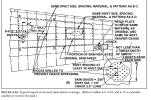
This is a replacement:
-0523003-11 CESSNA LEADING EDGE ASSEMBLY - RIGHT
Call for Price
Part Number: -0523003-11 Availability: Built to order. Minimum of 12 weeks for delivery.
pfarber
Pattern Altitude
- Joined
- Jun 20, 2021
- Messages
- 1,653
- Display Name
- pfarber
Consider this: The Grumman AA series. Wing skins are BONDED to the ribs. So under the oft quoted definition given here there is absolutely no way, EVER that a skin REPLACEMENT on an AA-1 is a major repair. EVER. Its glued.
Yet if you intend to use a patch/doubler repair it instantly becomes a major repair... because you are now FABRICATING a patch and a doubler from random pieces of sheet metal.
One thing I have learned is that even the FAA doens't really know what is major repair is.
Read this for a glimpse into the hilarity/insanity
Well, I’ve tried to explain it in various ways, but I can’t help if it still makes no sense to you. The fabrication of a part is dealt with in one way and when replacing a part via a fabrication method like riveting or welding is dealt with in another way. This latter version is further supported under the definition of a major repair or alteration: “That is not done according to accepted practices or cannot be done by elementary operations.” And riveting or welding are not considered an elementary operation per the available guidance.You are NOT FABRICATING A SKIN. You are replacing it. Please tell me what you are FABRICATING.
Perhaps read some of the old articles from the late great Bill O’Brien on this subject as he took the Work Group's results mentioned in your link to the next level. So, while you believe it’s a “hilarity,” their actions along with Bill’s actually provided mechanics with several long-needed guidance documents or revisions to existing docs. The simple fact you think it’s a joke explains a lot on your point of view. Perhaps you should have stuck with the dial up ISP work?One thing I have learned is that even the FAA doens't really know what is major repair is. Read this for a glimpse into the hilarity/insanity
Steamflyer
Line Up and Wait
- Joined
- Mar 23, 2022
- Messages
- 954
- Display Name
- Steamflyer
OPs trim tab is buckled. It has undergone plastic deformation that is not recoverable.I’d encourage you to have a look at the definition of structural buckling. It is related to the load a structure can take in compression before it becomes unstable, at a stress typically below the elastic limit and involving no plastic deformation.
Buckling - Wikipedia
en.wikipedia.org
My comment was in response to a previous comment highlighting the criticality of damage in stressed skin structures like fuselages, with the possibility of buckling instability under load brought about by damage to the skin, and this buckling preventing a shear panel from carrying load.
In the case I described on my aircraft's fuselage, when the panel is heated in the sun it induces compression that in combination with the gravity load causes panels to buckle, however in this case there is no impact on the load carrying capability because it operates in diagonal tension, not as a shear panel.
The B-52 is a great example of exactly what I was describing, but on a completely different aircraft. I was unaware that that B-52 skins may also operate buckled, in diagonal tension. When this is the case, previous damage in a buckled area of the panel that is not in diagonal tension will have no effect - which was my point. Conversely if the design requires that the panel operates unbuckled, as a shear panel, damage is more likely to be unacceptable because buckling may be induced by the damage.
Not all buckling requires plastic deformation but the tab was so deformed. Loads are still being carried across the buckled area, but it’s remaining strength and aero elasticity properties are now the now unknowns.
The B52 has a heck of a dense lattice underneath the skins to help transfer the loads.
4-17. STABILATOR.Due to circumstances I won't get into here, I had to take my plane to a new mechanic for the annual this year. This mechanic sent me an email this morning telling me that the plane is not airworthy due to a small dent in the stabilator trim tab (picture attached). This dent was there when I purchased the plane and none of the three companies that has done an annual inspection in the past has ever seen this as a problem. (It also passed a pre-buy inspection by a different mechanic). Looking for opinions on this, and especially would like any references to Piper specifications on what level of damage would be unacceptable (it is a 1976 Piper Warrior). I've been looking through the service manual and AC 43.13-1B, but so far haven't come across anything.
CAUTION: CONTROL SURFACE SKINS MUST BE REPLACED IF THEY SUSTAIN DAMAGE
OR EXHIBIT CRACKS.
pfarber
Pattern Altitude
- Joined
- Jun 20, 2021
- Messages
- 1,653
- Display Name
- pfarber
You didn't read the working group paper did you? You cited a rando with NO ability to alter or define the FAAs rule making.Well, I’ve tried to explain it in various ways, but I can’t help if it still makes no sense to you. The fabrication of a part is dealt with in one way and when replacing a part via a fabrication method like riveting or welding is dealt with in another way. This latter version is further supported under the definition of a major repair or alteration: “That is not done according to accepted practices or cannot be done by elementary operations.” And riveting or welding are not considered an elementary operation per the available guidance.
Perhaps read some of the old articles from the late great Bill O’Brien on this subject as he took the Work Group's results mentioned in your link to the next level. So, while you believe it’s a “hilarity,” their actions along with Bill’s actually provided mechanics with several long-needed guidance documents or revisions to existing docs. The simple fact you think it’s a joke explains a lot on your point of view. Perhaps you should have stuck with the dial up ISP work?
If you read that working group paper you can come accross dozens of contradictions and definition that make no sense and worse, mostly subjective rules.
Even FAR 1.1 is subjective and contradictory:
Major repair means a repair:
(1) That, if improperly done, might appreciably affect weight, balance, structural strength, performance, powerplant operation, flight characteristics, or other qualities affecting airworthiness; or
(2) That is not done according to accepted practices or cannot be done by elementary operations.
'if' 'might appreciably' 'or other qualities'
Riveting is an accepted practice and is an elementary operation. As is drilling.
How does replacing a wing skin with a manufacturers part:
'if improperly done' : you are using the exact same part. How can it be improper? Riveting is an accepted practice and an elementary operation.
'might appreciably affect weight': its the exact same part. It will weigh the same
'balance': its the exact same part. it will not alter the moment arm to affect balance
'structural strength': its the exact same skin, it will have the exact same strength
repeat 'its the exact same part' for all the other qualifiers and any sane person will see (1) does not apply.
Now if you grab a random sheet of Al off your scrap pile, try and bend it to conform NOW you have questions regarding weight, strength etc
As for (2) you are using acceptable, nay APPROVED processes (riveting, drilling) and they are elementary processes.
Now in Pt 43 add some additional qualifiers, but they don't apply as you pass the initial definition that it does not qualify as a major repair for the reasons I listed above.
Could you just regurgitate that a 337 is the safe route? Sure. But I don't see any enforcement actions (well, honestly I don't even know where to look for them) against AnPs replacing a skin with a manufactures skin and NOT having a 337.
pfarber
Pattern Altitude
- Joined
- Jun 20, 2021
- Messages
- 1,653
- Display Name
- pfarber
Is this from Piper SL 1320? Some relevant excerpts:4-17. STABILATOR.
CAUTION: CONTROL SURFACE SKINS MUST BE REPLACED IF THEY SUSTAIN DAMAGE
OR EXHIBIT CRACKS.
WARNING: ANY CRACKS DISCOVERED IN THE AIRCRAFT STRUCTURE MUST BE REPAIRED PRIOR
TO THE NEXT FLIGHT. AN AIRPLANE WITH CRACKS IN ITS STRUCTURE DOES NOT MEET ITS TYPE DESIGN AND NO LONGER POSSESSES ITS REQUIRED TYPE DESIGN STRENGTH.
FAA Advisory Circular AC 43.13-1B authorizes stop drilling as a temporary repair to arrest the growth of cracks, but this is limited to cracks in plastics, including plastic windows in non-pressurized airplanes. AC 43.13-1B also provides instructions to stop drill cracks in aluminum structure, but only as part of a permanent repair. AC 43.13-1B does not authorize stop drilling, with no further action, as a repair for cracks in a wing skin or fuselage skin.
Stop drilling, by itself, is not an acceptable permanent repair for cracks in wing and fuselage skins. If a crack is discovered in a wing or fuselage skin, unless specifically authorized for ferry flight purposes en-route to a repair facility, an FAA-approved repair must be accomplished prior to next flight.
Piper SL 1095C covers dents (small) caused by hail damage. I still consider this a authoritative source for several reasons:
While it states hail damage, its clear that a dent outside of the cosmetic limits are airworthiness issues.
A dent caused by hangar rash or hail still causes the same damage.
There might me a specific dent limit SL but I could not find one nor do I wish to delve into MMs or POHs or SRMs to find out. This reference is clearly states that dents above 'cosmetic' are airworthiness issues.
Actually, I read it when it was released almost 30 years ago. So, what relevance does it have to this discussion on major repairs?You didn't read the working group paper did you?
So if you consider riveting to be an elementary operation, why is it along with welding, called out in Part 43 as a qualifier to a major repair? Any chance you can provide an FAA or industry-based reference on your statement? I suppose you also think 3d printing is an elementary operation as well?As for (2) you are using acceptable, nay APPROVED processes (riveting, drilling) and they are elementary processes.
I trust your “rando” comment wasn’t directed to Bill O’Brien I mentioned in my post? If it was it would just go to prove how clueless you are on aircraft maintenance and its guidance, especially when you use the work group paper above as a reference.You cited a rando with NO ability to alter or define the FAAs rule making.
I met Bill several times. His understanding and explanation of maintenance
regulations would keep you on the edge of your seat. There has been no
one his equal. Naming a FAA Safety Award after him is a well- deserved
honor. Gone too soon.
regulations would keep you on the edge of your seat. There has been no
one his equal. Naming a FAA Safety Award after him is a well- deserved
honor. Gone too soon.
I've read through most of the messages, so sorry if I missed some comments and am just repeating what they said. As an owner, not a mechanic or IA, here are my thoughts.
First, what's the cost and really... what's the issue with fixing it!? It may get a lot more expensive to do what some of the others have commented on.
Second, if the plane is still within the last Annual, and you really want to, then pay the guy for the work he's done and leave. Take the plane somewhere else for the Annual. BUT, now that one mechanic has raised the question of Airworthiness, is another mechanic/IA going to take the risk and sign it off? And what is it going to cost you in time and money to have a second shop do the Annual... which comes back to the cost of just fixing the issue.
Biggie! that I didn't see anyone else mention. If you get the Annual signed off with "discrepancies" what does that mean as far as the plane not being Airworthy? If it is not Airworthy then you have no insurance. The plane is just out of the shop, and not that they would do anything intentionally, but WHAT IF it is just one of those times that there is an issue right out of the shop and you don't make it to the next airport???? Oops.
Unless the guy is ripping you off, just fix the issue and be done with it. One comment made that 8 or so inches long is not just a "little" ding. AND... Now that this is all public, if something happens down the road, hopefully your insurance company doesn't have a copy of this thread.

Lama1125
Pre-takeoff checklist
As soon as the mechanic disassembles is for the inspection the airplane becomes unairworthy. The IA can sign it off as unairworthy and you can get a ferry permit to somewhere to get the repair made. An A&P can sign off that the repair(s) were made and it becomes airworthy. The airworthiness is signed off by the first mechanic.Second, if the plane is still within the last Annual, and you really want to, then pay the guy for the work he's done and leave. Take the plane somewhere else for the Annual. BUT, now that one mechanic has raised the question of Airworthiness, is another mechanic/IA going to take the risk and sign it off? And what is it going to cost you in time and money to have a second shop do the Annual... which comes back to the cost of just fixing the issue.
As an IA, I wouldn't care about a dent like that but that's just me I guess.
Except its more than just paying the guy as he will need to document all the work he has performed up to that point. So depending where he's at on his annual checklist, it may not be feasible to simply shut it down. Usually its better to just let him finish and sign off the annual with discrepancies per Part 43.Second, if the plane is still within the last Annual, and you really want to, then pay the guy for the work he's done and leave.
Its not airworthy until the discrepancies are signed off or the owner obtains a special flight permit to fly with those discs to another location to have them dealt with.If you get the Annual signed off with "discrepancies" what does that mean as far as the plane not being Airworthy?
Sure. Why not if a mechanic thought it wasn't an issue? Keep in mind this "dent" was not an issue during the previous annuals, only the current annual. Also, it has yet to be stated under what reference this current IA has used to make their determination on this. And based on the single picture of the area with no other context, I don't see how anything useful can be determined from it.BUT, now that one mechanic has raised the question of Airworthiness, is another mechanic/IA going to take the risk and sign it off?
@Lama1125 and @Bell206.... see my first item. 
And very true about a Ferry Permit. I get that he's not thrilled about this mechanic saying it must be fixed when multiple others did not. But regretfully I bet it would be much more of a hassle to try and switch shops now. Doable, sure. But I'd just get it fixed and never go back to this shop.
And very true about a Ferry Permit. I get that he's not thrilled about this mechanic saying it must be fixed when multiple others did not. But regretfully I bet it would be much more of a hassle to try and switch shops now. Doable, sure. But I'd just get it fixed and never go back to this shop.
- Joined
- May 15, 2020
- Messages
- 7,770
- Display Name
- Ernie
- Home Airfield
- C81
Stop drilling is not an acceptable repair on piper control surfaces.Is this from Piper SL 1320? Some relevant excerpts:
WARNING: ANY CRACKS DISCOVERED IN THE AIRCRAFT STRUCTURE MUST BE REPAIRED PRIOR
TO THE NEXT FLIGHT. AN AIRPLANE WITH CRACKS IN ITS STRUCTURE DOES NOT MEET ITS TYPE DESIGN AND NO LONGER POSSESSES ITS REQUIRED TYPE DESIGN STRENGTH.
FAA Advisory Circular AC 43.13-1B authorizes stop drilling as a temporary repair to arrest the growth of cracks, but this is limited to cracks in plastics, including plastic windows in non-pressurized airplanes. AC 43.13-1B also provides instructions to stop drill cracks in aluminum structure, but only as part of a permanent repair. AC 43.13-1B does not authorize stop drilling, with no further action, as a repair for cracks in a wing skin or fuselage skin.
Stop drilling, by itself, is not an acceptable permanent repair for cracks in wing and fuselage skins. If a crack is discovered in a wing or fuselage skin, unless specifically authorized for ferry flight purposes en-route to a repair facility, an FAA-approved repair must be accomplished prior to next flight.
Piper SL 1095C covers dents (small) caused by hail damage. I still consider this a authoritative source for several reasons:
While it states hail damage, its clear that a dent outside of the cosmetic limits are airworthiness issues.
A dent caused by hangar rash or hail still causes the same damage.
There might me a specific dent limit SL but I could not find one nor do I wish to delve into MMs or POHs or SRMs to find out. This reference is clearly states that dents above 'cosmetic' are airworthiness issues.

Dan Thomas
Touchdown! Greaser!
- Joined
- Jun 16, 2008
- Messages
- 12,389
- Display Name
- Dan Thomas
Cessna has an SB that outline the use of stopdrilling in flap skins to stop cracks radiating from the trailing edge rivets. A max of six such stopdrillings is allowed per flap. Beyond that, the skin must be replaced. No patches are demanded over those stopdrillings.FAA Advisory Circular AC 43.13-1B authorizes stop drilling as a temporary repair to arrest the growth of cracks, but this is limited to cracks in plastics, including plastic windows in non-pressurized airplanes. AC 43.13-1B also provides instructions to stop drill cracks in aluminum structure, but only as part of a permanent repair. AC 43.13-1B does not authorize stop drilling, with no further action, as a repair for cracks in a wing skin or fuselage skin.
Stop drilling, by itself, is not an acceptable permanent repair for cracks in wing and fuselage skins. If a crack is discovered in a wing or fuselage skin, unless specifically authorized for ferry flight purposes en-route to a repair facility, an FAA-approved repair must be accomplished prior to next flight.
They have another SB that permits stopdrilling cracks that appear in the horizontal stabilizer's forward spar center section. It's caused by people pushing down on the tail to turn the airplane on the ground, a load that far exceeds the aerodynamic loads on that spar in flight. The main wheels are well aft of the center of pressure, requiring more downforce on that stab, and the air loads are centered on the stab's much beefier aft spar, not the front. If the crack travels beyond the stopdrilling it can be stopdrilled again, but once the crack reaches the spar flange, the spar must be replaced, and a reinforcing kit is added.
So stopdrilling is often permitted by Cessna as a permanent repair. You really need to consult the manuals and SBs and other documentation before making your pronouncements.
Your interpretation is not the one that matters. An FAA inspector's interpretation is what matters.Piper SL 1095C covers dents (small) caused by hail damage. I still consider this a authoritative source for several reasons:
Not really on the hassle part. As I stated it happens more than most realize. But curious if you’d get this fixed vs a similar sign off: say you take your aircraft to a new IA where he finds your #4 cylinder shows 65/80 and his fix is to change all the cylinders. So, would you agree to that or accept an annual signed off with a #4 cylinder low compression discrepancy?But regretfully I bet it would be much more of a hassle to try and switch shops now. Doable, sure. But I'd just get it fixed and never go back to this shop.
If it were really needed, I'd probably change the one cylinder. He may "recommend" changing all of them, but if there are no issues, it is only a recommendation.his fix is to change all the cylinders. So, would you agree to that or accept an annual signed off with a #4 cylinder low compression discrepancy?
But then I don't think my mechanic would recommend changing ALL cylinders if it was not needed. In reality the discussion would probably be that it was time for the engine to be rebuilt/replaced since I'm so close to TBO. I'll probably keep flying it until there is an issue that may start the dominos of something similar each year, or possibly in flight. But been there, done that and don't think I want to do it again. (Guessing the JFK Twr doesn't want me to either.
 )
Cherokee maintenance manual. Not current, but it gives a much clearer direction.Is this from Piper SL 1320? Some relevant excerpts:
WARNING: ANY CRACKS DISCOVERED IN THE AIRCRAFT STRUCTURE MUST BE REPAIRED PRIOR
TO THE NEXT FLIGHT. AN AIRPLANE WITH CRACKS IN ITS STRUCTURE DOES NOT MEET ITS TYPE DESIGN AND NO LONGER POSSESSES ITS REQUIRED TYPE DESIGN STRENGTH.
FAA Advisory Circular AC 43.13-1B authorizes stop drilling as a temporary repair to arrest the growth of cracks, but this is limited to cracks in plastics, including plastic windows in non-pressurized airplanes. AC 43.13-1B also provides instructions to stop drill cracks in aluminum structure, but only as part of a permanent repair. AC 43.13-1B does not authorize stop drilling, with no further action, as a repair for cracks in a wing skin or fuselage skin.
Stop drilling, by itself, is not an acceptable permanent repair for cracks in wing and fuselage skins. If a crack is discovered in a wing or fuselage skin, unless specifically authorized for ferry flight purposes en-route to a repair facility, an FAA-approved repair must be accomplished prior to next flight.
Piper SL 1095C covers dents (small) caused by hail damage. I still consider this a authoritative source for several reasons:
While it states hail damage, its clear that a dent outside of the cosmetic limits are airworthiness issues.
A dent caused by hangar rash or hail still causes the same damage.
There might me a specific dent limit SL but I could not find one nor do I wish to delve into MMs or POHs or SRMs to find out. This reference is clearly states that dents above 'cosmetic' are airworthiness issues.
The damage is to a primary flight control that is all flying and balanced. Argue all you want. It is not safe, not airworthy and not going to get my professional certification.
Happy signature hunting!