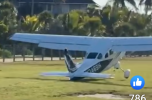
Captiva Island Cessna 206 "tail ... dragger"

Ed Haywood

Final Approach
Joined
Jul 12, 2020
Messages
7,624
Location
Tampa FL
Display Name
Ed
Home Airfield
FD77
Nobody was seriously hurt, thankfully.

Bonus points for the little girls waving.

 
Last edited:
2025 T206H That stings.
Flew over that strip many times. Always looked soft and sandy.
 
The engine sounded strong. The tail was dragging all the way down the runway. Definitely a soft runway surface takeoff to the extreme.
 
AirNav says 1800’ of turf for the runway. They had 4 onboard, 2 were kids. There may have been technique issues but also performance seemed a little weak for the conditions.

Don’t know all the details, but I’m more incline to go to a more forgiving runway, get a ride to visit who or whatever.

https://www.airnav.com/airport/FL90
 
Looked slow to me, certainly not 65-70mph. Maybe the excessive AOA induced more drag than anticipated?
Should have been flying, as stall speed would have been ~55 kts with flaps, and sea level, and ground effect ...
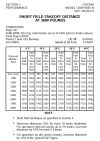
But winds, temperature, runway surface change stuff. From the POH, at gross:
1774459000264.png
 
Looks like yoke was full back almost from start of takeoff roll. Like pilot was afraid of the end of the runway.

Can't figure out what caused 90 degree veer to the right though. Maybe stalled and dropped wing?
 
Looks like yoke was full back almost from start of takeoff roll. Like pilot was afraid of the end of the runway.

Can't figure out what caused 90 degree veer to the right though. Maybe stalled and dropped wing?

Or, steered right to avoid swimming. Or, Occam says he simply had too much right rudder and it dropped the wing when the mains left the ground. It will be interesing to hear the pilot account of the takeoff roll.
 
Last edited:
I have to admit having a 'tail strike' during early training in an Air Plains STC 172 performing a soft field takeoff. It was my first attempt and the instructor had me pull the CW back into my belly and rapidly advance the throttle. The nose promptly and unexpectedly came up in the first dozen feet of the roll and banged the aft tie down ring into the asphalt. We looked at eachother in surprise and taxied back to the ramp to have the tail examined. No harm, no foul, and a few more thou's ground off of the lower edge of the rear tie down ring. OOPS!. Never made that mistake again. That video is just perplexing as to how someone can continue to plow a furrow with the tail ring all the way down the runway. :dunno:
 
Or, steered right to avoid swimming. Or, Occam says he simply had too much right rudder and it dropped the wing when the mains left the ground. It will be interesing to hear the pilot account of the takeoff roll.
or...microburst
 
Looks like yoke was full back almost from start of takeoff roll. Like pilot was afraid of the end of the runway.

Can't figure out what caused 90 degree veer to the right though. Maybe stalled and dropped wing?
You want the yoke back till you get some speed. Nose must be heavy in a T206. I might say sandy but don’t know.
Charts say no problem.
 
Took that soft field technique to the extreme. Never let off on the back pressure.

Probably could have built up speed quicker without the tail strike/drag

The 50/70 rule would have likely saved the plane, "When you have reached 50 percent of your calculated takeoff distance, you should have 70 percent of your takeoff airspeed". Especially important to be calculated on a short and possibly soft runway.

or...microburst

The weather in the video looked awful nice and calm for an accompanying microburst to occur. Plus, the little girl waving during the low speed takeoff appeared way too happy to be concerned about anything beyond enjoying a visit to an airfield!
 
I believe even with a tail low attitude it should of flown. Partial power for some reason?
 
It looks like he took off half stalled, followed by full stall/spin. With the nose that high, lotsa drag kept him from ever gaining sufficient speed. Looks like more than 20° flaps, too? Dragging the tail (even after the mains lifted off) doubtless didn't help.

Makes me wonder if it was first time on grass and he was scared.
 
Took that soft field technique to the extreme. Never let off on the back pressure.

Probably could have built up speed quicker without the tail strike/drag

Doesn't look soft to me. IMO soft field technique was not necessary. Maybe just a bit of back pressure to lighten the nose on initial roll.

We see this all the time at my home drome, which is in the same climate. This time of year the ground is hard and the grass is thin.
 
Given how many takeoffs out of that field during the preceding 4 days (two successful takeoffs earlier in the day), it would seem the pilot knew how to takeoff from that strip.

I wonder if the seat slid back?Screenshot 2026-03-25 at 17-57-24 N2469H Flight Tracking and History - FlightAware.png
 
Only if you can reach it.
True, although I don't think any of the Cessnas I've flown would have had the seat go back far enough that I couldn't reach the throttle. The seat going back on climb out is the classic nightmare. On the early take-off roll, you'd hope it would be more recoverable. Anyway, pure speculation on our part at the moment. Will be interesting to hear the pilot's account of what actually happened.
 
True, although I don't think any of the Cessnas I've flown would have had the seat go back far enough that I couldn't reach the throttle. The seat going back on climb out is the classic nightmare. On the early take-off roll, you'd hope it would be more recoverable. Anyway, pure speculation on our part at the moment. Will be interesting to hear the pilot's account of what actually happened.
Man, seat full back, I could reach in a 172 but not a 182. I think I just revealed that I have short arms and am rather ape like in build!
 
You guys need to take a look at the seat rails and locks in the '96 and on Cessna singles. And especially considering that this one was only a year old or so. That system is extremely robust and has positive locking on BOTH rails, and even if half of it wasn't working there'd be no slip. Cessna was determined that there were going to be no seat slips in these airplanes. No excuses for pilots' complacency and mechanics' negligence.

The old system was prone to it when the stuff got worn, hence the ADs demanding proper inspections and maintenance on them. Still, I found numerous defects on airplanes recently so "inspected."
Yeah - to be fair, I think the most modern Cessna I have been in is the 1977 c150 that my dad bought for my brothers and I to learn in.
 
Or, the friction lock on the throttle was allowed to creep back? Probably unlikely in this case, as you'd think he'd be pushing it so hard forward the panel would bend...
 
Given how many takeoffs out of that field during the preceding 4 days (two successful takeoffs earlier in the day), it would seem the pilot knew how to takeoff from that strip.

I wonder if the seat slid back?

Or it just took that long for his bad technique to bite him. Right combination of wind, temp, DA, runway conditions, etc.

Here is an article about the airfield. The island has no bridges, so grocery runs are via boat or plane.

 
Or it just took that long for his bad technique to bite him. Right combination of wind, temp, DA, runway conditions, etc.

Here is an article about the airfield. The island has no bridges, so grocery runs are via boat or plane.


Very cool place! I'd want a 3-blade prop on the Mooney before using that runway for additional ground clearance for some additional "get up and go".

Now that it appears this C-206 may have been used in a commercial operation, will be interesting to learn if it may have been overloaded, and how much experience the pilot flying had operating in and out of that short strip.
 
Last edited:
Certainly appears to be full-aft yoke. The bigger question is why. Bad technique? Something jammed? Passenger freak-out?

I'm genuinely curious on this one.
 
True, although I don't think any of the Cessnas I've flown would have had the seat go back far enough that I couldn't reach the throttle. The seat going back on climb out is the classic nightmare. On the early take-off roll, you'd hope it would be more recoverable. Anyway, pure speculation on our part at the moment. Will be interesting to hear the pilot's account of what actually happened.
I'm 6'5" and if the seat were all the way back, I would have had a hard time reaching the throttle in my 182-RG with the nose up like that. And I definitely don't have short arms.
 
It was a cool party trick, he just got a little too macho with it and road the wheelie out a little too long.
Almost think pilot was a STOL flyer.
Just a little too heavy in a 206.
Or he panicked.
 
Almost think pilot was a STOL flyer.
Just a little too heavy in a 206.
Or he panicked.
Or had never flown it with the CG that far aft. I've been surprised in my plane when I have pax and bags in the back, but the trim is still set for solo flight. She'll pretty well rotate and fly on her own with no input from me, and at a lower speed than I was expecting. Add in full elevator for "soft field technique" and a tail strike would be pretty easy I suspect. I don't do a lot of soft field, but when I do they're usually short, too. Get the nosewheel off and just hold it there or the induced drag really slows acceleration.
 
Back
Top