
You are using an out of date browser. It may not display this or other websites correctly.
You should upgrade or use an alternative browser.
You should upgrade or use an alternative browser.
Removed
- Thread starter Iflydogs
- Start date

- Joined
- Jun 13, 2008
- Messages
- 9,173
- Location
- Marietta, GA
- Display Name
- Drake the Outlaw
- Home Airfield
- Cartersville, GA
I'd have to find my E6B in order to throw it out...

I remember the key ones for xw and then mentally interpolate.Ran into a pilot who used some kind if clock reference system to figure crosswind component. Why don’t you just memorize the sine tables? I asked. He had never heard of it. Submarine officers use them to figure torpedo firing angles in their head, as a check against the computers. When I took my written exam I never used the E6B, did it all
In my head. I wrote a paper on it and put it on my website as a “reader magnet”, if you are interested in it, DM me. It is very simple and based upon the fact that at low angles, the sine is equal to the angle in radians. And accurate enough to shoot torpedoes, and pass the written.
30deg wind angle = 50% of the wind speed will be XW component
45deg = ~70%
60deg = ~85%
Any angle over 60 and I can assume it's full xw.
That's enough information to let me know if the landing is doable or not

Steamflyer
Line Up and Wait
- Joined
- Mar 23, 2022
- Messages
- 954
- Display Name
- Steamflyer
30. 45, and 60 are memorized during trig anyhow. Namely 0.5, sqrt(2)/2, and sqrt(3)/2 respectively. Since 60 is .866, for flying, just use the whole wind velocity as xwind component.
30 -> 0.5
45 -> 0.7
60 -> 0.9
For all intents and purposes
30 -> 0.5
45 -> 0.7
60 -> 0.9
For all intents and purposes

- Joined
- Oct 16, 2019
- Messages
- 8,855
- Location
- Atlanta / Marietta
- Display Name
- Vintage Snazzy (so my adult children say)
- Home Airfield
- KPUJ
I use those tricks in the air to see if it's in the acceptable range. On the ground, I'll look at the X Wind computed by F Flight.
- Joined
- May 15, 2020
- Messages
- 7,764
- Display Name
- Ernie
- Home Airfield
- C81
Well look at you professor wizardWhen I took my written exam I never used the E6B, did it all In my head.

- Joined
- Oct 16, 2019
- Messages
- 8,855
- Location
- Atlanta / Marietta
- Display Name
- Vintage Snazzy (so my adult children say)
- Home Airfield
- KPUJ
Hey - if you got professor wizard horse power, why not use it.Well look at you professor wizard
Meh, just use a CORDIC or Newton-Rapheson

Matthew
Touchdown! Greaser!
I have that xw chart printed on my kneeboard. I’m pretty sure it’s still calibrated.
Ashara Keliyn
Pre-takeoff checklist
- Joined
- Feb 20, 2023
- Messages
- 261
- Display Name
- Ashara
I use Taylor series expansion, in my head of course. So much easier to do simultaneously while shooting an instrument approach, navigating with VORs, running through checklists, switching between frequencies, talking to controllers...Meh, just use a CORDIC or Newton-Rapheson
Clip4
Touchdown! Greaser!
You find it hard to remember 30° is 50% and >60° is 100% for crosswind and think memorizing the sine tables is easier? Really?Ran into a pilot who used some kind if clock reference system to figure crosswind component. Why don’t you just memorize the sine tables? I asked. He had never heard of it. Submarine officers use them to figure torpedo firing angles in their head, as a check against the computers. When I took my written exam I never used the E6B, did it all
In my head. I wrote a paper on it and put it on my website as a “reader magnet”, if you are interested in it, DM me. It is very simple and based upon the fact that at low angles, the sine is equal to the angle in radians. And accurate enough to shoot torpedoes, and pass the written.
I wonder why the aircraft manufacturers bother putting a chart in he AFM?
MauleSkinner
Touchdown! Greaser!
Because we didn’t have the benefit of this thread until very recently.I wonder why the aircraft manufacturers bother putting a chart in he AFM?



Crashnburn
Pattern Altitude
Same here. In fact, if it's between two angles, I use the sine of the larger one.I remember the key ones for xw and then mentally interpolate.
30deg wind angle = 50% of the wind speed will be XW component
45deg = ~70%
60deg = ~85%
Any angle over 60 and I can assume it's full xw.
That's enough information to let me know if the landing is doable or not



billsgs126
Line Up and Wait
You left out looking up threads on PoA to optimize your ADM.I use Taylor series expansion, in my head of course. So much easier to do simultaneously while shooting an instrument approach, navigating with VORs, running through checklists, switching between frequencies, talking to controllers...


Doc Holliday
En-Route
When I put the winds on the landing page in the FMS it figures it out for me.
billsgs126
Line Up and Wait
The lettering has worn off my FMS, which knob do I use?When I put the winds on the landing page in the FMS it figures it out for me.
MauleSkinner
Touchdown! Greaser!
Both…one knob is for the headwind/tailwind component, and the other is for the crosswind component.The lettering has worn off my FMS, which knob do I use?
View attachment 144195
Unfortunately I can’t remember which is which, so you still have basically the same problem.

I was at CAP drone school earlier this summer and had the worst time doing circles with the two controls until the instructor explained it using this device!The lettering has worn off my FMS, which knob do I use?
View attachment 144195
MauleSkinner
Touchdown! Greaser!
Didn’t have a whiteboard out on the flying field?I was at CAP drone school earlier this summer and had the worst time doing circles with the two controls until the instructor explained it using this device!


MauleSkinner
Touchdown! Greaser!
It’s when the wind gets really ****ed off.Explain crosswind… I’m confused still.
Tools
…or the carrier’s Skipper gets really ****ed off..

SkyChaser
En-Route
- Joined
- Mar 22, 2020
- Messages
- 2,604
- Display Name
- SkyChaser
I haven't calculated an exact crosswind since I took my written, to be honest. I usually just take a rough guess, rounding up, at what I expect the component to be based off the 30* =50%, 45*=75%, and 60*=100% "chart", and then make any adjustments as needed while flying. But I don't fly near the limits, either. I would be a lot more exact if I did.
billsgs126
Line Up and Wait
'Cause, you know, if you try to take that C150 off at 1650 pounds and two ounces you will fall from the sky.But I don't fly near the limits, either. I would be a lot more exact if I did.
SkyChaser
En-Route
- Joined
- Mar 22, 2020
- Messages
- 2,604
- Display Name
- SkyChaser
*runs off to check sarcasm thread to see if I'm about to reply seriously to a post meant to be sarcastic...*'Cause, you know, if you try to take that C150 off at 1650 pounds and two ounces you will fall from the sky.

I was thinking more of my own personal limits in regards to crosswinds, but you never know...those two ounces might just be the straw that breaks the camel's back!
ateamer
En-Route
- Joined
- Dec 19, 2007
- Messages
- 2,981
- Location
- Port St. Lucie, FL
- Display Name
- ateamer
- Home Airfield
- FD88
What runway is the wind favoring, fly the centerline, if there’s too much and there’s no better runway, divert and chill for a while.

Zeldman
Touchdown! Greaser!
Same with me. I figure if I am at full rudder travel, full aileron, more than 10 inches difference in manifold pressure, (in a twin) can't bank and/or crab anymore as well as can't hold center line then there might be a tad too much cross wind.I haven't calculated an exact crosswind since I took my written
billsgs126
Line Up and Wait
Just sayin' there are no clearly definable absolutes. Every abstract value is an approximate point on a continuum interacting with every other point on the continuum.What runway is the wind favoring, fly the centerline, if there’s too much and there’s no better runway, divert and chill for a while.

Dana
Final Approach
If you're worried about those two ounces you'll sweat them out before you reach Vr.*runs off to check sarcasm thread to see if I'm about to reply seriously to a post meant to be sarcastic...*
I was thinking more of my own personal limits in regards to crosswinds, but you never know...those two ounces might just be the straw that breaks the camel's back!

schmookeeg
Final Approach
- Joined
- Nov 6, 2008
- Messages
- 5,812
- Location
- Alameda, CA
- Display Name
- Mike Brannigan
- Home Airfield
- KOAK
Sigh.
- Joined
- Oct 16, 2019
- Messages
- 8,855
- Location
- Atlanta / Marietta
- Display Name
- Vintage Snazzy (so my adult children say)
- Home Airfield
- KPUJ
Getting a little X wind Zen going there……Just sayin' there are no clearly definable absolutes. Every abstract value is an approximate point on a continuum interacting with every other point on the continuum.

I admit I never calculate an exact crosswind.
1. I haven’t flown a plane that can’t handle a 20 knot crosswind in reality. So unless the wind is > 20 knots I know I’m good. If it’s > 20 knots I’d reconsider the flight in the first place and calculate the crosswind if I decided to make the flight anyway, but I’d still be doing a rough estimation.
2. Around where I typically fly there are so many airports with varying runways that if I tried to land and had to go around due to a crosswind, I could find an airport I could land at safely pretty easily.
3. I don’t fly tail wheel aircraft. This is really the same as #1 but just a specific example.
I’ve found that I’ve used the most rudder on landing on days that the wind data did not indicate there would be a strong crosswind. The wind close to the surface is just not nice and reliable, plain and simple. You just never know what you’re going to get so be prepared for anything.

eman1200
Touchdown! Greaser!
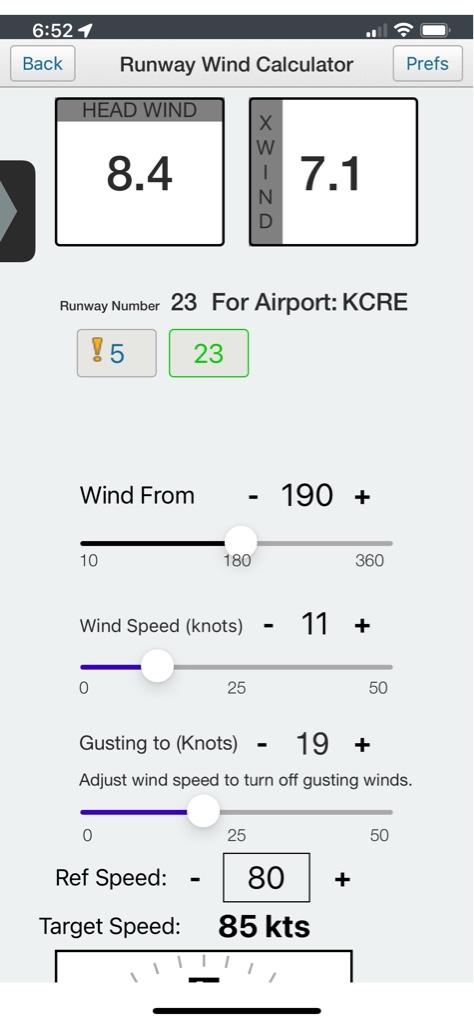
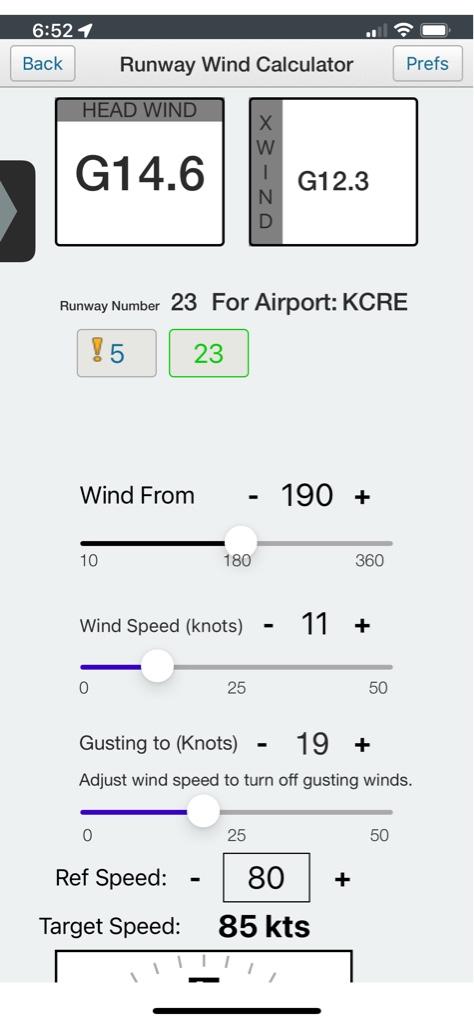
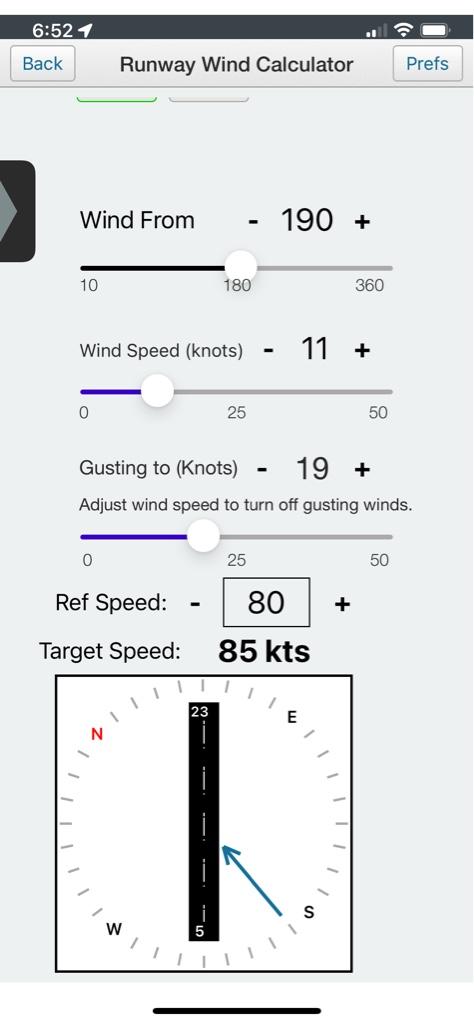
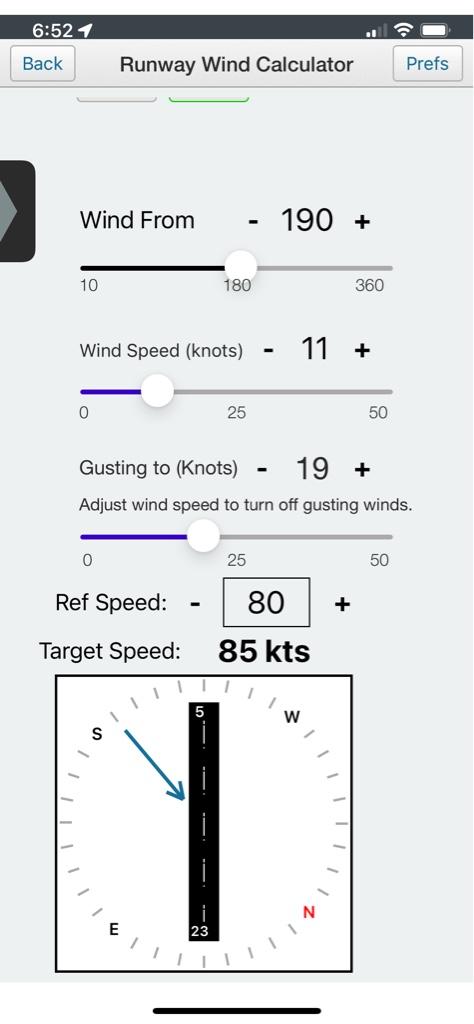
about the only reason I use fltplan go

- Joined
- Mar 2, 2005
- Messages
- 16,628
- Location
- Southeast Tennessee
- Display Name
- This page intentionally left blank
about the only reason I use fltplan go
Someone going to the beach?
eman1200
Touchdown! Greaser!
Someone going to the beach?
lol mentally I’m always at the beach

I've been spoiled by my old lancair. Crosswinds pretty much didn't matter. It just wasn't affected by them very much. I once landed at a towered field after dark in very strong crosswinds. They told me they all came out to watch me land because I was the first plane to land there all day long due to the wind.

Half Fast
Touchdown! Greaser!
- Joined
- May 7, 2016
- Messages
- 21,187
- Location
- Central Florida
- Display Name
- Half Fast
- Home Airfield
- KGIF
about the only reason I use fltplan go
Wouldn’t it be simpler to memorize the sine table and do a calculation in your head?
PRO TIP - If you’ve memorized the sine table, you don’t need to memorize the cosine table, too. Just remember that the cosine is equal to the square root of (one minus the square of the sine).