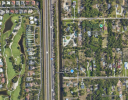
Plane crash on FL freeway

I too know nothing about metallurgy or jet engines. This sounds extremely speculative. Given the age, cycles and flight hours on the aircraft, it probably had multiple engine changes and overhauls over its lifetime. So there’s a very low probability both engines had identical corrosion and failed within a few seconds of each-other IMHO. We need to know when each engine was last overhauled or replaced. Many of these same aircraft and engines “live in” identical salty environments. I do not recall hearing about any other dual engine failures in any aircraft type, let alone this one. Awaiting the final NTSB report.
From the Airworthiness Factual Report:

“Both engines were installed new on the airplane on May 14, 2004, and had never been removed from the airplane.”

“The CF34-3B engine is operated under the Task Oriented Maintenance Program [TOMP] thus having no mandatory scheduled Overhaul or Hot Section
Inspection maintenance. This program consists of installed engine repetitive visual borescope inspections of the external and internal components, specific maintenance checks and an optional but highly recommended Trend Monitoring program.”

Regarding the salt exposure, the accident aircraft spent about 70% of its operating life based in Barbados, with the remaining 30% based at FXE.
 
Last edited:
Reading through the docket, appears the NTSB has already circulated a draft final report to the parties.
Given the accident Factual Report has not been released yet, it is that report that is usually circulated to the principals prior to release. The Final Report is purely an NTSB product.

But where did the salt come from?
The atmosphere or low quality water. In this case it appears to be from the atmosphere. There is lots of guidance on operating turbine/jet engines in salt-laden areas to include maps to help guide operators. Corrosion of this sort is very common on these type engines in these areas especially when the proper preventative measures are not taken.

This sounds extremely speculative.
Not really. The pictures in the docket link above shows the damage that led to the issue and subsequent compressor stalls. The fact both engines were in basically identical condition shows it was more a procedural issue than a direct engine issue. As to the OH schedule, I doubt those engines have ever been off the aircraft with less than 10,000 TT on them. The corrosion was also a known issue for the CF34s per other reports and there had been a number of OEM recommendations to prevent its development on the variable guide vane system. My guess GE will now make something mandated regardless if you operate in a salt-laden area.
 
There's no way the engine mx people for this outfit (probably subcontracted out all to hell) legitimately did not pick up the level of physical vane degradation found post accident, which would lead to dual compressor stall by virtue of a simple in-envelope throttle demand. To say nothing of the documented starting difficulties through the preceding months worth of flights.

Somebody, likely the mx signatories, lied when they put their signature to those engine borescope inspections, and they got those guys killed. And people unironically sneer at EAB owner/operators doing mx on their own recognizance as somehow being the danger to public safety. chicken plucker please, nothing more dangerous than the certified profit motive from where I sit...

Guess it's time to make everyone wear diapers (again), cuz a few can't help themselves. TOMP may also need re-thinking if we can't actionably hold the individual liars criminally or civilly responsible for these deaths and hull losses, as was supposed to be the deterrent point of criminal penalties in the first place.
 
There's no way the engine mx people for this outfit (probably subcontracted out all to hell) legitimately did not pick up the level of physical vane degradation found post accident, which would lead to dual compressor stall by virtue of a simple in-envelope throttle demand. To say nothing of the documented starting difficulties through the preceding months worth of flights.
Guess you missed the part that GE tech support was involved in troubleshooting the starting issues? And what specifically did the mx side miss on the guide vane degradation that the current owner/operator-selected mx program would have required to be checked?

Somebody, likely the mx signatories, lied when they put their signature to those engine borescope inspections, and they got those guys killed.
So, based on your borescope experience, what specifically did the "mx signatories" lie about concerning those borescope inspections?

For context, my question is why the owner/operator didn't follow the recommended GE maintenance procedures for CF34 engines operated in salt-laden environments to prevent such failures as documented in other similar operations?
 
How close is a TF-34 to a CF-34? I operated TF-34s in VERY salt water environments.
 
How close is a TF-34 to a CF-34? I operated TF-34s in VERY salt water environments.
I believe the CF was derived from the TF from what I read. However it appears from the reports the operator elected not to maintain their engines per the recommended procedures for operating in salt water environments as other operators did with no similar issues.
 
However it appears from the reports the operator elected not to maintain their engines per the recommended procedures for operating in salt water environments as other operators did with no similar issues.
Hard to understand why they would do that.
Our normal procedure was to do compressor washes at the end of each day when operating in salt water environments. Took a few minutes.
 
Hard to understand why they would do that.
Our normal procedure was to do compressor washes at the end of each day when operating in salt water environments. Took a few minutes.
Per the docket, they performed engine washes at 800 hours which was a carryover from the previous owner. GEs recommendation was 400 hours or in severe environments as low as 200 hours if I recall correctly. Daily water rinses like for helicopters are usuually not a thing at this level but have seen it done on fixed wing before.
 
Well, goes to the issue of can they corrode that much that fast, or were they simply not really inspected as the maint records indicate?
 
Well, goes to the issue of can they corrode that much that fast, or were they simply not really inspected as the maint records indicate?
In my experience any turbine engine will corrode due to the material used and the exposure to hazardous conditions like salt laden air or even polluted air in various urban areas. And yes it can be that simple as a regular engine wash every 300 hours vs 800 hours that changes the outcome. For example, on helicopters that would spend several days or week offshore on a platform, you could tell who complied with the daily wash requirements and who did not. The CF is not the only turbine engine series to have an issue due to corrosion when not maintained properly.
 
Juan's report is out with ATC and CVR transcripts. . Monday morning quarterbacking I would've taken the FO's advice and taken the water landing or at least the grass medium. Three people survived so that's a accomplishment.
crash site:
 
Last edited:
I'm going to repost the comments I made the day after this mishap occurred. The dual engine failure was something the crew could not have anticipated, and their actions in the brief amount of time they had to react were extraordinary.

The crew did a damned good job of playing the cards they were dealt. Putting down a bizjet on a highway involves speeds that usually result in fragmentation of the aircraft and death of the occupants. That the passengers survived shows those two professionals gave it their all.

Rest easy, guys.
“Okay, hey, let me take over land in this water," one of the pilots proposed.

"Negative, I'm landing right here," one pilot responded.

The pilots faced a critical decision as they approached Interstate 75, aware that their actions could put people on the road in danger.

"No, the road's got traffic, man," one pilot noted, acknowledging the potential danger.

"It's too late for the..." a pilot began.”

Well the FO wanted the water. I think they would of made out better.

Question for two pilot cockpits. If Captain decides what action is to be taken just like this example and FO disagrees does Captain have the final word?

There’s two red knobs on the console that they can split the pitch and roll, then each party gets to do what they like with their side of the airplane.
 
Question for two pilot cockpits. If Captain decides what action is to be taken just like this example and FO disagrees does Captain have the final word?

From a legal standpoint, I believe that whichever pilot is PIC has the final word. OTOH, I assume the Captain gets the final word on who is PIC.
 
Captain had 10,525 hours
FO had 24,618 hours
FO was not some wet behind the ears FO
Captain maybe should of listened to him
my point.
Captain could of easily killed many innocent people landing on an interstate.
 
Captain had 10,525 hours
FO had 24,618 hours
FO was not some wet behind the ears FO
Captain maybe should of listened to him
my point.
Captain could of easily killed many innocent people landing on an interstate.

And you were there and could see everything the Capt could see. And of course with your high experience level in this type of aircraft lends even more credence to your observation.

What is your jersey number you wear while sitting in your arm chair?
 
And you were there and could see everything the Capt could see. And of course with your high experience level in this type of aircraft lends even more credence to your observation.

What is your jersey number you wear while sitting in your arm chair?
My point I think the FO had the best solution to the problem that’s all.

Seems like you think nobody should ever second guess a Pilot? Is that simply it?

Why even comment on crashes then?
 
No so I can’t comment then?

Go ahead.

There’s a lot going on at that phase of flight. I’m not going to second guess ( what you are attempting to do) what was decided as I nor anyone else was in the seat and had to make those rapid calls.
 
Maybe the Captain remembered the acro lady who drowned in St. Augustine?
 
I stand corrected. So if the FO is flying a leg as PIC, the Captain can't change that? I'm completely unfamiliar with how this works in for-hire flying.
The FO isn’t flying AS PIC. He’s designated as SIC by the company.

What he can log, on the other hand…
 
Based on the information available to them at the time, or based on the information available to you now?
To me now. Juan went over it but I’ll try to remember.
FO: I have water on my side let me have it
CA:No we will land here
FO: Man there’s cars on the road
 
The crew had 75 seconds to react and decide, and we've had 18 months to pick it apart and second guess their actions.

Did you look at the water the FO was talking about? A narrow drainage canal lined with tall pine trees on both sides. I would speculate the water choice could have been worse. They weren't talking about open ocean.

Honestly, deadsticking a large corporate aircraft they did a heck of a job, and nearly pulled it off. Had they not run off the shoulder and got the wingtip into the sound barrier, everyone would have likely walked away. Even as it turned out, they saved the passengers and lost their lives due to a problem they couldn't have predicted or corrected.

For reference, the canal running parallel to the east side of the interstate was the water in question.

1757539366687.png
 
The crew had 75 seconds to react and decide, and we've had 18 months to pick it apart and second guess their actions.

Did you look at the water the FO was talking about? A narrow drainage canal lined with tall pine trees on both sides. I would speculate the water choice could have been worse. They weren't talking about open ocean.

Honestly, deadsticking a large corporate aircraft they did a heck of a job, and nearly pulled it off. Had they not run off the shoulder and got the wingtip into the sound barrier, everyone would have likely walked away. Even as it turned out, they saved the passengers and lost their lives due to a problem they couldn't have predicted or corrected.

For reference, the canal running parallel to the east side of the interstate was the water in question.

View attachment 144992

Highway looks like the better shot to me. Crap sandwich.
 
The crew had 75 seconds to react and decide, and we've had 18 months to pick it apart and second guess their actions.

Did you look at the water the FO was talking about? A narrow drainage canal lined with tall pine trees on both sides. I would speculate the water choice could have been worse. They weren't talking about open ocean.

Honestly, deadsticking a large corporate aircraft they did a heck of a job, and nearly pulled it off. Had they not run off the shoulder and got the wingtip into the sound barrier, everyone would have likely walked away. Even as it turned out, they saved the passengers and lost their lives due to a problem they couldn't have predicted or corrected.

For reference, the canal running parallel to the east side of the interstate was the water in question.

View attachment 144992

I believe the water the FO saw was on the west side of the road. Go north aways, it's a lake not a ditch.
Whatever
 
The FO isn’t flying AS PIC. He’s designated as SIC by the company.
If I’m reading the interview transcripts correctly, the FO was not PIC rated with Hop-a-Jet. He was described by the company check airman as still new to the operation. He would not have been allowed to fly PF with passengers, but PF on empty legs. Check airman further stated that PF always flies from left seat in Hop-a-Jet ops.
 
I believe the water the FO saw was on the west side of the road. Go north aways, it's a lake not a ditch.
Whatever
Care to point out what lake you are referring to? I'm not seeing one large enough to even attempt to land a Challenger in anywhere near where the engines failed. They were on right base to the SW runway at Naples at low altitude. Not a lot of options at that point. There was no Hudson River available for this crew.
 
If I’m reading the interview transcripts correctly, the FO was not PIC rated with Hop-a-Jet. He was described by the company check airman as still new to the operation. He would not have been allowed to fly PF with passengers, but PF on empty legs. Check airman further stated that PF always flies from left seat in Hop-a-Jet ops.
Wouldn’t matter what ratings he held or what his status at the company was…the company designates the PIC for the trip, and the PIC can’t change that designation.

§ 135.109 Pilot in command or second in command: Designation required.​

(a) Each certificate holder shall designate a—

(1) Pilot in command for each flight; and
(2) Second in command for each flight requiring two pilots.
(b) The pilot in command, as designated by the certificate holder, shall remain the pilot in command at all times during that flight.
 
Last edited:
To me now.
That doesn't count. Decisions have to be made based on the information you have when making the decision. So knowledge of the outcome and facts unavailable to the pilots are off limits in evaluating their decision making. Besides, the outcome doesn't speak to whether the decision was correct anyway, since the outcome is so heavily influenced by luck.
 
Back
Top