Personal Minimums, Marginal VFR

Below 1500 is scud running to me. I won't leave the pattern unless it is a very short hop to a known location or am confident it improves in my direction of travel.

Between 1500 and 2500 is marginal. I usually go, but I exercise more caution. Large towers are a particular concern below 2K.

Above 2500 is comfortable in almost all circumstances.
Exactly. In known terrain, I'll deal with lower than 1,500' - say going to the pancake breakfast at a neighboring field with no obstacles enroute. I've done long X/C's at 1500'. Atlanta to almost Dallas. What I won't do is launch into worsening conditions or launch when the destination is IFR.
 
I want to know if the mvfr airports along the route are improving or deteriorating.also do I have a way out of the route safely. You set your minimums that you are comfortable with. Keep an eye out behind you in case you decide to turn around.
 
Like others, it depends on where I am at.

When I was flying out of Kotzebue, if I could see the prop(s) from the pilot seat, off I'd go.

Here in NM, If the vis is anything below 5 miles, (blowing dust being the exception) I would file and go. SVFR isn't done much, unless it is for blowing dust. One time in Albuquerque the wind was howling. Reported vis was 2 miles. However I could see Mt. Taylor that is around 40 miles to the west. So I asked for SVFR. The controller took a couple seconds then gave me the special.

As long as I don't hit a sailboat mast I am good.
I was trying to get into Kivalina one day in uhhh, let's say 1 mile visibility. I was about 10 miles southwest of the airport over the Chukchi Sea, about 200msl, when suddenly a large cargo ship went under me. I saw a faded hammer and sickle painted on the stack and the white, blue and red flag flying on the tail end of the ship. ooooops....sorry comrade....

No, I wasn't in russian airspace, there is a mine, Red Dog Mine, about 30 miles inland. The minerals that are mined there are trucked to the coast and loaded on smaller ships that then go out and unload onto the bigger ships.
 
With the proliferation of digital instruments, there is no reason not to be equipped for basic instrument flight. I installed a pair of AV-30s in my VFR-only Decathlon and get regular hood practice. It's good peace of mind for $5K.
 
This is especially true for local sight-seeing. Those flights are purely for fun, so even if I could fly but there's a low ceiling and bumpy air below it, I just shrug my shoulders and say "Not now."

Yep. With the price of fuel these days I sometimes take off for a fun flight and find the rough and tumble and go put it back in the hangar. Saturday was like that but I had an EAA meeting to get to so I tightened the belts and away I went ... :rockon:
 
There's no need to be less than 2000ft AGL, and you'd need to ensure you have clearance to towers and other man-made structures. And while 1sm of visibility can be legal, it is still a not so smart thing to do. 3sm should still be something to aim for even if 1sm is legal. Use NEXRAD/ASD-B WX to see if there's anuthing more than green returns, and stay a safe distance away, accounting for the data delay.
 
On the coast of CA, below Gaviota, we have something called a 'coastal Eddy'. It's a common layer of thin cirrus that runs about 700-1300' AGL and is layered from a few slippery feet to a 1000 feet at the most. It's also thin enough in most cases that I can maintain visual reference to the ground and horizon. I've flown through that stuff many, many times. In fact, I've towed banners just below it for hours. Very stable, and it usually blows away, or clears by prime beach hours of noon. It's great for practicing actual IMC if one can get the appr to give the proper altitude(usually they route too high). Very well known weather phenomenon, and mostly harmless.

In the central US, from NB over through Iowa and into MO, there's another common pattern in spring and early summer of a stationary front(which is an oxymoron) with overcast/scattered about 2500-3000' AGL. I flew from Indy down to OK City, and back several times in a VFR only plane. If I see or get a brief that there's a stationary front, and it'll last more than 18 hours, I feel I'm good to fly at 2000-ish.

Occluded fronts are to be avoided. The key for me has been stability, or known improving conditions. Yes, I've flown quite a bit of MVFR, before getting my rating and filing IFR, and also before having a plane that was qualified. The most important thing I would on a trip is go point to point, which follows airport to airport across the ground. If I get to a point where the next airport isn't going to be made, I do the 180 and already have my planned landing spot right behind me. Kinda zig-zag, but it works. I've had to reverse course a few times.
 
Yep. With the price of fuel these days I sometimes take off for a fun flight and find the rough and tumble and go put it back in the hangar. Saturday was like that but I had an EAA meeting to get to so I tightened the belts and away I went ... :rockon:
I'm feeling tailwheel rusty these days. Went to the aeropuerto yesterday to brush up in the RV-6. The wind and its variability surprised me so I took up the RV-10 (nosegear). It was turbulent and un-fun. But I was glad I *didn't* take the RV-6 up. The conditions were not right for polishing my tailwheel skills.
 
MVFR, spring and fall, down here usually just means an overcast layer around 1,000–2,000 feet with great visibility underneath — nothing to get worked up about. Being on the coast, it can be pretty widespread, sometimes states‑wide. Honestly, I love flying on those days: the sun isn’t cooking you, it’s easy to knock out the six‑hitter, and the air is usually smooth. Plus, we don’t have any tall rocks waiting to grab us.

Outside of MVFR days, I almost never use the IR because around here it usually means icing or nasty thunderstorms. I don’t mind weaving around summer storms now and then, but when it’s MVFR during the summer, that usually means it's extra nasty out
 
Last edited:
Since retiring, I've become, if not truly more conservative, at least less willing to fly in "not-so-fun" conditions. When I was working, my time to fly was more constrained, but now that I'm joyfully unemployed, if weather looks iffy one day I don't hesitate much to wait a day or two.
One of my Favorite quotes from a local backcountry chartpilot. "I checked the weather... It wasn't bad enough to cancel and wasn't good enough to be fun."

Brian
 
I’d love to see a thread about marginal VFR flying.

I’ve been realizing lately that I generally only fly when the weather is basically perfect. That’s partly because where I live there are only two or three common weather patterns: very good VFR and totally disaster storm, with not much “flyable marginal” weather in between. IFR flight around here involves very high MEAs with almost year-round freezing/ice potential, so there is basically never flyable IMC without FIKI, so that’s out, too.

At least partly due to the above phenomenon, I realized lately that I have become a bit of a fair weather flyer, and - especially when it relates to flying to other destinations (usually coastal) where there are saturated air masses, overcast, drizzle, but otherwise very doable VFR flying - I have scrubbed a lot of trips that probably were totally doable. For example, I realized it had been years since the last time I had flown through even a little bit of rain, and if I were a little more comfortable with other weather patterns I’d get a lot more utility out of my plane.

So, lately I’ve been looking for marginal weather to fly in, and when a recent storm came through, I jumped at the chance to go fly. It was something like 900 scattered, 2500 overcast, areas of light to moderate rain. I spent most of the flight at about 1500 AGL, dodging clouds, aiming for the areas of light showers, and flew a 1.5 hour lazy loop around our local area. It was great. Very different from my normal flying, a couple spots that put me on edge where the horizon started to blur and visibilities decreased significantly, but overall I was surprised how comfortable I was (I’m sure this is partly because it was my local area and because I’m not a newbie - been flying more than 20 years).

So. What are your thoughts on marginal VFR? What is safe boundary pushing vs. unsafe boundary pushing? How can you evaluate when you can trust ceiling and visibility reports - like, is it just 5 miles and 2500 OVC right over the airport and 0/0 everywhere else? What are your thoughts about light vs. moderate vs. heavy rain? Snow? Thunderstorms in the vicinity? How would you characterize the “good” marginal VFR weather in your area, and what limits and rules of thumb do you try to abide by when making the go/no-go decision

If you plan to depart or arrive with a ceiling of 1000 feet (or lower) and you experience engine failure, how much time will you actually have to visually acquire and set up for your emergency landing after you break out of the goo?

You might want to ask that same question about overflying large areas of low ceilings/visibilities during your flight planning.

Your own proficiency, currency and knowledge of your aircraft glide characteristics are important, but never plan for best case glide performance. Recency is also important. You might be legal and current, but when was the last time you actually cracked a real ceiling alone? When did you last practice engine out glide?

We all read the accident reports, thinking in the back of our minds that things like that happen to other pilots. But if you fly long enough, those bad things might eventually happen to you, too.

Break the thread. Fly safe.
 
One additional thing to consider is that if a low ceiling is forcing you to stay low, it's doing the same thing to every other VFR pilot. Low ceilings compress VFR traffic into a thin slice near the ground, and below 3000' AGL there's no rule for altitude vs direction of flight. Something to bear in mind if you're flying in a popular area.
 
Anyone contemplating flying in marginal vfr frequently needs to understand what Special VFR is and how to best utilize that privilege. Way long time ago, before my PP-ASEL checkride, I was up with my instructor out of KBDR when a strong cold front came through including some significant snow squalls. My CFI said "watch this", and called the tower for a Special vfr clearance, received it, and landed without fuss or damage. At the same time we could hear the gaggle of weekend warriors calling for pop-ups for clearance to Islip NY KISP to divert. Great lesson!

-Skip
 
Last edited:
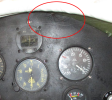
You have bigger problems than staying away from weather!

View attachment 151463

I never noticed that! Though it's an old picture from before I owned the plane.

It's believed by many that it was incapacitation caused a Black Widow spider bite that did the great Bevo Howard in... a nest was found under the seat of his Jungmeister after the crash.
 
I never noticed that! Though it's an old picture from before I owned the plane.

It's believed by many that it was incapacitation caused a Black Widow spider bite that did the great Bevo Howard in... a nest was found under the seat of his Jungmeister after the crash.

Crap. Something else to add to the preflight checklist.....
 
3000’ and 10 is a good number for me if I’m flying for fun. Just because you can do stuff doesn’t mean you should or that it’s a good idea. Be wary of falling into the “Well, I did x thing and it was fine, so surely I can do y thing and it will be okay too.”

I know a lot of dead folks who thought they could get away with y thing. If I’m having to work at it I should be getting paid and if it’s no longer fun the whole original point of the flight is negated. YMMV
 
:D :D I know it's dangerous to assume, but I'm going to assume he wasn't planning on flying underground.

Hope not... but flying through the saddles is more than possible for those who thrive on adrenaline and love risks (not me). Following the Pennsylvania turnpike (I-76) eastbound across the mountains at 3000' MSL would work if you plan on a little dead-reckoning when losing sight of the highway while overflying that damn tunnel... LOL
 
One additional thing to consider is that if a low ceiling is forcing you to stay low, it's doing the same thing to every other VFR pilot. Low ceilings compress VFR traffic into a thin slice near the ground, and below 3000' AGL there's no rule for altitude vs direction of flight. Something to bear in mind if you're flying in a popular area.
Not always...it always shocks me when I'm in IMC on a fully overcast day, and get a call for VFR traffic, not talking to us, at your 11 o'clock 2 miles. At the same altitude.

Negative contact. I'm in IMC.

Happens way more often than I ever would have thought, especially in the sweet spot altitudes of 6-10k in central Texas.
 
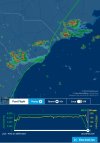
Ed, similar to your view except higher, and with NEXRAD to view the obvious. Typical mid-summer afternoon - VFR at 7500'.

IMG_2518.jpg
 
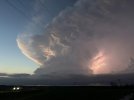
I think this was our MVFR conditions last night, although the clg might have been a little low. I didn’t check any local METARs.

Cool pic. I'd speculate on that being a supercell. Probably want to give that mess a little more space than the recommended 20 miles. Especially downwind of the anvil and prevailing winds aloft.
 
That looks like a trans-dimensional portal throuh the space-time continuum.
Did you see Langoliers at the other end?
 
How accurate do y'all find the https://aviationweather.gov/gfa/#clouds forecasts?
I'm trying to find days where the ceiling isn't too low and the cloud tops aren't too high to get some practice IFR in. I'd like to practice approaches starting for clear air.
 
Get a clear blue sky day and fly with a safety pilot.
Not the same and you know that.
Starting out new ifr I’d say 800’ and three miles. Just avoid convective and icing weather.

Best practice is when the airport is IFR that way it’s all real and you have the whole airport approach to yourself.
 
Not the same and you know that.
Starting out new ifr I’d say 800’ and three miles. Just avoid convective and icing weather.

Best practice is when the airport is IFR that way it’s all real and you have the whole airport approach to yourself.
"Avoid convective and icing weather"? In the areas where AA5B and I live that is the only kind of IFR we get. My driveway is 7400'; MEA's start at 11k'. I've been instrument rated for 30+ years, never had access to FIKI equipment; my actual instrument time is less that 3%. It makes it tough as a CFII when a student wants some actual time and I have to tell them, no, you can't go play with the big boys. As much as I'd like to, I don't do it. It's not fair to them but if they want actual time in a C172, it won't be around here. In answer to the original question, my MVFR minimums are well above VFR minimums.
 
Last edited:
Back
Top