Matthew
Touchdown! Greaser!
Speaking of storm pix:
My daughter got this picture over her jobsite at Beardstown, IL several years ago.
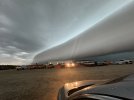
My daughter got this picture over her jobsite at Beardstown, IL several years ago.

Ok, but that's you and where you live. And doesn't answer my question, in true POA form"Avoid convective and icing weather"? In the areas where AA5B and I live that is the only kind of IFR we get. I've been instrument rated for 30+ years, never had access to FIKI equipment; my actual instrument time is less that 3%. It makes it tough as a CFII when a student wants some actual time and I have to tell them, no, you can't go play with the big boys. As much as I'd like to, I don't do it. It's not fair to them but if they want actual time in a C172, it won't be around here. In answer to the original question, my MVFR minimums are well above VFR minimums.


Yes…. AGLYou'll need higher than 3000' to remain safe in VMC (unless you're referring to AGL?).
I always get nervous when someone says, “watch this”.Anyone contemplating flying in marginal vfr frequently needs to understand what Special VFR is and how to best utilize that privilege. Way long time ago, before my PP-ASEL checkride, I was up with my instructor out of KBDR when a strong cold front came through including some significant snow squalls. My CFI said "watch this", and called the tower for a Special vfr clearance, received it, and landed without fuss or damage. At the same time we could hear the gaggle of weekend warriors calling for pop-ups for clearance to Islip NY KISP to divert. Great lesson!
-Skip


Ok, but that's you and where you live. And doesn't answer my question, in true POA form
I'm east coast, flat land. While we do get some fun thunderstorms are the weather warms up, we often get 2k' layers that are 2-3k' AGL. It would be nice to get a moderately accurate prediction of those circumstances so I can take advantage of them.

When I say ''watch this'...I am gonna teach something.I always get nervous when someone says, “watch this”.

My last sentence answered the OP's question. I was not aware that you asked a question. If I have time, I'll go back a look.Ok, but that's you and where you live. And doesn't answer my question, in true POA form
I'm east coast, flat land. While we do get some fun thunderstorms are the weather warms up, we often get 2k' layers that are 2-3k' AGL. It would be nice to get a moderately accurate prediction of those circumstances so I can take advantage of them.
I think it's a great idea to get comfortable with MVFR, but be careful you don't get burned. I was recently on a flight where it was VFR at the Airport, but I had to depart IFR to climb up to altitude. I climbed from about 2000 to 3000 AGL to clear blue skies on top, but that cloud base went for hundreds of miles and at one point I heard a VFR pilot that was stuck on top and called ATC for help. About 100nm west of where I departed I could see the end of the front and the ground, so I let ATC know, but about that time the pilot also found a hole and made it under the clouds. For this I'd suggest you do some practice with a CFII on how to descend through a cloud layer. If you're flying marginal Wx, you might find yourself stuck on top and you can only fly around looking for a hole. Eventually you're fuel gauges are going to force you to get over an airport, declare and emergency and descend through the clouds.So. What are your thoughts on marginal VFR?

At the risk of this thread becoming cross-controlled, it's hard to get an accurate forecast when you don't even get enough funding to launch a minimum number of weather observation balloons.

I’m on the gulf coast and I find the AWC cloud layer as accurate as any other product I’ve used for cloud cover. It gets fairly accurate under 3 days out and very accurate under 24 hours out in the upper Tx to Fl panhandle and inland a hundred miles.Ok, but that's you and where you live. And doesn't answer my question, in true POA form
I'm east coast, flat land. While we do get some fun thunderstorms are the weather warms up, we often get 2k' layers that are 2-3k' AGL. It would be nice to get a moderately accurate prediction of those circumstances so I can take advantage of them.
At the risk of the thread going inverted, I haven't noticed that the forecasting has been any worse than its always been.

At the risk of the thread going inverted, I haven't noticed that the forecasting has been any worse than its always been.
I think it's a great idea to get comfortable with MVFR, but be careful you don't get burned. I was recently on a flight where it was VFR at the Airport, but I had to depart IFR to climb up to altitude. I climbed from about 2000 to 3000 AGL to clear blue skies on top, but that cloud base went for hundreds of miles and at one point I heard a VFR pilot that was stuck on top and called ATC for help. About 100nm west of where I departed I could see the end of the front and the ground, so I let ATC know, but about that time the pilot also found a hole and made it under the clouds.
Our EAA chapter organizes a good number of fly-outs every year, and they're planned as VFR-only events. That means that you start looking at the forecast 3-4 days out to decide if you cancel or change destinations.I haven't noticed that the forecasting has been any worse than its always been.
Could we find a less measurable question to argue about anecdotally?
How would we measure the measurably of an unmeasurable question?Could we find a less measurable question to argue about anecdotally?
How would we measure the measurably of an unmeasurable question?
I think you’d want something better than an inferiormeter.With a coherent light source and an interferometer.
Obviously.
No, it was last fall in IL.That wouldn’t have happened in east TX a few weeks back?
not sure where you are but 1800wxbrief, the weather channel and aviationweather.gov are pretty reasonable at searching out those lower mvfr days, atleast down here around the gulf. have a good look at the taf, forecast temps, prog and convective charts, should get you in the ballpark.How accurate do y'all find the https://aviationweather.gov/gfa/#clouds forecasts?
I'm trying to find days where the ceiling isn't too low and the cloud tops aren't too high to get some practice IFR in. I'd like to practice approaches starting for clear air.


True. It's not exactly the same. If you're rusty, you don't die with a SP in VMC.Not the same and you know that.
True. It's not exactly the same.
But you're miles ahead if you also do the more plentiful VMC safety pilot practicing.

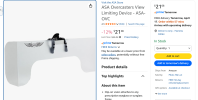
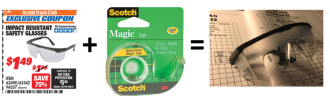
Any recommendations out there for a comfortable view limiting device that eliminates all side vision inputs, that also works well with eyeglasses? I've tried the glasses with the frosted side panels and don't find them nearly as effective.

 www.sportys.com
I just close my eyes. The ILSs I’ve flown while sleeping were some of my best.Any recommendations out there for a comfortable view limiting device that eliminates all side vision inputs, that also works well with eyeglasses? I've tried the glasses with the frosted side panels and don't find them nearly as effective.