Paint budget

Tony R

Pre-takeoff checklist
Joined
Mar 12, 2019
Messages
200
Display Name
Atrosa
Has anyone recently painted a Cherokee 140?

How much should I budget for this? $15 AMUs?

What are some items I need to be aware of? I just want white with maybe a stripe.

Not looking for the next AOPA sweepstakes plane, just a decent paint job.
 
I don't think $15K will get you far but I could be wrong. You gonna replace windows and seals concurrently?

Where are you? You'd do well to state where you are so folks can recommend shops that are reputable and reasonably local to you.
 
Connecticut, so take normal prices and apply a 1.5 factor. Of course it can be flown, so I can reasonably look at a 300 mile radius.
 
Connecticut, so take normal prices and apply a 1.5 factor. Of course it can be flown, so I can reasonably look at a 300 mile radius.
I suspect normal prices start at 15-20K. If there's a 50% adder, well...
 
I just got a quote for a shop in PA. $35ish for my 182 with 2 colors, new fairings and weight and balance re done. No new windows
 
It all depends on the extras. How straight is your airframe? Hail damage? New paint will accentuate all the dents, dings and defects. What else to want to add or modify. The cost of paint has soared in recent years.

When I had Sunny painted, I just wanted basic white. I thought I could put a vinyl stripe on her myself, or at minimal cost. Vinyl is used extensively in the automotive world, so why not? I eventually decided to have the stripes painted, and I am very happy with it.

Your cost estimate was not out of the realm of reason before extras. But, that is several years ago. That said, I added extras, so my total was about 1/3 - 1/2 more.
 

Attachments

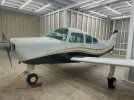
  • IMG_0822.JPG
    IMG_0822.JPG
    1.3 MB · Views: 18
I know of a Baron 55 painted in Mena, AR recently with 3 colors, proper stripping, prep, etc. quoted under 30K and delivered on price. He visited during a couple of phases and was very happy with the processes used and the end result. Crider did the work. The owner of the Baron knows what a proper job entails.
 
I know of a Baron 55 painted in Mena, AR recently with 3 colors, proper stripping, prep, etc. quoted under 30K and delivered on price. He visited during a couple of phases and was very happy with the processes used and the end result. Crider did the work. The owner of the Baron knows what a proper job entails.
This is where my friend had his Aztec painted a couple months ago. He had 3 paint colors and it was north of 40k. It looks great!
 
Last edited:
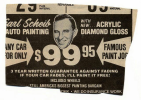
Perhaps someone should open a Scheib type paint store for aircraft. You don't have to remove any paint. Simply wash it, tape up the glass and paint everything else ... :biggrin:

Motto "any plane, any color - 9,995.00"
Sounds like a profitable business would be to open a paint shop in Mexico. I suspect environmental regulations and labor costs are far lower there. Of course, getting it fixed if things go south would be more difficult too.

Another alternative would be to set up a production shop here in the States where you use one stripping process on the aluminum (say dry ice blasting) sand the plastic/fiberglass, then go back with a standard white (everyone gets the same 1-2 whites) and an offer of two of a dozen standard trim colors/packages. Turn it into a production shop, rather than a job shop. Yep, your flexibility/individuality is reduced, but your cost might be reduced by $10K too.

It'll get more expensive if the owner wants new windows or if the plastic/fiberglass is damaged and the owner wants to repair it.
 
Last edited:
Sounds like a profitable business would be to open a paint shop in Mexico. I suspect environmental regulations and labor costs are far lower there. Of course, getting it fixed if things go south would be more difficult too.
I should have posted that in green ... ;)
 
I should have posted that in green ... ;)
My day job is essentially as a production engineer. Painting an airplane could be a more or less standard process, but owners want a lot of input and customization. That costs money. I really do think it could be done far less expensively if owners were prepared to accept less customization. Less customization doesn't mean lower quality, just fewer options and a standard process.
 
My day job is essentially as a production engineer. Painting an airplane could be a more or less standard process, but owners want a lot of input and customization. That costs money. I really do think it could be done far less expensively if owners were prepared to accept less customization. Less customization doesn't mean lower quality, just fewer options and a standard process.

Use the Henry Ford approach - "any color you want as long as it's white"
 
Dry ice stripping has the advantage of few environmental problems and simply a sweep job for cleanup. It's disadvantages are that you need a large compressor and it takes a lot of dry ice to do an airplane. If I remember correctly, when they did the DC-3 demo at Oshkosh many years ago, they used about 50,000 pounds of dry ice to complete the job. Around here, dry ice is running between 6$ and 9$ a pound, depending on quantity and where you buy. Bulk needs to come out of a plant in Houston and must be ordered a couple of days in advance.

If you were going to set up a stripping operation with it, you would need to factor in the cost to build enough capacity to make your own dry ice on an as needed basis.
 
Perhaps someone should open a Scheib type paint store for aircraft. You don't have to remove any paint. Simply wash it, tape up the glass and paint everything else ... :biggrin:

Motto "any plane, any color - 9,995.00"
Don't forget "We use the highest quality Rollers on every job "
 
Prices seem ridiculous.
The man hours to perform a proper strip and prep consume a lot of the cost. Taping off all the skin joints then manually stripping those areas is tedious time consuming work...but the proper way of doing things. Of course, then you have the reassembly and balancing of control surfaces. Slopping on a bunch of stripper then pressure washing it off can save a lot of labor cost but, will you have an airworthy plane once corrosion takes it's toll in those lap joints/faying surfaces? There is no paucity of reports of airframes being written off from such poor practices.
 
I’ve done “ quick n dirty” paint touch-ups but primarily on Cessnas.
Sand and repaint Leading Edges only of wings and stab.
Also cowling and some fairings.

You don’t see the top of wings ( Cessna) and lower surfaces don’t deteriorate. It’s tough to eliminate trim lines but you can change colors
and follow the lines.

These were generally Flight School birds so downtime is significant.
They were often done in stages and flown in between. Controls not painted so balancing eliminated. If you don’t like it just step back another 10 feet.

Hangar Fairies had painted my last 172 with rattle cans of Rust Oleum.
Didn’t look bad and easy touch-up. Complete repaint would have been more than selling price of the aircraft.

A LOT of the fleet had mediocre paint when new. Paint can add weight and cost. Some folks mentioned a decrease in performance. They claimed
spanwise leading edge stripes acted like ice. Sanding the edges restored
performance.
 
The man hours to perform a proper strip and prep consume a lot of the cost. Taping off all the skin joints then manually stripping those areas is tedious time consuming work...but the proper way of doing things. Of course, then you have the reassembly and balancing of control surfaces. Slopping on a bunch of stripper then pressure washing it off can save a lot of labor cost but, will you have an airworthy plane once corrosion takes it's toll in those lap joints/faying surfaces? There is no paucity of reports of airframes being written off from such poor practices.

All true, plus the cost of materials and the cost of complying with environmental regulations are quite high. I spent a while talking with my paint guy when my Beech was done last year. The overhead of maintaining a facility large enough to paint biz jets ain't cheap, either. They have to have sealed lights, switches, etc., special air handling, fire suppression, and so on.

Unlike a car paint shop, they're not turning a job out every day or two, either. My plane was in the paint shop for over two months. I think he had about a half dozen planes in the shop, in one stage or another. I'd guess on average that they're completing about one job every two weeks, though I'm sure it varies a lot with airplane size and the complexity of the paint.

Plus they have to cover the cost of eating inevtible mistakes. When I first saw the airbrushed tail art on my plane, it was excellent but the height wasn't the same on each side, so they had to remove it from one side, redo the base paint, and then bring their airbrush guy back in for another day. The shop was great about doing it, no hassles at all, but I know it ate into their expected earnings.

A reputable shop will also flag any problems, like corrosion or skin damage, that they may find during disassembly. Some shops will cover small repairs up to some dollar limit, but will contact you if they find something bigger for instructions.

 
Maybe there is a different choice. On our club planes, instead of a repaint, we did a hybrid approach of cleaning, buffing off the old oxidized top layer of paint, and ceramic coating it.

Our club planes sit on tie down, and paint was getting a bit "weathered". We had spots repainted that were deteriorated, mostly the cowl, as well such as the leading edge, few spots on the ailerons, etc. Our old Skylanes have the "old school" paint that has no clear coating. Reminds me of polishing the old paint on our 1971 Cutlas we had when I was a teenager. The "old school paint" is is fairly easy to color match. Had the plane washed/scrubbed, polished with compound to remove the old oxidized top layer, and then ceramic coated.

Plane looks completely different, and the plan is that with ceramic coating and future increased frequency of washing/cleaning, we will have delayed the need for a complete repaint by many years.

Again, it comes down to how much good paint is left on your plane.
 
Prices seem ridiculous.
They are. I flew my Arrow partial-panel painted, as bought, for more than 13 years. It was a good decision too, as I would have lost even more of my labor value for no performance benefit, when the engine went. Quotes were outrageous then, and they are even more so now.

Our monetary debasement got out of hand, that's just the short and skinny of it. You have to look abroad for any semblance of value retention in anything you wish to pursue in life anymore. This decade has been a big exercise in substitution value for us. My household's purchasing power has got rekt'd in the 2020s (I estimate -40% since '20), and we make twice in nominal terms what we made in the 2010s. As such, on the the whole, that moniker "you get what you pay for" has not been our experience. Consumer products of any kind have been absolute crap too. Longevity of appliances is terrible. We can't afford new vehicles anymore (we could in the 2010s, as a % of our income at that time).

Moving forward, just like hangars, paint isn't going to keep me from flying; the pride in ownership brigade can go get bent. Of course some of my substitution choices are going to ruffle some feathers, but that's a put it on my tab/catch me if you can type of thing.

I’ve done “ quick n dirty” paint touch-ups but primarily on Cessnas.
Sand and repaint Leading Edges only of wings and stab.
Also cowling and some fairings.

You don’t see the top of wings ( Cessna) and lower surfaces don’t deteriorate. It’s tough to eliminate trim lines but you can change colors
and follow the lines.

These were generally Flight School birds so downtime is significant.
They were often done in stages and flown in between. Controls not painted so balancing eliminated. If you don’t like it just step back another 10 feet.

Hangar Fairies had painted my last 172 with rattle cans of Rust Oleum.
Didn’t look bad and easy touch-up. Complete repaint would have been more than selling price of the aircraft.

A LOT of the fleet had mediocre paint when new. Paint can add weight and cost. Some folks mentioned a decrease in performance. They claimed
spanwise leading edge stripes acted like ice. Sanding the edges restored
performance.
You're my kind of people. Glad to hear there's some of us "poors" still upsetting the apple cart here.
 
Moving forward, just like hangars, paint isn't going to keep me from flying; the pride in ownership brigade can go get bent. Of course some of my substitution choices are going to ruffle some feathers, but that's a put it on my tab/catch me if you can type of thing.

:yeahthat:

My plane has what I refer to as a "twenty two hundred" (2200) paint job. At 20' or 200 mph it looks as good as anything on the field ...
 
I just had my Navion painted last year for $7000. The hard part was getting the guy who was painting it out of my hangar.
 
I just had my Navion painted last year for $7000. The hard part was getting the guy who was painting it out of my hangar.
Reminds me of the old Mae West joke. "There was a guy pounding on my door all night long. I let him out in the morning".
 
iu
 
A guy near me stripped a Mooney by himself over a couple months, working a little at a time. Someone else is going to spray it for not a whole lot.

I’m currently stripping and painting my 140 a panel at a time using Rustoleum white and royal blue with harbor freight spray gun. It’s taking a while but looks decent enough for a 140…much better than it was.

The paint shop in Mexico is already happening.

Professional paint shops are going to do a professional job and charge a professional price. They have to to cover the overhead of epa, state, federal, city, county, and airport regs. Those fees and insurance policies are ridiculous and a professional shop is forced to cover those expenses. Some states are better than others, but it’s still going to be pricey.

DIY is possible. You won’t achieve professional results, but…it’s a 140, not a Gulfsteam.
 
Dry ice stripping has the advantage of few environmental problems and simply a sweep job for cleanup. It's disadvantages are that you need a large compressor and it takes a lot of dry ice to do an airplane. If I remember correctly, when they did the DC-3 demo at Oshkosh many years ago, they used about 50,000 pounds of dry ice to complete the job. Around here, dry ice is running between 6$ and 9$ a pound, depending on quantity and where you buy. Bulk needs to come out of a plant in Houston and must be ordered a couple of days in advance.

If you were going to set up a stripping operation with it, you would need to factor in the cost to build enough capacity to make your own dry ice on an as needed basis.
Is that supposed to be 6¢ and 9¢? I sure hope so.

:biggrin:
 
Did a little looking on the dry ice prices and it's dropped quite a bit in the lat couple of years. Pelletized is still several bucks a pound, while larger block is about half the prices. The problem with large block is that you have to break it up to put it in a grinder to make pellets to send to the blasting unit.
 
DIY is possible. You won’t achieve professional results, but…it’s a 140, not a Gulfsteam.
Definitely possible depending on how you define DIY. Assisted with a few repaints where we pulled the wings and tail feathers, the owner did most of the prep, had a local paint shop who was willing to work with us, and in the end had a professional paint job for a reasonable cost.

However, its not for the faint of heart and needs the assistance of a willing mechanic plus have an area large enough to handle the disassembly and prep work. Since a lot of this work falls under prevent mx the owner can work alone to control the billable labor costs. And just to add there are a number of non-hazard paint strippers out there vs paint blasting that keep required prep skill levels well within an average owners capabilities.
 
DIY is possible. You won’t achieve professional results, but…it’s a 140, not a Gulfsteam.
If you put in the work, DIY can offer equal to or better than professional results. But it is real work, requires an adequate space and equipment, and can be incredibly frustrating (and satisfying).
 
A rattle -can job may restore the original “ glory”?

Quality of the finish was not too good when leaving the factory.

The Maule folks didn’t even have a spray booth. A bud bought one

and questioned the finish. BD Maule himself said; “That’s the way they

come”!
 
Back
Top