Oil change results in me messing up.

PIDG style terminals and an appropriate cycle controlled type crimper. Autozone $3.99 Chinesium squeeze as hard as you can crimpers should be tossed in the trash.

I have a Greenlee 45500 crimper,


Technically you should pay hundreds of dollars for a professional mil spec crimper. Practically, this will do just fine:

Klein crimping tool

I have had this MSD crimper for 25 years. It was originally used to crimp ends on spark plug wire sets used on my mags on a top alcohol dragster. I forget what it cost back then.

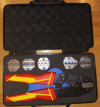
All of these look like they could have come off the same assembly line, apart from cosmetic differences. Here's what I use:
1780680119022.png​

Pretty much the same thing, I think it was under $30 on Amazon.
 
Nice list of recommended crimpers. Where do you all find good crimps / connectors that are of high enough quality you'd used them on your plane?
 
Nice list of recommended crimpers. Where do you all find good crimps / connectors that are of high enough quality you'd used them on your plane?


Or, if you feel like spending more on a crimper,.....


Nice list of recommended crimpers. Where do you all find good crimps / connectors that are of high enough quality you'd used them on your plane?
Aircraft spruce is aircraft grade
 
  • Like
Reactions: WDD


Or, if you feel like spending more on a crimper,.....


Please note that the crimpers from aircraft spruce are made like MSD crimpers, unlike all the other imported/imposter crimpers available everywhere for cheaper.
Is there a difference? I say yes.
 
Please note that the crimpers from aircraft spruce are made like MSD crimpers, unlike all the other imported/imposter crimpers available everywhere for cheaper.
Is there a difference? I say yes.

I'm sure you're right, but I suspect most of the difference is in the quality of the crimper, not the quality of the resulting crimp. But I'm certainly willing to learn otherwise.
 
I'm sure you're right, but I suspect most of the difference is in the quality of the crimper, not the quality of the resulting crimp.

My wirefy crimpers rusted quickly, as is common with chinesium. The dies were not affected.

As I understand it, a mil certified crimper has been calibrated, which I assume uses some sort of gauge to verify the tolerance of the dies. So the main difference would be you have a greater assurance that the tool is without defect that could cause a faulty crimp.

If I were an A&P, avionics tech, or habitual homebuilder I would get a certified crimper. For occasional owner PM, inspecting the crimp with a good tug and a DMM is sufficient.
 
My A&P school uses Snap On. For a quick laugh, we sometimes look up how much a tool is.

As a guy who would use a crimper a few times a year, going slow with the Amazon crimper and using a good quality heat shrink crimp should suffice.

If it’s hyper critical, heck I’ll just solder.
 
As I understand it, a mil certified crimper has been calibrated, which I assume uses some sort of gauge to verify the tolerance of the dies.

Yep. At LockMart, our techs had expiration tags on their crimpers, and they had to send them to our metrology lab for re-cal when they went out of date. They also had go/no-go pins they used to check the tools prior to use.

As you imply, though, that's overkill (and impractical) for the guy looking to do an occasional repair, and a tug test will be fine.

OTOH, I'd be interested to see a real test of some of the chinese crimpers versus a cal'd multi-hundred dollar unit. Do several crimps of different sizes with each tool, then do a visual inspection and a measured pull test.
 
One - yes, just one - of those go / no go pins from Snap On is a few hundred dollars.

This is all related to an upcoming problem. When we A&P students take our practical test with the DME we have to bring our own tools. Each student is looking at having to buy several thousand dollars of tools for the exam. But ….. if someone goes to delta, etc you can no longer bring your own tools. They all now have lockers that you check a tool out of. Tool quality control, and controls losing tools inside the aircraft.

I’m lucky I could absorb this financial it, but others in the class are going to be pinched. For tools they probably won’t need again and won’t be used more than once.
 
Each student is looking at having to buy several thousand dollars of tools for the exam.

Could you buy one set of tools among several students, sharing the cost, then afterwards sell them to the next group of students?

I’m lucky I could absorb this financial it, but others in the class are going to be pinched.

Why not rent your tools to each student for his or her test, save them some money, and recoup some of your cost?
 
I thought about that. But I’d invest several thousand dollars, and what happens when a tool gets lost or broken? I’d rather not risk having that conflict with folks I’ll be spending a year with after we take the airframe DME exam.
 
....what happens when a tool gets lost or broken?

They pay for it or you keep the refundable deposit they made when they rented the tools.

But if that's all too much risk or hassle, at least people should be able to re-sell their tools to incoming students after they've taken the test.
 
As I understand it, a mil certified crimper has been calibrated, which I assume uses some sort of gauge to verify the tolerance of the dies.
The main issue with the cheaper crimpers is they won't hold their adjustments and the crimp dies tend not to be uniform. However, name-brand crimpers tend to hold their own without breaking the bank. The need for top end crimpers and calibration requirement only comes into play at the upper tier operations or when crimping cannon plug pins where crimp depth critical. But you can find deals on these better crimpers in the used market for sometimes pennies on the dollar. A lot of my specialty tools were bought in this manner.

If it’s hyper critical, heck I’ll just solder.
You'll find the aviation guidance prefers crimping vs soldering whenever possible for several reasons. Plus, any soldered connection will need strain protection of some sort to maintain joint integrity in most installations.

When we A&P students take our practical test with the DME we have to bring our own tools. Each student is looking at having to buy several thousand dollars of tools for the exam.
Does your school offer Snap-On tool discounts? The ones I'm familiar with still do which can be as high as 50% which is a great deal. Unfortunately, even at 50% off you're still into the $1000s. However, Proto make a nice basic aviation mechanics tool set for <$1000 that should serve the purpose, or there still is the Craftsman route available as well.
 
As I understand it, a mil certified crimper has been calibrated, which I assume uses some sort of gauge to verify the tolerance of the dies. So the main difference would be you have a greater assurance that the tool is without defect that could cause a faulty crimp.
Must be about 20 years ago that the FAA revised AC43.13 to demand calibrated ratchet crimpers for aircraft work. Transport Canada inspectors did an aujdit of our shop about that time, and asked where my calibrated ratchet crimper was.

"Don't have one. Never heard of it."

"You got to have one."

"Ok. Where from?"

"We don't know. You have to figure that out."

And how do I calibrate it? Where are the standards for such stuff?"

"We don't know that either. You have to find out."

"How soon do I have to have it?"

"ASAP. We'll be waiting to see that you do."

So I bought one from Aviall. Paid a hefty price for it. I did a bunch of Googling and finally found the MIL-spec dimensions to calibrate it. You take a bit of lead, such as large solder or doubled-up solder, or a fishing weight, and crimp it, then measure that crimp with precise calipers. I did that, and the tool was OK. Transport wanted that tool checked each time we used it, so I made three go/no-go gauges on the lathe, with two different diameters on each, one .001" smaller than the minimum spec and the other .001" larger than the max. Painted them red, blue and yellow as apropriate to the die size. Clamp the crimper shut and check the jaws with the dies. The small diameter should go in, the big one should not. Showed the Transport guys. Impressed, they were. "So that's how it's done!" I could have sold sets of those gauges.

And I forget the sizes, now. Retired and all that. As long as my wires stay in that terminal with a good tug, I'm good.
 
Does your school offer Snap-On tool discounts? The ones I'm familiar with still do which can be as high as 50% which is a great deal. Unfortunately, even at 50% off you're still into the $1000s. However, Proto make a nice basic aviation mechanics tool set for <$1000 that should serve the purpose, or there still is the Craftsman route available as well.
They do offer a discount, and yes it's still very expensive - more than full price of other brands. Is Snap On really better than other brands / that much better? I have my doubts, but others who have used multiple brands can chime in.

And.... I did ask. The school will not loan a set to a student to take the test. Which kind of indicates what peril the tool encounters in the hands of some students. There was one student who broke a go / no go pin. How? No one is sure. Not all students are a Snap On scourge - but a few / some are.
 
Is Snap On really better than other brands / that much better?
Snap-On, Mac, MATCO, Wright, etc have their place as their manufacture tolerances are very specific. Beyond that, a tool is a tool in my opinion. Some invest $100K+ in boxes and tools and some, like myself, "struggle" to make a $10,000 investment outside of specialty tools. Its very subjective to the mechanic what tools they use and how much they want to spend. For me, I stuck with Craftsman and Proto with some Snap-On and Mac where I needed the higher specs, however, I also didn't lose any sleep when I took one of my Proto wrenches, cut it in half, and grinded it to fit into a tight spot. Regardless, a mechanic needs tools to do their thing, and even if you end up a Delta or some other place that provides tools, you still need to have your own set just in case.
 
Nice reply.
I'm a retired guy getting the A&P mostly for fun, work on my plane, etc. Definitely not going to Delta. I could see buying a basic set of crimpers, wire cutters. I don't see a need for a micrometer, but maybe a good set of feeler gauges. Maybe splurge and get a nice set of safety plyers, regular plyers, screw drivers - some basics. I think I'll know what I can actually put to good use only after I get this certificate.

Side Note: Craftsman as a quality brand? You caught met off guard here. 50 years ago Craftsman was the high cost, indestructible, life time warranty, cost well worth it choice. Today? After Sears died and Black and Decker bought the brand, I haven't see a Craftsman tool that I would consider "high quality". I see Craftsman today as the budget friendly light homeowner tool. FWIW, for comparison I usually get DeWalt or Ryobi tools for work around the home.

But -- am I wrong about Craftsman?
 
But -- am I wrong about Craftsman?
IMO, yes. They'll get the job done for what you want to do on aircraft. Not a fan of Harbor Freight for airplane work but everything else, sure. If you want to bump up a level go Proto, but they're also part of the Stanely Black & Decker family if that is an issue.
 
  • Like
Reactions: WDD
The Craftsman sockets, wrenches, and screwdrivers I have are good quality and seem machined to tight tolerances. I can tell the difference between them and the odd spares I've picked up elsewhere. I have not had good luck with the Craftsman ratchets I've gotten in sets. Replaced them with Carlyle ratchets from NAPA.
 
The Craftsman sockets, wrenches, and screwdrivers I have are good quality and seem machined to tight tolerances. I can tell the difference between them and the odd spares I've picked up elsewhere. I have not had good luck with the Craftsman ratchets I've gotten in sets. Replaced them with Carlyle ratchets from NAPA.
Craftsman used to be quality. Now it’s just a trademark that gets stamped on bits outsourced to lowest price manufacturers.
 
Gearwrench is the new middle of the road that craftsman used to be.
 
Snap on wrenches and screwdrivers are worth the extra cost. And so are hundreds of other Snap On tools but not everyone wants to spend that kind of money.
Get your self some Snap On screwdrivers and tell us what you think.
I stopped buying craftsmen when they quit selling individual tools and only in sets to help prevent theft.
That was many years ago.
IMO craftsmen tools today are not what they were years ago sadly.

If your young and just stating out, get to know the guys with tool trucks. You can buy individual items from them without buying a whole set for one tool.
 
There was one student who broke a go / no go pin. How? No one is sure.
I remember once seeing an A&P student using a micrometer as a C-clamp, the instructor almost had a cow.
I'm a retired guy getting the A&P mostly for fun, work on my plane, etc. Definitely not going to Delta. I could see buying a basic set of crimpers, wire cutters. I don't see a need for a micrometer, but maybe a good set of feeler gauges. Maybe splurge and get a nice set of safety plyers, regular plyers, screw drivers - some basics. I think I'll know what I can actually put to good use only after I get this certificate.
I'm not and probably never will be an A&P, but already have 90% of the tools one would need just from years of fixing cars and other things. (hmmm, autocorrect changed "cars" to "cats" which completely changed the meaning of that sentence. :eek:)

Safety wire pliers are a must as are the basic have tools (screwdrivers / wrenches / pliers) and if not a micrometer you need at least a dial caliper. Now that I have my LSRI cert I just bought a mag timing box, got tired of the old homemade one I was using. Most specialty tools I buy as I need them.
Craftsman used to be quality. Now it’s just a trademark that gets stamped on bits outsourced to lowest price manufacturers.
Yup. They're hit or miss now, some Craftsman stuff is still decent while other stuff is crap. Snap-On is probably no better than some others but they just feel so nice in the hand. Flea markets and even ebay are a good source for used quality tools.
 
Must be about 20 years ago that the FAA revised AC43.13 to demand calibrated ratchet crimpers for aircraft work. Transport Canada inspectors did an aujdit of our shop about that time, and asked where my calibrated ratchet crimper was.

"Don't have one. Never heard of it."

"You got to have one."

"Ok. Where from?"

"We don't know. You have to figure that out."

And how do I calibrate it? Where are the standards for such stuff?"

"We don't know that either. You have to find out."

"How soon do I have to have it?"

"ASAP. We'll be waiting to see that you do."

So I bought one from Aviall. Paid a hefty price for it. I did a bunch of Googling and finally found the MIL-spec dimensions to calibrate it. You take a bit of lead, such as large solder or doubled-up solder, or a fishing weight, and crimp it, then measure that crimp with precise calipers. I did that, and the tool was OK. Transport wanted that tool checked each time we used it, so I made three go/no-go gauges on the lathe, with two different diameters on each, one .001" smaller than the minimum spec and the other .001" larger than the max. Painted them red, blue and yellow as apropriate to the die size. Clamp the crimper shut and check the jaws with the dies. The small diameter should go in, the big one should not. Showed the Transport guys. Impressed, they were. "So that's how it's done!" I could have sold sets of those gauges.

And I forget the sizes, now. Retired and all that. As long as my wires stay in that terminal with a good tug, I'm good.
Let me guess - the TC guy had never been an actively working A&P, had he?
 
Just my humble and oft-ignored opinion, but.....

Most of the hand tools in my shop out in the barn are Craftsman from the 1980s. They're good quality, and I believe at the time they were only slightly below SO. They've held up extremely well for about 40 years.

About 12 years ago I bought my dad a Craftsman socket set, which I inherited when he passed. That set is now in my hangar. I can compare the two tool sets directly, and the newer set is simply not as good as the old stuff. Not that the tools are particularly bad, but I'd put them about on par with Husky.

Over the years, Craftsman tools were made by different manufacturers, so it's not surprising that the design and quality varied. You can read more than you'll ever want to know about it at http://alloy-artifacts.org/craftsman-mfg-codes.html .

SO (and other tool trucks) also uses many different manufacturers, so you can sometimes get the same tool under a different name for less money. Take a gander at https://www.garagejournal.com/forum/threads/the-truck-tool-equivalents-thread-gathering-data.136120/ .

I am just a poor boy and my story's seldom told, so I try to be thrifty when practical. In the hangar, I use an inexpensive HF ratcheting screwdriver and an off-brand Chinese cordless screwriver, for example, but I put the money where it matters by buying quality ACR bits for them. I have a few other HF items, like pliers and dikes and a set of stubby wrenches, and they seem to work fine.

I have not had good luck with the Craftsman ratchets I've gotten in sets.

Yep, one of dad's Craftsman ratchets (the newer set of tools, above) broke. I first tried taking it to Ace for a replacement, and they wanted five or ten bucks for some sort of "processing charge." I said BS to that and took it to Lowe's. They exchanged it for no charge, but required me to fill out a form and show ID. I can recall when Sears would just take the old tool and tell me to grab a new one off the wall and we were done. No hassle.
 
Let me guess - the TC guy had never been an actively working A&P, had he?
He had to have had that experience, but it may have been before the ratcheting crimpers were mandated. I think his experience was airline stuff, and he wondered why we weren't using nitrogen in the tires of our Cessnas and Citabrias. He was going to flag that, but another inspector overruled him, an inspector with small-aircraft experience.
 
He had to have had that experience, but it may have been before the ratcheting crimpers were mandated. I think his experience was airline stuff, and he wondered why we weren't using nitrogen in the tires of our Cessnas and Citabrias. He was going to flag that, but another inspector overruled him, an inspector with small-aircraft experience.

Generally speaking, it seems Canadians are more accepting of Government authority and less apt to challenge than in the US. Just an impression.
 
About 12 years ago I bought my dad a Craftsman socket set, which I inherited when he passed. That set is now in my hangar. I can compare the two tool sets directly, and the newer set is simply not as good as the old stuff.

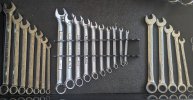
3 sets of Craftsman wrenches in my tool drawer. The left and right sets are about 5 years old. The center set is 40 years old.

PXL_20260608_195510635.jpg
 
Home tool box. At work most are Snap on and at the hangar it's a mix of extra tools and only what I need for the plane. So I don't have complete sets on hand at the hangar. But I have everything that is needed to maintain a 172 and my buddies arrow.
Since this picture was taken, I junked the gear wrenches in the upper right corner. They sucked.
dd5182bb-3cc3-4c71-8202-98f0b3f85384.jpg
 
Last edited:
Back
Top