Oil change results in me messing up.

Slimbizza

Filing Flight Plan
Joined
Jan 29, 2026
Messages
2
Display Name
Slimbizza
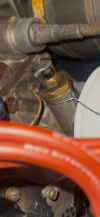
I did my first oil change today on my newly bought, but hardly new, 1965 Piper Cherokee 140. It went well, kind of. When I got back and inspected for any leaks, I noticed the wire above the oil filter was disconnected. I think when I was messing around with the safety wire, I pulled it from its connector. I believe this is the oil temp sender wire. As an owner and a pilot, I was thinking I could simply go to NAPA, buy a female connector and simply reattach the wire.

I'm not sure if I should though. I feel like this is minor, but I cant be sure. Any opinions?
 

Attachments

  • IMG_5263.PNG
    IMG_5263.PNG
    4.7 MB · Views: 195
This does not fall within allowed owner maintenance.

Sometimes things like this just seem to fix themselves, no idea how. It seems to occur mostly at night, and after you have NOT posted pictures of the crime scene on the internet.
 
I believe this is the oil temp sender wire.
Correct.

As an owner and a pilot, I was thinking I could simply go to NAPA, buy a female connector and simply reattach the wire.
You could, but...
I'm not sure if I should though. I feel like this is minor, but I cant be sure. Any opinions?
As simple as that repair is, it doesn't fall under the preventive maintenance a pilot owner is allowed to do.
 
I did my first oil change today on my newly bought, but hardly new, 1965 Piper Cherokee 140. It went well, kind of. When I got back and inspected for any leaks, I noticed the wire above the oil filter was disconnected. I think when I was messing around with the safety wire, I pulled it from its connector. I believe this is the oil temp sender wire. As an owner and a pilot, I was thinking I could simply go to NAPA, buy a female connector and simply reattach the wire.

I'm not sure if I should though. I feel like this is minor, but I cant be sure. Any opinions?
Is it minor? Yes.
Is it included under preventative maintenance, no.
Is the grade of connectors used for automotive and aviation the same, no.
Is this for the oil pressure, can’t tell from the photo, but it likely the oil temp.
 
Welcome to Fight Club. The first rule of Fight Club is…

Go find the A&P who showed you how to change oil and ask if they can fix or show you how to properly fix (connector, crimp, supervision, sign off). It can be the start of a wonderful yet somewhat rare relationship.
 
Without weighing in on whether the Coleal letter might apply, that existing connector sure doesn’t look like an aircraft quality part.
 
I'm not sure if I should though. I feel like this is minor, but I cant be sure. Any opinions?
First, those electrical connections are considered standard parts which only require they be made to a govt or industry standard. Last I checked NAPAs are not, but the TE/AMP brand sold at Spruce or most commercial electric outlets are. So that will give you a legit part.

As to whether its considered prevent mx, I support that it is. And its this type of example that the infamous Coleal LOI actually gives reference to with the statement the list in 43 Appx A(c) would be better viewed as examples of tasks in each category. So if you look at item (category) 16 of that list, "...repairing broken circuits in landing light wiring circuits," you could replace the landing light example with the oil temp wire circuit and repair the wire. This task would also include your use of AC 43.13.1B as your repair reference, and that you make the appropriate record entry for your work per 43.9.

And considering the only person who would balk at this would be the mechanic who signs your annual, you can be proactive about this, and once you determine what the repair will entitle, complete with a draft of your logbook entry, talk to them for input on the matter prior to fixing it. Who knows, maybe that will open up other options to maintaining your aircraft?
 
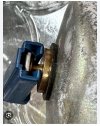
This is an automotive version of a similar connector (Toyota).
IMG_0939.jpeg
 
Looks like a quarter inch spade female connector. The fun part will be seeing if that apparently original wire enjoys being stripped before your mechanic crimps on a new quality end.

While doing it under A&P supervision is appropriate and a good learning experience, personally would not extend troubleshooting a landing light (AC 43) to pretty much any wiring repair. Yes perhaps to a nav light, less so for anything engine indicating or behind the panel.
 
I did my first oil change today on my newly bought, but hardly new, 1965 Piper Cherokee 140. It went well, kind of. When I got back and inspected for any leaks, I noticed the wire above the oil filter was disconnected. I think when I was messing around with the safety wire, I pulled it from its connector. I believe this is the oil temp sender wire. As an owner and a pilot, I was thinking I could simply go to NAPA, buy a female connector and simply reattach the wire.

I'm not sure if I should though. I feel like this is minor, but I cant be sure. Any opinions?
Don't beat yourself on this, It looks like it was pretty worn out already and was going fail probably sooner than later.
Go find a A&P ask him to provide a connector and crimp it on. He should have the proper crimpers also.
 
No he cannot.
Yes he can, but he may not, under the regs. Or maybe he may.

Practically speaking... if you have the tools and skills (not that it takes much skill) to crimp a new connector on, just do it. The FAA maintenance SWAT team won't be banging down your door, and even if it fails it won't make your plane fall out of the sky even if you ignore the obviously incorrect zero temperature reading.
 
Can anyone point to the correct connector that was used originally or should be used now?
And the correct crimper to use?
 
Last edited:
Can anyone point to the correct connector that was used originally or should be used now?
And the correct crimper to use?

Not sure about the original connector, but I’m quite certain the crimper is the same part number used by a lot of opinionated observers here to pinch their undies into knots.
 
First, those electrical connections are considered standard parts which only require they be made to a govt or industry standard. Last I checked NAPAs are not, but the TE/AMP brand sold at Spruce or most commercial electric outlets are. So that will give you a legit part.

As to whether its considered prevent mx, I support that it is. And its this type of example that the infamous Coleal LOI actually gives reference to with the statement the list in 43 Appx A(c) would be better viewed as examples of tasks in each category. So if you look at item (category) 16 of that list, "...repairing broken circuits in landing light wiring circuits," you could replace the landing light example with the oil temp wire circuit and repair the wire. This task would also include your use of AC 43.13.1B as your repair reference, and that you make the appropriate record entry for your work per 43.9.

And considering the only person who would balk at this would be the mechanic who signs your annual, you can be proactive about this, and once you determine what the repair will entitle, complete with a draft of your logbook entry, talk to them for input on the matter prior to fixing it. Who knows, maybe that will open up other options to maintaining your aircraft?
Spot on! Bell… you live anywhere near Columbus, Ohio. I’m going to be looking for a new AnP when mine retires after next year. :)
 
On the dragsters that we raced, we used mechanical oil pressure gauges just on my 172. Like said above I think that is a oil temp sender?
Did I ever mention a 172 scared me more at first than a 275 mph super charged dragster?

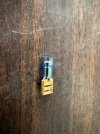
Would this connector be acceptable in this case?IMG_6691.jpeg
 
Last edited:
This does not fall within allowed owner maintenance.

Sometimes things like this just seem to fix themselves, no idea how. It seems to occur mostly at night...
IMHO it is the interaction of three known physical phenomena: Macro-Mass Attraction, The Daytime Barrier, and The Nocturnal Energy Vacuum.

(1) Since all objects with mass exert a weak force on one another, previously connected wires and terminals experience a constant, non-zero attraction toward each other.

(2) During the day, ambient energy waves, e.g. from the sun, Wi-Fi, and audible noise, create a high thermal agitation. This causes atoms to vibrate at a greater frequency, keeping the wire and connector physically repelled.

(3) At night, those local ambient energy levels drop sharply. This removal of this thermal agitation allows the subtle, underlying gravitational pull to finally dominate.
.... and after you have NOT posted pictures of the crime scene on the internet.
This is pure Wavefunction Collapse, by observing the system all ambiguity is removed. Posting online increases observational force exponentially.
 
Last edited:
i say this is exactly the type of simple maintenance the letter speaks to, your plane, me, i'd fix it with acceptable parts, log it and when annual comes point it out.
 
This does not fall within allowed owner maintenance.

Nope you can’t. Napa doesn’t sell FAA PMA and this is not something that falls under Part 43 App. A.

As simple as that repair is, it doesn't fall under the preventive maintenance a pilot owner is allowed to do.

Is it included under preventative maintenance, no.


I disagree. In my oft-ignored but never humble opinion, this fits perfectly within the realm of preventive maintenance that can be performed by the owner. Let's dig into things a bit.

FAA legal (the Coleal interpreation, https://www.faa.gov/about/office_org/headquarters_offices/agc/practice_areas/regulations/interpretations/Data/interps/2009/Coleal-Bombardier Learjet_2009_Legal_Interpretation.pdf ) has stated:

And, preventive maintenance is defined to​
mean "simp le or minor preservation operations and the replacement of small standard​
parts not involving complex assembly operations." Id. Preventive maintenance, in​
general, includes tasks that are less complex than those deemed to be maintenance, and​
requires less sophistication in terms of the knowledge, skill, and tools required.​
Many preventive maintenance tasks are listed in 14 C.F.R. part 43, appendix A,​
paragraph (c ). The paragraph sets forth in 32 numbered subparagraphs items the FAA​
has determined to be preventive maintenance. Even though the introductory text of​
subparagraph ( c) states that "[p ]reventive maintenance is limited to the following work​
2​
... ." (emphasis added), in view of the broader definition of preventive maintenance in​
section l. l , we believe that such limitation is not controlling. Similarly, for the same​
reason, we also believe that the following sentence in Advisory Circular 43-l2A,​
Preventive Maintenance (which was referenced in Mr . Hernandez' s letter), is overly​
restrictive. That sentence, found in Paragraph 3(b)(l), states: " If a task or maintenance​
functi on does not appear in the list, it is not preventive maintenance." As with the other​
paragraphs of Appendix A (i.e. , on major repairs and major alterations), the lists are​
better viewed as examples of the tasks in each category-they cannot be considered all-​
inclusive. There are, no doubt, many "simple or minor preservation operations [tasks]"​
and many "replacement of small standard parts not involving complex assembly​

operations" performed daily, especially on small general aviation aircraft, that the agency​
would consider to be preventive maintenance, though they are not included in the 32​
listed items. ​

So, according to the FAA legal department, the list of tasks in Appendix A, paragraph (c) is no more a complete list than are the lists of things considered major repairs or major alterations. Rather, it is the definition given in 14 CFR 1.1 that tells us what preventive maintenance really is, and the list in Appendix A is illustrative rather than binding.

Now then, 14 CFR 1.1 specifically says that preventive maintenance "means simple or minor preservation operations and the replacement of small standard parts not involving complex assembly operations." The crimp-on connector shown is certainly a "small standard part" and crimping on a new one is about as simple an operation as I can imagine; certainly it does not involve a complex assembly operation.

If we look to the Appendix A paragraph (c) list of examples to better inform our decision, we see that item 16 gives an example of repairs to wiring: "Trouble shooting and repairing broken circuits in landing light wiring circuits." Clearly, this example tells us that simple wiring repair jobs fit the PM definition.

I don't see any problem at all with the OP doing this repair himself as owner preventive maintenance and logging it as such.

 
we believe that such limitation is not controlling.
Thanks for bringing it up. Forgot some of the details in that letter.
I agree that it should be preventive maintenance. I'd also like the FAA to publish and maintain an AC on the matter, because the quoted statement can lead to some rather loose interpretation.

In the grand scheme of things, my exhaust muffler is a small standard part. There's nothing complex (in my opinion) about replacing it. Can I do it under preventive maintenance?
 
had an exhaust riser rust out and depart the aircraft, called my IA he said order the part and replace it, 10 minute job. def a simple job, does it count hmm
 
Thanks for bringing it up. Forgot some of the details in that letter.
I agree that it should be preventive maintenance. I'd also like the FAA to publish and maintain an AC on the matter, because the quoted statement can lead to some rather loose interpretation.

In the grand scheme of things, my exhaust muffler is a small standard part. There's nothing complex (in my opinion) about replacing it. Can I do it under preventive maintenance?
You’re never going to get that level of clarity. What might be simple in one plane could be complex in another. That’s the point of the letter. I work with my AP/IA on things in the gray areas, sometimes he says go do it and log it, others he says he should do it.
 
A. Yes it is owner maintenance. As others have outlined, it falls well within the general definition provided by the FAA, and falls within a category in part 43 Appendix A, which the FAA clarified in the Coleal Memo were examples, not an exhaustive list.
B. PMA not required. The spade terminal is a standard part produced under SAE AS7928, which is met by AMP product family PIDG and several other brands. Check the datasheet when you order and look for SAE or MS and a number.
C. You will need the correct crimper tool. Technically to meet the SAE spec you should use a crimper that meets the SAE spec, but those are pricey. IMO a ratchet crimper from Amazon with the correct die is adequate. Give it a hard tug to see if it holds.
 
Can anyone point to the correct connector that was used originally or should be used now? And the correct crimper to use?
A quick check and it appears you’ll need to get the Piper drawing listed in the IPC to that level detail for the original one. While most temp bulbs I’ve seen take a regular ring terminal, there are several options of connector styles to choose from to use with that connection post. As to a crimper, if using TE/AMP brand terminals you can use their branded crimpers or one of the various alternates out there.

Bell… you live anywhere near Columbus, Ohio. I’m going to be looking for a new AnP when mine retires after next year.
Ha. Except I’ve been retired for quite some time. And if I would decide to re-enter the rat race, @NealRomeoGolf already has an offer on the table for my services in another thread, which if I recall included lodging. So, it might be a while.;)

In the grand scheme of things, my exhaust muffler is a small standard part. There's nothing complex (in my opinion) about replacing it. Can I do it under preventive maintenance?
No. You’re still limited to the 32 items listed in 43 Appdx A(c) so you would need to shoe-horn that muffler into one of those “categories” to make that work. But keep in mind the Coleal LOI is not a direct reference for preventive mx. So if you wave that LOI at an ASI as your sole reference, I doubt your result will be what you wanted.

What’s applicable in the LOI is the statement that the task lists in 43 Appdx A are treated in a similar fashion with the list being the general guidance that is further defined by the Part 1 definition of the topic. Its easier to see this in Appdx A(a) with the major alteration section where the list basically covers the entire aircraft. However, apply the Part 1 major alteration definition to that that section and the list gets significantly reduced in scope.
 
the question that comes to my mind is, is that the proper part number for the sender. i have never seen one on aircraft that uses a slide on connector.every one i have ever seen is a stud and nut. but I have not seen every lycoming installation there is.
 
the question that comes to my mind is, is that the proper part number for the sender. i have never seen one on aircraft that uses a slide on connector.every one i have ever seen is a stud and nut. but I have not seen every lycoming installation there is.
So this might’ve been done by a hanger ferry with plausible deniability? ;)
 
Now then, 14 CFR 1.1 specifically says that preventive maintenance "means simple or minor preservation operations and the replacement of small standard parts not involving complex assembly operations."
Playing devil’s advocate here.

While I agree with your response’s idea that preventive maintenance tasks we can do is broader than some may think, all of the quotes regard PREVENTIVE actions. Seems to me if we see the connector is frayed but hasn’t broken, replacing it preventatively would fit into your comments. When the wire breaks, it has moved to the “repair” category, even if the procedure is identical.

And “maintenance” to me means routine, scheduled tasks such as an oil change.

Yeah - replacing a bald but working tire is the same as replacing a flat one but one is still technically a preventative action and the other is, debatably, more in the repair category.

Better for the OP to have said “huh - the oil temp connector was frayed when I saw it when changing the oil. How would that best be replaced before it breaks?”

Again - just a philosophical observation…

Add: if someone performed a “repair” with a procedure identical to a permitted “preventive maintenance” action, that would seem to be literally a distinction without a difference and more “defensible” should the issue be raised
 
Last edited:
When the wire breaks, it has moved to the “repair” category, even if the procedure is identical

Interesting thought, but I think we can look to our example from the PM list for enlightenment.

"Trouble shooting and repairing broken circuits in landing light wiring circuits.”

Clearly repairs can be considered part of PM as long as they don’t require a complex assembly operation.
 
Back
Top