
You are using an out of date browser. It may not display this or other websites correctly.
You should upgrade or use an alternative browser.
You should upgrade or use an alternative browser.
Next plane...
- Thread starter UngaWunga
- Start date
UngaWunga
Pattern Altitude
- Joined
- Oct 27, 2014
- Messages
- 2,265
- Display Name
- UngaWunga
- Home Airfield
- 7B3
as long as the seats are comfortable, I don't care.Do you like traveling in an SUV - more upright - or a sports car, sitting lower.

- Joined
- Sep 25, 2019
- Messages
- 828
- Location
- Lancaster, Pennsylvania
- Display Name
- Rick A
- Home Airfield
- KLNS
Do you like traveling in an SUV - more upright - or a sports car, sitting lower.
Great question. I'm 6' 0 with shorter legs and a longish torso. Plenty of headroom with the seat adjusted all the way down. The legs go under the panel like driving a Corvette. Very comfortable.
- Joined
- Sep 25, 2019
- Messages
- 828
- Location
- Lancaster, Pennsylvania
- Display Name
- Rick A
- Home Airfield
- KLNS
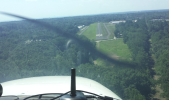
Interesting field. Tough to tell from a photo, but from what it looks like to me, you should consider buying a 1967 F model for the extra 20 horsepower for taking off heavy.
Landing on 20 I'd consider remaining slightly to the right on a short steep final, then slide left a little to straighten and lineup above the extra pavement during the flare, and touchdown a little past the numbers.

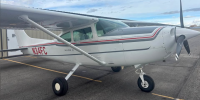
A friend has his Turbo 182 for sale. which might address the speed issue above and not add the retractable gear complexity.I haven't, but the jump from 105-110kts to 135knts doesn't sound like a big gain for the price.
I have seen a few 182RG that look interesting.
it is pretty much an identical twin to this one for about the same price...
BARNSTORMERS.COM Find Aircraft & Aircraft Parts - Airplane Sale, Jets, Helicopters, Experimental, Warbirds & Homebuilt
Aircraft for sale. Find the best new and used aircraft for sale such as business jets, helicopters, Experimental, Warbirds and more.
www.barnstormers.com
AI Overview
A 1986 turbocharged, fixed-gear Cessna 182 (often modified or a late-model T182) typically cruises around 145–155 knots (TAS) at high altitudes (15,000–20,000 ft), burning roughly 13–16 gallons per hour. While the fixed gear adds drag compared to the retractable RG model, the turbocharger provides high-speed performance at altitude.
Found his listed on facebook here.
 www.facebook.com
Another Friend has his M20J for sale.
www.facebook.com

I have flown both aircraft both are nice IFR capable aircraft.
Brian
Yeah, but once you are off the climb gradient is different.As I recall the C-172 needed more ground roll to lift off than an old Mooney C model. It's probably close, but I could be wrong.
EDIT: I don’t doubt you on the ground roll. The presence of a blue knob makes a difference in that department.
Last edited:

HornedFrogGrant
Pre-Flight
Cessna 206 maybe?
I would suggest estimating how much time you'll save in a faster plane over the course of a year, and then look at the increase in your costs over that year. Those minutes may come pretty dear.
The 182 would be a safe option. 1976 and earlier can burn autogas. That may be even more important in a few years. Who knows what 100 unleaded will cost.
There are some tempting ads for older retracts, but they are priced that way for a reason. Parts prices for an old E-series Continental in a Bonanza can get crazy, but parts for an O-470R are plentiful.
The important thing is to buy what makes you happy. Just make sure the ownership experience doesn't spoil that.
Best of luck.

Good restaurant there too. I’ve been in the Archer. It wasn’t elegant but need to do it again
I've been watching Trade-A-Plane et al daily for quite a while. My intuition is that planes are selling for substantially less than the stratospheric asking prices, or not selling at all.Yeah, I'm not interested in an orphaned engine older E-series V-tail. I'm learning why nice 40 year old 182s are listed at $1/4 million like the ad above.
As they say, cash is king. I suspect that many sellers will abandon the imaginary values of their planes for the real value of a bank transfer.
2026-40=1986 which would mean an R-model. P's and Q's are the sweet spot for pre-restart, in my opinion.I'm learning why nice 40 year old 182s are listed at $1/4 million like the ad above.
My post-restart preference is for a 182T with a 6-pack, which is actually pretty rare since most of them came with G1000's.

- Joined
- Oct 16, 2019
- Messages
- 8,855
- Location
- Atlanta / Marietta
- Display Name
- Vintage Snazzy (so my adult children say)
- Home Airfield
- KPUJ
I'd agree. I'd also add that getting an older version of whatever you pick can have the advantage of not having a Garmin 1000 welded to it via the TCDS, making panel upkeep / upgrades manageable.P's and Q's are the sweet spot for pre-restart, in my opinion.
Entire issue of EAA March/Apr vintage mag is devoted to the Comanche. Lots of great info there. I just got my copy today. The 400 with eight cyls is a beast of an engine.
FYI, the E series Conti engine is an O-470 with a splined crankshaft. Just about every part that fits an O-470A will fit the E series. The important bits are the 727 casting cylinders for the E-225/O-470 straight valve. Later versions of the O-470 used different crankshaft dampers, different FI and higher compression for 240/250/260HP. Hartzell still supports the splined crankshaft with two possible options. Most don't know, but the E225 engine is the highest RPM of the line, except for the helicopter FSO type. With an 88" prop, the thrust of the E225 is about the same as the 2600RPM 250HP J model. But - it's not for everyone.
FYI, the E series Conti engine is an O-470 with a splined crankshaft. Just about every part that fits an O-470A will fit the E series. The important bits are the 727 casting cylinders for the E-225/O-470 straight valve. Later versions of the O-470 used different crankshaft dampers, different FI and higher compression for 240/250/260HP. Hartzell still supports the splined crankshaft with two possible options. Most don't know, but the E225 engine is the highest RPM of the line, except for the helicopter FSO type. With an 88" prop, the thrust of the E225 is about the same as the 2600RPM 250HP J model. But - it's not for everyone.

flyingcheesehead
Taxi to Parking
- Joined
- Feb 23, 2005
- Messages
- 28,184
- Location
- UQACY, WI
- Display Name
- iMooniac
- Home Airfield
- KUES/KMKE
It is a significant difference. A 4-hour trip in the 172 becomes a 3-hour trip in the 182, and you can carry a lot more.I haven't, but the jump from 105-110kts to 135knts doesn't sound like a big gain for the price.
If the point is to build time, sure, look at cost per hour. If the point is to go places, you should look at cost per mile, not cost per hour.Sadly, I don't think you'll get a good benefit/cost ratio from any plane upgrade. More speed puts you into constant speed prop/retractable gear territory, and at that point cost/hr will jump a good bit.
FWIW, my Mooney M20R can beat the airlines pretty much anywhere east of the Rockies, but my cost per mile is lower than a 172.
That's what everyone says. However, when our flying club went from a fixed gear 182 to a retract, it didn't change things much. Maybe 10% each... And it was more than 10% faster, so it's kind of a wash.Owned two 182's. 182 is the answer. Retract your maintenance and insurance goes way up.
I do agree that 182s, both fixed and retract, should be high on the OP's list due to the short obstructed field.
"Fairly long" trips?I am super happy with it - have had the 182 for more than 8 years now and flown it on some fairly long trips!
 How many circumnavigations and circumnavigation equivalents are you up to in it now?
Yep.Bonanza - Awful ergonomics if you’re tall or close, but the flying qualities are good. Best for people with 1947 style build.
Huh? What's awful? It's much more solid than a 172, but I really like it that way. I don't think it gets any better for hand flying IFR, or VFR XC.Mooney - Awful control forces, like driving a school bus, but efficient. Best if your idea of flying is long straight lines on the chart, on autopilot.
It's hard to get more performance out of your purchase dollar than you'll get with a Comanche. The hurricane taking out the production line is one of aviation's great tragedies.Or a Comanche, which would be my choice if a low wing retractable were acceptable.
C172s are also a bit truck like, although Cessna by the time of the C170B had their planes flying exactly as the designers wanted them to fly, and very well matched to their market.It's much more solid than a 172, but I really like it that way. I don't think it gets any better for hand flying IFR, or VFR XC.
For sure some Mooneys are worse from my perspective than others in terms of control forces, a friend’s (fast, heavy) Bravo was particularly alarming to me, needing both hands on the yoke for both roll and pitch in routine flying. The earlier, lighter planes are better but on the other hand how many planes are so tiring to lift the wing in turbulence that the factory fitted a full time roll axis autopilot to do it, disengaged with a button when you want to turn? That was the case for older Mooneys and strikes me as desperation.
My understanding is that the original wood wing Mooney was much better in this regard and that’s how they got ratcheted into the situation. Subsequently Mooney made modifications to the metal wing ailerons and tips too IIRC to address the issue but these were seemingly counteracted by increased weight and speed as the models progressed.
This old article on the Mooney Predator, which was the result when they tried to make a military trainer out of the M20, talks extensively about the control heaviness and matches my personal perspective (see ‘Grunt, Heave!’ in the link below) although forces in that aircraft were apparently lighter than normal given the extra mechanical advantage provided by stick controls.
Aviation Consumer Article
I like a plane that you can fly with fingertips, not both hands on the yoke, but to each his own. I’ve found Comanches to be pleasant enough and unlike a Bonanza also roomy for a tall guy (never an issue in Mooneys BTW). In terms of aileron control specifically a Bellanca Viking is closer to my taste than any Mooney.
If a plane isn’t pleasant to maneuver, I can’t imagine me personally buying it. But again to each his own. Just because we all fly through the same air doesn’t mean we all want the same plane.
Last edited:
- Joined
- Sep 25, 2019
- Messages
- 828
- Location
- Lancaster, Pennsylvania
- Display Name
- Rick A
- Home Airfield
- KLNS
If a plane isn’t pleasant to maneuver, I can’t imagine me personally buying it. But again to each his own.
Different strokes for different folks. Maybe control force preferences are somewhat based on the type of flying pilot's do.
Personally I disliked hand-flying instruments in the only Bonanza I ever spent enough real time flying enough to form an opinion, an old F35. A joy to fly in nice weather headed out for the $100 hamburger, but IMO way too delicate on the controls for me to consider buying one for the type of work related IFR missions often flown.
There was a sweet V-35 for sale I thought may be a good trade up while shopping for an upgrade out of a 1980 M20 J model I'd flown for over 10 years. At that time was looking for a nicer panel, less time on the airframe and engine, more room inside, and really liked the idea of having a much larger baggage door than the little high placed one found on all Mooneys. Back then fuel was much cheaper, so the Bonanza V-35's increased burn rate wasn't much of a concern.
After flying it, I remember thinking maybe these super nice and light Bonanza controls are why there are so many examples of Bonanza pilots losing control in IMC, over-speeding, breaking out of the clouds, and pulling back enough to break the tail. Decided to stay with Mooney and upgraded to another Mooney, a 1982 J model, which I still fly 31 years later, with lots of personalized (and work paid for) improvements.
The Comanche was on my short list, but I removed it when a (knowledgeable) person raised concerns about parts availability. I'm making a list of ?s to ask my future A&P--based on folks' personal experience, should I put it back on the short list? The others are the Dakota, Commander 114B, and Cherokee 6/300.It's hard to get more performance out of your purchase dollar than you'll get with a Comanche. The hurricane taking out the production line is one of aviation's great tragedies.

MIFlyer
Pattern Altitude
but a lot of the old e-series can run autogas, and fit under the weight and speed rules, and can get in and out of pretty short fields...I would suggest estimating how much time you'll save in a faster plane over the course of a year, and then look at the increase in your costs over that year. Those minutes may come pretty dear.
The 182 would be a safe option. 1976 and earlier can burn autogas. That may be even more important in a few years. Who knows what 100 unleaded will cost.
There are some tempting ads for older retracts, but they are priced that way for a reason. Parts prices for an old E-series Continental in a Bonanza can get crazy, but parts for an O-470R are plentiful.
The important thing is to buy what makes you happy. Just make sure the ownership experience doesn't spoil that.
Best of luck.
Absolutely right. I owned an F35 back in the '80s, and rarely ran avgas in it. It was a nice plane, but the fishtailing ride in turbulence was awful. I sold it to buy a Cessna 180. The 180 was 12 knots slower in cruise, but better in every other respect. That's what I'm shopping for now.

I see the presumed cruise speed for a 182 at 135kts. I had a 2000 S model, IO-540, and routinely cruised at 140-144kts TAS at 8-10K’ near max load. The downside of a restart is the lower UL; after gutting the 6 pack/KAP140/13lbs of old unused wiring/vacuum pumps and putting in a pair of GI275’s and GFC500, my UL was up to 1160 lbs. My friend’s Q model, with glass and a Northpoint engine STC also cruised in the low 140’s TAS at 8K’ and had a UL in the upper 1200 lb range. It is a very good 4 person family hauler if you want fixed gear.

Good chick pick-up line: you know the Air Force flies the F35? I owned one back in the 80s.I owned an F35 back in the '80s


The Comanche was on my short list, but I removed it when a (knowledgeable) person raised concerns about parts availability. I'm making a list of ?s to ask my future A&P--based on folks' personal experience, should I put it back on the short list? The others are the Dakota, Commander 114B, and Cherokee 6/300.
I've owned one for over 3 years now and did a lot of work to it - parts availability has not been an issue for what it's worth. Not sure how "knowledgeable" your person was or where he/she acquired the knowledge.
You had the fastest 180 in the world, or the slowest F35 ever built. Book on the C180 is 141Kts, and the F35 is rated at 160. I have a C35, with the F35 engine and 88" prop and I get 160-163 easy with two on board. I've owned a lot of Bo's and many of them have serious rig problems. Drooped flaps to correct a trim issue, gear doors sagging, Aileron deflected wrong. On a fast design, small issues cause a lot of speed loss. Also, some Bo's have lbs of paint, and leftover crud in the fuselage from radios and instruments.Absolutely right. I owned an F35 back in the '80s, and rarely ran avgas in it. It was a nice plane, but the fishtailing ride in turbulence was awful. I sold it to buy a Cessna 180. The 180 was 12 knots slower in cruise, but better in every other respect. That's what I'm shopping for now.
Not sure. My Bonanza averaged 142 kts, same as my friend's D35. The Cessna did 130. Those speeds were Loran (remember that?) groundspeed averages. Both planes were rigged properly. We're both picky engineers.
I'm not sure how I had the fastest 180 if the book speed is 141 and I only got 130. Maybe the company exaggerated. They wouldn't do that, would they?
I'm not sure how I had the fastest 180 if the book speed is 141 and I only got 130. Maybe the company exaggerated. They wouldn't do that, would they?

Wrench978
Pre-takeoff checklist
I flight plan 145kts in my F35 Bonanza. That’s burning around 9-9.5gph of mogas. I’ve flown in and out of OP’s airport a lot (did my primary flight training there) and I wouldn’t fly out of there loaded up to gross. The height of the trees are proportional to the weight of the plane. But it was quite comfortable in the summer with 60 gallons of fuel and 2 larger men. Any time I took a full load I just went up to PSM to pick up passengers. My useful load is ~1050lbs
I understand the concern about the engine. I haven’t had an issue come up that wasn’t easy to solve. I might be singing a different tune if I have to do an overhaul, but I’m not too worried about that. Lots of great resources for bonanzas and E series especially.
I understand the concern about the engine. I haven’t had an issue come up that wasn’t easy to solve. I might be singing a different tune if I have to do an overhaul, but I’m not too worried about that. Lots of great resources for bonanzas and E series especially.
- Joined
- Oct 16, 2019
- Messages
- 8,855
- Location
- Atlanta / Marietta
- Display Name
- Vintage Snazzy (so my adult children say)
- Home Airfield
- KPUJ
FWIW - my 182P at 7000 - 9000 feet regularly shows 137 kts or so TAS, and that is burning about 11.5 - 12.0 GPH while running LOP.
I just flew a trip behind a G1000NXi. It continues to both luxuriate and frustrate me.I'd also add that getting an older version of whatever you pick can have the advantage of not having a Garmin 1000 welded to it via the TCDS, making panel upkeep / upgrades manageable.
Pros:
Syn vision is better on a 10" rectangular screen than a 3" round GI275
Vertical Situation Display is really handy
Menus/buttons/displays are in the same place from plane to plane
Cons:
Several small screens is more flexible than 2 big screens
No touch screen input
No "Copilot as Passenger" mode1
No monitor mode2
[1] I had a passenger in the copilot seat that wanted to zone out to some tunes but ATC kept cutting in. PS-Engineering audio panels have this mode where the copilot doesn't have to listen to ATC but the GMA1360 does not.
[2] GTR205/GNC215 can listen to 2 frequencies at the same time. With 2 radios, you can monitor 4 frequencies at once.
- Joined
- Oct 16, 2019
- Messages
- 8,855
- Location
- Atlanta / Marietta
- Display Name
- Vintage Snazzy (so my adult children say)
- Home Airfield
- KPUJ
Let me clarify - nothing against the G1000, but rather that you’re type certified into it, and that particular flavor of it. You can’t swap an old non WAAS G1000 for a new G3X for example.
Hey, I recognize that airport. Just moved up to the seacoast, mind if I DM you a question or two?
UngaWunga
Pattern Altitude
- Joined
- Oct 27, 2014
- Messages
- 2,265
- Display Name
- UngaWunga
- Home Airfield
- 7B3
Yup, happy to share info.Hey, I recognize that airport. Just moved up to the seacoast, mind if I DM you a question or two?
flyingcheesehead
Taxi to Parking
- Joined
- Feb 23, 2005
- Messages
- 28,184
- Location
- UQACY, WI
- Display Name
- iMooniac
- Home Airfield
- KUES/KMKE
I've got a fast, heavy Ovation and that's where my comments come from. I love how it flies.For sure some Mooneys are worse from my perspective than others in terms of control forces, a friend’s (fast, heavy) Bravo was particularly alarming to me, needing both hands on the yoke for both roll and pitch in routine flying.
Would I want the same sort of control response if I were doing aerobatics? Of course not. But this is a plane built for long, possibly-IFR cross country trips and it's got exactly the control feel that works well for that mission.
No, that was just high tech for GA 70 years ago.The earlier, lighter planes are better but on the other hand how many planes are so tiring to lift the wing in turbulence that the factory fitted a full time roll axis autopilot to do it, disengaged with a button when you want to turn? That was the case for older Mooneys and strikes me as desperation.
I have not heard of any issues with parts availability, and there are some companies that have new, better parts for some of the more problematic ones (Webco, for example).The Comanche was on my short list, but I removed it when a (knowledgeable) person raised concerns about parts availability. I'm making a list of ?s to ask my future A&P--based on folks' personal experience, should I put it back on the short list? The others are the Dakota, Commander 114B, and Cherokee 6/300.
I think there's a lot of A&Ps out there that kind of poo-poo any type that they don't like to work on or don't have any experience with.I've owned one for over 3 years now and did a lot of work to it - parts availability has not been an issue for what it's worth. Not sure how "knowledgeable" your person was or where he/she acquired the knowledge.

The Grumman Tiger is a good option. It has very light, but well harmonized controls. With its fixed gear it is cheap to maintain and it is fast for a fixed gear 180 Hp airplane. They cruise at 160 mph and have a top speed of 170 mph. They have a 780 lb. useful load and 51 gallons of useable fuel giving it a 4.7 hour range - I don't know about you, but I need to get on the ground about every 3 hours to stretch and empty my personal tank. I owned the 150 Hp Grumman called the Traveler for about 5 years and really enjoyed the plane. It was faster than the 172s I'd been renting and they had good ramp presence with their sliding canopies. The back seats folded down easily and the sliding canopy made it easy to get bicycles in the back if I wanted to fly somewhere for a scenic 2 wheeled ride. Good examples are still available for better prices than 182s, but they won't haul as much. I owned a 182 with an IO 550 installed under the Texas Skyways STC and it was a beast, but the Grumman was more fun to fly. I've also owned a Pitts S2A, and it was an absolute blast to fly but was worthless for any X/C work or for hauling more than a toothbrush. I now own a Maule and it is slow, but rugged as hell and has been a blast for airplane camping away from any real airport. Buy any plane that meets your mission within your budget and you'll be a happy pilot.
If I were looking for a four place aircraft that is useable for cross-countries and also not truck-like to fly, the Tiger would be on my personal short list for the reasons you mention.The Grumman Tiger is a good option. It has very light, but well harmonized controls. With its fixed gear it is cheap to maintain and it is fast for a fixed gear 180 Hp airplane. They cruise at 160 mph and have a top speed of 170 mph. They have a 780 lb. useful load and 51 gallons of useable fuel giving it a 4.7 hour range - I don't know about you, but I need to get on the ground about every 3 hours to stretch and empty my personal tank. I owned the 150 Hp Grumman called the Traveler for about 5 years and really enjoyed the plane. It was faster than the 172s I'd been renting and they had good ramp presence with their sliding canopies. The back seats folded down easily and the sliding canopy made it easy to get bicycles in the back if I wanted to fly somewhere for a scenic 2 wheeled ride. Good examples are still available for better prices than 182s, but they won't haul as much. I owned a 182 with an IO 550 installed under the Texas Skyways STC and it was a beast, but the Grumman was more fun to fly.
I used the word 'alarming' in reference to the Mooney Bravo's control forces without intending to exaggerate... but I might also say the same to describe the experience of driving the larger SUVs that other people choose to drive on the road for their own reasons - I drive a four door sport sedan that does the same job, is safer at speed and a lot more fun.
One Bravo memory is flying down an Alpine valley (obviously VFR) and figuring out I needed both hands on the yoke for both roll and pitch if I wanted to have a enough control authority to feel safe, and to trim profusely for any change in speed or altitude. To me that's much like driving a bus or truck, or maybe an airliner (I've never flown one). However that same plane has been flown across the Atlantic three times at altitude on autopilot, so it does that well enough. Just don't expect it to be viscerally enjoyable like a Bonanza or Viking or any number of other planes that do the same mission.
I was once quite interested in the Meyers 200, but then read the dreaded 'heavy aileron and pitch controls' in several flight reviews and it dampened my enthusiasm. But I've yet to fly one and would like to see for myself

Last edited:

Crashnburn
Pattern Altitude
Late model C177B or C177RG. Roomier than a 172. Almost as fast as a 182 on a lot smaller engine.
rockyfatcat
Pre-takeoff checklist
- Joined
- Jan 20, 2026
- Messages
- 134
- Display Name
- keith whitcomb
RV-10 would be my 1st choice, but the prices are crazy
www.facebook.com

KLRDMD
Pre-takeoff checklist
They will do 145-150 KTAS, not KIAS.The earlier 35 models A-P are generally cheaper than P/S/V models due to having smaller engines, but cruise around 145-150kts IAS.
KLRDMD
Pre-takeoff checklist
The S35 was the fastest V tail without a turbo from the factory. There are plenty of V tails with IO-550s today that are faster than the S35. My M35 with a 550 was faster and climbed better than my S35 with a 520.S35 Bo is the fastest V tail without turbo.
Not just anal - but also retentive.The S35 was the fastest V tail without a turbo from the factory. There are plenty of V tails with IO-550s today that are faster than the S35. My M35 with a 550 was faster and climbed better than my S35 with a 520.
Hey, some guy posted in another thread that Mooney's are roomy. You should go set that ****head straight.